We can't find the internet
Attempting to reconnect
Something went wrong!
Hang in there while we get back on track

Athens's culinary record
While for the last decade Athens has been struggling with the impact of the ongoing economic crisis, which has also brought up some big questions regarding Greece’s self-identity and the country’s place within Europe, the hard times have also helped spark a process of rediscovery, with Greeks taking a new look at their own identity, their own resources and – most importantly – their own culinary traditions and heritage.
Get the Full Story →Tour Athens with Culinary Backstreets®


discover the city, street by street, bite by bite

Athens
To Mitato tou Psiloriti: Cretan Hut
On Crete, endowed with fertile soil and an enviable climate, devotion to the island’s culinary traditions runs deep. This is even the case for people who have family ties to Crete but did not live there themselves, like Dimitris Katakis, who runs To Mitato tou Psiloriti, a small Cretan deli in Athens. In 1950 his grandparents left Crete, despite their great love for their native island, to go to Athens for better job opportunities – the postwar era saw many Greeks move to cities or even abroad in search of a better life. Yet the flavors and traditions of Crete, one of the southernmost points in Europe and the largest island in Greece, stayed with them and were lovingly passed on to their children and grandchildren.
Read more
Athens
Liquid Assets: Frappé and Freddo, Greece’s Cold Coffee Kings
It was August 31, 1957, and Yiannis Dritsas, a representative of Nestlé Greece, was at the 22nd Thessaloniki International Fair. His mission? To present a new iced chocolate drink for kids. It was simple, really: add milk and cocoa powder to a shaker (essentially a cocktail shaker), shake well and serve. During a break, an employee of the same company named Dimitris Vakondios went to the kitchenette to prepare his regular instant coffee – using Nescafé, Nestlé’s coffee brand, of course. But he couldn’t find hot water anywhere. Desperate for his caffeine, he decided to try and copy what his boss was presenting to the public, only instead of cocoa powder he used his instant coffee and instead of milk he used cold water. In the shaker it went and boom, the frappé was born.
Read more
Athens
Margaro: Pillar of Piraeus
Piraeus – located about 10 kilometers south of downtown Athens – is not just the largest port of Greece, but it is also among the top five most important ports in Europe. Aside from the port, Piraeus covers a large area, some of which is residential and other parts which are more industrial. Though it may seem chaotic at first glance – especially for the many visitors who arrive at the port by ferry from a lovely little island and are shocked to suddenly find themselves in a grey city – the truth is that Piraeus hides a nostalgic flair and charm that is rare to come across in cities these days.
Read more
Athens
Diporto: Time Travel Taverna
In business since 1887, Diporto – a defiantly traditional spot in downtown Athens – has no sign and no menu. The staff doesn’t speak a word of English, and you might have to share a table with eccentric old men who look like they stepped out of a folk ballad. You will probably have to mime your order or draw it on the paper tablecloth. But if you ever wondered what it would be like to eat in a working-class Greek taverna circa 1950, read on. Diporto is located smack in the middle of what is – at least by day – one of the Athens’ most fascinating areas, home to a variety of specialized marketplaces. Varvakeios, one of the few of its kind in Europe, is the city’s largest fish and meat market, in operation since 1886. Around this enormous, chaotic market, where vendors try to outdo each other in shouting, lies Athens’ traditional center of trade, with streets devoted to specific merchandise: hardware stores and bric-a-brac on Athinas Street; spices, cheeses, kitchen equipment and plants on Evripidou and Sofokleous; doorknobs on Vissis (yes, there is a street dedicated solely to doorknobs).
Read more
Athens
Varsos: Nostalgia, with Cream on Top
A visit to Varsos, a culinary landmark in Athens that looks much the same as it did 60 years ago, is like traveling back in time to one of the city’s grand patisseries of the 1950s. The venue, which is still in the hands of the Varsos family who originally opened it, is one of the most famous of Athens’ old-style coffeehouses and is the only one that has kept its traditional charm over the last several decades. Varsos was established in 1892 in central Athens, but it is the wonderfully old-fashioned Kifisia location, to which the patisserie moved in 1932, that has made the venue famous. At the beginning of the 20th century, Kifisia was a holiday destination for rich Athenians, and their stately summer mansions still dot this beautiful yet ever-expanding northern suburb, which is now popular with professionals, families and expats.
Read more
Athens
Peinirli Ionias: Talking Dough
Since its name derives from the Turkish word peynir (cheese), it’s no surprise that Athens’ best peinirli (πεϊνιρλί, “with cheese”), a boat-shaped flatbread similar to pide in Turkey and khachapuri in Georgia, is usually found at old, specialized shops or eateries owned by families who originally came from Asia Minor or Pontus, the Greek name for the southern coast of the Black Sea, in the early 20th century. So when Spyros, the owner of Peinirli Ionias in Ambelokipoi, one of the most popular peinirli takeaways in downtown Athens, casually mentions that he originally hails from the Ionian island of Corfu – nowhere near Asia Minor, another name for Turkey’s Anatolia region – we are left scratching our heads. Sensing our confusion, he quickly adds that he learned the art of peinirli-making directly from the source, so to speak: his father- and mother-in-law, who both emigrated to Athens as part of the 1923 population exchange between Greece and Turkey.
Read more
Athens
Seychelles: Post-Industrial Cooking
The neighborhood of Metaxourgio in central Athens gets its name from the historic Athanasios Douroutis silk factory (metaxi means “silk”), which closed down in 1875. The former factory, which now houses the Municipal Art Gallery, was designed in 1833 by the Danish architect Hans Christian Hansen and is among the city's most important surviving neoclassical structures. The building was originally intended to be a shopping center, but because the area became an industrial zone, it inevitably attracted mostly working-class residents who were employed in the nearby factories, smaller industries or workshops.
Read more
Athens
Athens’ New-School Wine Bars
The economic crisis that has plagued Greece for the past five years has led to changes on the Athenian culinary scene, including the opening of three new types of venues that seem to be reflective of the times. The first two – cupcake places and frozen yogurt shops – are imports from abroad, perhaps indicative of a population in need of something sweet, comforting and affordable. On the other hand, the third trend, wine bars, digs deep into Greece’s roots, representing a fascinating phenomenon in a country that is one of the world’s oldest wine-producing regions. In antiquity Greek wine was exported across the Mediterranean, and the winemaking tradition has remained strong through the millennia. Yet although there are numerous wineries around the country, in the modern era Greek wine has never achieved the place it deserves on the international market. Production levels are low and vintners have long been unsure of how to market abroad.
Read more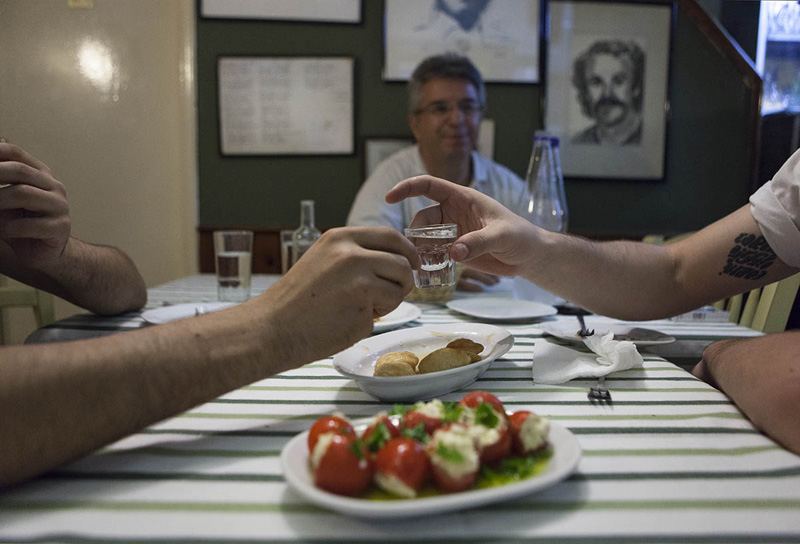
Athens
Kriti: Cretan Comforts
It all started about six years ago, when Cretan cuisine – food from Crete, one of Greece’s largest and most famous islands – became fashionable in Athens. Suddenly, Cretan restaurants started popping up all around the city.
Read more


Daily Dispatches from the Frontlines of Athens





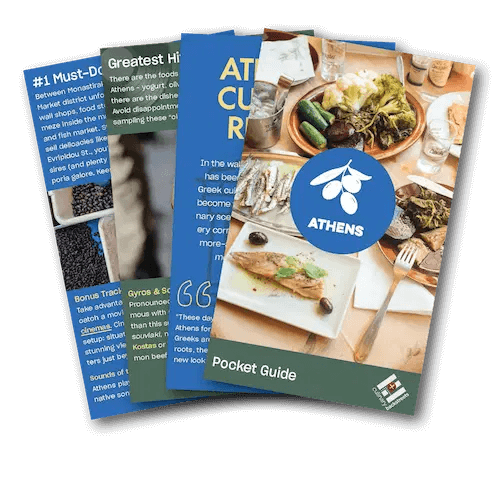
Get Your Free Athens Pocket Guide
Introducing our pocket-sized Athens guide — perfect for your next culinary adventure. Yours free when you sign up for our newsletter.
Get Your Free Athens Pocket Guide
Introducing our pocket-sized Athens guide — perfect for your next culinary adventure. Yours free when you sign up for our newsletter.
Immersive Multi-Day Journeys In and Around the World’s Culinary Capitals



Your trips, powered by our picks
Curated Athens Travel Boards


Visual Dispatches from the Frontlines of Local Eating
Discover Athens With Culinary Backstreets®

CB Cooks: Carolina Doriti Makes Galatopita, a Greek Milk Pie
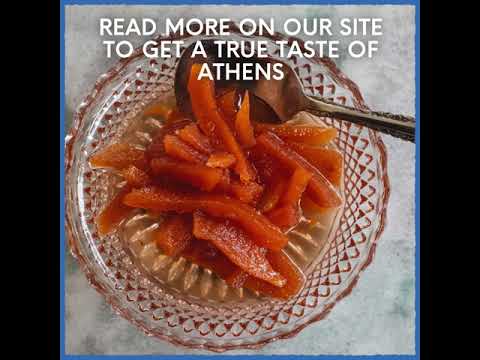
A Sweet Greek Tradition
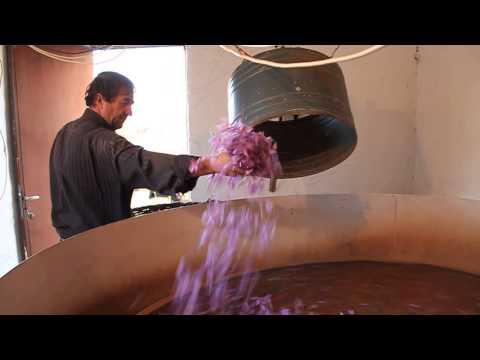
Kozani Saffron, the Greek Spice of Myth
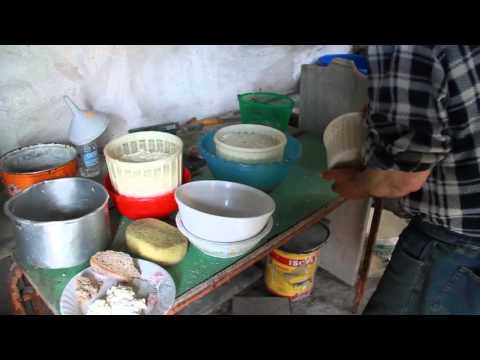
Culinary Backstreets Visits: A Traditional Cheesemaker on Amorgos

Distilling Tsipouro
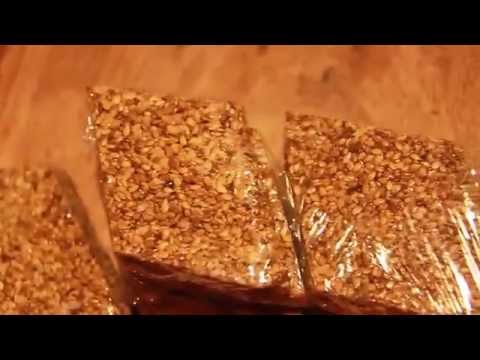
Making Pasteli in Amorgos
Πρεμιέρα CineDoc 2014 2015

CB Cooks: Carolina Doriti Makes Dolmades Avgolemono
Discover Athens With Culinary Backstreets®
Culinary Backstreets® Envoys, Always Searching for the Next Hidden Gem

Carolina
Athens Bureau Chief

Constantine
Athens Tour Leader

Gulden
Athens Tour Leader

Natali
Athens Tour Leader

Katia
Athens Tour Leader

Sofia
Athens Tour Leader

Giannis
Athens Tour Leader

Diana
Athens Correspondent

Johanna
Athens Correspondent

Manteau
Athens Photographer

Athens: An Eater’s Guide to the City
Part of Culinary Backstreets® “An Eater’s Guide to the City” series, this newly updated and expanded book was created with those who travel to eat in mind.
Visit the shopYour Questions, Answered
Athens is an ancient city, as well as the capital of modern Greece and its largest city. It is located at the south of Greece’s mainland, in the Aegean Sea’s Saronic Gulf. You can reach many of the country’s famous islands from Athens’s Piraeus Port. Many of Classical civilization’s intellectual and artistic ideas originated here, and the city is generally considered to be the birthplace of Western civilization. At the same time, it is a contemporary and vibrant city, combining its history and ancient sites in unique and creative ways.
The best things to do in Athens are visiting the Acropolis and Acropolis Museum, as well as all the sites surrounding the historic part of town they are located in. Athens is steeped in history and culture, from the ancient ruins dotted around the city, to its fascinating museums, like the National Archaeological Museum. You can stroll the charming streets of Old Plaka, discover Greek food and wines, hit a number of beaches and ascend the Temple of Poseidon. Attending a concert at the Odeon of Herodes Atticus, a stone Roman theater at the base of the Acropolis, is an unforgettable experience.
The best times to visit Athens are between March and May and from September to November. Weather during these spring and fall months is agreeable and sunshine is pretty much guaranteed. Also, crowds are thinner and hotel and airfare deals are easier to come by than in summer.
In Athens, the summers are hot, dry and clear and the winters are short, though they can be cold and are sometimes windy and cloudy. Over the course of the year, the temperature typically varies from 42 F to 92 F and is rarely below 34 F or above 97 F.
In comparison to other European capitals, Athens is on the cheaper side, though tourist attractions and hotels can become pricy. While prices can vary, the average meal in Athens should cost around €25 per person. Breakfast prices are generally cheaper than lunch or dinner. The average price of a 3-star hotel in Athens is about €80-120, though nightly apartments are much cheaper. A coffee or cheap beer cost just under €2.
Athens is considered a very safe city, even for solo female travelers. Visitors can be put off by the graffiti that proudly covers some of Athens’s neighborhoods, Exarchia in particular. But this street art is a part of the city’s history and feel. The crime rate is very low and as long as you take normal precautions, you will feel safe here. Most visits are trouble-free, though like most large cities, petty theft is more common on the metro and in crowded tourist sights.
Greek cuisine features lots of seasonal vegetable, high-quality olive oil and good seafood. You may know popular Greek foods like souvlaki, moussaka, and feta cheese, but there’s so much more to discover. Stuffed vegetables, fresh calamari and a variety of street food like savory pies, fresh yogurt, Choriatiki salad, fantastic cheeses, wines and more!
The best neighborhoods in Athens for tourists are Plaka, Monastiraki, Koukaki, Syntagma, Kolonaki and Psyri, which are conveniently located to all the major sites. Travelers with early morning ferries might be tempted to stay in Piraeus near the port, but the metro opens early and taxis are plentiful, so staying in Athens is strongly recommended.
You can fly directly to Athens International Airport Eleftherios Venizelos, which is a 30-40 minute taxi ride to downtown Athens. You can also reach the center by metro (45 minutes) or shuttle bus (60 minutes).
Athens has a very diverse dining scene from the traditional to the trendy, and it is ever-changing. Some of our favorite restaurants include Diporto, Seychelles, Kriti and Ama Lachi stis Nefelis.
Athens can be a fantastic getaway for families with kids of all ages. Many of the sites and museums offer plenty to entertain both children and adults, and the pleasant parks and seaside are a perfect place for families to relax after a few days of sightseeing.
Yes. US passport holders can enter Greece without a visa for stays up to 90 days within any 180-day period as part of the Schengen area. From late 2026, ETIAS pre-authorization is required, apply online before travel. No vaccination or testing requirements.
Culinary Backstreets runs six food tours in Athens, all led by resident food writers. Backstreet Plaka takes the historic quarter beyond the tourist restaurants. Exarchia: Taste of Utopia explores the anarchic-artistic neighborhood's food scene. The Moveable Sunday Feast is a market-and-taverna crawl built around Athens' Sunday rhythm. Keramikos Calling: Market Day covers the up-and-coming Keramikos district. Plaka At Twilight is the evening companion to the daytime Plaka tour. Culinary Secrets of Downtown Athens covers the Central Market at Varvakios and the streets around it.
Three full days is the sweet spot. One for the Central Market and downtown tavernas, one for a Piraeus seafood run or Kifisia food shopping, one for a modern Athens dinner in Pangrati or Koukaki. Add a fourth if you want a day trip to Aegina or Hydra.
For traditional cooking: Psirri, Plaka, and Pangrati. For modern Greek: Koukaki and Kolonaki. For markets and everyday eating: the streets around Varvakios and Kypseli. Skip the tourist tavernas around Monastiraki Square, locals don't eat there.
Souvlaki (chicken or pork, wrapped in pita) at least once. A full meze spread with tsipouro or ouzo. Grilled octopus, taramosalata, and gigantes. A koulouri from a street vendor for breakfast. And Greek yogurt with honey and walnuts before you leave.
All three. Solo travelers do well because Greek meze culture is built for grazing, ordering many small plates, and lingering at outdoor tables. Families are welcome at almost every taverna and kids are expected, not tolerated. Groups of six to twelve are the perfect size for a proper Greek table with shared plates and bottles of wine.
Diporto in the Central Market for lunchtime stews, Klimataria in Psirri for rembetiko-scored meals, Ta Karamanlidika in Aiolou for pastourma, Trelos Gianis in Pangrati for grilled meat. All neighborhood spots, all no-menu-in-English.




