We can't find the internet
Attempting to reconnect
Something went wrong!
Hang in there while we get back on track

Palermo's culinary record
Sicily has a millennial history that has integrated many different cultures, and Palermo’s culinary scene is the highest expression of this. Here, each dish is not only a simple assemblage of different ingredients, but a living story that wants to be told and savored. Traditional Sicilian cuisine was born from the food of the poor, made from the scraps that the nobles threw away. From this, necessity has been made a virtue; from poverty, the richness of gastronomic creativity has blossomed. This can still be seen today, in the home-style cooking of the old downtown eateries, the sizzling grills of the city’s street food, the sugary assortment of Sicilian pastries.
Get the Full Story →Tour Palermo with Culinary Backstreets®


discover the city, street by street, bite by bite

Palermo
Palermo, One Street Snack at a Time
Eat your way through Palermo’s street-food traditions, from pani cà meusa, panelle and arancine to gelato, Sicilian pastries and old-school espresso.
Read more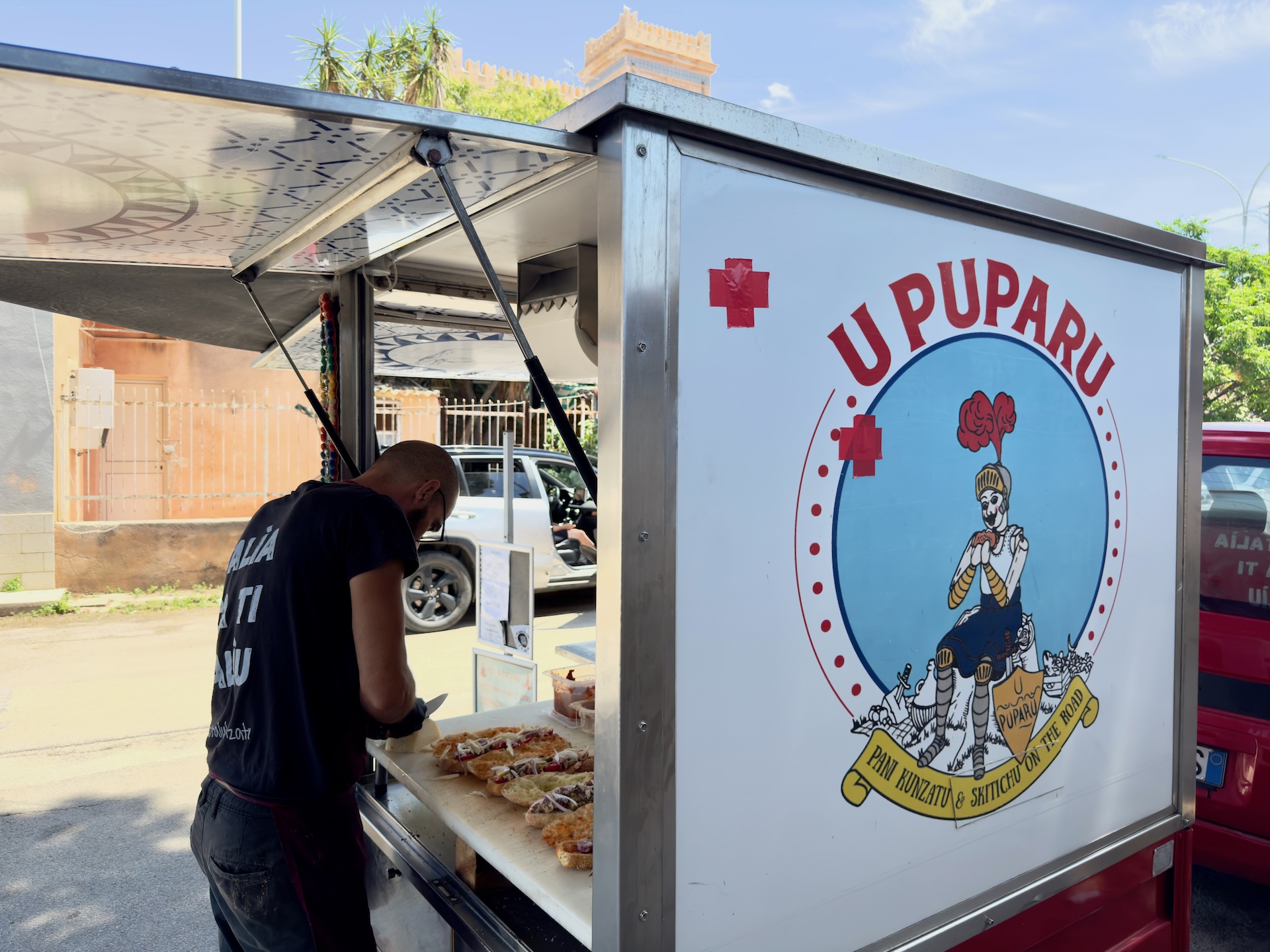
Palermo
U Puparu: The Puppetmaster of Panini
A beloved Cinisi food truck serving Sicilian panini layered with memory, technique, and local flavor. U Puparu shows how street food can be art.
Read more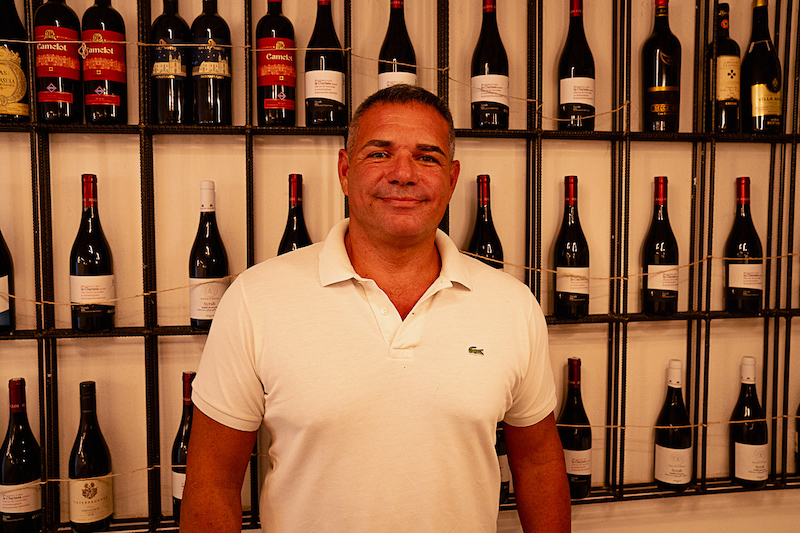
Palermo
Ciccio Passami l’Olio: Palermo’s Neighborhood Pizzeria
“I'm a big pizza eater,” Francesco “Ciccio” Leone confesses. “But what I like most is being together with friends, conviviality.” The broad-shouldered Palermo native, 50, greets everyone who enters his establishment with a welcoming smile. It was during a dinner party held at his home that he came up with the idea for the name of his pizzeria. “The name came about by chance,” he recalls. “My friends would come to my house to eat, they would say, ‘Ciccio, pass me this; Ciccio, pass me that,’ and so I thought of calling the pizzeria Ciccio Passami l’Olio, which means ‘Ciccio, pass me the oil.’”
Read more
Palermo
Osteria Mangia e Bevi: To Nonna’s Kitchen We Go
Imagine you are Marcel Proust at the beginning of his novel In Search of Lost Time, or the feared food critic Anton Ego in Ratatouille, the Pixar masterpiece that won the 2008 Oscars for Best Animated Film. In the exact moment you taste a madeleine dipped in tea or a forkful of ratatouille, your palate is activated you are catapulted back in time, to that first Sunday morning you tried the dessert or to that time when, after falling off your bike, the dinner your mother prepared you somehow seemed to make everything better. It is this emotion, this involuntary memory flashback, that cousins Nico Virga and Angelo Fascetta had in mind when they opened their restaurant. Located on Via Cavalieri di Malta, behind the Church of San Domenico – known as the Pantheon of Sicilians – Osteria Mangia e Bevi is a charming eatery that offers not only simple home cooking from Palermo, but also a true taste of grandma's cooking. Grandma Antonietta’s, more specifically.
Read more
Palermo
Al Fresco: A Fresh Start
Upon entering Al Fresco in the Ballarò neighborhood, we are struck by both the kind welcome and the special location – the restaurant is set in a garden enclosed within the walls of Casa San Francesco, a former seventeenth-century convent, lit by strings of lights dangling between plants and saplings. There is an immediate sense of openness, freedom and freshness. This is no coincidence: while “al fresco” in Italian can refer to the chill of being out in the open air, it is also an expression used to mean “life in prison.” The double meaning makes sense in this case – despite its first impression as a regular eatery, perhaps the most special feature of Al Fresco is that working in the kitchen and in the dining room are former inmates who have joined the team following their release from prison.
Read more
Palermo
La Delizia: Geniuses of Gelato
When we meet Mr. Giovanni Scalici, owner of the gelato shop La Delizia, he explains the formula for his success in one word: "Simplicity." We are in Sferracavallo, a seaside suburb of Palermo located between the mountains and a beautiful gulf. Here the coast is filled with dozens of seafood restaurants, but if you venture slightly off the promenade you will find this gem of a gelateria on Via Dammuso.
Read more
Palermo
Altri Tempi: Trattoria Time Machine
In Palermo, we don’t need a time machine to travel to the past. Stepping into Trattoria Altri Tempi, it’s possible to be transported by the nostalgia of classic flavors from the late 19th and early 20th centuries, a time when Sicilian cuisine still retained its distinct identity, before the influence of other regional Italian cuisines and, later, globalization began to shape the local culinary culture. This small restaurant, in business for 29 years, is a cornerstone of authentic Sicilian tradition, a place where time seems to have stood still. Altri Tempi indeed translates to "other times." The atmosphere is warm and intimate, its walls adorned with old photos, handwritten notes, and paintings depicting still lifes. Copper pots, terracotta vases, and other unused objects complete the decoration, contributing to the feel of an old-fashioned tavern. At the entrance, a giant mortadella awaits to be sliced and tasted.
Read more
Palermo
Trattoria Il Delfino: Sicilian Seafood Haven
For over fifty years, the historic restaurant Trattoria Il Delfino has been synonymous with tradition and quality in the heart of Sferracavallo, a small fishing village on the outskirts of Palermo. Here, the scent of the sea blends with the aromas of Sicilian cuisine, fresh fish is the undisputed star, and the philosophy of cooking has remained unchanged over time. At the helm of this renowned trattoria is Nino Billeci, who, together with his family, carries on a legacy that began in the 1970s. The restaurant’s story dates back to a time when fish was considered the food of the poor, and meat was preferred by those who could afford it. But over time habits changed, and Il Delfino became a touchstone for those seeking an authentic seafood experience.
Read more
Palermo
Ballarak: Brewed in Palermo
On warm afternoons, the Piazza Magione lawn fills up with young people, groups of friends with guitars, and people of all ages enjoying the outdoors while sipping excellent craft beer – the first brewed in Palermo. This scene is possible thanks to Ballarak, a craft brewery in the heart of Piazza Magione that has managed to transform itself into a true landmark for beer lovers. Its story began in 2013, during a homebrewers' competition in Messina, where four beer enthusiasts met and formed a bond based on their common passion.
Read more
Palermo
Ferro di Cavallo: Meet You at the Horseshoe
Tall flames and hot oil, stacked plates and searing pans, shouting and laughter: the kitchen of this trattoria may look chaotic, but it is a perfectly organized and harmonious chaos that well represents Palermo's vibrancy – the same energy that can be found in one of the old town markets or in city traffic. The same liveliness extends to the dining room, where a jovial and festive atmosphere is established among customers, waiters, and the restaurant’s owners. Waiters sweep in and out each time the cooks ring the bell, bringing traditional Palermo dishes to the tables.
Read more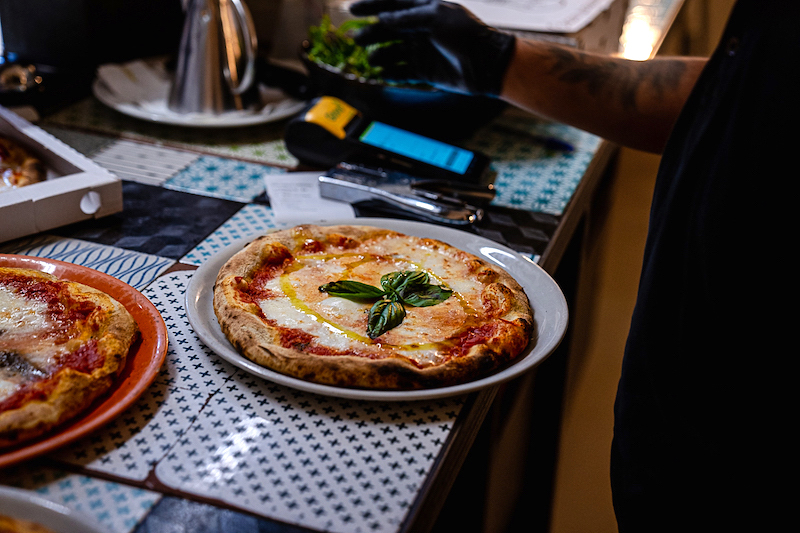
Palermo
Best Bites 2024: Palermo
Palermo is in the midst of a gastronomic evolution mirroring its own colorful heritage. Ancient Greek influences, Arab spices, Norman opulence, and Spanish traditions have long made Sicily’s largest city a chaotic mix of cultures. In recent years, this blend has been elevated by a new wave of chefs and restaurateurs who reinterpret tradition while staying true to the essence of the island. While classic trattorias and osterias that have served generations remain bastions of tradition, a younger generation of innovators is emerging, making 2024 a year of fun eating in Palermo.
Read more
Palermo
La Casa del Brodo dal Dottore: Doctor’s Orders
Along Via Vittorio Emanuele, one of the two thoroughfares that, together with Via Maqueda, bisects Palermo's old center to form its four historic districts, a small sign for a trattoria stands out on the corner of a building. La Casa del Brodo dal Dottore has been open here since 1890, making it the oldest eatery in Palermo and one of the longest-lived in southern Italy. La Casa del Brodo Dal Dottore translates literally to “The House of Broth From the Doctor,” because the specialty of the house is precisely meat broth and related boiled meat. For the first hundred years of operation, the establishment served nothing but broth: in the kitchen of the modest two-room eatery, cooks stirred broth in large pots atop cast-iron wood burning stoves. Customers would sit at a small table where they were served broth, boiled meat, tortellini or pasta in broth.
Read more


Daily Dispatches from the Frontlines of Palermo
Get Your Free Palermo Pocket Guide
Introducing our pocket-sized Palermo guide — perfect for your next culinary adventure. Yours free when you sign up for our newsletter.
Get Your Free Palermo Pocket Guide
Introducing our pocket-sized Palermo guide — perfect for your next culinary adventure. Yours free when you sign up for our newsletter.
Immersive Multi-Day Journeys In and Around the World’s Culinary Capitals
View all trips
Your trips, powered by our picks
Curated Palermo Travel Boards


Visual Dispatches from the Frontlines of Local Eating
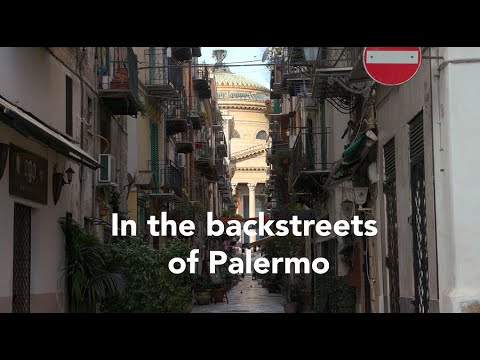
Discover the Culinary Backstreets of Palermo
Culinary Backstreets® Envoys, Always Searching for the Next Hidden Gem

Enrica
Palermo Tour Leader

Maria Luisa
Palermo Tour Leader

Francesca
Palermo Tour Leader

Paola
Palermo Tour Leader

Alessandra
Palermo Tour Leader

Larisa
Palermo Tour Leader

Elena
Palermo Tour Leader

Francesco
Palermo Correspondent and Photographer

Ségolène
Palermo Correspondent
Your Questions, Answered
In Palermo, restaurants are one of the best attractions. From the historic center to the suburbs, all restaurants compete with each other in terms of food quality and deliciousness. While the list is long, right now we love Buatta for typical Sicilian cuisine and Osteria Mercede for the best seafood.
Palermo is the capital of Sicily, the largest island in the Mediterranean, separated from the Italian peninsula by the Strait of Messina. On the northwest of the island, its wide gulf faces the Tyrrhenian Sea. It is Sicily’s most-populated city, with around one million people. The name Palermo comes from Greek and means “all port.” This port city has had a host of different conquerors who have contributed to its many-layered heritage overtime – making Palermo a rich cultural capital in a country already steeped in history.
Direct flights between the United States and Palermo Airport (PMO) are infrequent. Usually, a stopover at major Italian airports such as Rome Fiumicino or Milan Malpensa – or main European airports – is required before connecting to Palermo. It may be possible to find direct flights from JFK to Palermo.
Three-quarters of Palermo is surrounded by mountains, and its gulf opens to the Tyrrhenian Sea. You can enjoy a beautiful seaside promenade within walking distance of the historic center. The nearest beach is about 15 minutes from the city: Mondello, one of the most famous in Sicily, with kilometers of fine white sand. The beach can be reached by car, cab or bus (No. 806) that leaves the center every half hour.
Palermo is relatively cheap compared to many major cities worldwide, especially in Europe or the US. You can have an Italian breakfast for one person from 3 to 5 euros (cappuccino and pastry). Restaurants can be cheap or expensive according to the area but, usually, it is possible to buy a main course meal for 15-20 euros (drink and service included). Street food is very cheap at the market and it is possible to buy a traditional bite for just 2 euros. The average price for a coffee is 1-1.50, and a draft beer is about 4 euros.
Although it is the capital of Sicily, Palermo is relatively small compared to other Italian cities such as Rome and Milan. The city center remains the best place to stay in Palermo while on vacation. From the old town to the more bourgeois districts, there are excellent hotels and B&Bs from which you can walk to all the main sites. We most recommend the area around the Politeama Theater and Massimo Theater.
The best time to discover Palermo is spring and fall because of the mild temperatures, even if it is possible to visit Palermo year-round. Some places will be closed in January and February as it is considered low season, but the main monuments are always open to the public.
Compared to other cities, Palermo is very safe. The Palermitani are friendly and welcoming people. Violent crime in the city is rare, but petty crimes such as pickpocketing can be a nuisance in the market areas. People walk around late at night just as they do during the day, though it’s better to avoid isolated streets or alleys.
The climate in Palermo is Mediterranean, with very mild winters and warm, sunny summers. The Sirocco, a wind from Africa, is capable of raising the temperature by several degrees, sometimes pushing the thermometer past 65 F in winter and 100 F in summer.
Schengen: 90 days within 180. ETIAS from late 2026. No vaccination or testing.
Palermo is soaked in history, art, architecture, culture and good food. The attractions are many, and can please people of all ages, starting fro the UNESCO monuments of the Arab-Norman Itinerary. A stroll in the old town will be unforgettable. Take in the exquisite marble statues of the Fountain of Shame and walk along the seafront at the Cala, the former harbor of Palermo, sipping your Sicilian wine for an aperitivo and admiring the view of Mount Pellegrino, one of the most iconic places in Palermo. Adventurous ones can get lost in the narrow alleys surrounding the historic markets of Palermo, which are for sure not to be missed.
Palermo is world famous for street food. Everywhere on the streets and in the markets you can buy arancine or panelle and crocché, spending no more than 2 euros. There is no shortage of beautiful restaurants where you can discover other traditional dishes that make Palermo’s cuisine unique. Whether in the more traditional family-run restaurants, to the more-chic restaurants with a sea view, it will be possible to enjoy an eggplant Caponata or a pasta dish with sardines. Not to be forgotten are the cannolo or cassata, which will add an addictively sweet touch to your holidays.
Sicilians love children, and Palermo is a diverting city with much to do and eat for children of any age. The city’s cobblestone streets and crowds can make walking with a stroller difficult, but there are many parks and gardens, as well as children’s activities in the city’s major museums.
Arancina (rice ball, feminine "arancina" in Palermo, "arancino" in Catania, the war is real), pane con la milza (spleen sandwich), sfincione (Palermo's tomato-and-anchovy focaccia), panelle (chickpea fritters), crocché, and a granita di gelsi or almond for dessert.
Pasta con le sarde, sarde a beccafico, caponata, involtini di pesce spada, cannoli filled to order (never pre-filled), and cassata siciliana. Drink a Marsala, a Nero d'Avola, or an Etna Rosso.
Yes for tourists. The markets and central neighborhoods are safe and lively, standard Southern-Italian city awareness (pockets, bags on the shoulder side away from traffic). The Vucciria market at night is famously atmospheric.
Culinary Backstreets runs two tours in Palermo. The Old Town and the Sea: Waterfront Palermo, By Night explores the Kalsa and Vucciria alleys at their evening peak, seafood stands, wine bars, and street-food classics under the lights. Savoring Palermo: In The Markets and Beyond is the daytime market walk through Ballarò and Capo with cooking stops in between, tracing Palermo's Arab, Norman, and Sicilian layers.
Three days. One for the Ballarò and Capo markets and their sfincione and arancina street-food circuit, one for a proper Sicilian trattoria dinner and Kalsa nightlife, one for a day trip to Monreale, Cefalù, or the Trapani salt pans and fish auction.
All three, with the same intensity warning as Naples. Solo travelers do brilliantly, Palermo's street-food culture is entirely counter- and stand-based. Families are welcome, though the markets are hectic and hilly. Groups of four to eight are perfect for a Kalsa seafood trattoria or a Sunday-lunch pasta feast.