We can't find the internet
Attempting to reconnect
Something went wrong!
Hang in there while we get back on track

Tbilisi's culinary record
Tbilisi is a melting pot of a little over one million people. It’s a collision of modern and ancient, neither Europe nor Asia – singularly “Tbilisi” where tradition is the overriding theme. Walk down a given street and you will smell the seductive aroma of fresh bread wafting out of old cellar bakeries, baked in cylindrical ovens just like it always has. Listen to the refrain of “matzoni, matzoni,” being sung by women lugging bags packed with jars of the fresh sour yogurt at eight in the morning in every neighborhood.
Get the Full Story →Tour Tbilisi with Culinary Backstreets®
View all food tours
discover the city, street by street, bite by bite

Tbilisi
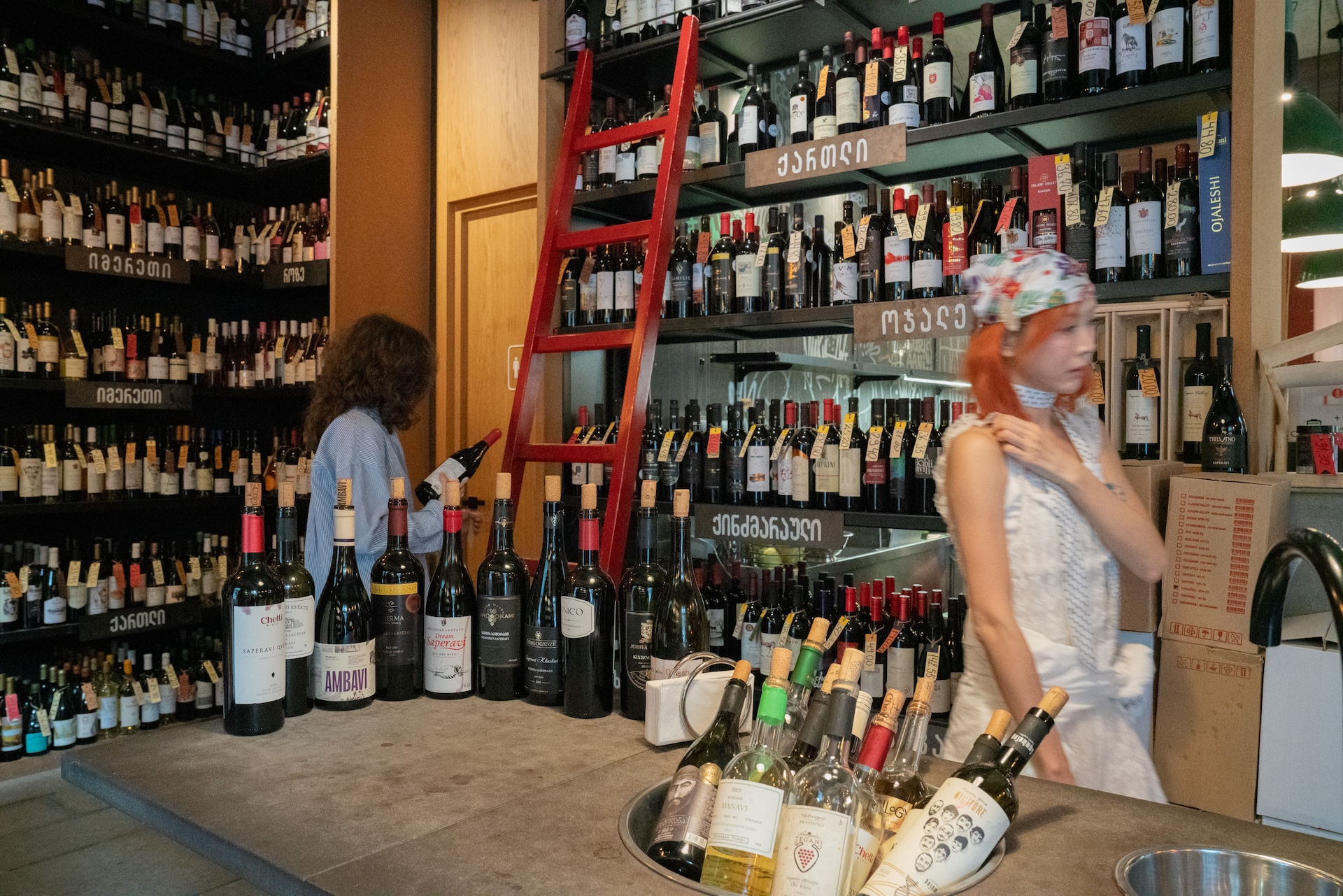
Tbilisi’s Best Wine Bars
Georgia’s astounding winemaking tradition traces back eight millennia, and is not to be missed. From the country’s different varieties, terroirs, and winemaking methods, there’s a lot to learn – and taste – when it comes to Georgian wine. As a starting point (or simply for those who don’t have time to venture out of the city), Tbilisi’s wine bars are a great place to have a glass or two and dig into Georgian viticulture. Wine bars are a relatively new trend in Georgia and about the greatest thing to happen since the invention of the kvevri, the characteristic ceramic vessels for fermenting and storing traditional Georgian wine.
Read more
Tbilisi
Kutkhe: Khinkali Corner Shop
No neighborhood is complete without that friendly corner shop that often provides the perfect excuse to pop out of the house for a bit. And when that corner shop serves up the most delectable juicy khinkali and fresh drafts served up in freezer-chilled pint mugs, there’s a dangerous temptation to linger and indulge. Kutkhe literally means “the corner” in Georgian, a no-frills basement restaurant at the corner of two frequented streets in Tbilisi’s left bank district of Marjanishvili. Located just two streets down from Fabrika – the multifunctional art and social space that helped gentrify the former overlooked and disheveled neighborhood – we couldn’t help but pop in while out on some errands on a sweltering day, easily lured by the simple chalkboard outside that promised khinkali, beers, kebabs and fries served up in air-conditioned comfort.
Read more
Tbilisi
Armazis Kheoba: Down by the River
Editor’s note: It’s Beat the Heat Week at Culinary Backstreets, and in this week’s stories, we’re sharing some of our favorite spots to visit when the summer temperatures soar. Summer in Tbilisi means sweet and sour cherries, plums, apricots, peaches, fresh figs, watermelons and, most importantly, tomatoes that taste the way God intended them to. It’s a season bursting with flavors – but there’s a hitch. Tbilisi summers are oppressively hot and humid, the thick, gritty city air leaves a mucky film on the roof of your mouth, stifling your appetite and keeping you out of your favorite local eateries. Everyone evacuates the capital in the summer, and if we can’t manage to get out of town for weeks on end, we can at least drive 15 minutes to spend an afternoon at Armazis Kheoba for some lungfuls of fresh air and beef liver mtsvadi.
Read more
Tbilisi
Dukani Racha: Tbilisi’s Oldest Greasy Spoon
We returned to Tbilisi in 2002 with the intention of staying one year. On that first day back, our friends took us to a chummy brick-walled cellar in Sololaki. There was enough sunlight coming down through the door to illume low pine tables and seating for fifty people max. In a refrigerated counter, menu items were displayed: beef tongue, tomato and cucumber salad, assorted cheeses, badrijani (sliced fried eggplant stuffed with a garlicky walnut paste), all the standard stuff. It was a Georgian greasy spoon, for sure, with a kitchen that would make a health inspector shudder, but the khinkali were really good, and the house wine was as decent as it comes. The name of the place was Dukani Racha. Little did we know people had been coming here for decades.
Read more
Tbilisi
Duqani Kasumlo: Blue-Collar Kebabs
Mtkvari, the local name for the Kura River, divides Tbilisi. Until the launch of Fabrika – a disused Soviet-era garment factory turned into a trendy social-space-cum-hostel in 2016 – few gentrified souls from the city’s fancier shore crossed over to the left bank. Fewer still stepped out further than the central Marjanishvili neighborhood, making it past Dezerter Bazaar – the throbbing gastronomic heart from where most of the city’s fresh produce and meats originate. This is also where Leonid Chkhikvishvili buys fresh cuts of meat each morning for his restaurant Duqani Kasumlo, located even further north on the left bank in Didube. Here is a neighborhood where few travelers tread, except perhaps to quickly pass through to catch cheap intercity mashrutkas (mini-buses). But despite its overlooked location, Duqani Kasumlo has acquired semi-cult status for its kebabs in an area better known for its cluster of home improvement stores and the labyrinthine Eliava market, home to hawkers of used car parts and construction materials.
Read more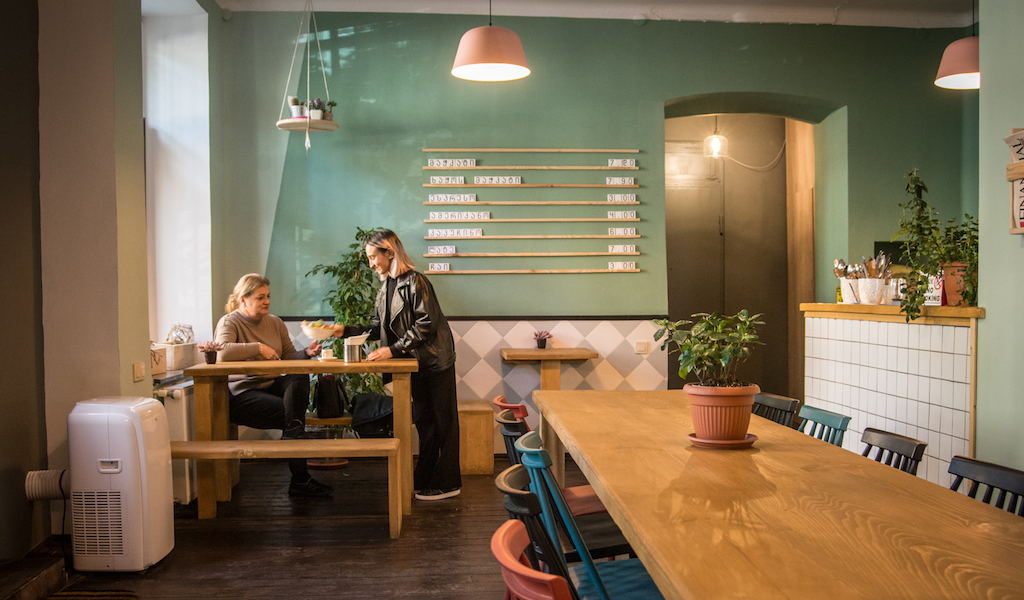
Tbilisi
Kikliko: For Whom The Rooster Crows
The Georgian culinary experience is all about the dinner, stereotypically a glutton’s nirvana of singularly delicious foods stacked plate by plate to the ceiling alongside beer pitchers full of wine. This might explain why, after a night of belt-popping gourmandizing, there is very little in the way of a breakfast culture in Tbilisi. Another explanation might be that Tbiliseli are not morning people. Most cafes open around 11 a.m., which is about the time our neighborhood baker is slapping his first batch of bread in the tone. Nevertheless, people do break the fast at home, often with leftover bread and butter or a chunk of cheese, or maybe day-old khachapuri.
Read more
Tbilisi
Salobie Bia: Simple Pleasures
This story starts with a hamburger, a juicy, perfectly grilled patty between a pair of fresh, no-frill homemade buns and the standard trimmings. As burgers become part of the culinary landscape in Tbilisi, we find that many cooks have a tendency to get too slick with a dish that loathes pretension. But this place, Burger House, nailed the balance between originality and straightforwardness. While sopping the drippings up with finger-thick fries we saw a hamburger story in the making and filed the idea away in our bucket list of food tales. A year or so later, walking down Machebeli Street in Sololaki, we saw a little basement joint named Salobie Bia with a Gault & Millau (a French restaurant guide) sign above the door and decided to investigate further. Several lip-smacking meals later, we learned that the chef and co-owner of this place is the same guy who was responsible for those impressive burgers.
Read more
Tbilisi
Alubali: Comfortably Stuffed
Going to dinner at a Georgian restaurant typically means having to fast all day. The table will bulge with must-orders: tomato and cucumber salad, badrijani (eggplant stuffed with garlic and walnuts), an assortment of cheeses and wild greens, and probably pkhali (vegetable pate with walnuts) too. There will be meat, lots of meat – lamb, pork, veal and chicken that will be stewed, baked and roasted – and bread to clean the plate with. Perhaps there will be a grilled trout. And don’t forget the khachapuri, because that is just the way it is. After several hours at the table, we will make our final toasts, take one last look at the leftovers, maybe snatch a farewell nibble at a loose chive or slice of cucumber and then waddle out of the joint, with greasy grins and logy eyelids. We grunt while we plop into the taxi and groan as we struggle to climb out when we get home.
Read more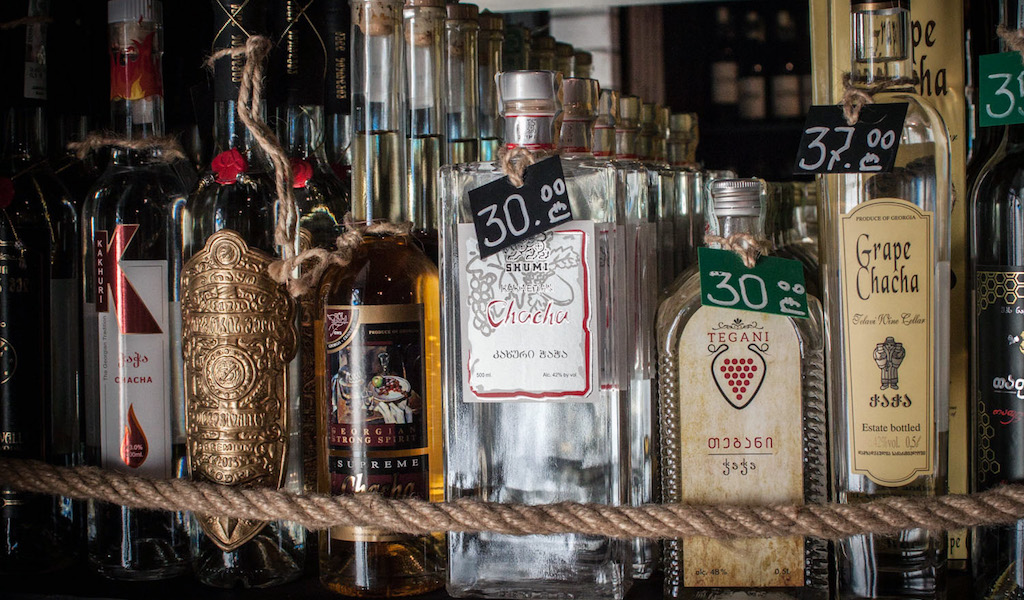
Tbilisi
Chacha Corner: Moonshine Museum
The day two airliners flew into the World Trade Center, we were in Lagodekhi, an east Georgian village on the border with Azerbaijan. We had been in a total daze trying to comprehend the scope of the tragedy from a village halfway around the world where our hosts were offering solace through the bottle. Zaur, a neighbor, showed up the morning of the twelfth with a Borjomi mineral water bottle of his chacha and made breakfast toasts to the victims of New York, to peace, to bloody revenge and so on. Needless to say, we were well under the influence by lunch time and ended up arm-in-arm at a local stolovaya (canteen) with a platter of frankfurters and bread before Zaur put us in a minibus home.
Read more
Tbilisi
Shavi Lomi: The Black Lion for Golden Guests
In the Caucasus, guests are considered gifts from God. Georgians like to call them okros stumrebi – “golden guests” – an endearment that illustrates the stature the ever-hospitable Georgians give to those they host. And whenever our own golden guests come to visit in this remote corner of the world, we never fail to entertain them in our own surrogate dining room, Shavi Lomi (the Black Lion). The cellar restaurant is an homage to Georgia’s favorite artist, Niko Pirosmani, a naive painter whose favorite subjects were animals, a singer named Margarita and feast scenes. The flea-market furniture, tablecloths and china make the Black Lion an ideal setting for anybody hankering to create a one-of-a-kind, laid-back feast scene of his own, with hearty original takes on traditional Georgian cooking.
Read more


Daily Dispatches from the Frontlines of Tbilisi





Get Your Free Tbilisi Pocket Guide
Introducing our pocket-sized Tbilisi guide — perfect for your next culinary adventure. Yours free when you sign up for our newsletter.
Get Your Free Tbilisi Pocket Guide
Introducing our pocket-sized Tbilisi guide — perfect for your next culinary adventure. Yours free when you sign up for our newsletter.
Immersive Multi-Day Journeys In and Around the World’s Culinary Capitals
View all trips
Your trips, powered by our picks
Curated Tbilisi Travel Boards


Visual Dispatches from the Frontlines of Local Eating

Tbilisi Food Tour with Culinary Backstreets
Culinary Backstreets® Envoys, Always Searching for the Next Hidden Gem

Maka
Tbilisi Tour Leader

Kristo
Tbilisi Tour Leader

Alexandre
Tbilisi Tour Leader

Tamar
Tbilisi Tour Leader

Clément
Tbilisi Correspondent

Pearly
Tbilisi Correspondent
Your Questions, Answered
Tbilisi remains a safe city with a low crime rate, although caution should always be exercised, especially when walking alone in the trails above the city or drinking with strangers. Petty theft can often be a nuisance in the city’s crowded tourist areas but apart from that, pickpocketing is extremely rare in the city’s downtown areas.
Prices in Tbilisi remain generally cheaper than the Western Europe. With rising inflation, however, the city is not as cheap as it once was and, of late, is even more expensive than bigger cities like Istanbul. One can still get a very comfortable room fitting 3-star hotel standards for $60, while decent hostel beds start at $10. On average, expect to pay about $3 for a flat white or cappuccino and about the same for beer at a bar. While it’s still possible to have a good filling meal with multiple items at a local Georgian tavern for less than $10 a head, expect to pay twice to thrice more at well-reviewed upper-scale restaurants where prices for main menu items start at $7-8.
Sololaki is one of the best areas to stay for those who like to walk and stay close to the historic old town, and within easy reach are restaurants and cafes that pockmark the neighborhood. The neighboring districts of Matatsminda and Vera have some wonderful offerings as well for boutique stays and provide a bit of more seclusion from the touristic hubs, while being closer to some of the city’s more upscale joints. The former German settlement of Marjanishvili, on the left bank, is famous for its Turkish “hazir yemek” or cafeteria-style restaurants. It is more flat and easier to navigate for those wishing to be close to the city center and yet within walking distance or a metro ride from the old town.
Tbilisi is the capital of Georgia, which borders the Black Sea with Russia to its north and Turkey to its southwest; its southern border is shared with Armenia and Azerbaijan. Since it was established in the 5th century, Tbilisi has seen waves of invasions by the Arabs, Turks, Persians, Russians and eventually, the Soviets, leaving intriguing traces of its complex and varied historical influences in its mesmerizing architecture, incredible gastronomic culture and its 8,000-year-old wine heritage.
As a popular viral tourism campaign touts, “Spend 4 seasons in Georgia.” The country offers plenty to visitors across the seasons, but if seeking to linger in Tbilisi, late-May to mid-June and the early autumn months from late-August till October are perhaps the two best windows to explore the city before and after the peak tourist summer season of June and July.
Apart from a few of the city’s main avenues – Rustaveli, Chacchavadze, Aghmashenebei – strollers can be tricky. But helpful locals abound to help with the unavoidable pedestrian underpasses or broken sidewalks that abound even in these downtown hubs. Child carriers are essential if you want to walk unhindered with baby. There are many parks like 9 April, Dedaena, Rike and plenty of smaller neighborhood green spaces for kids to play and parents to catch their breath. Georgians love children and especially babies, and are quick to accommodate any special needs they or their parents might have.
Tbilisi has a continental climate marked by cold winters where temperatures hover only a few degrees above freezing and hot summers when temperatures can occasionally cross 90 F. Spring sees milder temperatures, but with plenty of gray rainy days. Autumn is perhaps the best season for those seeking sunny warm days and slightly chilly nights.
Tbilisi is full of trendy restaurants, cafes and local bakeries called “satskhobi” that sell the ubiquitous cheesy breads called kachapuri and lobiani (bread with mashed bean stuffing), local hot dogs that’s essentially a sausage baked into phyllo dough, and tons of breads and pies with different stuffing ranging from potato to tarragon, mushroom and meat. These are the city’s cheapest food joints and some have become institutions. At sit-down restaurants, try classic staples like mtsvadi, khinkali, pkhali. The many delicious stews of Georgian cuisine – Megrelian kharcho, chakhokhbili, ostri, chakapuli – can be had either in cheap taverns or in one of the many upscale Georgian fusion restaurants we’ve reviewed over the years.
With its layered history, incredible dining options and wine bars serving up some the world’s best natural wines, the best mantra to explore and soak in Tbilisi is “walk, eat, drink.”
Plot your walking routes around the city’s cobbled old town making sure to include the dome roofed sulphur baths of Abanotubani – which literally translates to the “bath district” – and whose geothermal waters gave Tbilisi its name (“Tbili” means warm in Georgian). Climb the steep paths up to the Narikala fortress and take in the statuesque Mother of Georgia monument overlooking the city. From there, skip your way down countless stairs, making sure to stop by the Betlemi Church courtyard for a final bird’s eye view of the city skyline before meandering slowly through the streets of Sololaki, admiring the crumbling yet majestic facades of the city’s historic neo-baroque buildings. When possible, make sure to step through covered archways of these magnificent buildings to admire the ornate wooden balconies overlooking hidden courtyards that locals call “ezo” or “Italian yards,” primarily for their legacy of neighborhood gossips, romance, rivalries and intrigues that have made it into countless songs and screen plots.
After a re-energizing meal at one of the many restaurants we’ve carefully curated, plan a trip to one of the state museums and art galleries on the city’s main Rustaveli Avenue for a sense of Georgia’s fascinating and tumultuous history, and its influence on its arts and crafts through the ages. Browse through the pavement market on Dry Bridge for mid-century Soviet memorabilia and cross over the Mtkvari River to explore the former German settlement of Marjanishvili while peeking into the vibrant hipster-packed social spaces of Fabrika and the aptly named Leftbank, where drum and bass beats start throbbing after sunset. Bacchanalians especially shouldn’t forget to drop by one of the natural wine bars we’ve listed, to get acquainted with the best wines of Georgia and seek addresses of the coolest winemakers to visit across the country.
Apart from a handful of Eastern European cities, most international flights to Tbilisi will require a stopover at one of the regional transit hubs either in Istanbul or Dubai/Sharjah.
Tbilisi is an inland city, about 320km away from the nearest Black Sea beach. But if you’re craving some beach time, check out the large reservoir called Tbilisi Sea in the eastern suburbs of town. Here, a mini Riviera vibe pops up as soon as the sun gets baking. Lounge chairs, bikinis and hairy bellies abound in this suburban summer escape.
Our “Old Town and Beyond: A Tbilisi Silk Road Feast” tour takes you through Tbilisi’s multicultural and layered history. We explore the delicious roots of a cuisine that developed over centuries of Georgia being a juncture on the Silk Road. From stops at old Azeri tea houses, visits to cellars run by Orthodox Christian monks, a tasting spree of Georgian condiments and spices at specialty shops to a belt-popping Georgian supra in a traditional ezo with plenty of traditional natural clay aged wines, this walk provides a thorough taste of the epicurean and bacchanalian delights the country has to offer. Georgian cuisine can be tough on the gluten intolerant and vegans, but kinder on vegetarians. If you have special needs, consider arranging a private tour with us.
Culinary Backstreets runs one food tour in Tbilisi, Old Town and Beyond: A Tbilisi Silk Road Feast. It's a full-day walk through the Old Town, Marjanishvili, and the Dezerter Bazaar, covering khinkali houses, sulguni-and-shoti bakeries, wine cellars, and family-run supra restaurants, led by a resident Georgian food writer.
Georgia is the world's oldest wine region (8,000 years), fermenting in clay qvevri buried underground. Try amber (skin-contact) whites made from Rkatsiteli or Mtsvane, and Saperavi reds. In Tbilisi: Vinotheca, g.Vino, Wine Merchant, 8000 Vintages. In Kakheti: any family cellar with a supra table
Tbilisi has numerous and diverse dining options for lunch and dinner, from dingy greasy spoons like Dukani Racha (with finger-licking food slightly injurious to the midline), and a fine selection of places that care a bit more about nutrition and delicacy – Salobie Bia, Shavi Lomi, Khasheria, Ezo, Terracotta, Alubali are some consistent favorites we can vouch for. However, options for breakfast remain limited to a handful of cafes that open no earlier than 8am. French café chain Entrée might be worth noting for early risers for croissants, coffee and more, but for those seeking a bit of a personalized touch seek out Kikliko in Vake, which is named after the Georgian version of the classic French toast. Ukrainian owned Lui café also in Vake stays open 24/7 and usually has a shift change just in time for breakfast.
Kakheti wine region (Sighnaghi, Telavi, 2 hours), Mtskheta (30 min, historic capital), Kazbegi and the Gergeti church (3 hours by car, mountains), Uplistsikhe cave city, Borjomi for the mineral water and forests.
Yes. US passport holders can enter Georgia visa-free for stays up to 365 days. No vaccination or testing requirements. Direct flights from Europe, connect through Istanbul, Warsaw, or Frankfurt from the US.
Three days for the city, plus two for a Kakheti wine region trip. Georgian cuisine is regional, you can't understand it without a countryside meal. Plan: one day for Old Town and khinkali–khachapuri circuits, one for markets and Soviet-era-nostalgia dining, one for wine bars, two for Kakheti (Sighnaghi, Telavi, qvevri wineries).
Khinkali (soup dumplings, twist-and-slurp), khachapuri (five regional versions: Adjaruli, Imeretian, Megrelian, Guruli, Ossetian), mtsvadi (skewered pork), pkhali (vegetable pâtés), satsivi (walnut-chicken), churchkhela (walnut-and-grape-must candy), and lobio (bean stew).
All three, though the Georgian supra (feast) tradition is built for tables of six or more. Solo travelers do very well at khinkali houses and wine bars, both are welcoming to single diners. Families are warmly welcomed, Georgian hospitality is extreme by international standards. Groups of six to twelve are ideal for a proper supra with a tamada (toastmaster) and shared plates.