Latest Stories, Naples

Building Blocks: The Humble Taralli Hits New Heights Featured Image

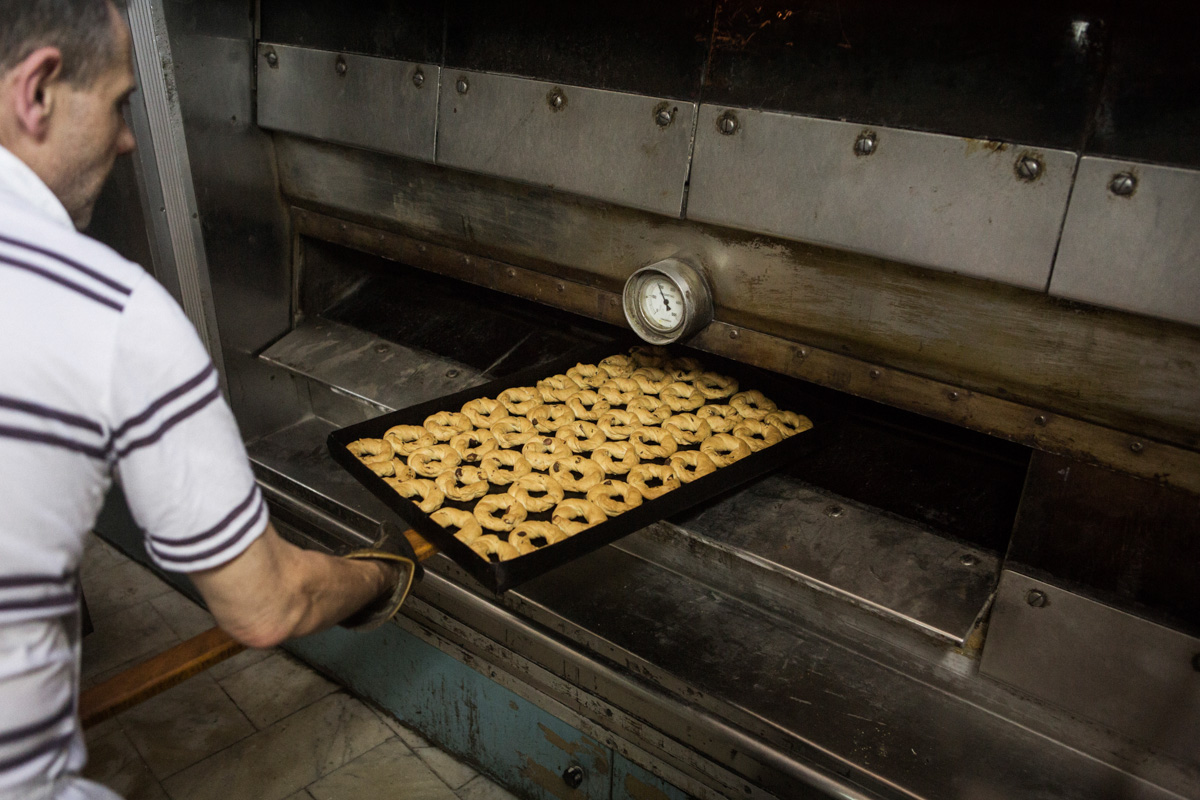
From humble 18th-century street food to a high-end ingredient in Michelin-starred kitchens, we trace the rise of taralli, Naples’s much-loved snack.

Locanda Gesù Vecchio: New Kid on the Ancient Block Featured Image

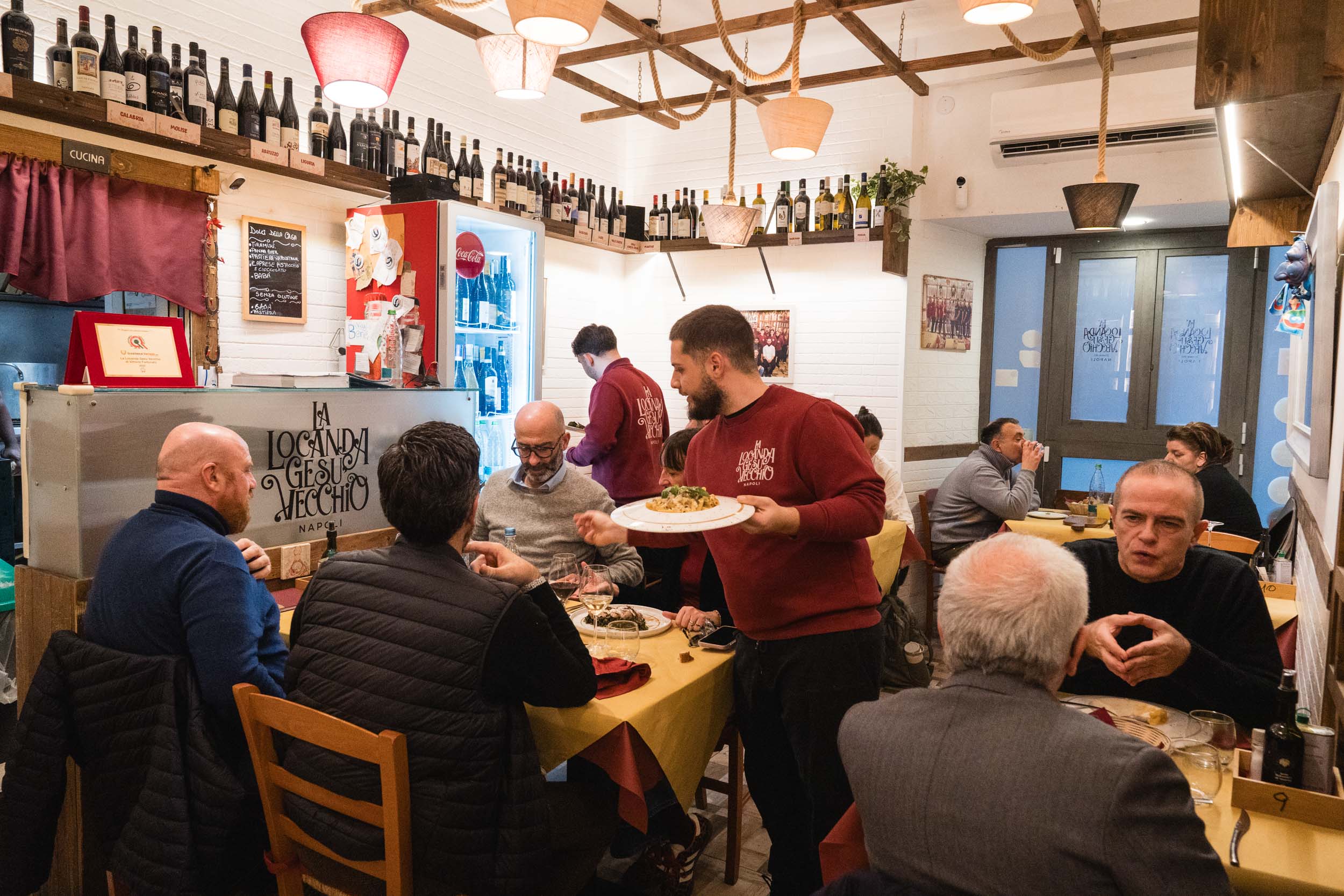
Amidst the roaring and loud Naples centro storico, the Locanda Gesù Vecchio's twin venues are a haven of authentic, well-crafted cuisine, where great classics are matched by intriguing culinary discoveries rooted in local tradition.

The Perfect Spring Day: Naples Featured Image

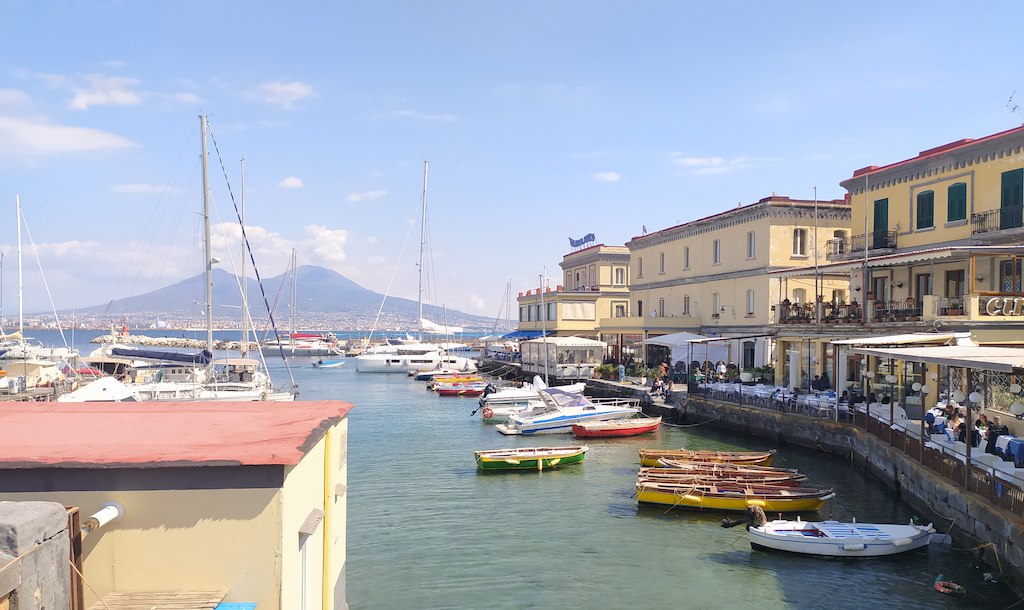
Spring in Naples is the sweetest season. As in many Italian and Mediterranean cities, the sunlight is gentle and temperatures are mild, which makes walking the ups and downs of the hilly city more enjoyable. And, should the blue of the sky be shaded by the clouds, the white-and-blue celebratory flags which anticipate the long-awaited local soccer team’s victory at the national soccer championship – defeating the Neapolitans’ famous superstition – restore the appropriate shade at every corner of the city. If it’s still too early – for most of people, at least – to take a swim in the gulf or cruise it on a kayak, this is the perfect time to explore Naples on foot, discovering its unexpected green soul.

Meet the Vendors

Being a street butcher in Naples is not for the faint of heart. “Rain, sun, wind, heat, cold… being on the street seven days a week means knowing how to face every type of weather,” says Gaetano Iavarone. He is part of the invincible team behind Macelleria Iavarone, a butcher shop in Naples’ Sant’Antonio Market run by Domenico (Mimmo) and his three sons, Gaetano, Lorenzo and Davide. The so-called “street butcher shop” has a huge display of meat outside with only a small cash register inside. Also inside is a larger photo of Gaetano the elder, Domenico’s father, who opened the butcher shop 60 years ago. Domenico took over the reins 30 years ago and now runs it with his close-knit team of sons.

Osteria della Mattonella: Neapolitan Orthodoxy Featured Image

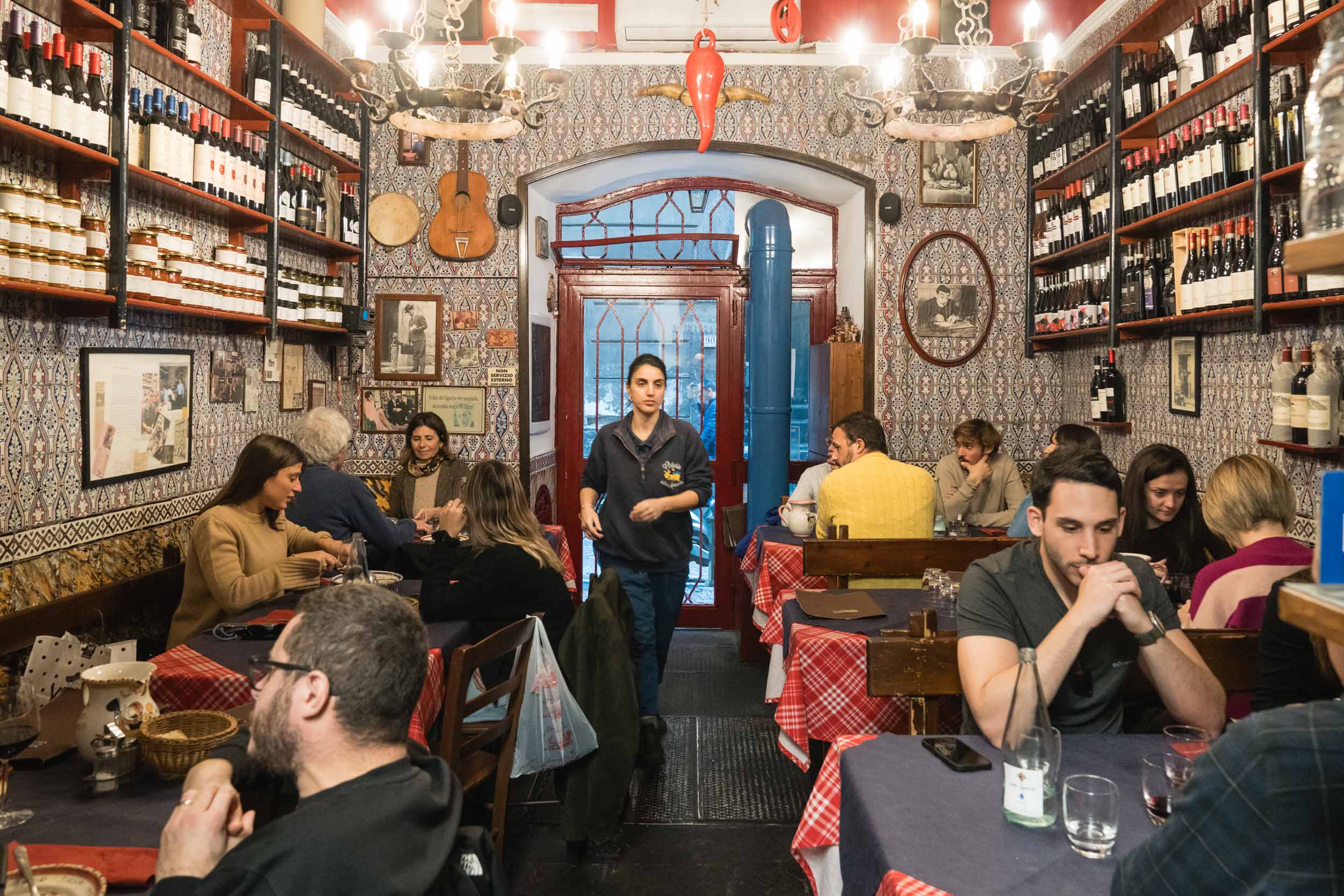
With blue 18th-century tiles, a deep cellar of wine, and a menu that refuses trends, Osteria della Mattonella remains one of Naples’ most steadfast trattorias. Run by the Marangio family since 1978, it’s a place where Neapolitan classics like Genovese sauce, pasta e patate, and baccalà are served exactly as they should be.

For Devotion

There’s a famous Italian saying that goes, “Christmas with yours, Easter with whomever you want.” In Naples, this piece of advice has practically become law, meaning that the Christmas holidays are spent with family – no ifs, ands or buts about it. So on December 25, Neapolitans can be found at home, surrounded by relatives (which is not always pure holiday joy) and enjoying together the gastronomic delights of Neapolitan Christmas fare. Of course, there is constant debate over what should go on the holiday table. There are certain dishes that have long been linked to the Christian calendar in Italy.

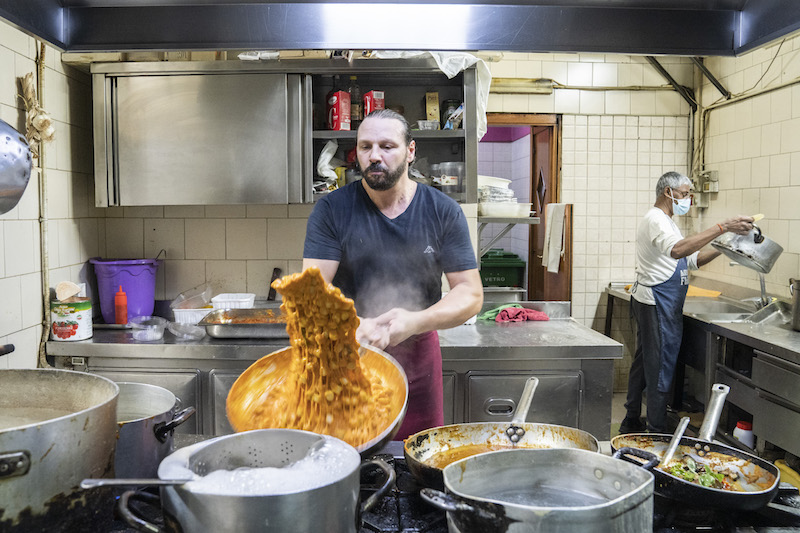
The frittata di pasta (A Neapolitan style pasta omelette), cooked by Chef Gianluca Pisacane, is seen here in the kitchen of the Seafront Pasta Bar in Naples, Italy, photo by Sara Smarrazzo and Gianni Cipriano

The acclaimed Italian director Federico Fellini once said that “life is a combination of magic and pasta.” We’d argue that magic is, in fact, a combination of pasta and eggs. Now, you’re probably thinking about carbonara, the ultra-famous Roman recipe based on eggs, bacon and cheese, whose uncertain origins are often ascribed to the interaction between locals and US soldiers during World War II. In Naples, however, this combination of ingredients – which come to together in the local favorite frittata di maccheroni – has different, and more ancient, beginnings. A must-have at picnics and informal luncheons, a favorite for summer meals at the beach and a cherished memory from school trips, the frittata is a staple of domestic Neapolitan cuisine.
ScottoJonno: Born Again

The Galleria Principe di Napoli’s beautiful arcades and art-deco ceiling made of iron and glass – built in the second half of the 19th century at the site of an ancient grain storehouse – stood silent for long time. Once a buzzing commercial and cultural hub in the heart of the city, with two of its three wings connecting the National Archaeological Museum to the Academy of Fine Arts, the Galleria was confiscated during the Fascist era and used to project propaganda films, shutting down its shops and venues. In the eighties, it was used for public offices for a time before it was left abandoned. Recently, though, the space has been brought to life, thanks to a call for bids and a handful of businesses that took on the challenge, such as a bike shop, a B&B and the lovely Lazzarelle Bistrot, among others.

A basket of fresh fruit at the entrance to The Florist Bar, photo by Gianni Cipriano and Sara Smarrazzo

There are flowers all around us. Seeds and plants are scattered here and there. Herbs and fresh fruits rest in wicker and reed baskets. Sitting amongst all this glory is Stefania Salvetti, who is telling us about Paradisiello, where she lives. Meaning “Little Paradise” in Italian, Paradisiello is where Stefania has a home with 2,000 square meters of greenery, citrus trees and even chickens. The big surprise? What sounds like a glorious village outside of Naples is actually a quarter within the city, very close to the historic center. Il Paradisiello is a small, romantic, peaceful place just a few meters from the noisy city. A site where time seems to stand still, the air somehow more rarefied.

Caffè Diaz

Naples is often celebrated as having a long-established coffee heritage whose fame is deeply grounded in a number of cherished rituals and literary tributes. But savoring a proper Neapolitan espresso at a café could prove to be a challenging experience for an unaware visitor: usually served in a scalding coffee cup, the hyper-concentrated concoction is very strong and intense, with a fiercely bitter edge, and it’s gone in just one sip. Neapolitans like their coffee "with the three Cs," meaning caldo (hot), comodo (no rush), and carico (strong, to give you a boost), and they indulge in it many times a day. One of the city’s most heartwarming traditions is caffè sospeso, the widespread habit – now also applied to pizza – of paying for one additional cup to ensure that even a person in need can be granted his daily shot.

CB on the Road: Along the Amalfi Coast’s Path of the Lemons Featured Image

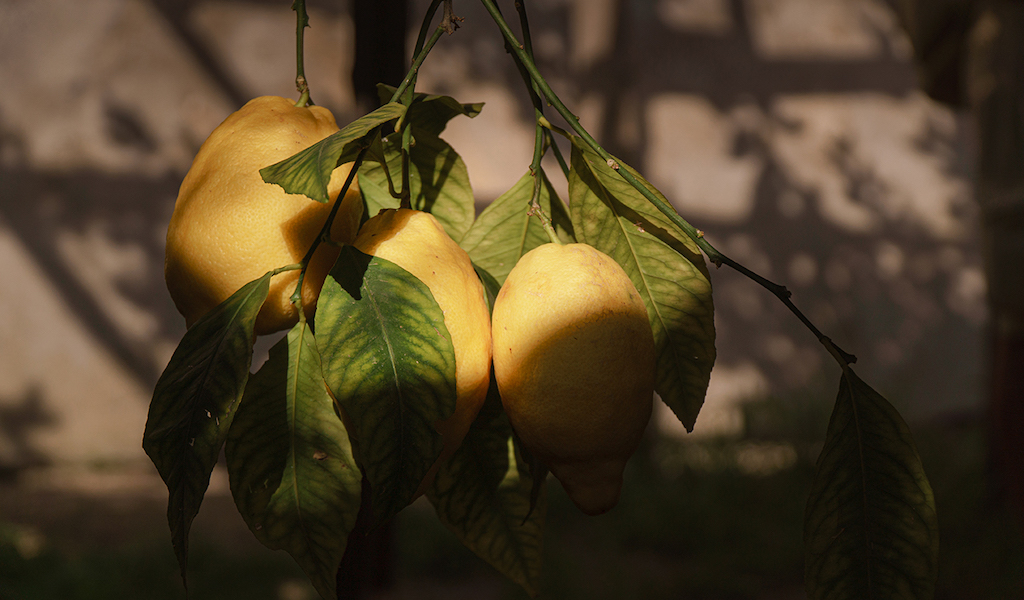
Two-and-a-half kilometers of curves and narrow alleys at 150 meters above sea level. Breathtaking views overlooking the sea. A coast dominated by the blue of the sky and dotted with arabesque domes. All around is the unmistakable perfume of the sfusato amalfitano – the Amalfi lemon.

Giardino Torre: A Slice of Pizza History Featured Image

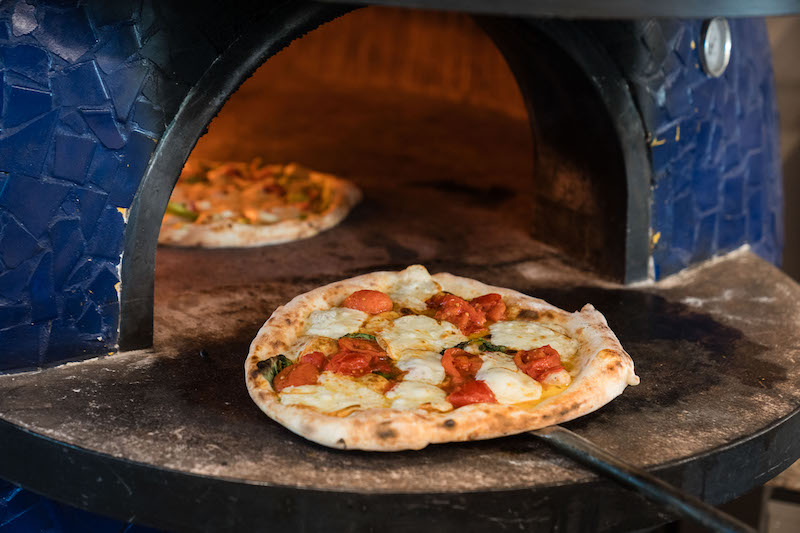
Among the many legends about pizza in Naples, the most famous and widespread – even though widely confirmed as inaccurate – is the one about the birth of the margherita pizza. Time and time again the story has been repeated, according to which this most beloved pizza was born in the summer of 1889, baked at the Capodimonte royal palace. Made by the cook and pizzaiolo Raffaele Esposito of Brandi Pizzeria, the pizza was intended as an homage to Queen Margherita di Savoia, wife of the first king of Italy (as a united nation) Umberto I, and to the country's three-colored flag.

Caffè Delizia: Bacoli Blends Featured Image

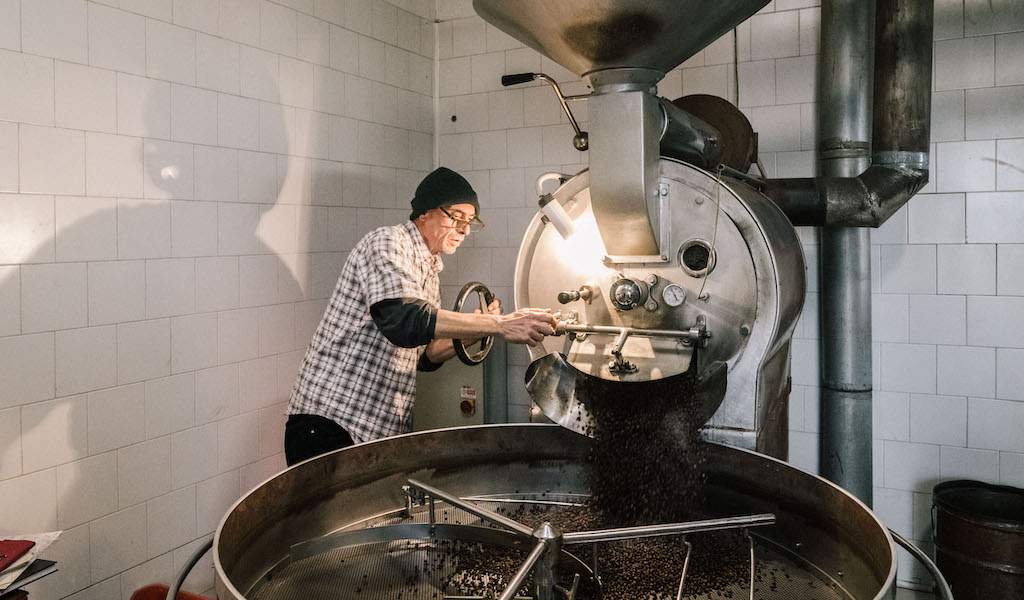
The last wood-fired coffee roaster in all of southern Italy is located, appropriately, in Bacoli. This area of Campi Flegrei, the Phlegraean fields of Naples (from the Greek word flègo, which means “burn”) is a part of the Gulf of Pozzuoli known since Roman times for its active volcanoes. It is here that Nicola Scamardella is carrying on his family’s tradition of roasting coffee with a wood-burning machine. Nicola is known in Bacoli as the son of Pasquale Scamardella, a man whose nickname was Pasquale della Torrefazione (“of the roastery”). In the 1960s, Pasquale and his wife Delia were working for a commercial coffee roaster in Naples.

Mar Limone, photo by Luciana Squadrilli

Great food, art scattered around the city – from fantastic museums and ornate subway stations to public squares and alleys – and its inhabitants' warm and joyful temperament all make Naples one of the most loved destinations in Italy. The city is busier than ever, but its also starting to feel the strain of its popularity, crowded with tourists looking for the best selfie spot and the most delicious sfogliatella or pizza a portafoglio. Our recommendation: slow down the pace, skip the interminable queues and overhyped spots, and search for quieter ones to savor a few blissful bites.

Sogni di Latte: Sweet Dreams are Made of Cheese Featured Image

Biting into a freshly-made globe of mozzarella, porcelain smoothness yields to a creamy interior and milk trickles down the cheeks. For any Neapolitan, this is true pleasure. And everyone knows the best spot for such an afternoon delight is at a cheese factory in the countryside – namely in the Caserta and Salerno provinces. There, some of the best Mozzarella di Bufala Campana DOP is shaped daily from fresh buffalo milk. For those of us stuck in the city center and craving that addictive bite of fresh mozzarella, one of Sogni di Latte’s two locations is our first stop.

logo

Terms of Service