







S M B O measurement-vertical measurement-vertical

Stories for shanghainese

Nanjing Soup Dumpling

Any Shanghai denizen who has lived in the city for longer than a few months worships at the altar of xiǎolóngbāo (小笼包). These steamed buns of goodness – tiny pork dumplings with a slurp of soup wrapped up in a wonton wrapper – provide delicious fodder for debates among Shanghai’s fiercest foodies.

Best Bites 2021

For the first time in 14 years, I have not left China for an entire calendar year – actually 620 days, but who’s counting? It’s a weird feeling, and one that makes me more than a little sad, so I’ve been trying to make up for it by eating delicious food as often as possible. Luckily, Shanghai was spared the brunt of the pandemic. The shutdown was never an official lockdown in China’s financial capital, although very few restaurants were given official permission to offer in-person in early 2020. Shanghai didn’t shut down in 2021 either, and while some restaurants went bankrupt, the pandemic pushed other great local spots into offering delivery services when they never had before.

The Big Slurp

Looking for the best Shanghai-style noodles, for the city’s most slurpable strands? From hairy crab specialists to the sesame sauce of your dreams, there’s something for everyone. Come prepared to chow down, but don’t forget there’ll be a wait at most of these joints. Reservations are not available for these mom-and-pop owned shops, and demand for these nostalgic flavors is high, especially during the breakfast and lunch rush.

Maolago

Historically, Guizhou is one of China’s most overlooked provinces. The landlocked location in central China is sandwiched between the famous spice havens of Sichuan and Chongqing to the north and Hunan to the East, and tucked behind the tourist destination of Yunnan to the west. It has the largest population of people in poverty and lowest income per person in China, and the geography of the province has made it tough to travel around; mountainous roads and lack of infrastructure don’t make for easy tourism. Its biggest claim to fame has been Kweichow Moutai (Wade-Giles Romanization of Guizhou Maotai), the famous state-owned baijiu brand served to Richard Nixon when he met Mao Zedong.

A Snacker’s Guide to Flushing

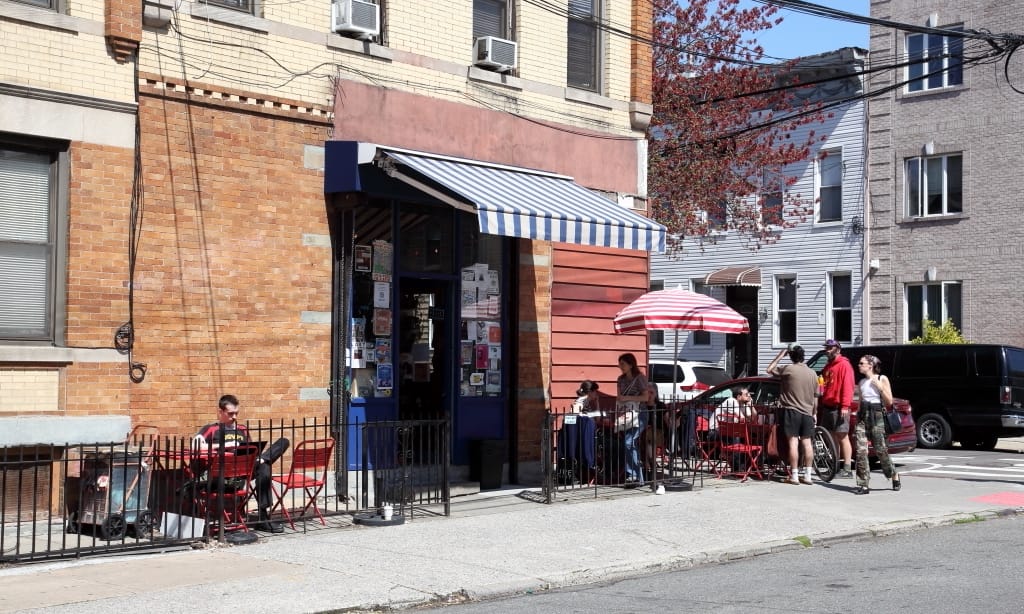
New York City has many Chinatowns; how many is a matter for dispute. While the oldest and most famous is in Manhattan, southern Brooklyn now boasts two such neighborhoods – or maybe three, depending on who's counting. Without a doubt, however, the city's largest and fastest-changing Chinatown surrounds the eastern terminus of the 7 train in Flushing, Queens. One measure of Flushing's vibrancy is the variety of spoken languages. Flushing is home to speakers of Mandarin, Shanghainese, Fujianese, Cantonese, Taiwanese and many other Chinese languages and dialects. The neighborhoods immediately to the east are densely populated with Korean speakers; in much smaller numbers, we also find speakers of other East, South and Southeast Asian languages.

Xiaoping Fandian

Non-descript is the best way to describe Xiaoping Fandian’s storefront. Its plain-Jane décor would never make you stop and take notice – the first floor looks more like a hotel check-in than a restaurant – but walk by around any meal time, and the scrum of waiting diners speaking in rapid-fire Shanghainese will turn your head. Where there are this many speakers of the local dialect, there’s bound to be delicious local food. Upstairs, you’ll discover that Xiaoping Fandian is a multi-level home with former bedrooms and an attic space that have been converted into private dining rooms with lazy Susans. A few smaller tables are scattered in the hallway and living room for good measure.

Memories of Shanghai

Xueling Zhang is “a working man, not a talking man.” So he told us, through the translation of his daughter, Elsa Zhang, before he returned his full attention to fashioning a set of crab-and-pork xiao long bao. Those faintly sweet soup dumplings, as they’re often called, are a signature item at Memories of Shanghai, his family’s recently expanded restaurant in Forest Hills. Chef Zhang, we might say on his behalf, lets his hands, and his delicious dim sum, do the talking. At greater length we sat down with Elsa – in a cozy booth, retained from the previous restaurant tenant, a diner – to learn more about her father’s long affinity for the kitchen, and especially for dim sum.

CB Book Club

We recently spoke to Betty Liu about her new cookbook, My Shanghai (Harper Design, March 2021), which spotlights the home-style Shanghainese food she grew up eating. Organized by season, this handsome volume takes readers through a year in the Shanghai culinary calendar, with flavorful, deeply personal recipes that are daily fare for Betty and her family. It also provides a thorough introduction to the ingredients at the heart of the region’s cuisine and illuminates the area’s diverse communities and their food rituals. Betty has been sharing recipes since 2015 on her award-winning blog bettysliu.com and worked as a food photographer – her talent is on display in My Shanghai, for which she did the styling and photography.

San Lin Tang Wontons

Over the past decade, it’s become increasingly difficult to find mom-and-pop-owned restaurants that serve Shanghainese classics. The local homestyle cuisine, a sub-brand of Shanghainese known as 本帮菜 (benbangcai), is often elevated and served in fine-dining environments, thanks to the city’s place as the economic capital of the country and the wealthy Shanghainese who benefit from their hometown’s prosperity. But occasionally you can still discover new hidden gems tucked away down the city’s backstreets. So when we hear about a spot we haven’t tried before, we are all ears. Like when our coworker Kelvin Ip told us about his favorite Shanghainese hole-in-the-wall just a couple blocks from the Bund.

Best Bites 2019

In Shanghai, robot restaurants (and grocery stores) were all anyone could talk about in 2019. Well, that and bubble tea shops. But we love that there are still thousands of mom-and-pop restaurants serving traditional foods that are handmade and well loved, if you know where to look. So next time, skip that trendy, US$100-a-head hotpot joint where you still have to queue for an hour after your reservation has passed, and try your local noodle joint. Of course, you’ll probably scan the QR code on your table to order (and pay), and you won’t even chat to the staff until they put your dishes in front of you – after all, it is 2019 in one of the most tech-forward cities in the world.

logo

Terms of Service