Latest Stories, Tbilisi

Slink Farm: Experimental Georgian Cooking Featured Image

At Slink Farm, Meko Tqabladze and chef Nika “Taba” Tabatadze pair garden-grown produce with a playful, thoughtful take on Georgian cooking.

Vakhtanguri’s Chebureki: Frying Up a Second Act in Avlabari Featured Image

Tucked into a quiet Avlabari courtyard, Vakhtanguri’s Chebureki serves grilled meat skewers, soup-filled dumplings, and the crisp fried pies that helped turn it into a Tbilisi institution.

Gochi

Early January is the start of Georgia’s real holiday season: the New Year (Jan. 1), followed by Orthodox Christmas (Jan. 7) and then the Old New Year (which follows the Julian calendar, falling on Jan. 14). In between those main celebrations, friends and relatives visit each other, and all of these occasions make something like a two-weeks-long feast, or supra. Tables are replete with all that the Georgian gastronomy can offer. This festive season ends the longest fasting period of the Orthodox calendar. Even though a big chunk of the population might not fast, hosts make sure to have on their table plenty of fish and meat prepared in various ways.

Gardenia Shevardnadze: An Enchanted Realm on the Edge of Tbilisi  Featured Image

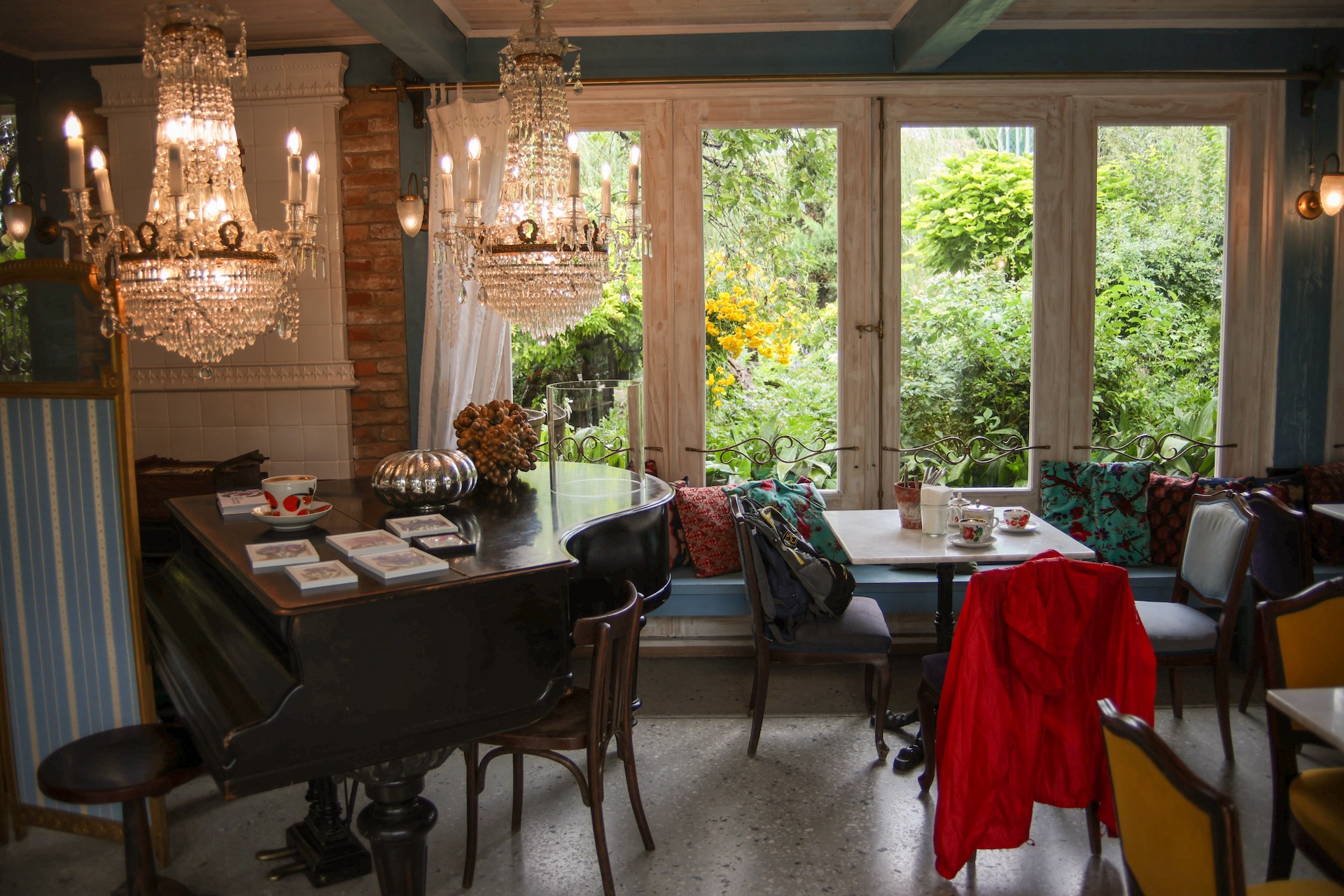
A whimsical garden café just outside Tvilisi, Gardenia Shevardnadze is the life’s work of Georgia professional gardner, Zura Shevardnadze.

Recipe

Anyone who takes more than a fleeting interest in Georgia’s traditional cuisine beyond the inescapable khachapuri and khinkali will probably agree that walnuts are the real gastronomic workhorse of Georgian cuisine. This versatile ingredient is deftly woven into a range of delightful dishes from soups and salads to rich, creamy stews, of which the Megrelian kharcho is one of our favorites. A slow-cooked dish of beef or veal simmered in creamy walnut sauce tempered with fried onions, garlic, and a generous amount of spices including coriander, a local variety of blue fenugreek (Trigonella caerulea) and marigold flowers (often called “the poor man’s saffron”), Megrelian kharcho is a heavy, hearty dish. It’s usually served with corn grits, locally called ghomi, or the cheese-saturated version called elargi – a combination that often calls for loosening the belt after indulging.

Outside of Dadi Wine Bar, photo by Paul Rimple

Georgia’s astounding winemaking tradition traces back eight millennia, and is not to be missed. From the country’s different varieties, terroirs, and winemaking methods, there’s a lot to learn – and taste – when it comes to Georgian wine. As a starting point (or simply for those who don’t have time to venture out of the city), Tbilisi’s wine bars are a great place to have a glass or two and dig into Georgian viticulture. Wine bars are a relatively new trend in Georgia and about the greatest thing to happen since the invention of the kvevri, the characteristic ceramic vessels for fermenting and storing traditional Georgian wine.

Pictograma

For a dish so ubiquitous, one would be forgiven to think there’s little to debate about Georgia’s national dumpling, the khinkali. But just as tastes vary, every Georgian has their own khinkali preferences and opinions. That’s certainly the case for chef Gela Arabuli, who believes khinkali has been gentrified and mass produced to a point where most people have forgotten the dumplings’ origins in the mountains and how they should really taste. “Real khinkali is from the high mountains. And there are no pigs in the mountains,” insists Gela, referring to the most popular and common filling of minced beef and pork in equal parts as kalakuri, or “city style,” khinkali.

Kitchen Bon, Tbilisi, photo by Luka Kupradze

The interior walls of Kitchen Bon are painted a fiery orange. The restaurant is set back, inlaid like a jewel into Kostava, one of Tbilisi’s main avenues, and when open it glows invitingly amid the concrete – easy to miss, if you’re not looking. Chi, the owner, and her sous chef Kana gracefully navigate the small square open kitchen, lined on two sides by stools and countertops, deep-frying tempura, spooning rice, folding nori, pouring beer from a tap. An ever-present Stolichnaya vodka bottle stands beside the rice cooker, beading in the heat. Chi is sarcastic, warm, quick-tempered, funny. Her regular customers address her in tones of mingled fear and admiration; she’s one of those people you reflexively want to impress.
8000 Vintages: Tbilisi’s Wine Library Featured Image

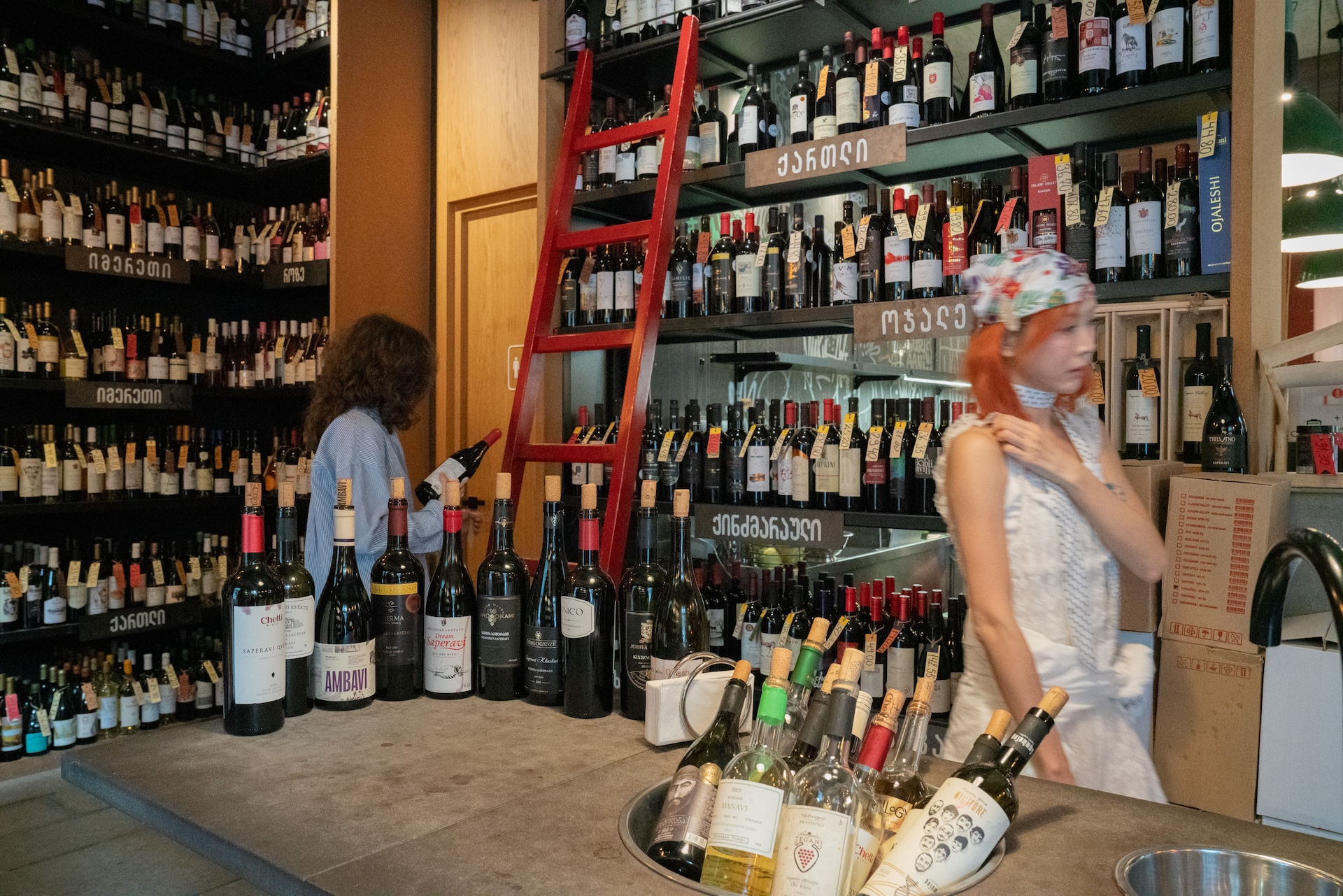
When Tbilisi wine enthusiast Irakli Chkhaidze first pitched his unconventional business idea over a decade ago – a wine store where customers could drink bottles at retail price rather than marked-up bar prices – his entrepreneurial friends dismissed it as unworkable. After all, most wine bars derived their profits from significant markups on alcoholic beverages. Moreover, at the time, many locals showed greater interest in foreign wines than local varieties, having easy access to family-made Georgian wines. Yet the former economist remained adamant. “I had no money, but I realized I had to do it myself,” says the now-42-year-old. Describing himself as “familiar with figures but hating figures,” he abandoned his managerial position at one of Georgia's largest pharmaceutical companies to pursue an MBA in Food and Wine in Bologna, Italy.

Chinese Snack

Tbilisi’s self-proclaimed first Chinese restaurant opened in 1998, with a competitor following a few years later. Both restaurants remained the only gastronomic reference for local Georgians seeking East Asian flavors for decades. The food, while decent at both establishments, seemed to model the style originally concocted by early Chinese immigrants to the US, with cornstarch and oyster sauce-heavy, sweet-and-sour sauces dominating the menu, and spice levels adapted to the sensitive western palate. The opening of Xinjian Sasadilo in 2018 marked a change, as it was one of the first local eateries in Tbilisi to serve authentic western Chinese dishes, with their signature hand pulled Uighur noodles and dry chili and star anise-infused spicy chicken dapanji.

Recipe: Nazuki, Georgia’s Forgotten Easter Bread Featured Image

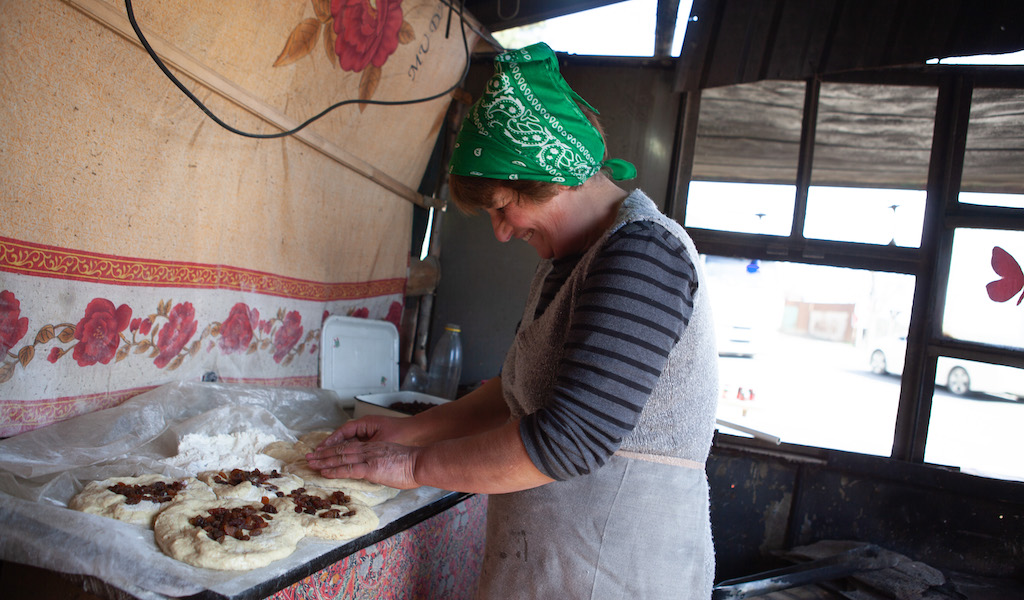
In Georgia, there are certain dishes that everyone associates with Orthodox Easter: paska, a sweet panettone-like bread and chakapuli, a lamb stew. However, there is another Georgian Easter tradition, one often overlooked: nazuki. Beautifully glazed and filled with raisins and spices, in recent years these fluffy sweet breads have become associated almost exclusively with the village of Surami in the Kartli region. In this small settlement between Tbilisi and Kutaisi in the West, huts line the side of the highway, each with a tone (a cylindrical traditional oven), a baker and a family nazuki recipe.

The Essentials

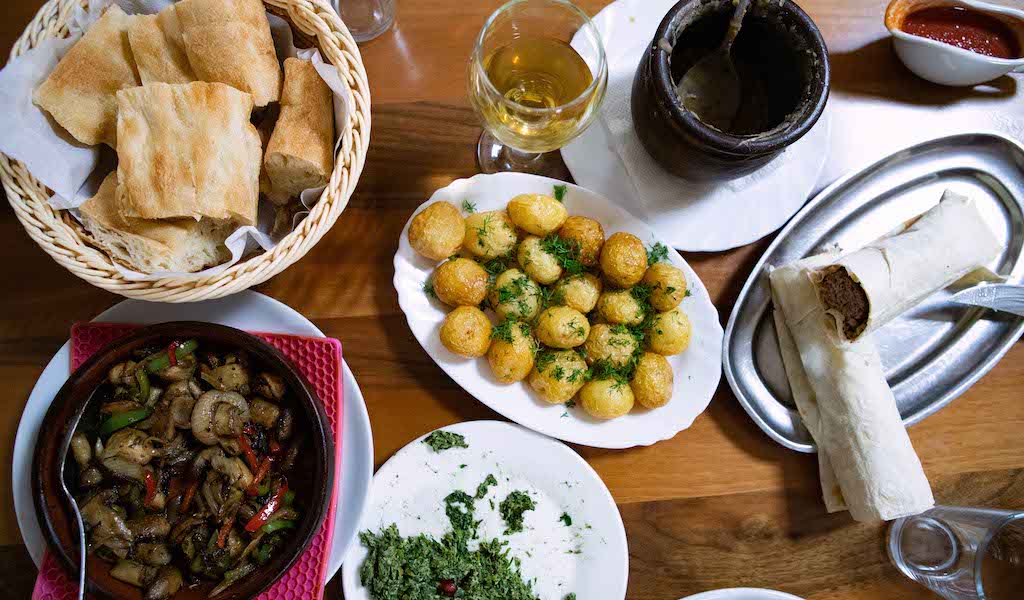
Walk down a given street in Tbilisi and you will smell the seductive aroma of fresh bread wafting out of old cellar bakeries, baked in cylindrical ovens just like it always has. Listen to the refrain of “matzoni, matzoni,” being sung by women lugging bags packed with jars of the fresh sour yogurt at eight in the morning in every neighborhood. We used to boast how Georgia’s food culture and Tbilisi’s restaurants were some of the world’s best-kept secrets, but the word is out, and we’re good with that. Georgia has a bottomless, wild culinary spirit full of rewarding surprises, and we’ve been diving into it for more than a decade here at Culinary Backstreets. For us, it doesn’t matter whether the khinkali we eat are meat-packed grenades or pesto- and mushroom-stuffed buttons. Either way, they’re Georgian. All they have to be is tasty. We’ve collected a sample of our most essential Tbilisi restaurants, so you can get your own taste of Georgia.

Praktika: The People’s Café Featured Image

From the bustling Melikishvili Avenue, we ascended a few steps to arrive at Praktika. The venue features three rooms adorned with white walls, well-worn parquet flooring, and standard-issue tables and chairs. Its resemblance to study rooms is no coincidence; Praktika is situated just a stone's throw away from Tbilisi State University, the city’s largest university, most of the customers are students, and the space is a former language school. The café’s humble appearance is not suprising. Praktika, which opened its doors in August 2022, owes its inception to a crowdfunding initiative led by the socialist movement Khma (meaning "voice" in Georgian). Its primary aim was to establish, as they put it, a “people’s café that will provide affordable and tasty food to students, workers, working students and everyone else in need.”

Ghebi: Subterranean Comfort Featured Image

Few locals, let alone tourists have reached the isolated mountain village of Ghebi in Georgia’s northern borderlands of Racha. However, many have passed through the doors of its namesake basement restaurant in the bustling left bank district of Marjanishvili in downtown Tbilisi. For more than a decade, the eatery has been steadily serving up comfort food from the region including lobio, the red bean stew with or without the aged Racha salted ham called lori, bean-stuffed pies called lobiani, and skhmeruli, the garlic saturated pan-roasted chicken dish. Located on Aghmashenebeli Avenue, which is more well known for its profusion of Turkish lokantasi diners with ready-made buffet spreads and Arab restaurants that attract many of the city’s foreign residents and visitors from South Asia and the Middle East, Ghebi remains a staunch local haunt frequented by tables of Georgian men toasting their chachas late into the evening over tables loaded with food.

Best Bites 2024

There’s no denying 2024 has been a year of political discontent that has permeated into all aspects of life in Tbilisi – including the culinary. Massive protests against the incumbent Georgian Dream party started in spring when it pushed forward a controversial law that many saw as emulating a Russian one and pushing the country towards Moscow-style autocracy. Even bigger protests broke out more recently when the ruling party announced they are suspending Georgia’s efforts to join the European Union, further fueling fears about the country’s orientation. For the CB crew, the political turbulence made this year one to revisit small backstreet joints that have withstood the test of time, such as Old Time Pub, the watering hole serving sausages and beer from Soviet times, and the pelmeni stronghold of Dumplings N1 that’s been serving some of the city’s best Slavic dumplings for over a decade.

logo

Terms of Service