We can't find the internet
Attempting to reconnect
Something went wrong!
Hang in there while we get back on track


Seoul's culinary record
The sheer variety of dining opportunities in Seoul make it a paradise for curious eaters. Consider Michelin-starred speakeasy-type ten-seaters to rowdy tent bars serving fried eels, market stalls serving world-famous savory pancakes to the latest fad in donuts, throw in barbecue, dumpling joints, an abundance of fresh oysters, and knock-your-socks-off fried chicken and you’re barely scratching the surface of this venerable chow town.
Get the Full Story →Tour Seoul with Culinary Backstreets®
View all food tours
discover the city, street by street, bite by bite
Seoul
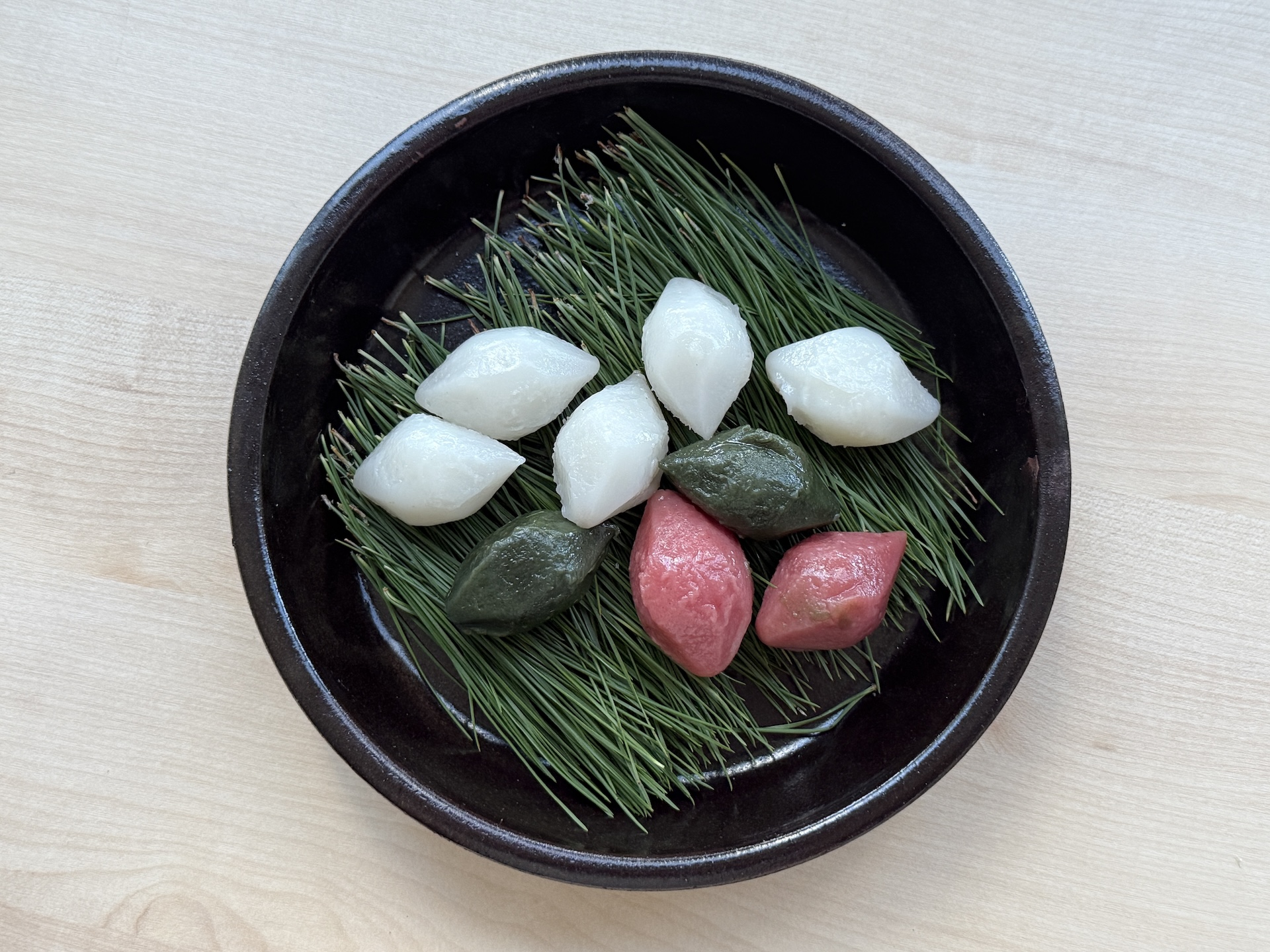
Songpyeon: The Rice Cake of Autumn
Around Chuseok, Korean rice cake shops fill with colorful songpyeon, small filled rice cakes traditionally steamed over pine needles. Their ingredients, shapes and fillings vary, but their place at the center of Korea’s autumn holiday remains constant.
Read more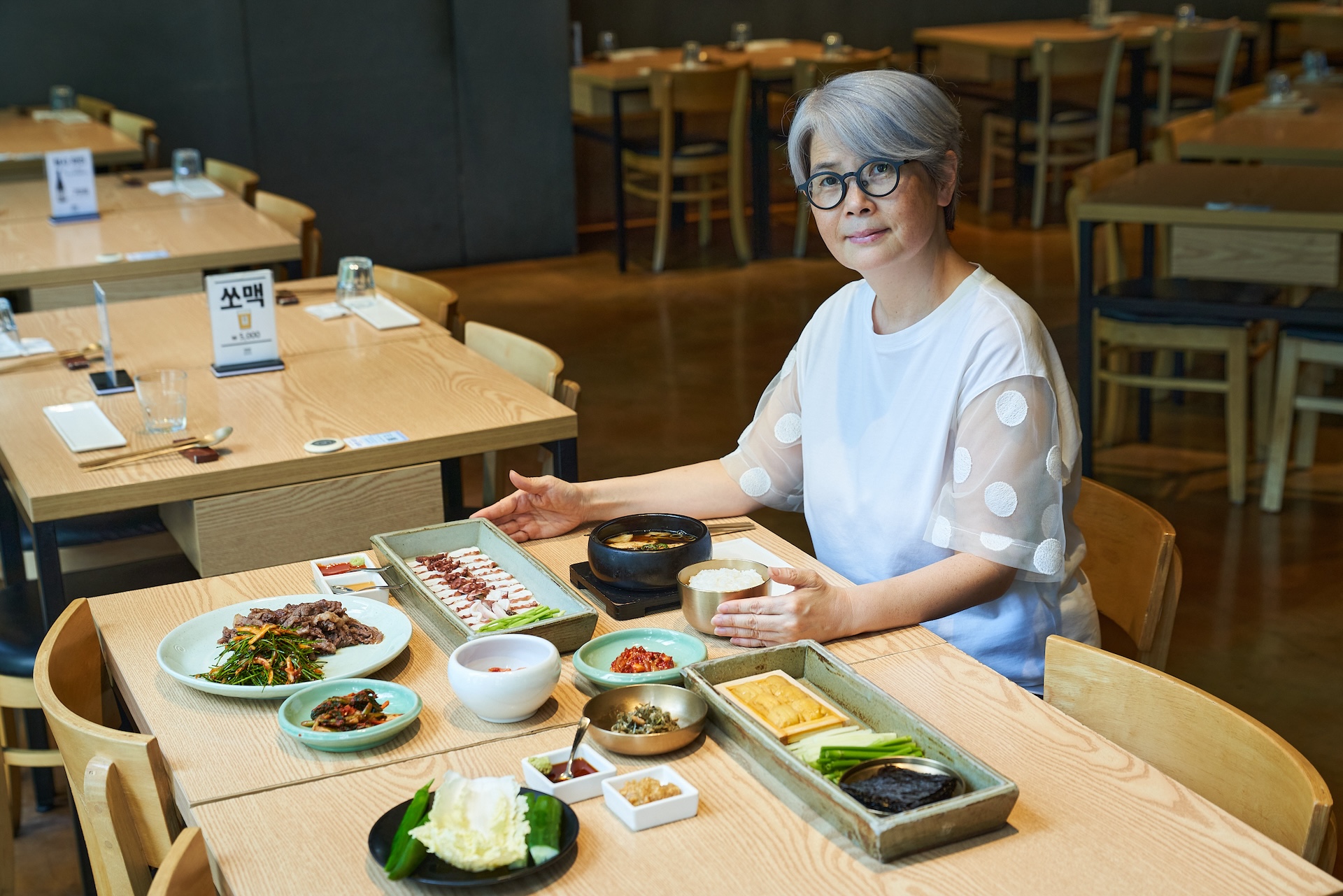
Seoul
Lakheeoak: Ssam, Seafood, and Serious Drinking in Seoul
At Lakheeoak in Gongdeok, seasonal seafood, ssam, banchan, and Korean comfort dishes arrive with enough sauces and accompaniments to make every bite a little different. Wine, whisky, baijiu, or makgeolli simply add another variable to the table.
Read moreSeoul
Bonghwa Mukjip: A Family Tradition of Handmade Buckwheat
This family-run restaurant near Jeongneung has been making buckwheat muk by hand since 1982, serving just 50 bowls a day alongside seasonal noodles and cabbage jeon.
Read more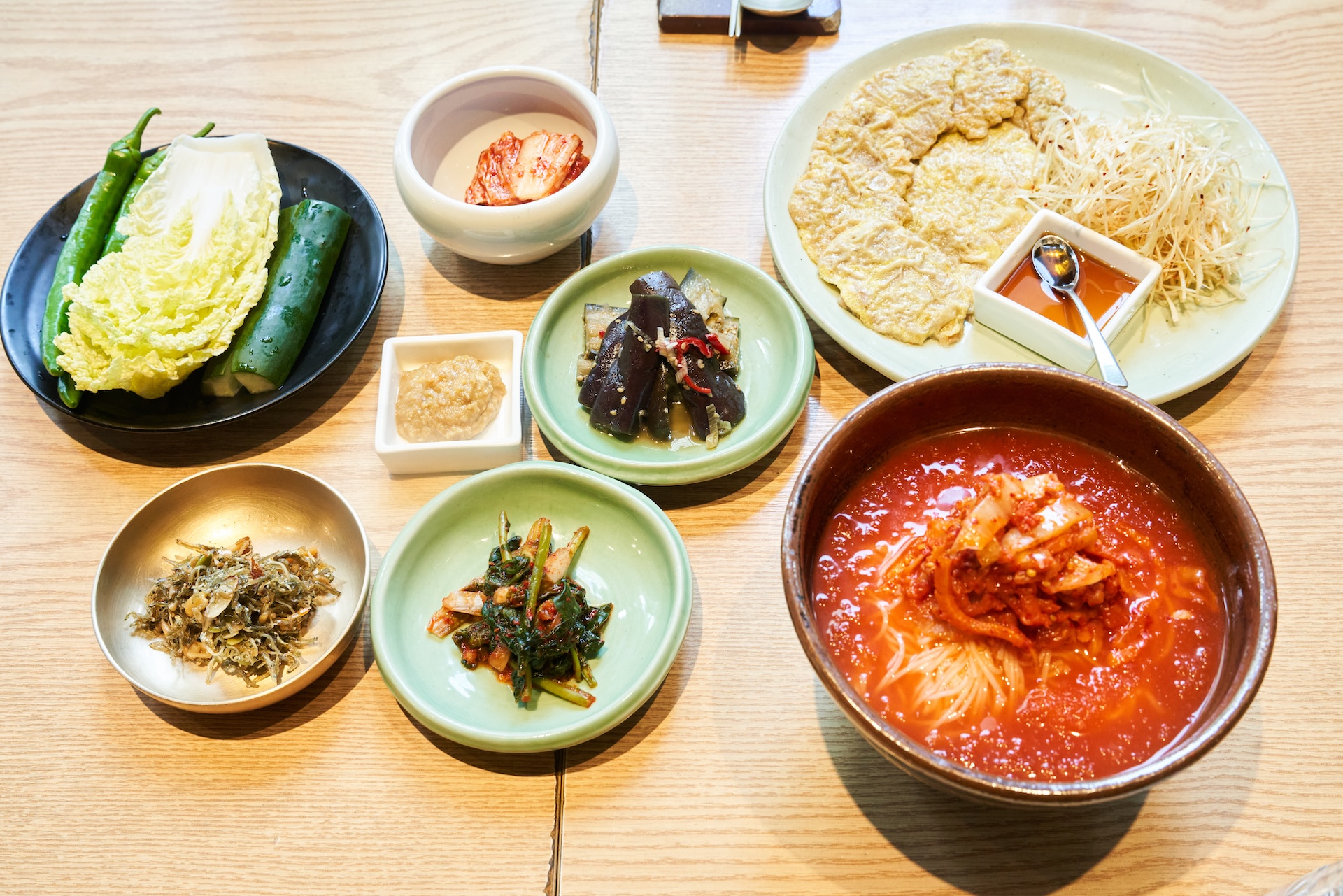
Seoul
The Essentials: Seoul’s Cold Summer Soups
When Seoul swelters, these six cold soups and noodle dishes deliver the city’s most refreshing answer to summer. Our mapped-out guide leads to the restaurants serving them at their best.
Read more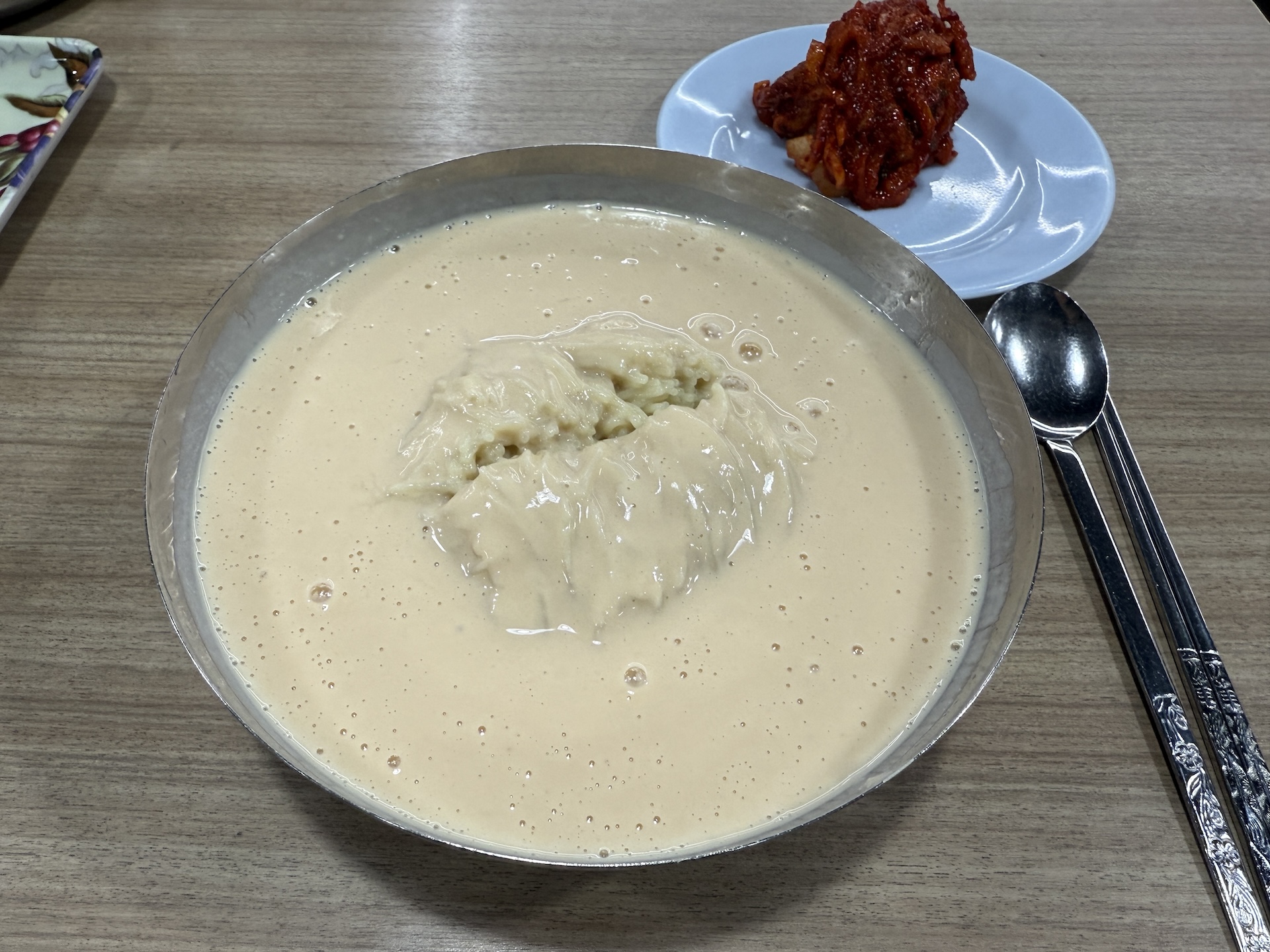
Seoul
Recipe: Kong-guksu, Korea’s Chilled Soybean Noodles
Learn how to make kong-guksu, Korea’s classic cold soybean noodle dish. This easy summer recipe pairs wheat noodles with a rich, chilled soybean broth.
Read more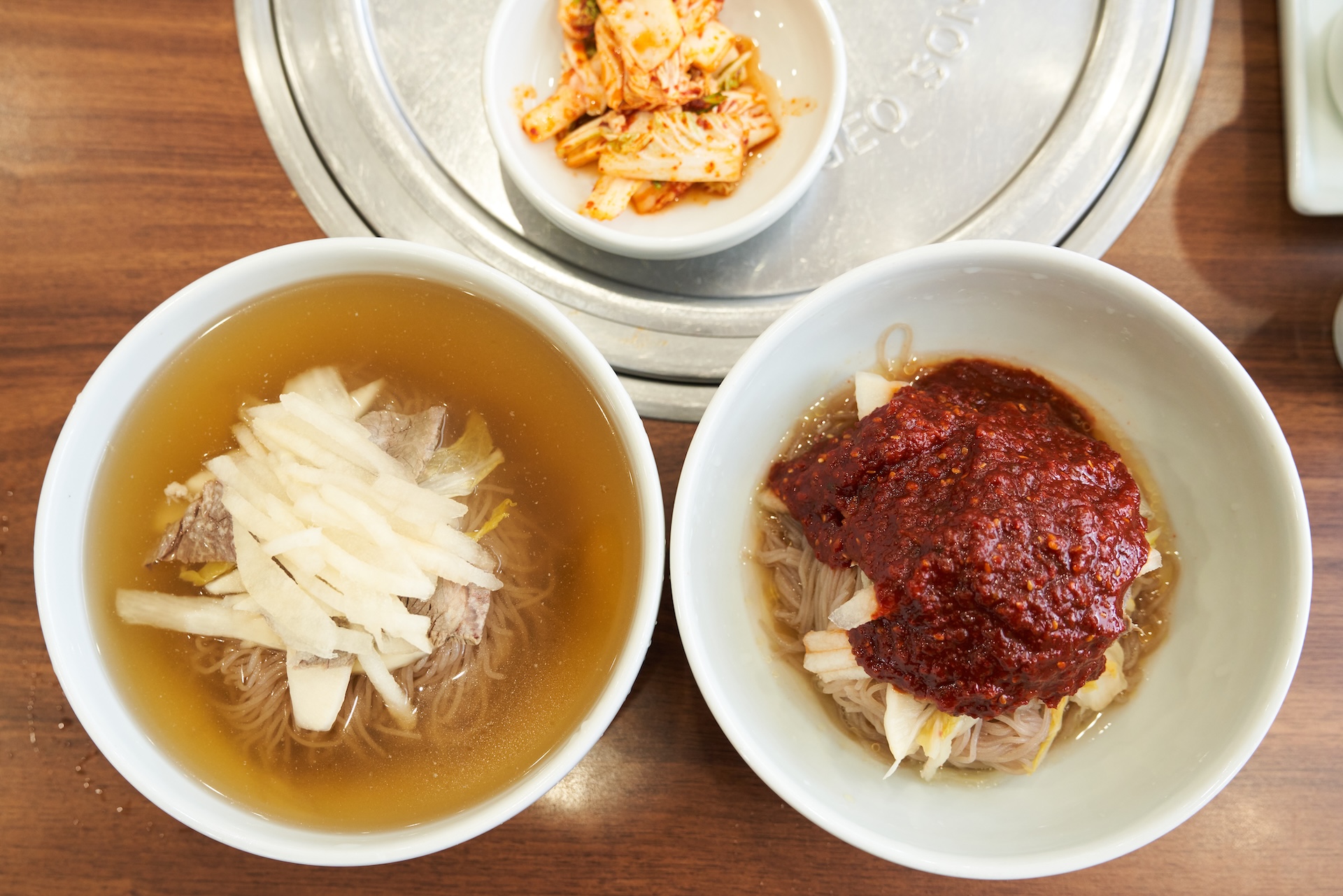
Seoul
In Seoul, Summer Comes in a Cold Bowl of Soup
From naengmyeon and kong-guksu to chilled chicken broth and buckwheat jelly, these are the cold noodles and soups that define summer in Seoul.
Read more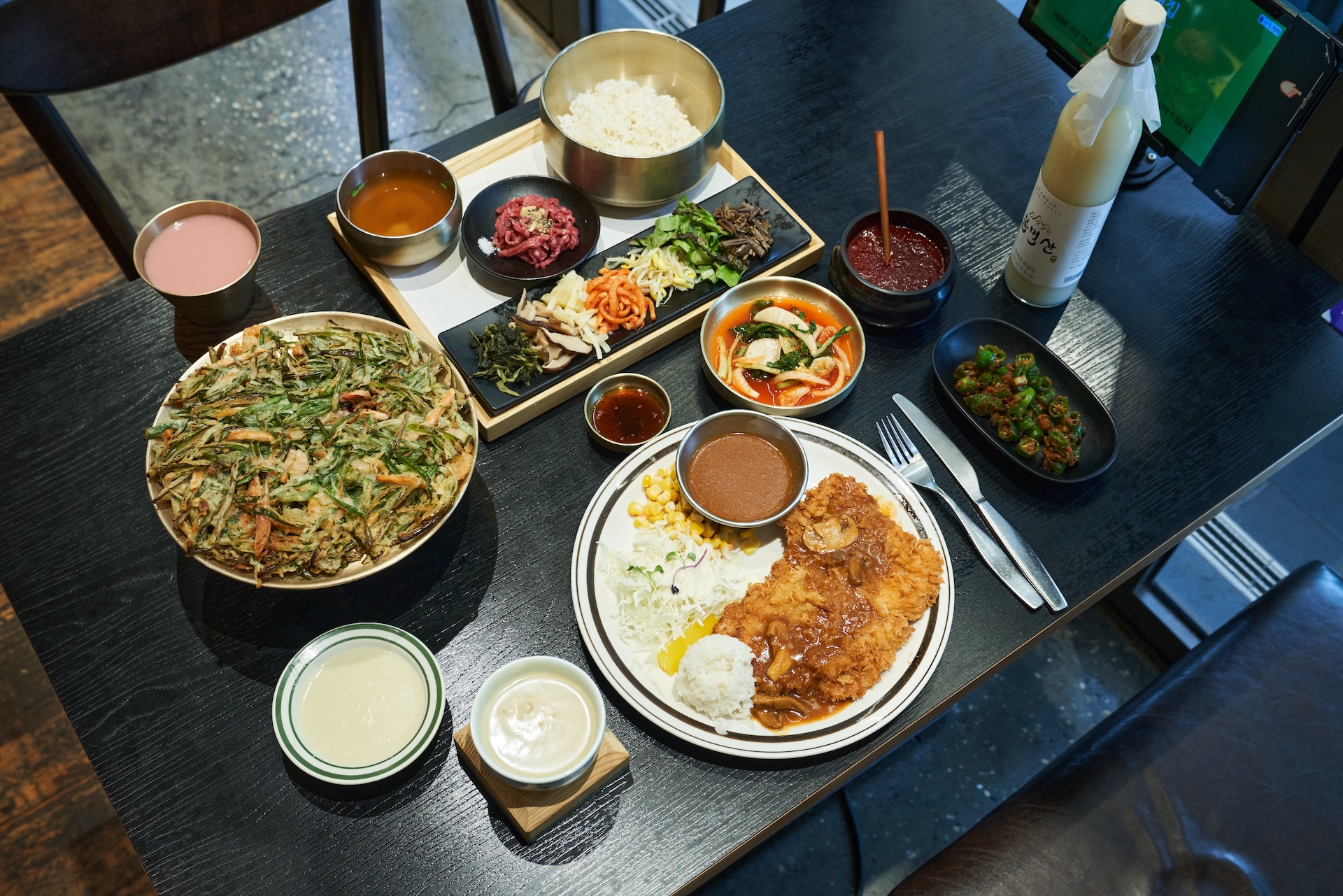
Seoul
Namsan Sanchajip: Seoul’s Mountain Pork Cutlet With a Korean Soul
A Namsan restaurant serving king-sized Korean pork cutlet alongside brassware bibimbap, savory jeon, and house makgeolli made in honor of the mountain’s old name.
Read more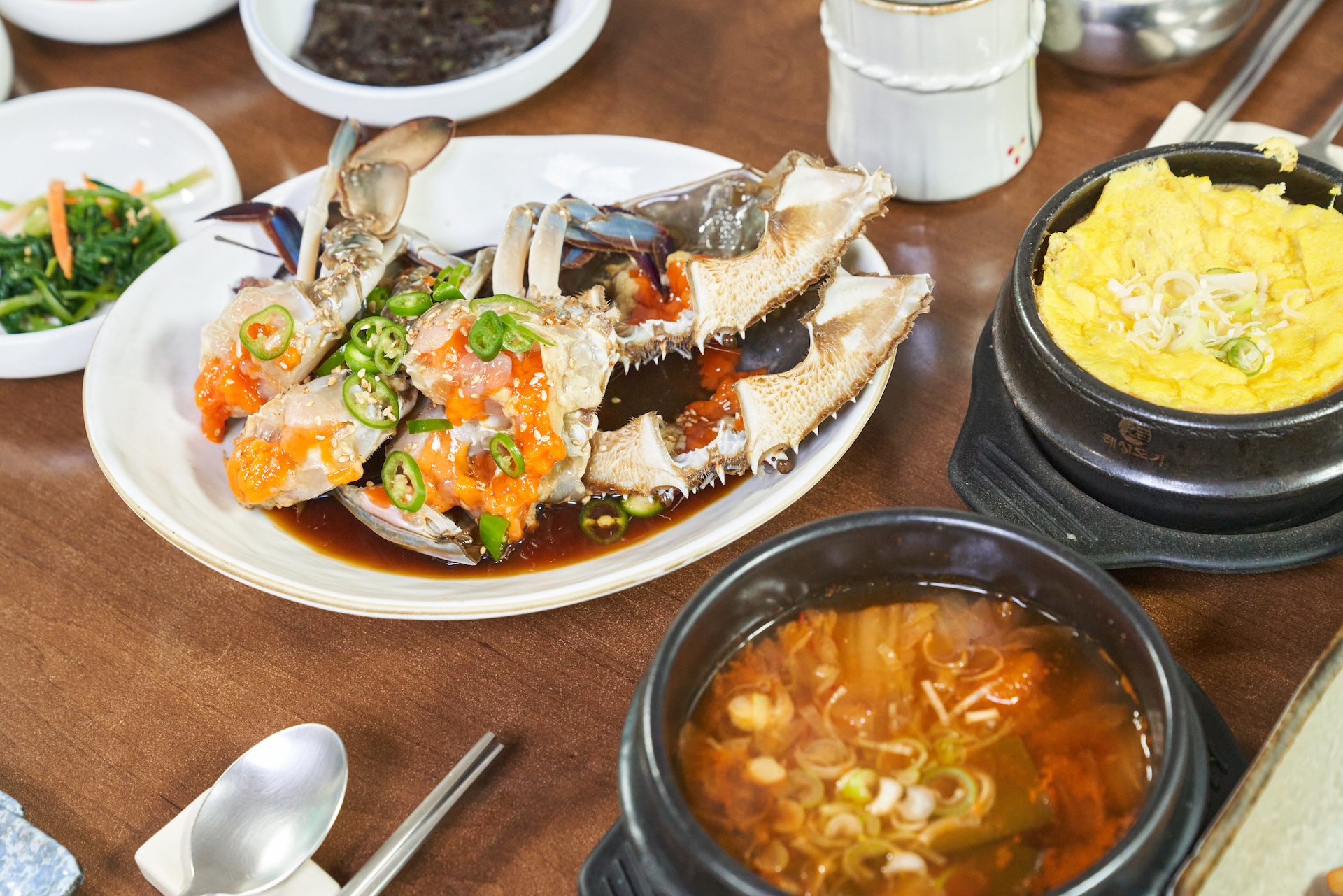
Seoul
Jinmi Sikdang: Seoul’s Master of Soy-Marinated Raw Crab
A family-run Mapo institution devoted to ganjang-gejang, where soy-marinated raw crab and warm white rice make an unforgettable pair.
Read more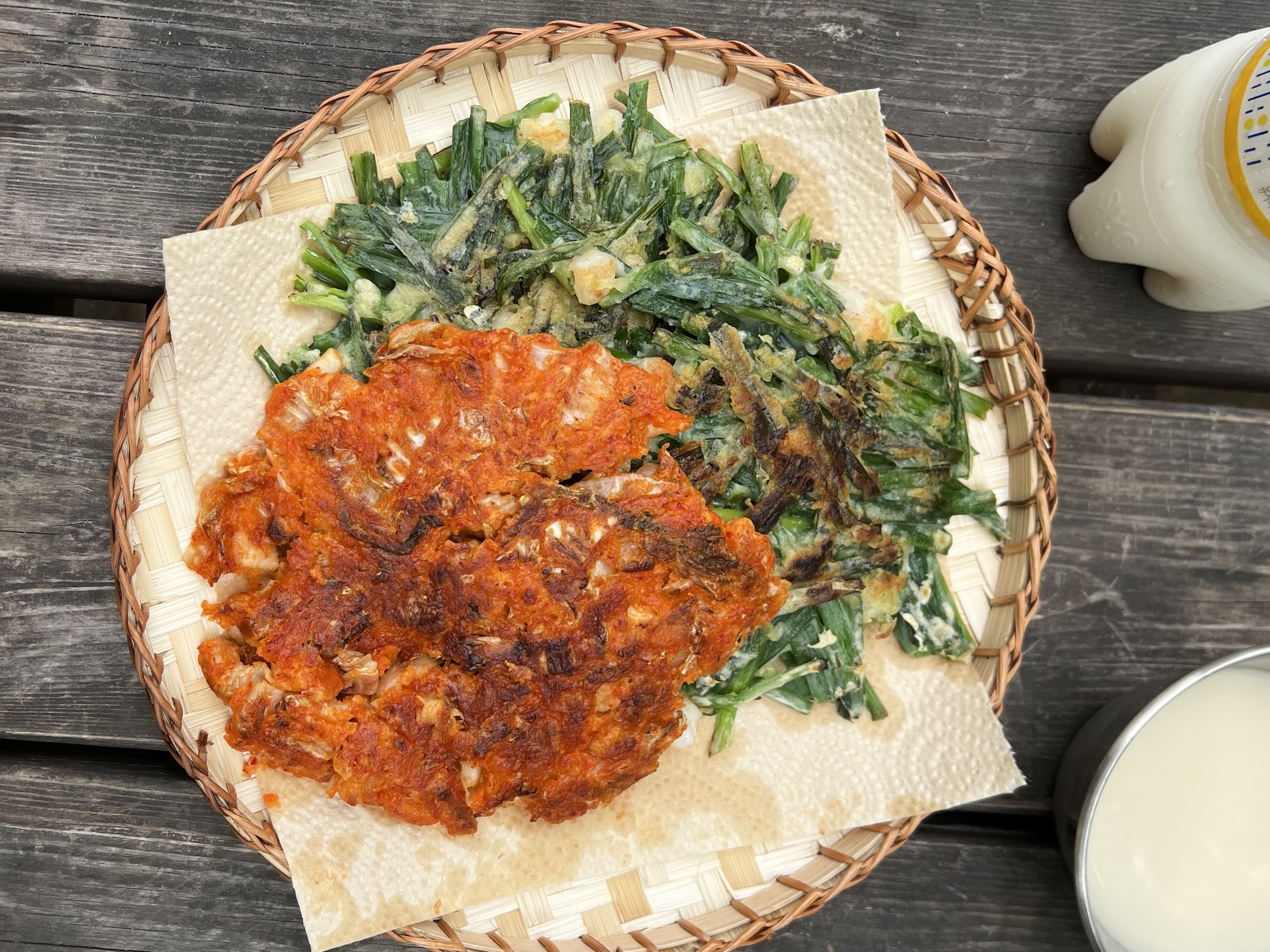
Seoul
Recipe: The Best Kimchi Jeon Starts with Old Kimchi
This kimchi jeon recipe uses aged kimchi, pork, and buchim garu to make one of Korea’s most comforting savory pancakes, especially beloved on rainy days.
Read more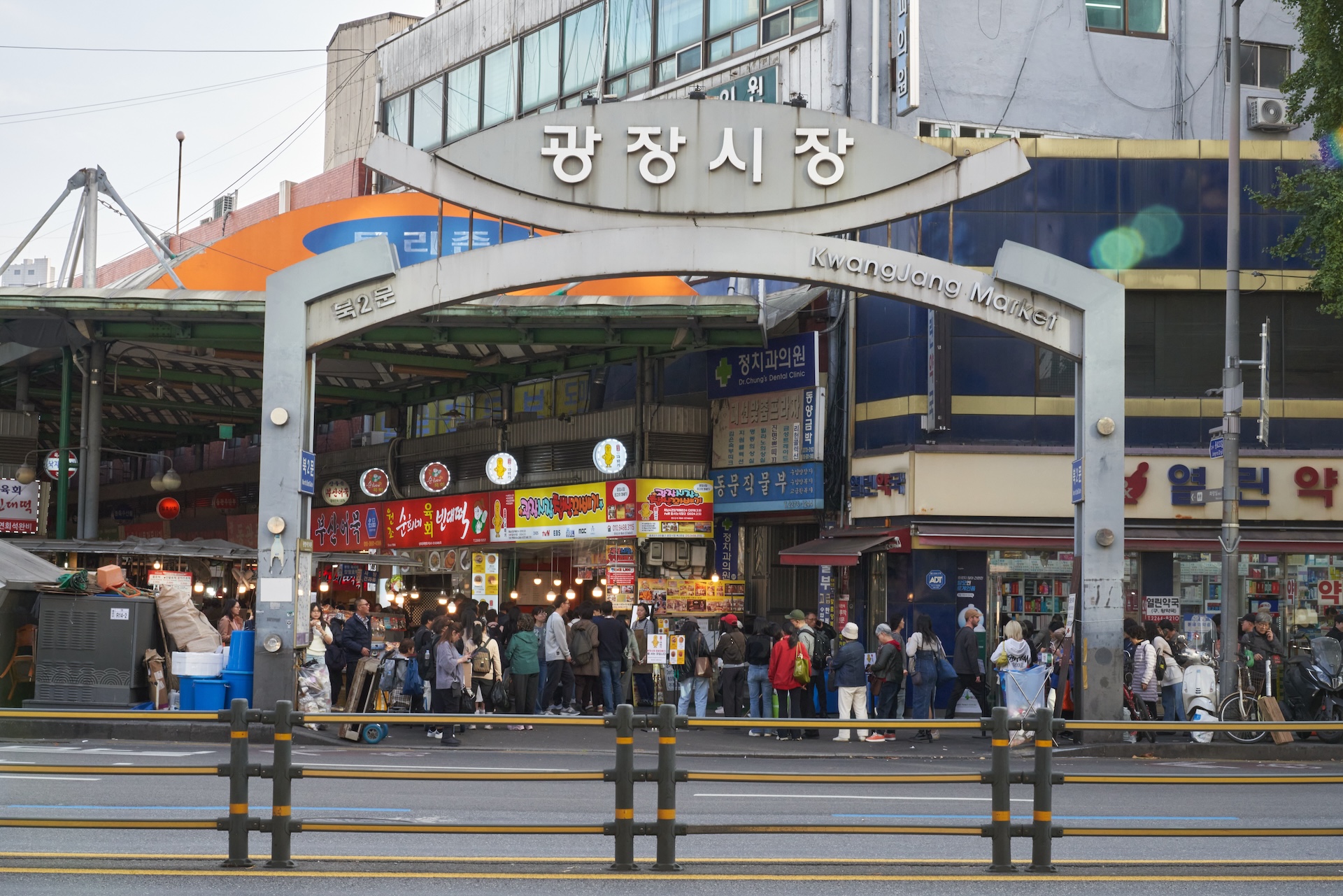
Seoul
Gwangjang Market: Seoul’s Historic Street Food Heart
A historic Seoul market where the crowds come for bindaetteok, mini gimbap and the constant rhythm of eating shoulder to shoulder.
Read more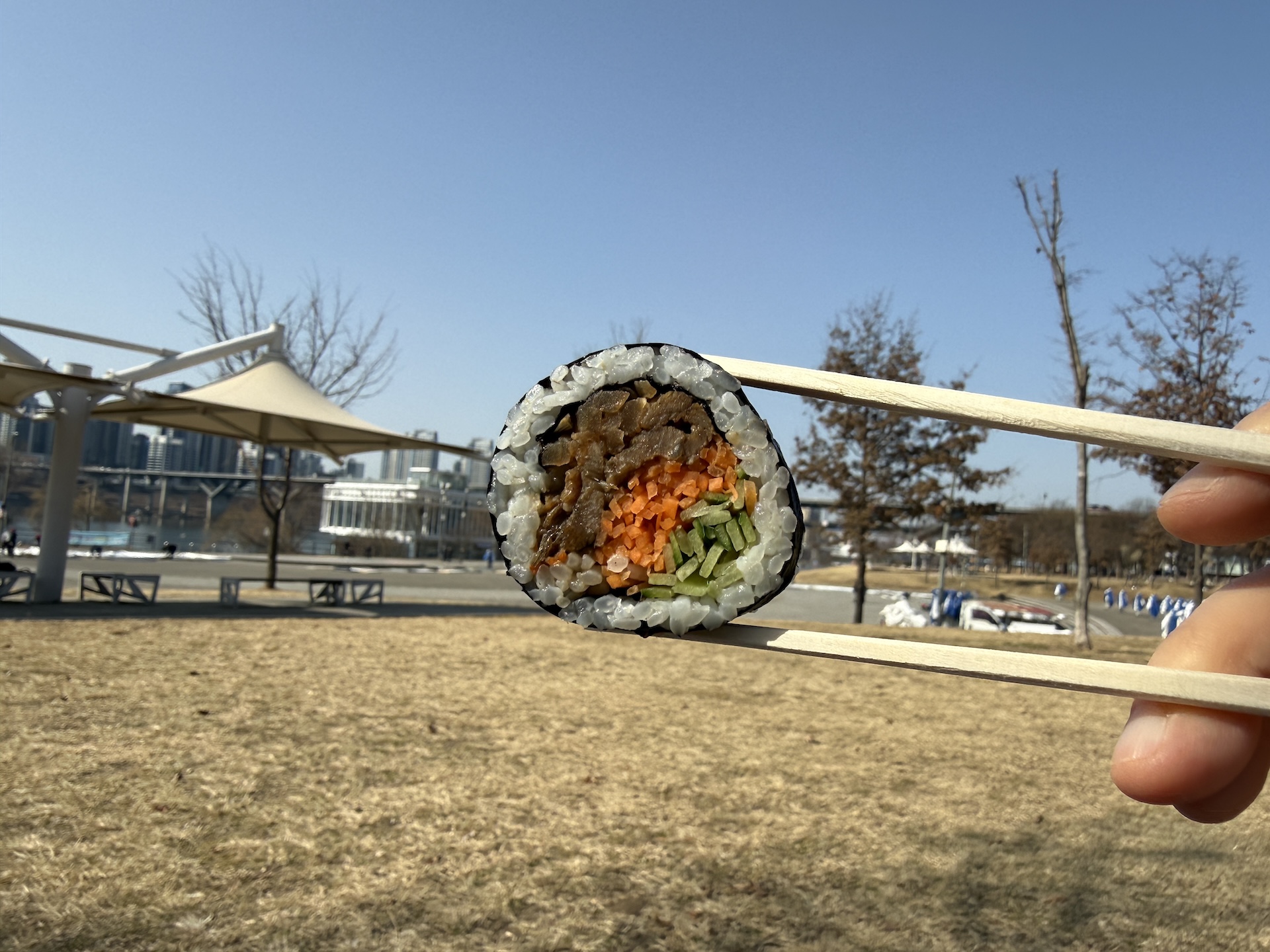
Seoul
Gimbap: Korea’s Favorite Picnic Food
Gimbap is one of Korea’s most enduring everyday foods: a portable rice roll packed for school trips, hikes, desk lunches, and picnics. This story explores why it matters.
Read more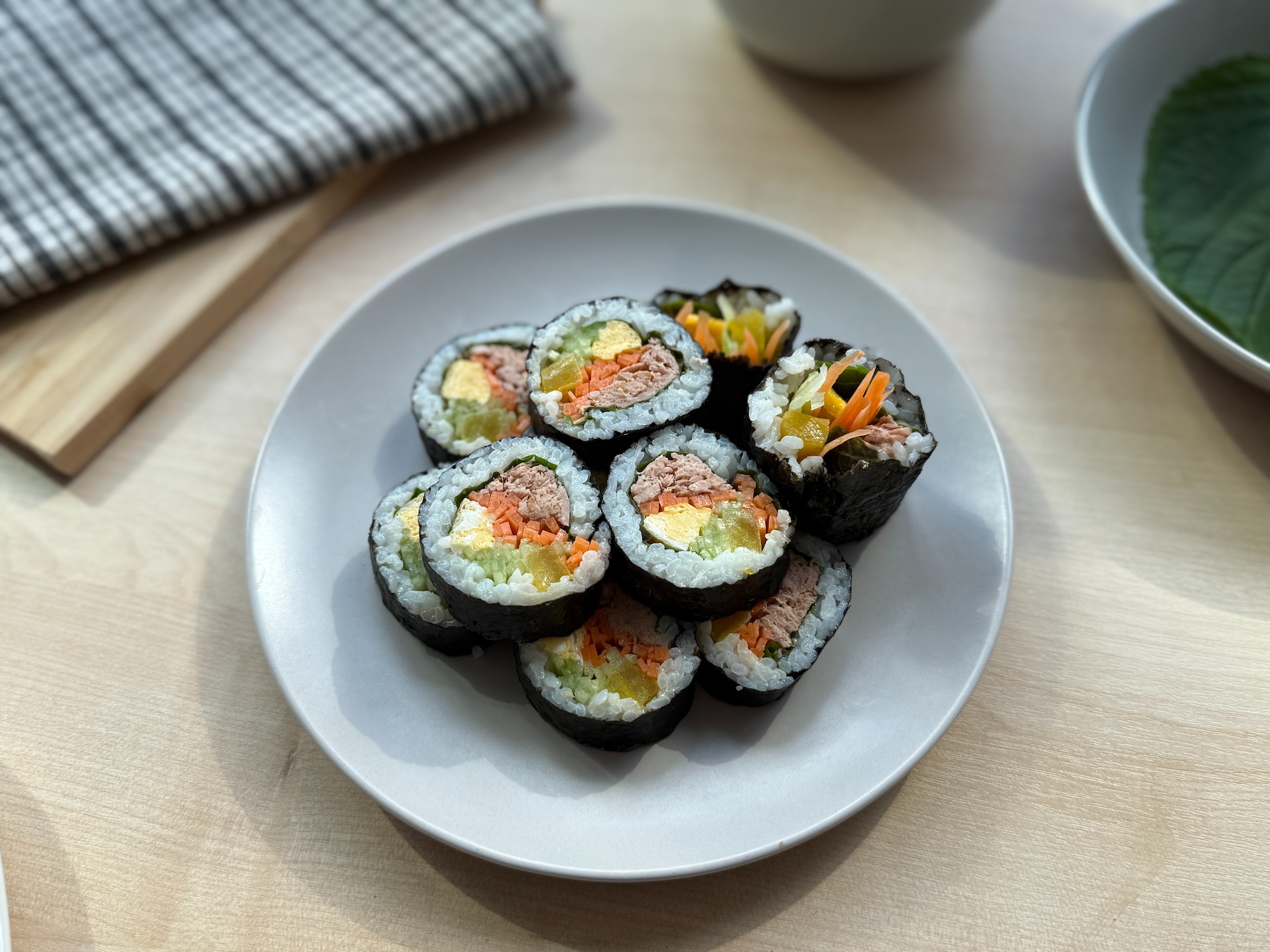
Seoul
Recipe: Tuna Gimbap, Korea’s Favorite Picnic Roll
Learn how to make tuna gimbap, a classic Korean rice roll filled with vegetables and seasoned tuna, and discover why it remains a staple of Korean food culture.
Read more


Daily Dispatches from the Frontlines of Seoul
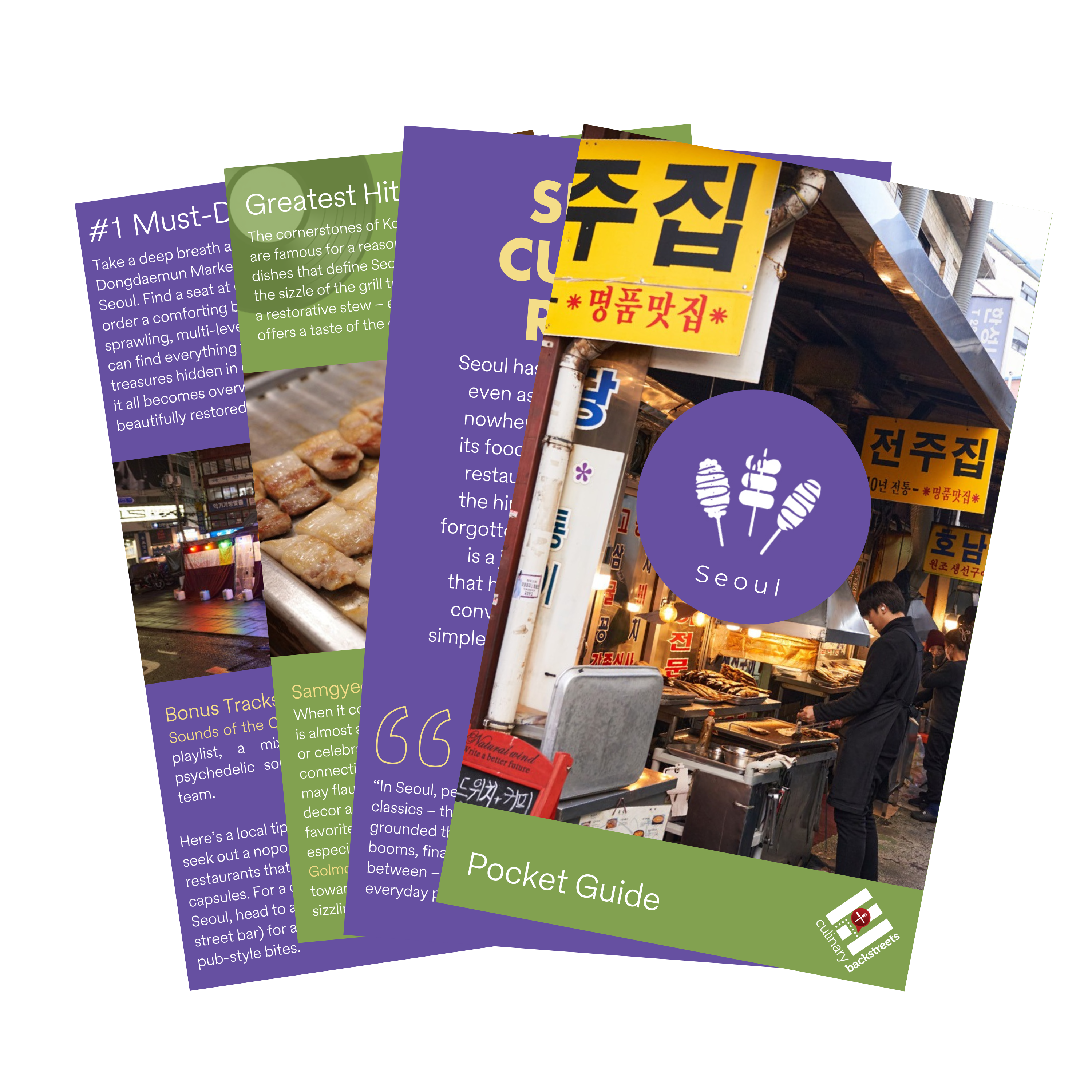
Get Your Free Seoul Pocket Guide
Introducing our pocket-sized Seoul guide — perfect for your next culinary adventure. Yours free when you sign up for our newsletter.
Get Your Free Seoul Pocket Guide
Introducing our pocket-sized Seoul guide — perfect for your next culinary adventure. Yours free when you sign up for our newsletter.
Immersive Multi-Day Journeys In and Around the World’s Culinary Capitals
View all trips

Your trips, powered by our picks
Curated Seoul Travel Boards


Culinary Backstreets® Envoys, Always Searching for the Next Hidden Gem

Eunice
Seoul Bureau Chief

Donald
Seoul Tour Leader

Yerica
Seoul Correspondent & Tour Leader

Kangsil
Seoul Tour Leader

Jonathan
Seoul Tour Leader

JK
Seoul Photographer

Yeonjoo
Seoul Correspondent
Your Questions, Answered
You can fly directly to Incheon International Airport (ICN) from many international cities. Within Korea, the high-speed KTX takes about 3 hours from Busan.
When it comes to the best things to do in Seoul, it’s hard for us not to dive right into eating! But on top of all the great food, there are the grand palaces like Gyeongbokgung, traditional Hanok villages like Bukchon, or non-stop nightlife in areas like Hongdae.
Seoul is considered a very safe city with a low crime rate. Like anywhere, it’s good to be aware of your surroundings, especially in crowded areas.
While Seoul itself isn’t on the coast, there are beaches within a few hours’ travel by public transportation, such as Eurwangni Beach and Daecheon Beach.
Seoul is continuously improving its accessibility. The subway system is generally well-equipped with elevators and ramps, and many tourist attractions have accessible facilities. However, some older areas and smaller establishments might still present challenges. It’s always a good idea to check accessibility information in advance, and Visit Seoul has a guide answering common accessibility questions.
Seoul has four distinct seasons. Be prepared for hot, humid summers (June-August) with humidity and rains, and temperatures averaging in the 80s (°F), sometimes even reaching the low 90s. Winters (November-March) are cold and dry, with temperatures often dipping below freezing, and occasional snow. Spring and autumn are milder and comfortable with temperatures in the high 50s to 70s.
Myeongdong and Hongdae are popular spots for first-timers, with lots of shopping, food, and easy access to transportation. Insadong is great for traditional vibes, and Gangnam is where you’ll find a more upscale atmosphere.
Seoul is the capital city of South Korea and located in the northwestern part of the country. It’s right on the Han River, which has played a big part in making it a center of politics, culture, and economics for centuries.
There’s endless thing to eat in Seoul. Start with the obvious: Korean BBQ, bibimbap, and kimchi jjigae (stew). Then expand into all the incredible street food, like tteokbokki (spicy rice cakes) and odeng (skewered fish cakes) at Gwangjang Market, which we visit on our food tour.
Yes. US passport holders enter South Korea visa-free for stays up to 90 days but must apply for K-ETA (Korea Electronic Travel Authorization) online before boarding. Valid 3 years, multiple entries. No vaccination or testing requirements.
Spring (March-May) and autumn (September-October) are generally considered the best times to visit Seoul. The weather is great, with cherry blossoms in spring and beautiful foliage in autumn. It can be a bit busier then, but well worth it.
Seoul can be affordable if you know where to look. There are plenty of budget-friendly options for food and accommodation, as well as some fancier choices if you’re looking to splurge. A decent 3-star hotel might cost $70-150 per night. Coffee is around $3-5, a beer about $4-7, and a sit-down meal $10-25 or more. Street food is cheaper, from $2-10. Public transport is very affordable, around $1-2 per ride.
Seoul is a fantastic destination for families. There’s something for everyone to enjoy, including museums and theme parks like Lotte World and Everland. The city also has plenty of outdoor spaces, like the Han River Parks, and a lot of food kids from all over will dig. Seoul’s efficient public transportation system makes it easy to get around.
Culinary Backstreets runs one food tour in Seoul, Seoul Food: Banchan, Bibimbap, and Beyond. It's a full-day walk covering Gwangjang Market for street food, an old-school Korean BBQ, jeon (savory pancake) counters, banchan-heavy hansik meals, and pojangmacha (tent bar) culture, led by a resident food writer.
Four to five days. One for the classic markets (Gwangjang for bindaetteok and mayak gimbap, Namdaemun for kalguksu), one for Korean BBQ done properly (Mapo, Majang, or Wangbijib area), one for hansik and royal-cuisine dinner, one for Euljiro's old alleys and pojangmacha tent-bar culture, one for a Suwon or DMZ day trip.
Gwangjang Market for street food. Euljiro for retro Seoul bar culture and jeon. Mapo and Majang for barbecue. Yeonnam-dong and Seongsu for young-chef bistros. Sinsa and Garosugil for modern. Hongdae for late-night casual. Ikseon-dong for hanok-era cafés and bars.
Bindaetteok (mung bean pancake) and mayak gimbap at Gwangjang, a proper Korean BBQ (samgyeopsal or hanwoo beef) with all the banchan, naengmyeon on a hot day, kalguksu, jjajangmyeon, sundubu jjigae, and Korean fried chicken with beer (chimaek). Don't skip a soju-tent-bar night.
All three, though Korean BBQ traditionally requires two-plus at the grill. Solo travelers should focus on market food, noodle shops, and hansik bar counters. Families are welcome and banchan-forward Korean meals are naturally kid-friendly. Groups of four to eight are ideal for BBQ, hot-pot, and jjimdak spots, this is a group-eating culture
Gwangjang (street food heaven, especially at night), Namdaemun (traditional, wholesale-meets-retail), Tongin (dosirak tin lunch tradition), Noryangjin (fish market, sushi on-site), Mangwon (best neighborhood market in Seoul).