
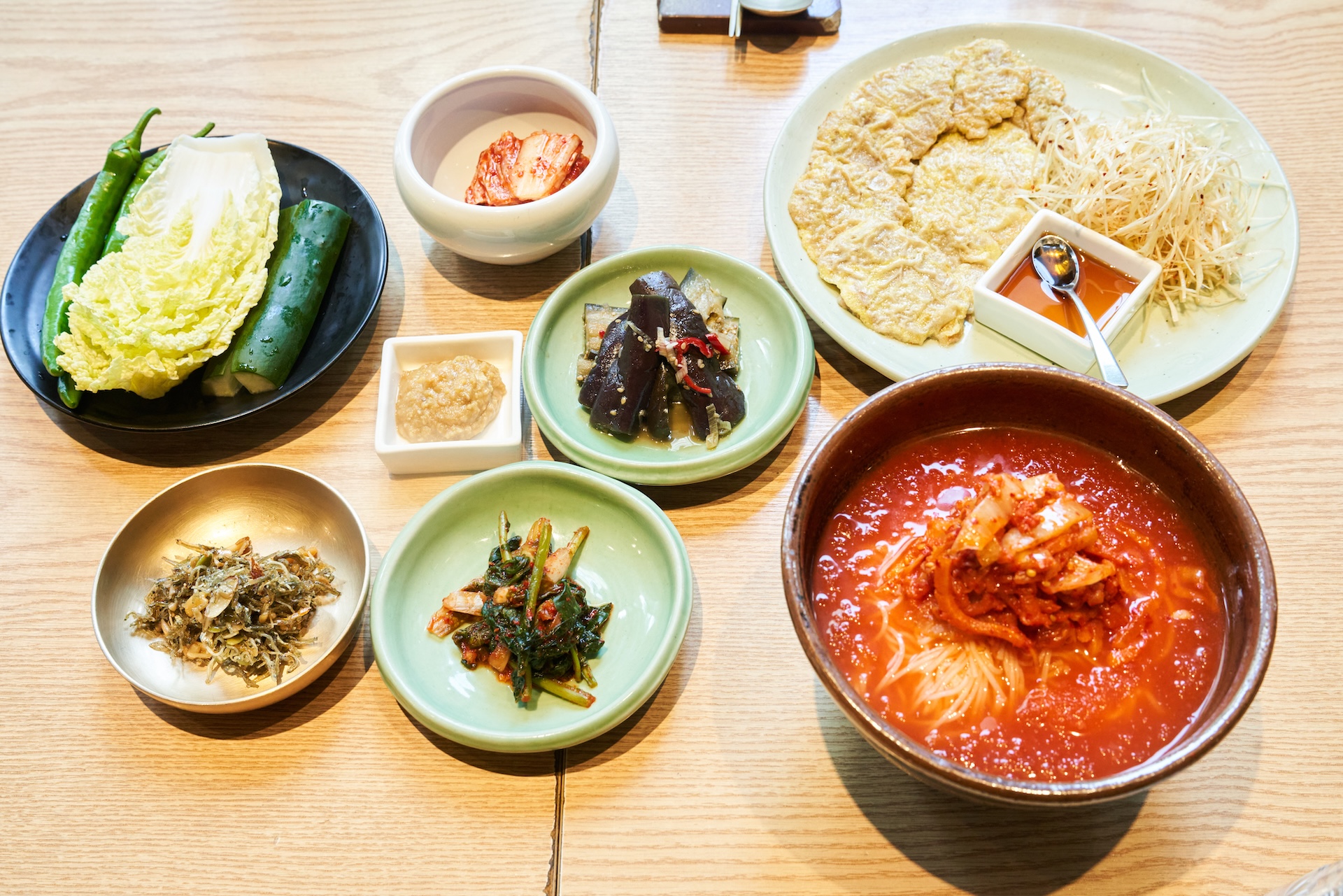
<p><span style="color: rgb(0, 0, 0)">Near Gongdeok Station, Lakheeoak is a modern Korean tavern with a menu of small plates and mains designed to accompany drinks. Its most popular summer order is kimchi-mari guksu, thin wheat noodles in an ice-cold broth made from the liquid of well-fermented kimchi. Unlike versions sweetened to soften the kimchi’s acidity, Lakheeoak lets its natural tartness come through, with a drizzle of sesame oil adding fragrance and chewy noodles giving the light broth substance.</span></p>
The Essentials: Seoul’s Cold Summer Soups


<p><span style="color: rgb(0, 0, 0)">Open since 1974, Jinjujib is one of Seoul’s most celebrated destinations for kong-guksu. Founder Jo Wol-rae developed the restaurant’s version in Jinju, in Korea’s southern Gyeongsang region, before bringing it to the capital. The dish consists of wheat noodles in a chilled broth made by finely grinding boiled soybeans; although the process resembles making soy milk, the finished broth is much thicker and richer. Jinjujib serves its pale soybean broth plain, without garnish, and with an almost cream-like consistency that needs no extra seasoning. The tangy-sweet kimchi alongside cuts through the richness. Lunchtime lines can be long, but the bowls arrive quickly and tables turn over fast.</span></p>

<p><span style="color: rgb(0, 0, 0)">A fixture in Euljiro since 1946, Woo Lae Oak remains one of Seoul’s defining destinations for pyeongyang naengmyeon, the northern Korean style of buckwheat noodles served in a clear, chilled broth. The restaurant was founded by Jang Won-il and Na Jeong-il, a couple who had previously operated a restaurant in Pyongyang. Its mul naengmyeon uses a broth made entirely from beef brisket and shank, gently simmered and carefully skimmed so it stays clean-tasting when cold. High-buckwheat noodles bring a nutty flavor and satisfying chew, while beef, radish, Korean pear and kimchi complete the bowl. Waits can stretch for hours, so arrive early or take a number before opening.</span></p>

<p><span style="color: rgb(0, 0, 0)">Operating since the 1960s, Pyungreok is a Seoul Future Heritage site specializing in North Korean cooking. Its warm-weather signature is chogyetang, a generous, shareable version of chogye-guksu, a cold noodle soup made with chicken broth sharpened by vinegar and mustard. Pyungreok fills the tangy broth with buckwheat noodles, shredded chicken, pickled radish, Korean pear, lettuce and other crisp vegetables. The result is cooling but far more substantial than its clear broth suggests, offering a chilled alternative to samgyetang, Korea’s better-known hot summer chicken soup. Chogyetang must be ordered for at least two people, making this a useful stop for travelers dining with company.</span></p>

<p><span style="color: rgb(0, 0, 0)">Cho Gyu-hyeon opened this Dapsimni restaurant in 1966 as Pyeongnam Makguksu, later renaming it after his hometown of Seongcheon County, now in North Korea. Three generations of the Cho family have kept it running. The specialty is makguksu, a Gangwon Province dish of rustic, high-buckwheat-content noodles served either in broth or mixed with sauce. Choose between mul makguksu, with noodles in a chilled broth made from aged dongchimi, beef stock or both, and bibim makguksu, tossed with spicy sauce, sesame oil and toppings. The mul version best highlights the noodles’ subtle buckwheat aroma and coarse texture. Add a half-order of jeyuk, thin slices of boiled pork.</span></p>

<p>Since 1982, Bonghwa Mukjip has been serving homemade buckwheat <em>muk</em> and regional noodles from a family-run restaurant in Seoul’s Jeongneung neighborhood. Founders Sin Eon-geun and Seo Sun-pil brought recipes from their hometowns in North Gyeongsang Province, including <em>muksabal</em>, a delicate buckwheat jelly served in anchovy broth with kimchi, sesame and <em>gim</em>. Today, their son and daughter-in-law carry on the tradition, grinding and straining buckwheat by hand to prepare fresh <em>muk</em> every morning, a labor-intensive process that yields only about 50 bowls a day. Set inside the family home, the restaurant also serves seasonal <em>geonjin guksu</em>, cold noodles from the Bonghwa region, and pan-fried cabbage leaves.</p>


