We can't find the internet
Attempting to reconnect
Something went wrong!
Hang in there while we get back on track


Thessaloniki's culinary record
Thessaloniki has always had deeper culinary influences than Athens, tracing them back to the city's founding: a wealthy trading city that over the centuries absorbed and assimilated cultural elements from antiquity through the Roman, Byzantine, and Ottoman eras, as well as from its once-thriving Sephardic Jewish community and from the Greek refugees who came from Asia Minor after World War I. As one of the most important ports in the Eastern Mediterranean and a gateway between the Balkans and central Europe, it was built for cosmopolitanism.
Get the Full Story →Tour Thessaloniki with Culinary Backstreets®
View all food tours
discover the city, street by street, bite by bite
Thessaloniki
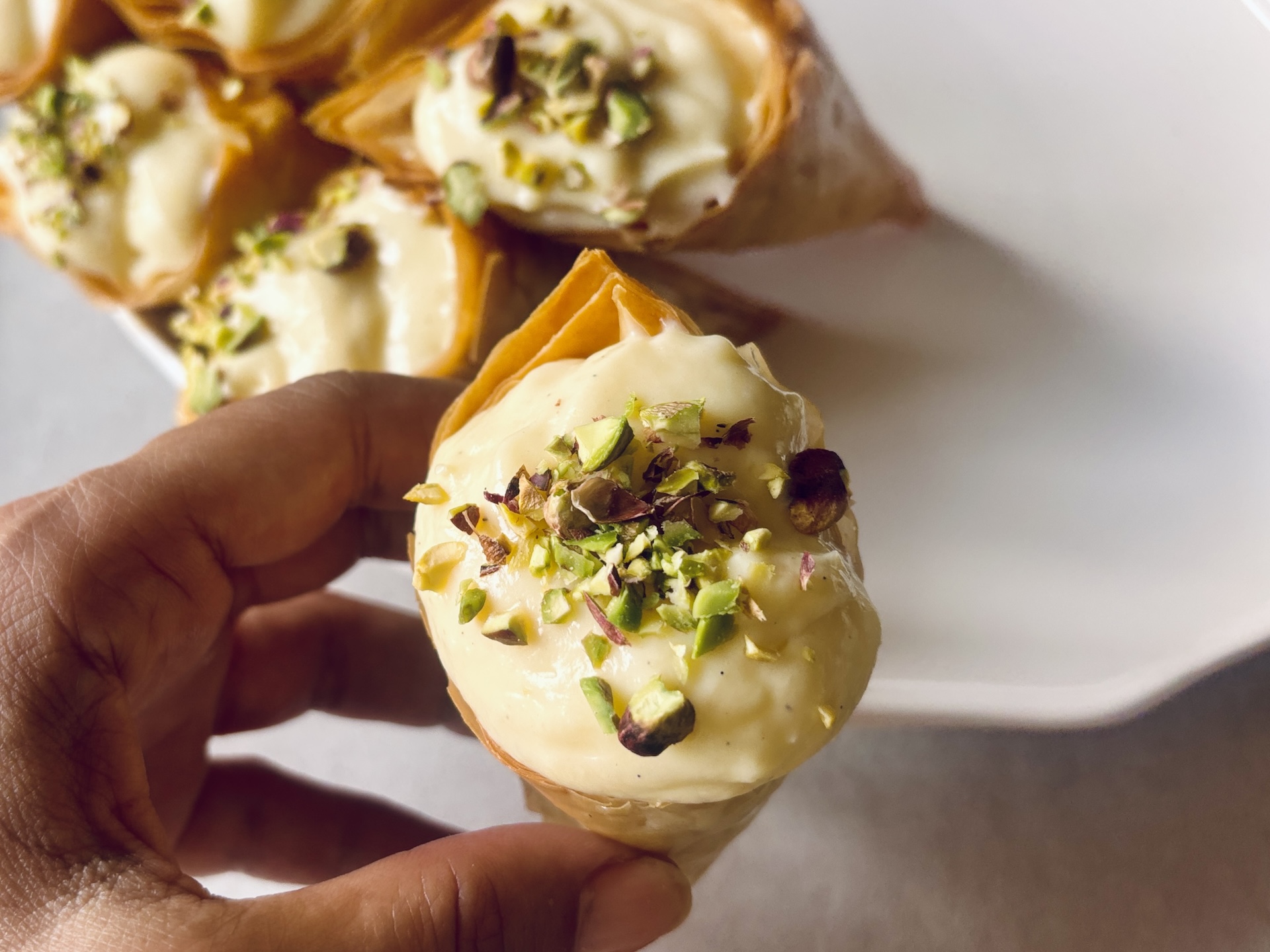
Recipe: Trigona Panoramatos, Crisp Filo Filled with Custard
Trigona Panoramatos are a Thessaloniki specialty of crisp, syrup-filled filo triangles filled with cool, silky custard and finished with chopped pistachios.
Read more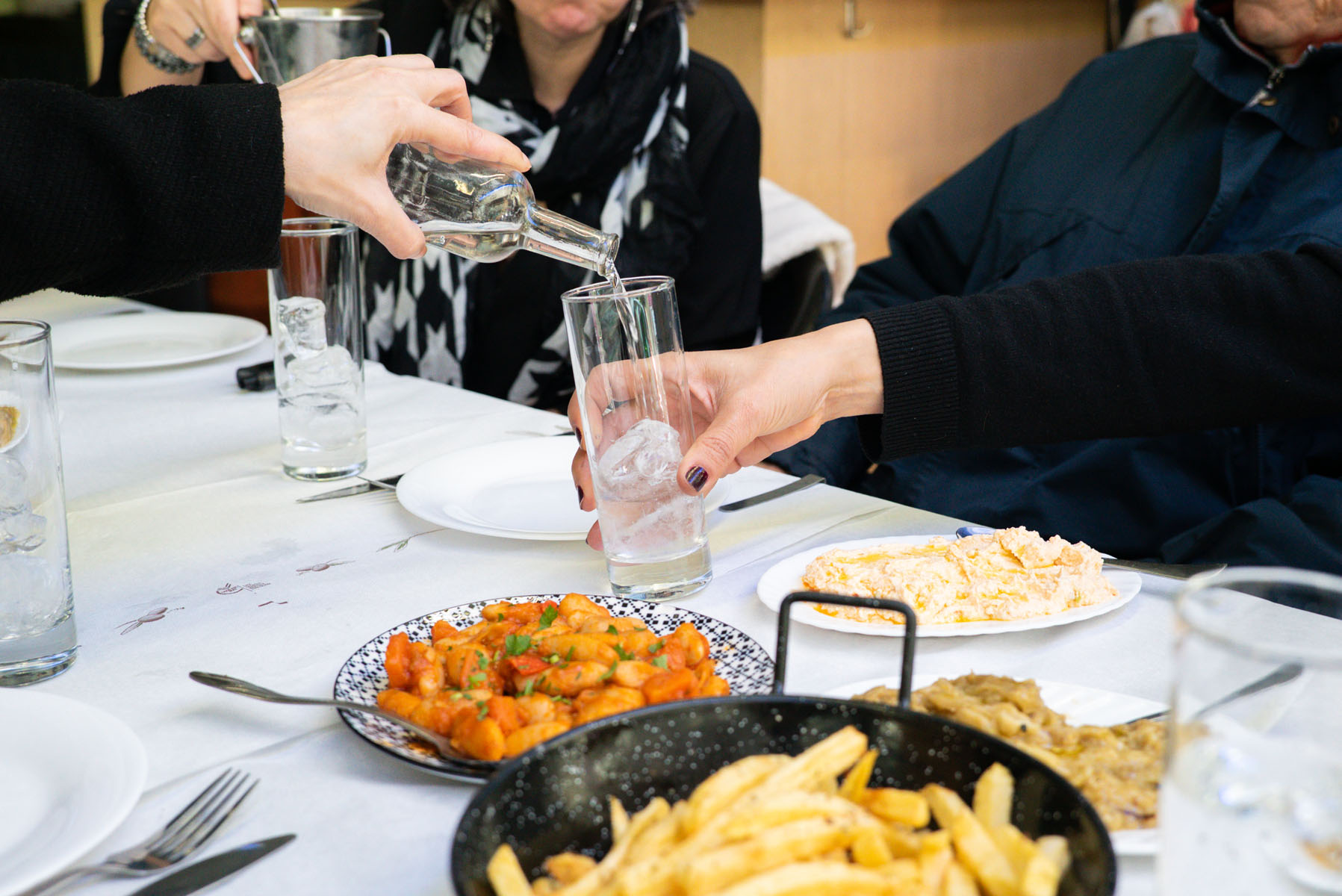
Thessaloniki
Quick Hits: Where to Eat, Drink, and Explore in Thessaloniki
A quick guide to Thessaloniki’s food scene, from old-school mezedopoleia and working markets to bougatsa, soutzoukakia, and the city’s new generation of restaurants.
Read more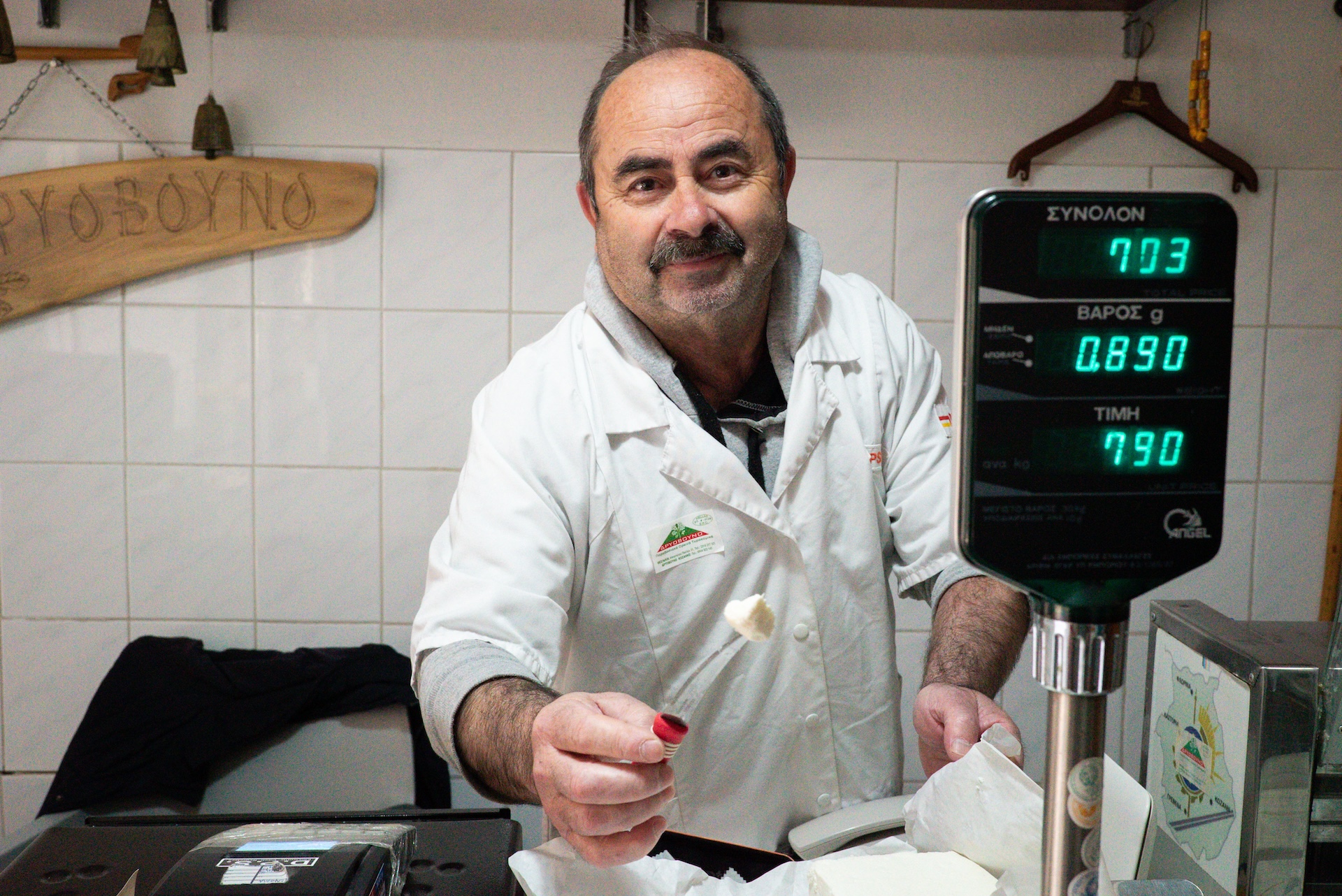
Thessaloniki
Dryovouno: Thessaloniki’s Cheese Whisperer
A small Thessaloniki cheese shop where Christos Kontonikolas sells feta, mizithra, yogurt, kefir, butter, and aged cheeses made from milk sourced near his mountain village of Dryovouno.
Read more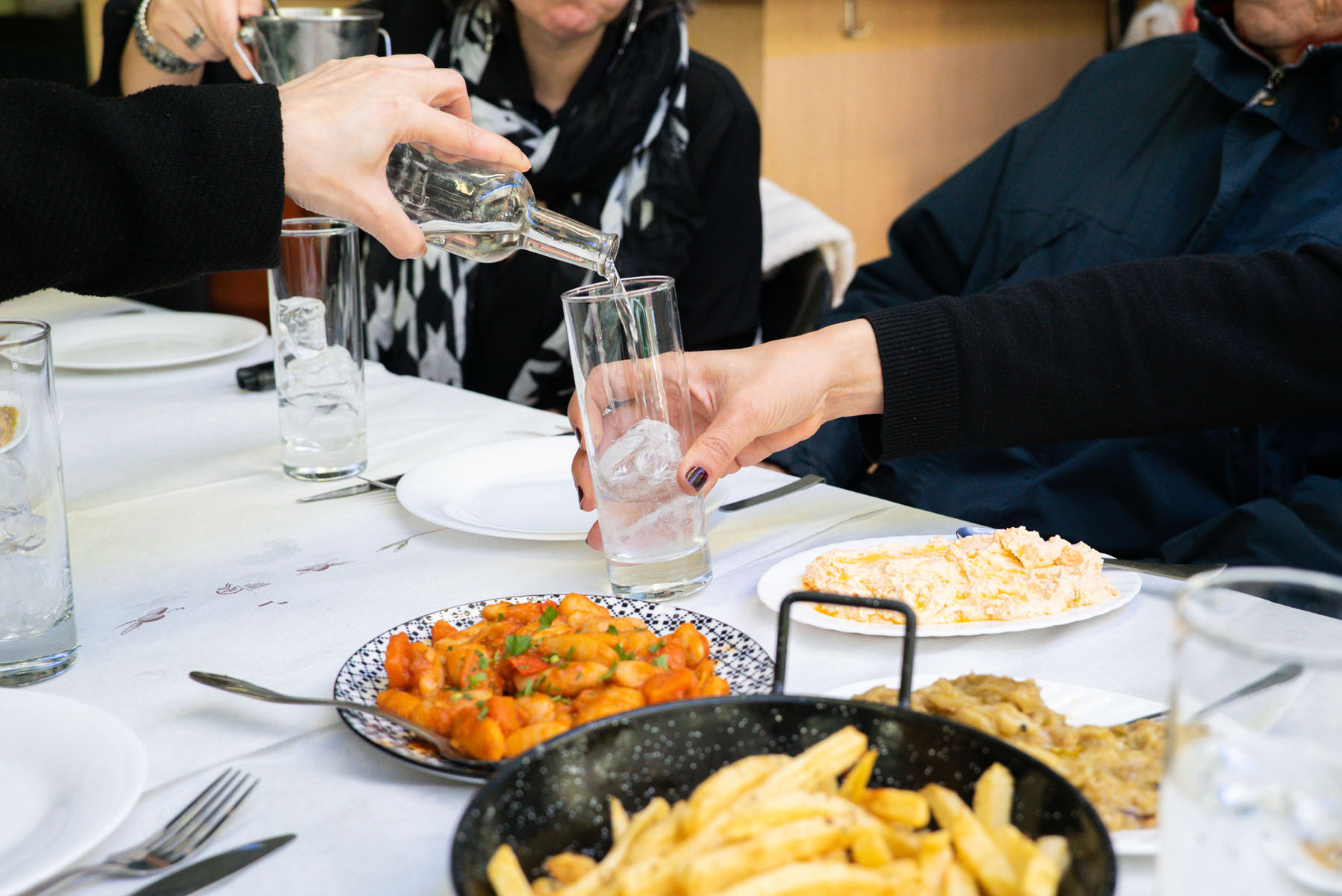
Thessaloniki
State of the Stomach: Thessaloniki
In Thessaloniki, food is the city’s most vivid expression of history. Roman, Byzantine, Ottoman, Sephardic Jewish and refugee influences all remain on the table, shaping a dining culture built on long meals, strong local loyalties and a deep sense of continuity.
Read more
Thessaloniki
Bougatsa: Thessaloniki, Wrapped in Phyllo
Like so many other Greek specialties, bougatsa has a long history, in this case one that stretches all the way back to Byzantine times. Bougatsa is mainly a breakfast pie with a phyllo pastry made of flour, softened butter and oil that requires a great deal of skill to prepare. This pie is made and enjoyed all around Greece, but particularly famous are those made in northern Greece, especially in Thessaloniki and Serres. Turkish börek is a close relation, and similar pies are traditional to many eastern Balkan countries that were formally part of the Ottoman Empire. The tradition of bougatsa making really took off around Greece in the early 1920s with the arrival of the Greek refugees from Asia Minor and Cappadocia.
Read more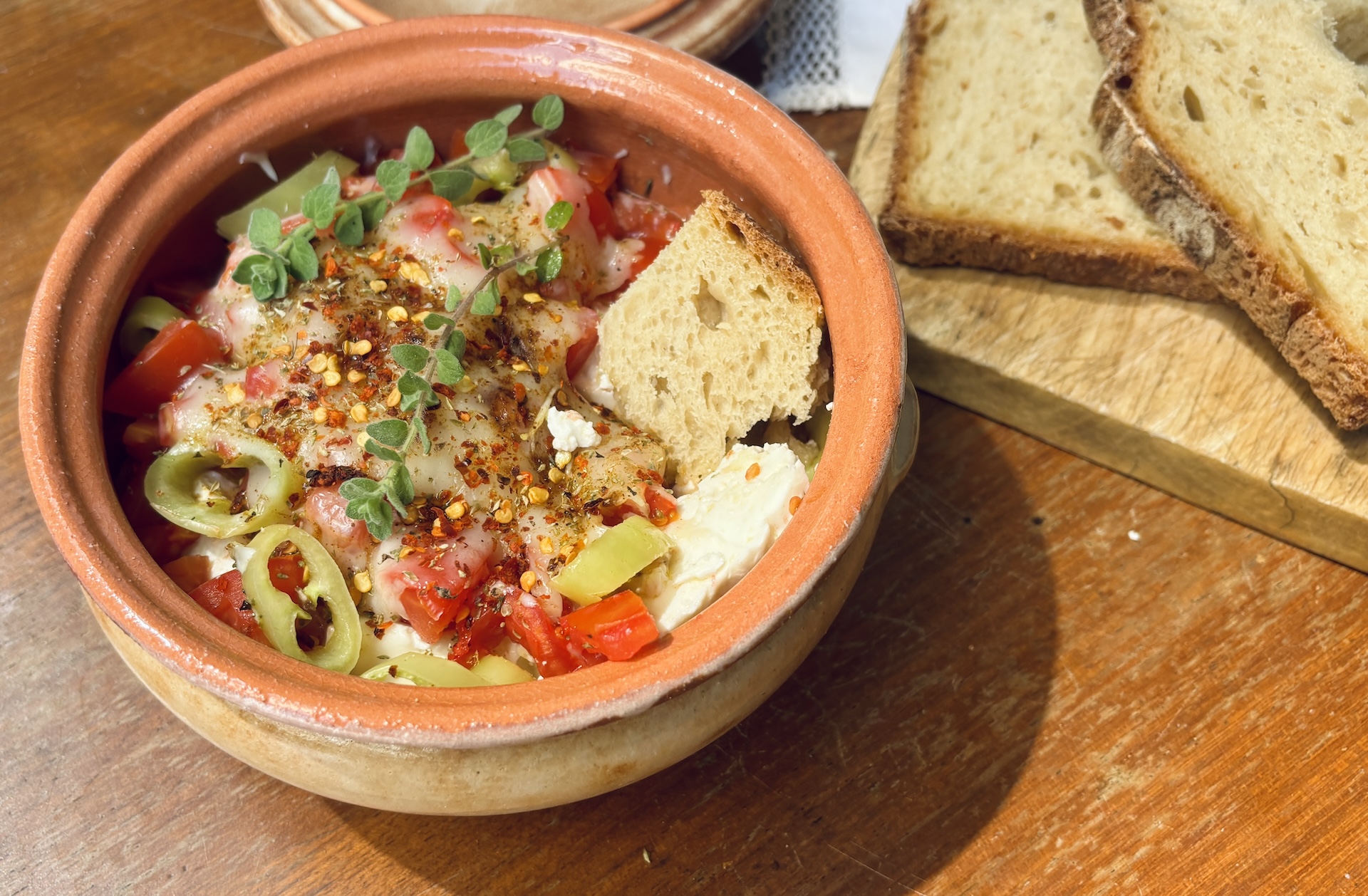
Thessaloniki
Recipe: Bouyiourdi, Baked Feta with Tomatoes and Peppers
A staple of Thessaloniki meze culture, bouyiourdi is a quick baked dish of feta, tomatoes and peppers, served hot and shared with bread at tavernas and home tables alike.
Read more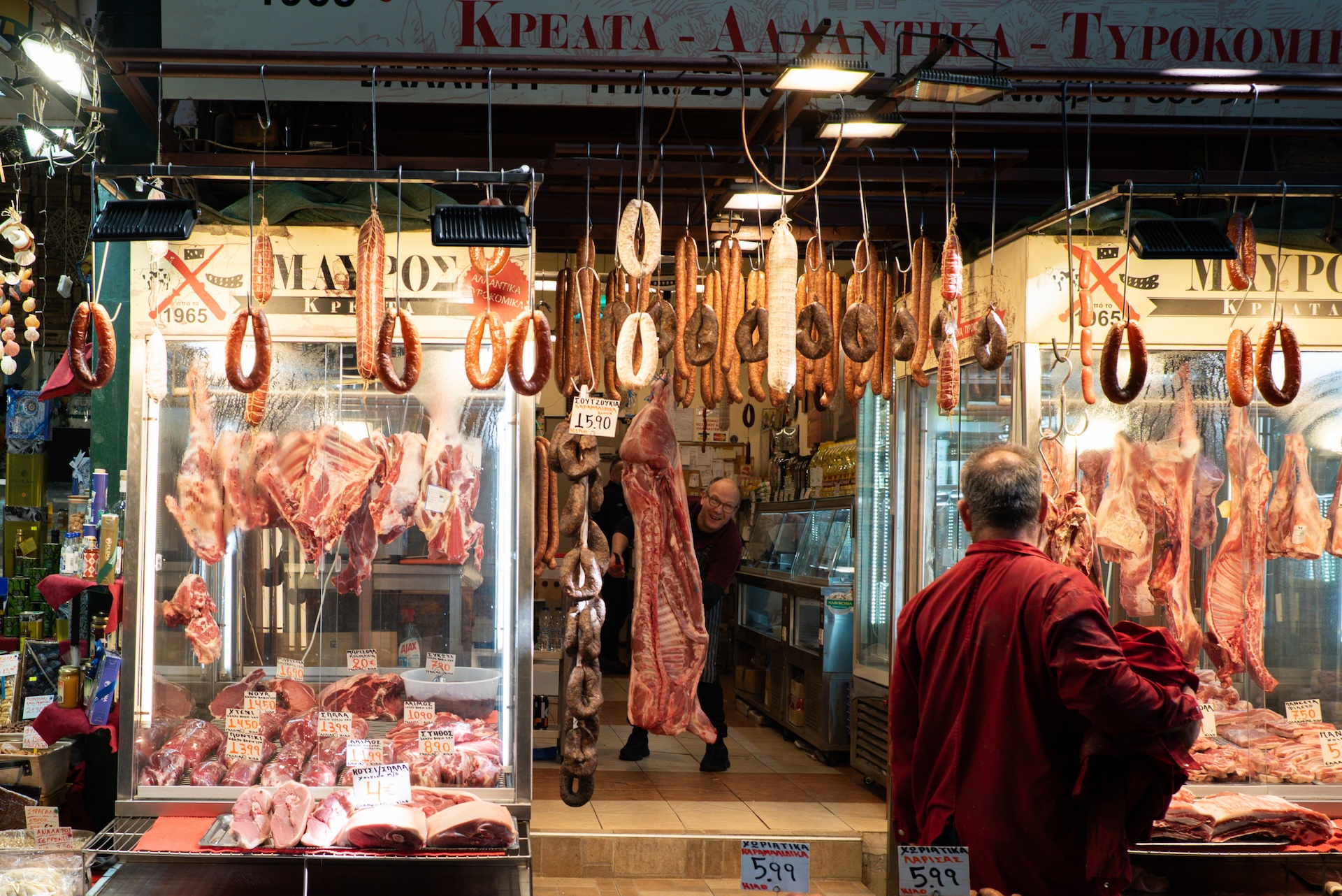
Thessaloniki
Market Watch: Shopping Through Thessaloniki’s Past and Present
From the Bezesteni and Bit Bazaar to Kapani Market and Athonos Square, Carolina Doriti traces the commercial life of Thessaloniki through the markets, delis and specialty shops that connect the city’s past to its everyday food culture.
Read more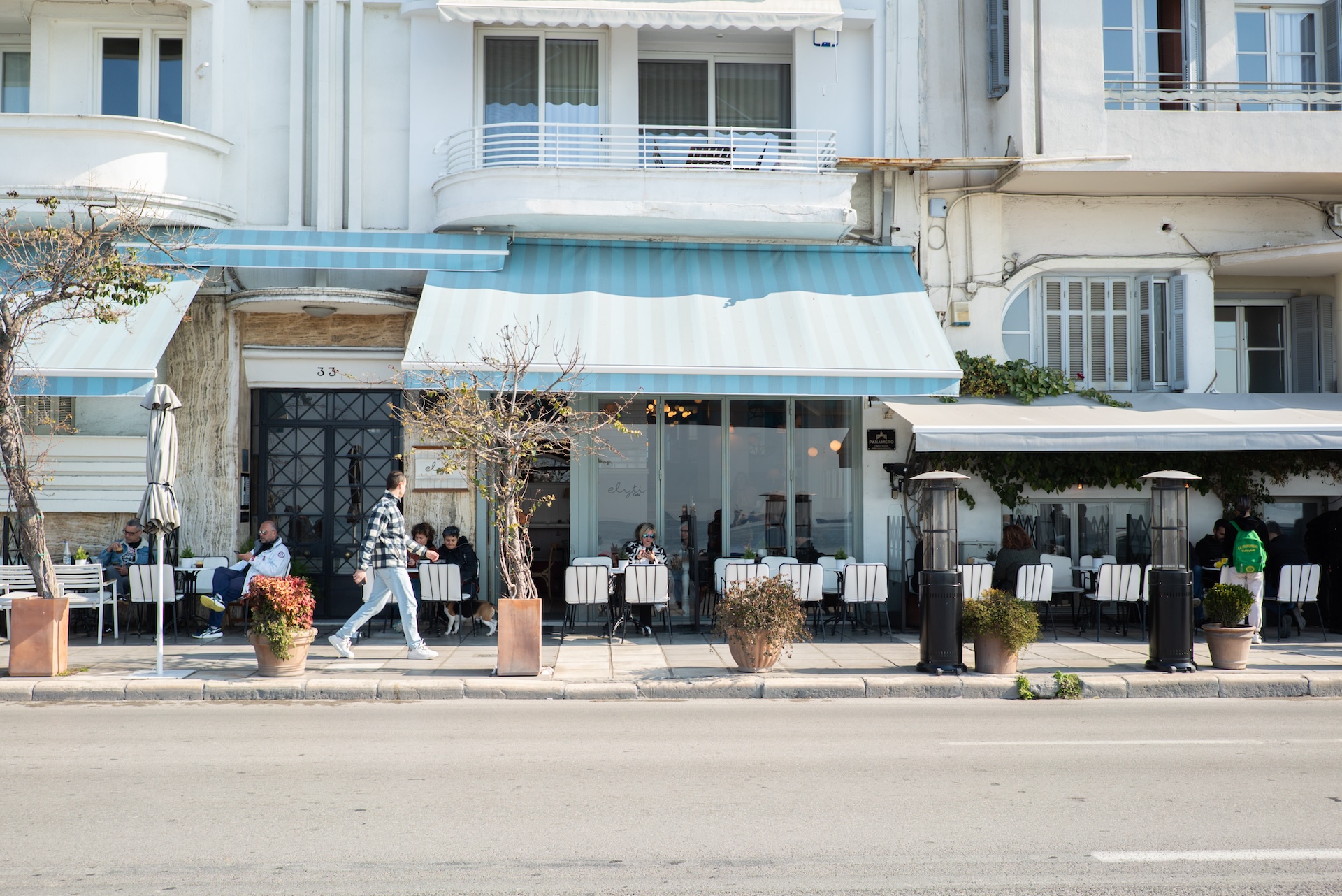
Thessaloniki
Morning, Noon, Night: Carolina Doriti’s Thessaloniki
Chef, cookbook author and longtime Culinary Backstreets guide Carolina Doriti shares her ideal day of eating in Thessaloniki, from koulouri and Greek coffee to soutzoukakia, seafood meze and dessert stops that show off the city’s sweet tooth.
Read more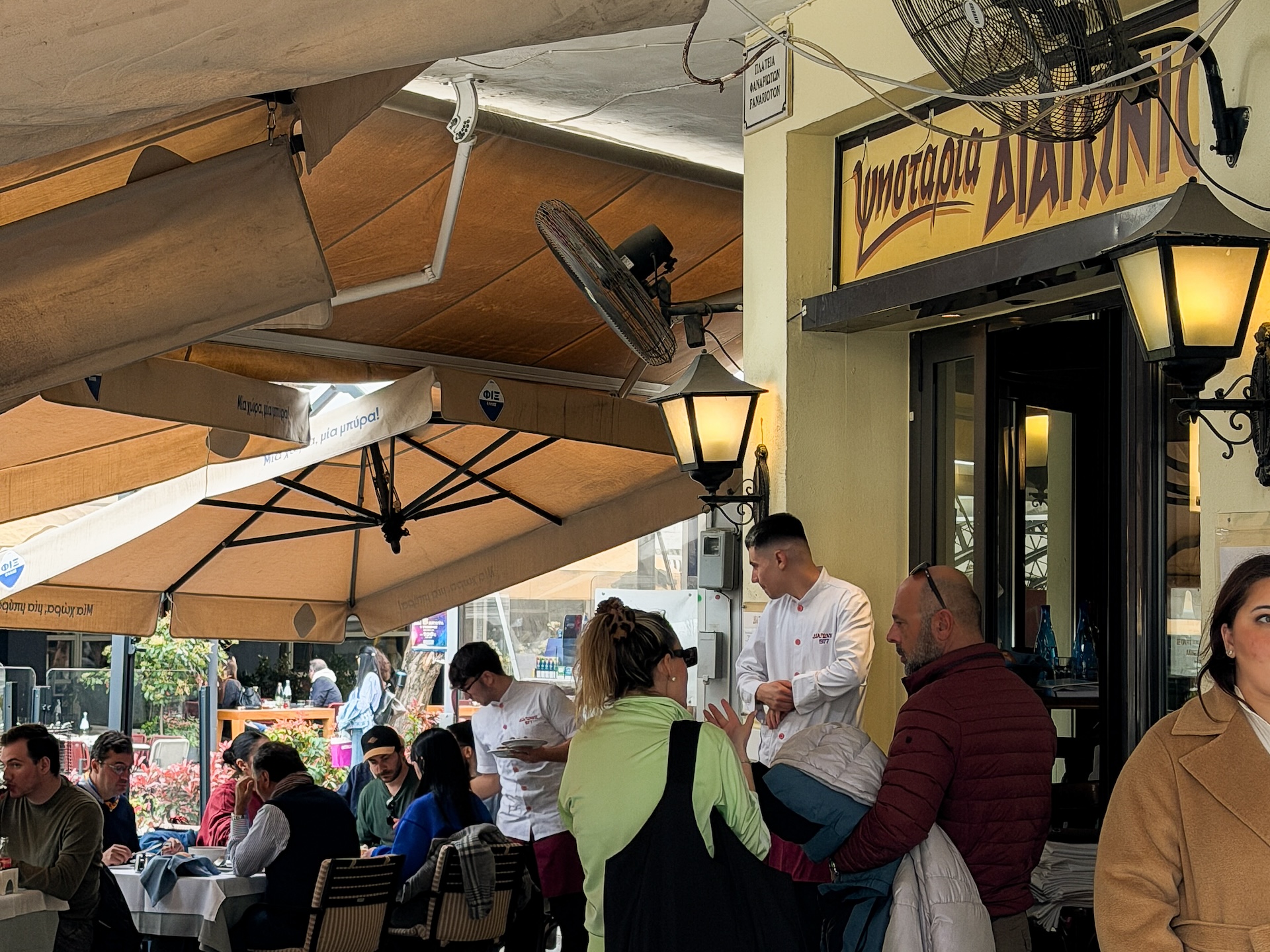
Thessaloniki
The Essentials: Where We Eat in Thessaloniki, Greece
In Thessaloniki, food is the clearest expression of the city’s history. From refugee-rooted soutzoukakia and late-night patsas to bougatsa, trigona and old-school seafood, these are the essentials that define how the city eats.
Read more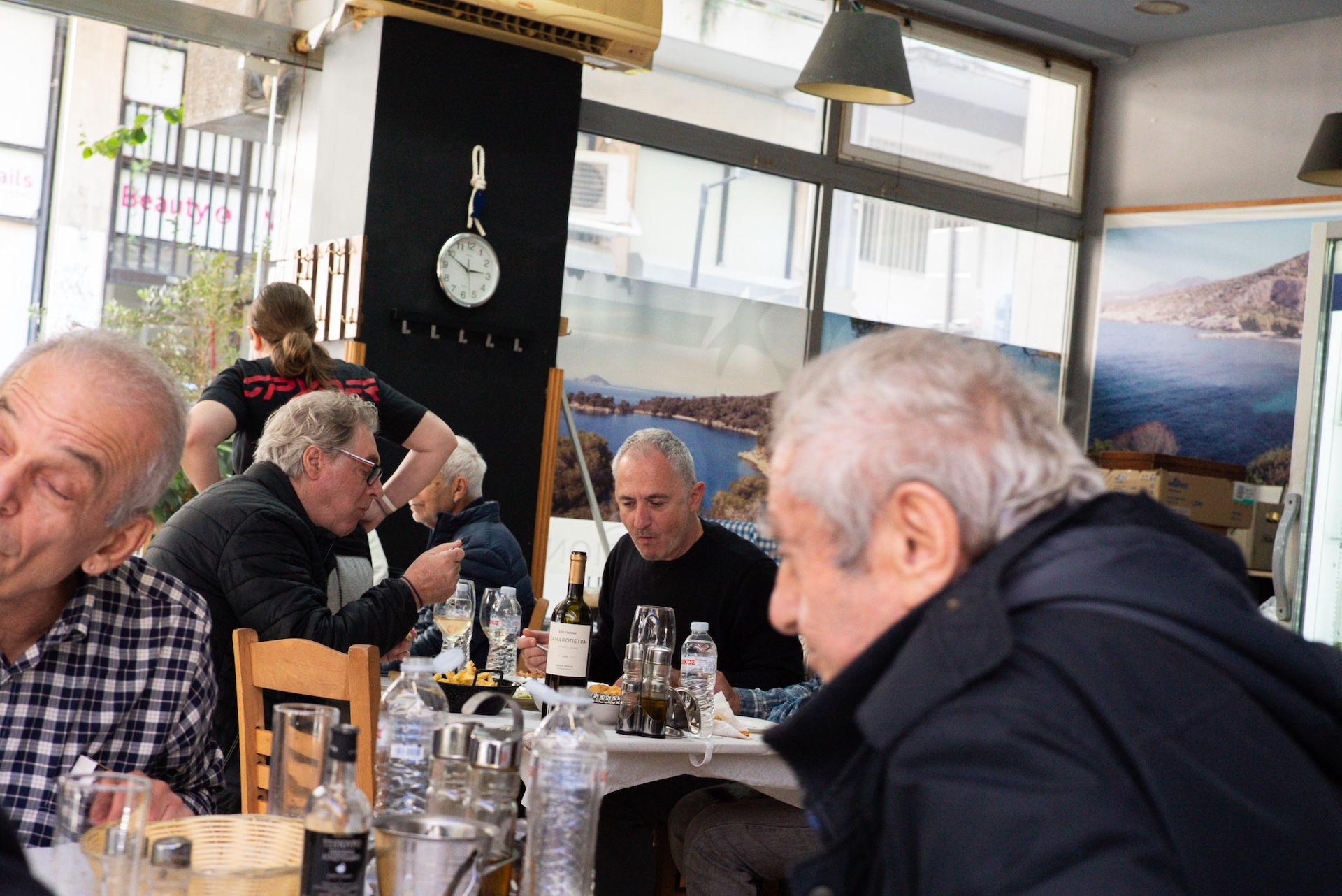
Thessaloniki
Where to Eat Meze in Thessaloniki: 7 Mezedopoleia to Know
One of the most popular kinds of restaurants in Greece is the mezedopoleio, which, as the name indicates, specializes in traditional local meze dishes (washed down with generous amounts of ouzo or other alcoholic drinks). Back in the day, mezedopoleia were the neighborhood’s meeting points. Men gathered there most of the day to drink, have a bite, talk politics and play backgammon, chess or cards. Today, the mezedopoleio remains a simple and very affordable place to eat, sometimes operating as a kafenio (cafeteria), and often offering traditional live music to add to the experience. Among Greek cities Thessaloniki is particularly famous for its numerous and excellent mezedopoleia, which makes it very difficult to choose just a few.
Read more
Thessaloniki
Along Thessaloniki’s Oregano Trail
As the car crested a craggy hill, the first rays of golden sun peaked over the horizon, painting distant clouds the color of red wine. Tufts of gnarled olive trees and rows of grapes whizzed by the window as we approached the farm, outrunning the quickly approaching sun. We left Thessaloniki at 5:30 a.m. to beat the Greek summer’s heat, something of concern for both workers – and oregano plants, our destination’s star crop. Michalis and Anastasia, owners of Aetheleon, were prepared for the day’s harvest. With every rising degree, minuscule droplets of moisture and essential oils seep from the oregano in an attempt to cool them down. The plants’ sweat-like response can be easily smelled, the aromatic wafts upon the breeze a prelude to the frenzied buzzing of hordes of happy bees following the fragrant trail.
Read more


Daily Dispatches from the Frontlines of Thessaloniki
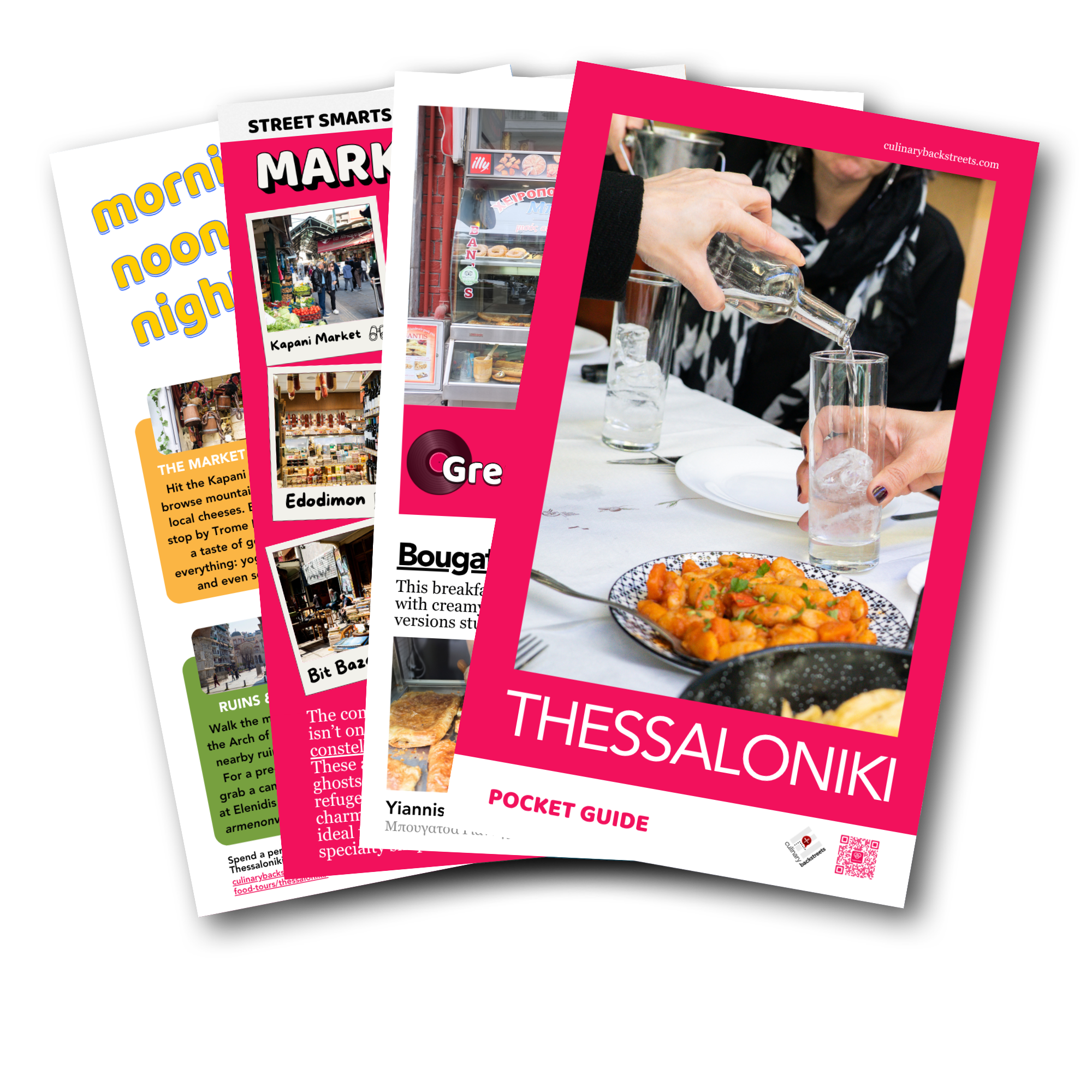
Get Your Free Thessaloniki Pocket Guide
Introducing our pocket-sized Thessaloniki guide — perfect for your next culinary adventure. Yours free when you sign up for our newsletter.
Get Your Free Thessaloniki Pocket Guide
Introducing our pocket-sized Thessaloniki guide — perfect for your next culinary adventure. Yours free when you sign up for our newsletter.
Your trips, powered by our picks
Curated Thessaloniki Travel Boards

Culinary Backstreets® Envoys, Always Searching for the Next Hidden Gem

Dora
Food Tour Leader

Eirini
Thessaloniki Tour Leader

Iannis
Thessaloniki Tour Leader

Carolina
Thessaloniki Correspondent
Your Questions, Answered
Thessaloniki is Greece's second-largest city and the historic capital of Macedonia in Northern Greece. It sits on the Thermaic Gulf, roughly 500 km north of Athens (a 4-hour drive or 45-minute flight).
In Thessaloniki, Roman, Byzantine, and Ottoman history collide. For a first-timer, a typical day would start with a walk along the Nea Paralia (the long waterfront promenade) to the iconic White Tower. Then, explore the Upper Town (Ano Poli), the only district that survived the Great Fire of 1917, for cobblestone streets and Byzantine walls. You might be tempted to skip the Rotunda, but its mosaics are a glitter wonder (and it’s blissfully cool inside on a scorching day). Pass the Arch of Galerius and roam through busy Modiano and Kapani markets. For a bit of boho, head to the Bit Bazaar. Day trips to the royal tombs of Vergina or the turquoise beaches of Halkidiki (Thessaloniki’s finger peninsulas) are easy and well worth the time.
May, June, September, and October, ideal weather, outdoor tavernas, and no Athens-level tourist crowd. Winter is cold but atmospheric, summer is very hot.
It’s a Mediterranean climate with a northern twist. Summers are hot and humid, often reaching 90°F. Unlike Athens, winters can be genuinely chilly and damp, with occasional snow and a biting north wind called the Vardaris. Spring and fall are mild and the absolute best times for walking.
Not from the US directly. Connect through Athens, Istanbul, Frankfurt, Munich, or London. Thessaloniki Airport (SKG) has strong European connections.
Two to three days for the city. Add one for a Halkidiki or Naoussa (Macedonian wine country) day trip. Thessaloniki is compact and the food scene is dense, you can cover a lot on foot..
Cheaper than Athens and much cheaper than Western European capitals. A full taverna meal with wine runs €15 to €25 per person
For first-timers, Aristotelous Square or the Ladadika district are perfect – you'll be steps from the sea and the best tavernas. For a more local and quiet stay with incredible views, look for boutique guesthouses in Ano Poli (the Upper Town).
The "best" is up for debate, but you can’t go wrong with modern meze at Zeme, the legendary soutzoukakia at Kronos, or find a table at one of the many spots inAno Poli. For the best bougatsa, locals swear by Bantis and Anoteron.
Bougatsa (sweet or savory) for breakfast, koulouri (sesame bread ring) from a street vendor, sesame-crusted karpouzia, soutzoukakia (Smyrna-style meatballs, Thessaloniki's Asia Minor heritage), grilled octopus with ouzo or tsipouro, and the signature Macedonian wine, Xinomavro from Naoussa.
Schengen: 90 days within 180. ETIAS from late 2026. No vaccination or testing.
Modiano and Kapani for markets. Ladadika for evening mezedopoleíes. Valaoritou for young-chef bistros. Ano Poli for tavernas with a view. The Nea Krini and Kalamaria waterfront for fish tavernas
The closest decent sands are in Perea or Agia Triada (about 30 mins by bus or water taxi). However, for beautiful blue flag beaches, everyone heads to Halkidiki, about an hour's drive south.
Very much so. The waterfront is a massive, car-free playground perfect for strollers and bikes. The city is compact, and the family-first Greek culture means children are welcome in almost every taverna, even late at night.
All three. Solo travelers do well because bougatsa counters, koulouri stands, and meze bars are all built for a quick single order. Families are welcome and Thessaloniki is a gentle, walkable city compared to Athens. Groups of four to eight are ideal for a proper Ladadika mezedopoleíon dinner.
Yes. One of the safer major European cities. Standard urban precautions apply.
Thessaloniki is a sleeper hit for those in the know. While Athens leans on its monumental Acropolis, Thessaloniki’s got its Byzantine soul and Ottoman corners. You don’t need to slog through massive cruise-ship crowds to spend a morning in the Kapani market, stand inches from Macedonian gold in the Archaeological Museum, or watch the sunset behind Mount Olympus from across the bay. It’s a more seamless city to navigate, with a slow-living cafe culture that makes it feel like a bit more of a local secret than a tourist destination.
Culinary Backstreets runs one food tour in Thessaloniki, Bougatsa and Beyond: Thessaloniki, Culinary Crossroads. It's a full-day walk through the Modiano and Kapani markets, Ladadika, and the Ano Poli upper town, covering bougatsa counters, koulouri stands, mezedopoleíes, and sesame-and-olive-oil shops, led by a resident food writer.
Different, not better. Athens is bigger and more diverse (with a strong modern-Greek scene). Thessaloniki is more distinctive, Sephardic Jewish, Ottoman, Pontic Greek, and Asia Minor influences layered into a compact city. If you're serious about Greek food history, Thessaloniki is required.
Ladadika for restaurants and nightlife. Aristotelous and city center for walkability. Ano Poli for character. The seaside promenade (Nikis Avenue) for views