We can't find the internet
Attempting to reconnect
Something went wrong!
Hang in there while we get back on track
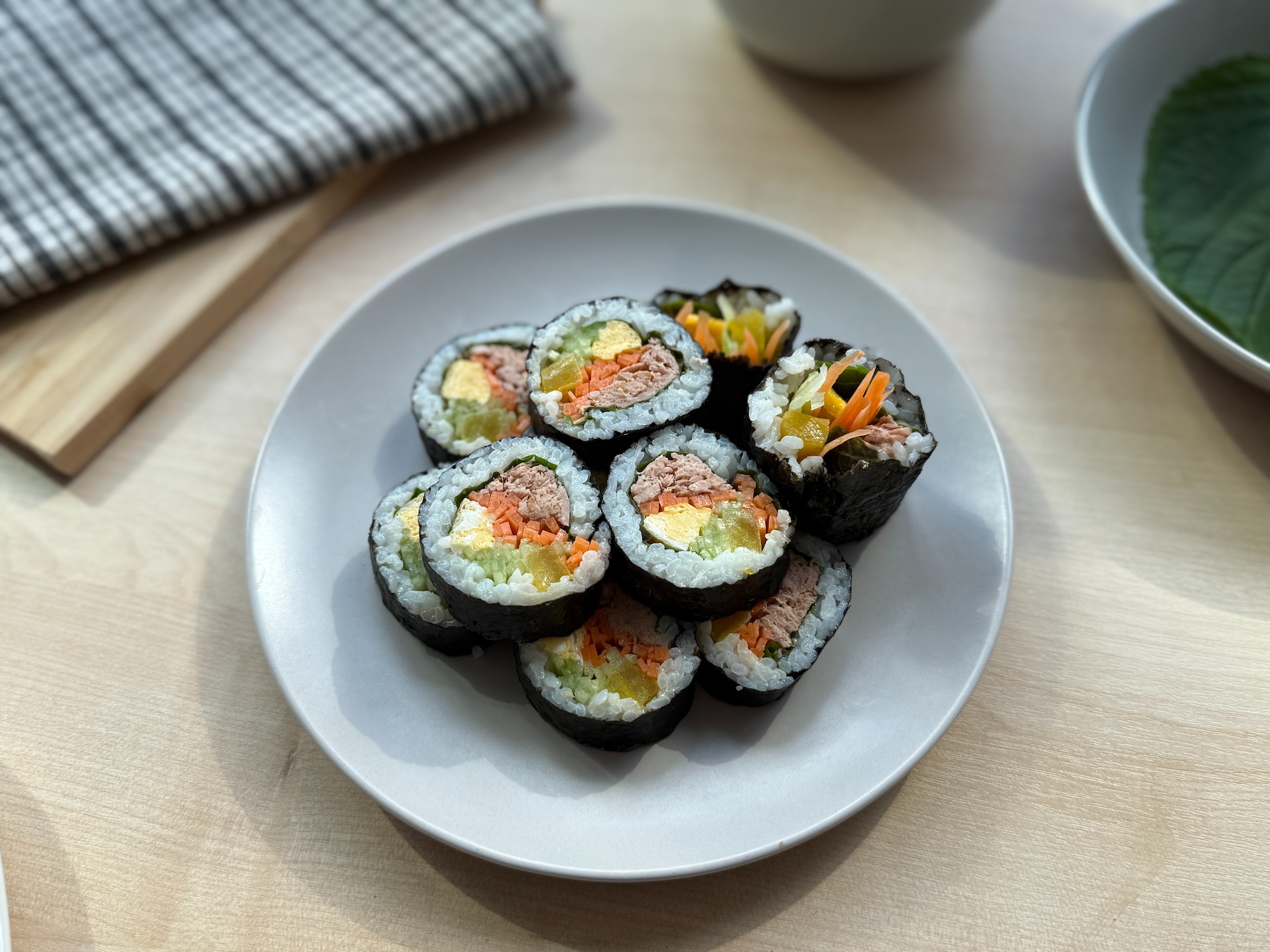
Recipe: Tuna Gimbap, Korea’s Favorite Picnic Roll


Recipe Information
A classic lunchbox and picnic staple, tuna gimbap is one of the most popular variations in Korea. The key is to keep every ingredient as dry and cool as possible before rolling. This version makes 2 rolls and serves about 2 to 3 people.
Ingredients
Makes 2 rolls
Basic Ingredients
2 sheets of gimbap seaweed (unseasoned nori)
about 300g (150g per roll) of freshly cooked rice
salt
sesame oil
Filling Ingredients
4 kkaennip (perilla leaves), stems removed
1/3 carrot
1/3 cucumber
150g canned tuna in oil, well drained
1 tsp mayonnaise
black pepper to taste
1 egg
salt to taste
2 long danmuji (yellow pickled radish) strips
Preparation
Step One
Julienne the carrot and cucumber. Toss with a pinch of salt and leave for 5 minutes, then pat thoroughly dry with paper towels. Wash the kkaennip, pat dry, and remove the stems.
Step Two
Drain the tuna very thoroughly, pressing out as much oil as possible. Mix with the mayonnaise and black pepper.
Step Three
Beat the egg and pour it into a lightly oiled pan. As it sets, roll it into a long log shape. Remove from the pan, let cool, blot off any excess oil with a paper towel, then slice lengthwise into finger-width strips.
Step Four
Put the freshly cooked rice in a bowl, season with salt and sesame oil, and mix well. Let cool.
Step Five
Keep all ingredients nearby and prepare your work surface with a large sheet of plastic wrap or a gimbap rolling mat.
Step Six
Place one sheet of gimbap seaweed on the mat with the rough side facing up. Scoop about half the rice onto the seaweed and spread it evenly about two grains thick, leaving a 1.5 cm strip empty at the far edge.
Step Seven
Along the center of the rice, lay 2 of the kkaennip flat as a base. Spoon the tuna mixture in a neat line on top, then stack the carrot, cucumber, egg omelette, and danmuji horizontally alongside. Press down firmly as you add each ingredient to create a tight, compact line.
Step Eight
Using the wrap or mat, lift the edge of seaweed closest to you and roll tightly so this edge meets the end of the ingredient pile, with no gaps. Continue rolling tightly to the end, pulling the wrap or mat to prevent gaps. Stick a few grains of rice on the inside of the empty seaweed strip or lightly moisten with water to seal.
Step Nine
Place the tightly rolled gimbap on a cutting board and use a gentle sawing motion with a sharp knife to slice into pieces about 1–1.5 cm wide, wiping the blade between cuts. Arrange in a dish or lunch container and sprinkle with sesame seeds, if available, on the cut surfaces.
Ingredient Notes
Selecting gimbap seaweed (unseasoned nori)
There are many types of seaweed in Korea, but for gimbap, look for square sheets of gimbap seaweed (unseasoned nori), about the size of a small handkerchief. They have a matte texture — one side rough, one side smooth. Place a sheet on the mat with the rough side facing up. This way, the smooth side faces out and the rice sticks well to the rough side.
Kkaennip (perilla leaf)
An aromatic herb used widely in Korean cooking, eaten fresh as a wrap leaf or prepared as banchan. Its clean, faintly minty fragrance cuts through rich or oily ingredients, which is exactly why it pairs so well with tuna. If you can't find it, arugula makes a good substitute.
Danmuji (yellow pickled radish)
A bright yellow-tinted pickled radish with a firm, crunchy texture and a mildly sweet, tangy flavor. If you can't find it, the quick-pickled daikon radish used in Vietnamese bánh mì sandwiches makes a good substitute.
Related Stories
We can't find the internet
Attempting to reconnect
Something went wrong!
Hang in there while we get back on track
Location & Contact
Book our Award-Winning Seoul Food Tour
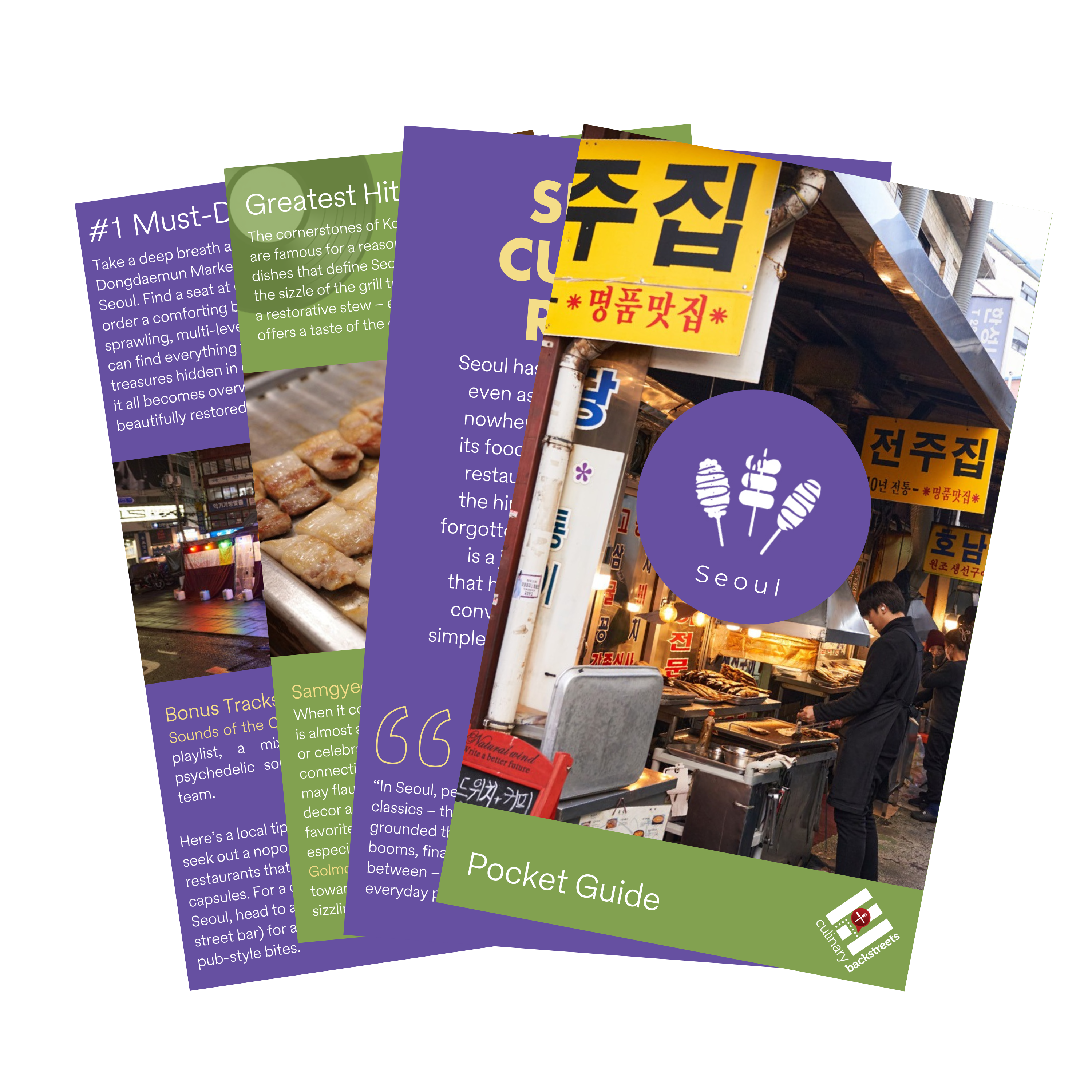
Get Your Free Seoul Pocket Guide
Introducing our pocket-sized Seoul guide — perfect for your next culinary adventure. Yours free when you sign up for our newsletter.




