Latest Stories

CB Book Club

We spoke to travel writer and cook Yasmin Khan about her latest cookbook, Ripe Figs: Recipes and Stories from Turkey, Greece, and Cyprus (W. W. Norton & Company, May 4, 2021). Author of two cookbooks, The Saffron Tales and Zaitoun, Yasmin turns her focus to the Eastern Mediterranean in Ripe Figs. Using the kitchen table as a lens through which to explore the issues of borders and identity in an interconnected world, she traces various migration stories in her travelogues and recipes. We chatted about the inspiration behind the book, her research process and the importance of documenting both the good and the bad in travel writing.

Wheel Hospitality

Bars, cafés, taverns and restaurants have historically functioned as meeting spots for all kinds of urban communities, from intellectuals to politicians and artists – revolutions have even been planned around the table. Nowadays in Barcelona, another community, one that has flourished in numerous cities around the world, has started gathering in these types of venues: cyclists. The number of cyclists in Barcelona has increased some 30 percent in recent years, according to the City Council – in 2017 alone, 38 percent of residents moved around the city on two wheels. With more than 230 km of cycling lanes and a fleet of 7,000 brand new municipal bikes, the city is still adjusting to coexisting with so many bikes and riders.

La Cuisine de Gagny

In Marseille, dining out in the Covid era has often meant eating in. Pizza, kebabs and other fast food have triumphed over cooked dishes, since they can more easily withstand travel in cardboard containers. While many restaurants have either pivoted to portable sandwiches or tried to implement new packing methods (like soupe à l’oignon in a vacuum-sealed bag), La Cuisine de Gagny has embraced glass jars – a return to its roots. At this tiny restaurant and caterer, the plats du jour are dished into glass containers – the kind of jars (bocaux) filled with rillettes and jams in a French country kitchen. Sealed with glass lids and a thick orange-rubber band, the old-school jars don’t make the food taste like plastic.

Recipe

Greek Easter – this year celebrated on Sunday, May 2 – involves a great deal of baking, from breads to cookies and sweet treats. Many of these traditional recipes are rich with symbolic meaning, usually referencing the regeneration of the earth, the blooming of spring, as well as the honoring of the dead. Some of the themes are clearly rooted in ancient Greek traditions and practices that Christianity later adopted and incorporated into their own celebrations. The egg is the star of most typical Easter recipes. An important ancient symbol of fertility, life and rebirth, eggs are also dyed for the holiday and used in various ways as decoration.

Fast Times

The holy month of Ramadan has arrived, and along with it Istanbul has been blessed with beautiful spring weather. Normally, people throughout the city would be gathering in groups large and small in the evening to enjoy their fast-breaking iftar, but these days are anything but normal. Surging Covid-19 figures, which recently eclipsed 60,000 a day in Turkey, have resulted in tightened measures geared toward curbing the pandemic (in fact, it was announced yesterday that the country will be under a total lockdown from April 29 until May 17). These have included the closure of restaurants and cafés for dining service and stricter curfews, which begin at 7 p.m. during the week.

A Tasca Renewed

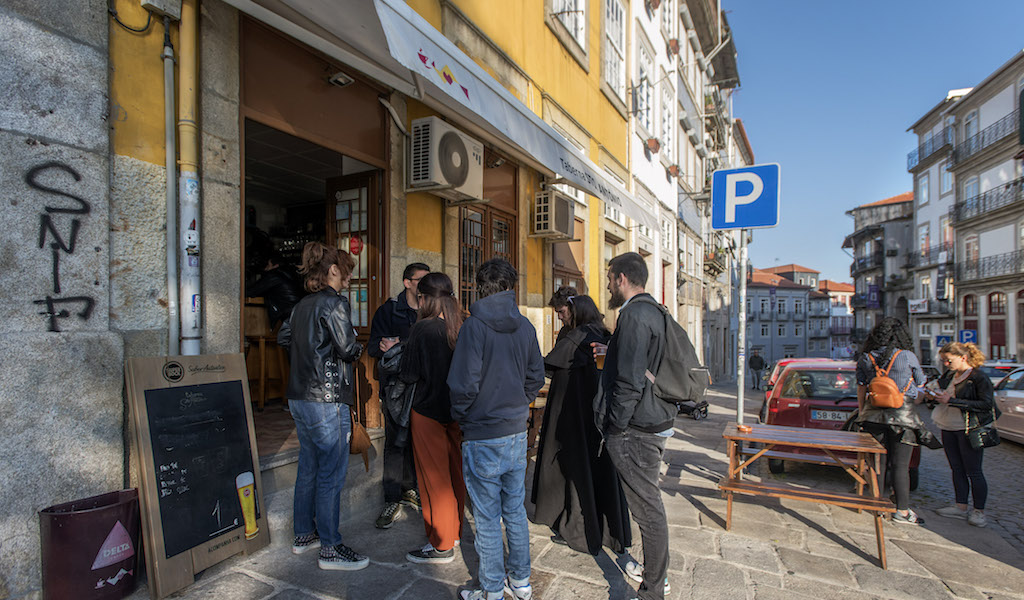
Last Monday was an emotional day for João Gomes, his wife, Adelaide, his son Nuno and Nuno’s wife, Ludmila. Imperial de Campo de Ourique, the family’s tasca, reopened for business after being shut for almost three months due to anti-Covid measures in Portugal. Hungry Lisboetas can once again enjoy the traditional and hearty dishes cooked by Adelaide, the heart of Imperial’s kitchen, and the joy of a warm welcome by João, the tasca’s enthusiastic frontman. “The biggest pleasure is to be able to talk to my clients again, I really missed this,” he tells us, a mask covering his wide-open smile.

Recipe

Vegetable main dishes abound in Greek cuisine. Those cooked in olive oil on the stovetop fall under the broader category of ladera (ladi means “olive oil”). They feature seasonal vegetables – usually one main vegetable is the star of each dish, with others adding flavor and color. In the lead-up to Easter – when there is a traditional fasting period of 40 days and lots of new vegetables come into season – ladera dishes enter the spotlight. One of my favorites is fasolakia (the diminutive of fasoli, or “bean”), which features fresh green beans cooked in tomato sauce with a few potatoes, carrots and often zucchini. It’s a dish that’s prepared all over Greece as well as in other Mediterranean countries like Turkey, with small variations.

Market Recovery

We used to live across the street from Dinamo Stadium, on the edge of the Deserter’s Bazaar and part of the Vagzalis Bazroba – Station Bazaar – complex, a sprawling, unhinged confederacy of free-marketers selling everything from counterfeit apparel to contraband from Russia, secondhand cell phones and coffee beans labeled Nescafé. Zaza, a musician and our roommate at the time, served as our guide. His song “Vashlis Gamyidvelo,” about an apple seller who sold him a beautiful but rotten apple, was a big hit on the radio and made him quite the local celebrity. Shopping with Zaza at the bazaar meant lots of discounts and free drinks at the many wine stands back then.

Tophane Tarihi Taş Fırın

Every year, for one month only, bakeries across Istanbul churn out round, flat, yeasty loaves of Ramazan pidesi, a Turkish flatbread. Before Muslims break their fast at sundown, they hurry to buy these addictively chewy pides, which are essential to the iftar meal here. Some bakeries rely on machines to shape the pide and stamp the traditional checkerboard pattern on top; others do it the old-fashioned way, by hand in wood-fired ovens. Tophane Tarihi Taş Fırın is a third-generation, family-run bakery that is known for its simit, the sesame-crusted bagel sold on every corner in Istanbul. They also make excellent Ramazan pide in their 130-year-old wood oven. Two easygoing Eryılmaz brothers run the shop, while additional family members head up many other bakeries in the area.

Xiaoping Fandian

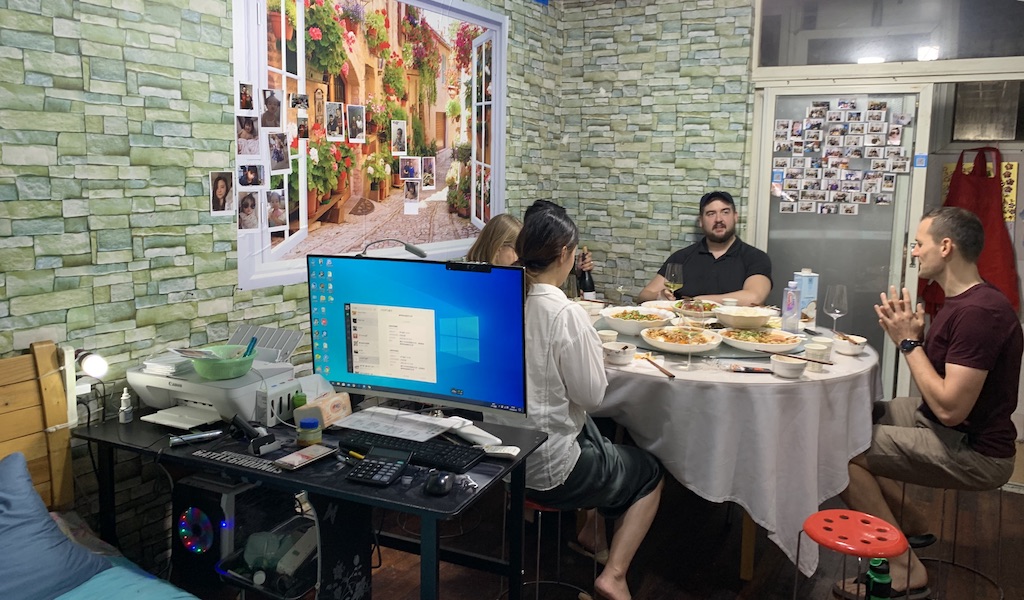
Non-descript is the best way to describe Xiaoping Fandian’s storefront. Its plain-Jane décor would never make you stop and take notice – the first floor looks more like a hotel check-in than a restaurant – but walk by around any meal time, and the scrum of waiting diners speaking in rapid-fire Shanghainese will turn your head. Where there are this many speakers of the local dialect, there’s bound to be delicious local food. Upstairs, you’ll discover that Xiaoping Fandian is a multi-level home with former bedrooms and an attic space that have been converted into private dining rooms with lazy Susans. A few smaller tables are scattered in the hallway and living room for good measure.

Queso de Mahón at Subaida, photo by Sam Zucker

At 10 a.m., Juan Trenado, head of cheese production at Finca Subaida, and his team had already been toiling for several hours. They moved efficiently through each step of the artisanal process, expertly crafting block after block of the famous Queso de Mahón on the Mediterranean island of Menorca. “By law” – Mahón has a protected designation of origin (D.O.P.) – “the cheese could include a little sheep’s milk, but ours doesn’t,” Trenado told us, as he directed a gushing stream of watery cheese curds from a wide hose into a big, waist-high stainless steel vat. Slowly, the vat filled nearly to the brim, and Trenado, along with Mònica Mercadal, Head of Cheese Maturation, and Ramon Alonso, a new hire, carefully stirred the curds, breaking them into small chickpea-sized pieces.

Mukhrani Nursery

In March, as the teasing wafts of spring begin to fill the air, local farmers converge at the entrance of the Sunday bazaar in Garikula where they lean against their old jalopies with bundled fruit tree saplings and grapevine seedlings for sale. For someone who wants to start a little backyard vineyard with a handful of vines, the bazaar is a fine place to shop. More ambitious wine growers, however, need to go to a grafting nursery and place an order. In Shida Kartli, one of the largest is run by a family who has been nursing grapevines for generations. Kobe Cherqezishvili, his wife, Maia Dalakishvili, and their sons, Beso and Gio, tend to over 500 varieties at their seven-hectare nursery in Mukhrani, which they opened in 2004.

Building Blocks: In Naples, There’s Something in the Air Featured Image

In the early 18th century, before there was the Spinning Jenny, the Cotton Gin and the steam engine, a new machine was making waves in Gragnano, the grain capital of the Kingdom of Two Sicilies. It was the torchio, the pasta extruder. And it would radically and permanently change the diet of Italy. Just beyond Naples, the ancient Roman town of Gragnano, whose very name indicates an abundance of grain, was tentatively beginning to mechanize the production of dried pasta, theretofore a luxurious oddity throughout the Italian peninsula. Local entrepreneurs gradually capitalized on what their forebearers had known for several millennia – not only was Gragnano ideally situated due to its storied cultivation of durum wheat and semolina, but it also offered access to thirty water mills. Perhaps even more curiously Gragnano offered something very rare at the time: the perfect air for drying pasta.

Maria peels an Ataulfo mango at her cart in Mexico City, photo by Paco de Santiago

We know that spring has arrived in Mexico City when street carts crowned with whole mangoes begin to roll into town. While wandering the Centro Histórico’s bustling streets just last week, we bumped into Maria, a seasonal worker whose cart is currently laden with this favorite springtime fruit. Intrigued, we stopped to watch as she deftly skewered the mango in her hand with a stick, peeled off the skin, made decorative cuts to transform the bright orange flesh into a beautiful flower, which she then brushed with chamoy, a classic Mexican sauce, and dipped in one of the brightly colored powders stored in plastic boxes: salsa tajín, chamoy, salt, chile or everything mixed together.

Spring (Food) Break 2021

A ripe loquat is a thing of beauty. For a short window of time, usually in April and May, trees heavy with the fruit can be spotted across Lisbon, in both public parks, private gardens and tiny backyards. We have a few favorite ones that we frequent, sometimes surreptitiously, during loquat season to pluck the small, butterscotch-colored fruit and fulfill our craving. But we have to be quick – loquats are as short-lived as they are delicious. Adriana Freire, the founder of Cozinha Popular da Mouraria, a community kitchen, knows the city’s loquat trees even better than we do. Although a popular spring fruit in Portugal, many of Lisbon’s loquat trees are ornamental in nature and often left unpicked.

logo

Terms of Service