Latest Stories

Catalonia's White Wines

When we think of white wine in Catalonia, we think of its seemingly endless possibilities. Production of whites here has a 2,000-year-old history. The wide-ranging diversity in the area’s Mediterranean climate and calcareous soils, from the mountains to the sea, and the combination of old grape varieties and newly introduced “foreigners” with traditional and experimental methods of production make for innumerable styles and no taboos. Who knew white was a color with so many variations? The traditional Catalan grape varieties used to make white wine are mainly macabeo, xarel-lo, parellada and garnatxa blanca, but this area of Spain has the largest number of white grapes included in all its protected appellations (D.O.). Where other Spanish D.O.s usually are deeply defined by one or a few varieties, in the Catalunya D.O. there are more than 16 allowed – 35 counting the reds. In fact, this umbrella appellation, which covers wines that do not fall under the 10 subregion designations (Montsant, Penedès, etc.), was created to allow the use of all the grapes of the other Catalan designations in the entire area. It implicitly gives freedom to Catalan winemakers to express more than the old narrower conceptions of terroir and opens the doors to experimentation.

All Natural

We’ve talked before about Greek coffee, and it’s true that going out for coffee is one of Athenians’ favorite pastimes, but there are plenty of Greeks who prefer tea or infusions. And in fact, the practice of gathering wild herbs has a history that stretches all the way back into antiquity. References to Mediterranean flora are found everywhere in history, from Egypt to Asia Minor and from Homer to the ancient Greek philosophers’ texts. Take, for instance, Hippocrates, the so-called father of medicine, who focused on the healing properties of plants and actually recorded about 400 species of herbs and their known uses in the 5th century BCE. That era saw a heavy trade in herbs between the Mediterranean and the East.

Ask CB

Dear Culinary Backstreets,I often have to dine with Chinese coworkers at banquets and want to make sure I am not offending anyone. Are there certain dining customs I should adhere to? China’s dining etiquette is more flexible and forgiving than that of other Asian cultures – like Japan, for instance – but there are a few rules you should know. Most are nonverbal cues that demonstrate respect, especially at work or government banquets.

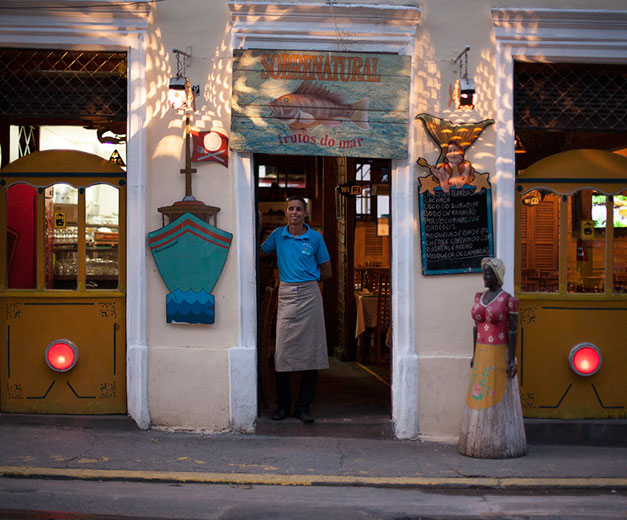
Sobrenatural

With 4,500 miles of coastline, the world’s largest river by volume (the Amazon), more than 10,000 miles of waterways and the largest amount of fresh water on the planet, Brazil suffers from a certain gastronomical misperception. Yes, this is a country that loves beef, prominently on display in popular Brazilian churrascarias.

Pyongyang

North Korean cuisine is about as mysterious as it gets. Few travelers have ever actually been to the reclusive country, and news reports are more often about high-profile rescues and the dire food security situation than its national cuisine. Thanks to 10 North Korean restaurants in Beijing and 50 others scattered around Southeast Asia, those living in the Far East have plenty of opportunity to glimpse the country’s dining scene. Shanghai is home to seven branches of the Pyongyang restaurant chain, and food is only part of the draw. With a nightly show around 7:30 p.m., the song and dance numbers put on by the double-duty waitresses supposedly allow for a rare glimpse inside the traditional culture.

Manas Kouzina Kouzina

Update: This spot is sadly no longer open. At first you’re puzzled. What a strange name. Why not just call it Manas Kouzina, Mother’s Kitchen, and be done with it? Well, like everything connected with this new Athenian eatery, which opened at the end of August opposite the big butter-colored church dedicated to St. Irene (Agia Eirini) on Aiolou Street, the name was given tremendous thought.

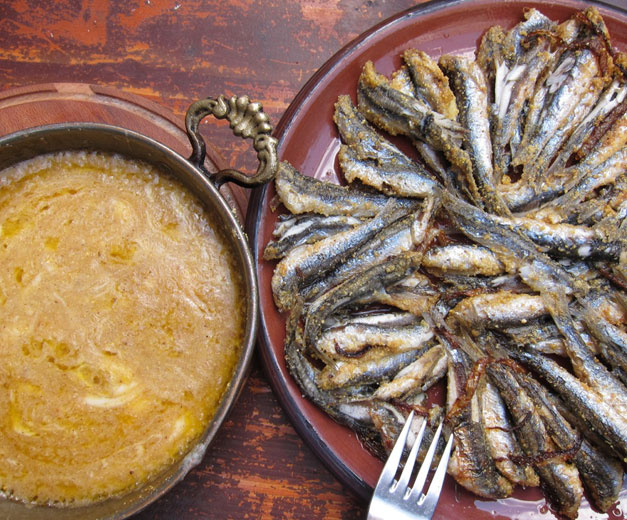
Hanegah

Editor’s note: Sadly, it appears that due to the neighbors no longer wanting to be surrounded by fish fry odors, this restaurant is no longer serving hamsi. We will update if things change. Around the time that hamsi, our favorite little fish, appear in the markets of Istanbul in late fall we become restless for the Black Sea-style cooking we’ve been missing since the previous season. Hamsi (fresh anchovies) are not the only thing to eat in a Black Sea restaurant, but eating in one that doesn’t have hamsi sometimes feels like sitting down for a meal in a BBQ joint that only serves coleslaw.

Gracioso

Rio’s Port Zone is undergoing a major facelift, and whether that will nicely polish its tired face or look like a botched Botox job remains to be seen. The port is the heart of Rio Antigo and particularly central to Afro-Brazilian history.It’s home to Rio’s first favela (squatter settlement), called Providência, which was originally populated in 1897 by veterans of the War of Canudos who were told the government would provide housing when they returned to Rio and found those promises to be delayed and elusive. At this port, up to an estimated half million slaves walked in from Brazil’s shores to then be sold in the port’s slave market, treated in a hospital if they were sick or buried if they died after arrival in Gamboa, where a fascinating makeshift museum called the Cemitério dos Pretos Novos offers a view of the human bones a homeowner found while digging on her property.

Asuman: East of the Border Featured Image

Editor's note: Culinary Backstreets' Migrant Kitchen: Taste of Iran event took place in Istanbul on Monday, and to mark the occasion, we're featuring this review of one of Istanbul's few Iranian restaurants. Considering the fact that Iran is a next-door neighbor to Turkey and that so many Iranians call Istanbul home, we’ve always found it more than a bit baffling that there are hardly any Iranian restaurants in the city. Imagine New York with all but a handful of Mexican restaurants? The one Iranian restaurant in town that we did know about – a tourist-oriented place with an in-house musician who played “Hava Nagila” on his zither – mercifully closed down years ago.

Roast Duck

The Chinese have appreciated the finer qualities of roast duck for millennia, and in that time, they’ve refined their cooking techniques into a virtual art form. The first mention of roast duck (烤鸭, kǎoyā) dates back to the Northern and Southern dynasties (A.D. 420–589). By the Yuan Dynasty (1206-1368), the tawny bird was gracing the tables of mandarins and emperors in then-capital Nanjing, and imperial kitchen inspector Hu Sihui mentioned it in The Complete Recipes for Dishes and Beverages, published in 1330, along with a record of how the duck was cooked.

Part of Taxidevontas's ouzo selection, photo by Manteau Stam

In Piraeus there is a tacit agreement among locals to keep treasured taverns and restaurants hidden, lest they be overrun by the tourists arriving on the cruise ships that dock in town. This is particularly true of Keratsini, a neighborhood on the outskirts of the port city. In 1922, Keratsini became home to Greek refugees driven out of Smyrna, the coast of the Sea of Marmara and Constantinople during fighting between Greece and the nascent Turkish state. At first, these immigrants were treated poorly and suffered poverty and hardships, but eventually they became a vital part of the Greek population.

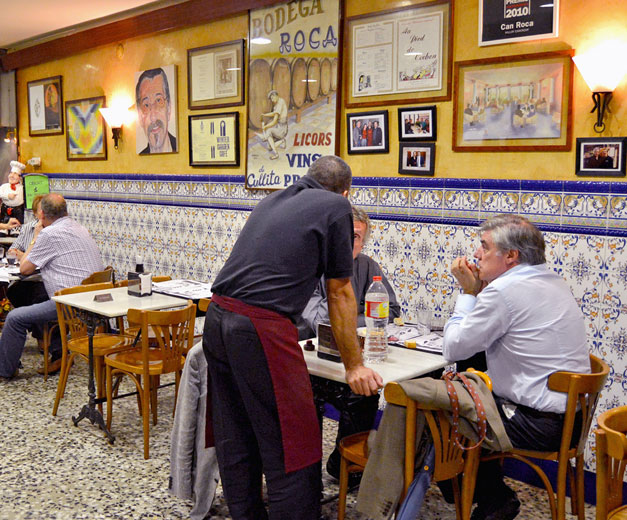
Taverna Can Roca

Editor’s note: We regret to report that Taverna Can Roca has closed. In the neighborhood of Sant Andreu we encounter very few city visitors wandering the cobbled streets or peering at the 19th-century two-story houses that pepper this district. Through the doors of Taverna Can Roca, we find even fewer. This is a place that can be considered muy del barrio.

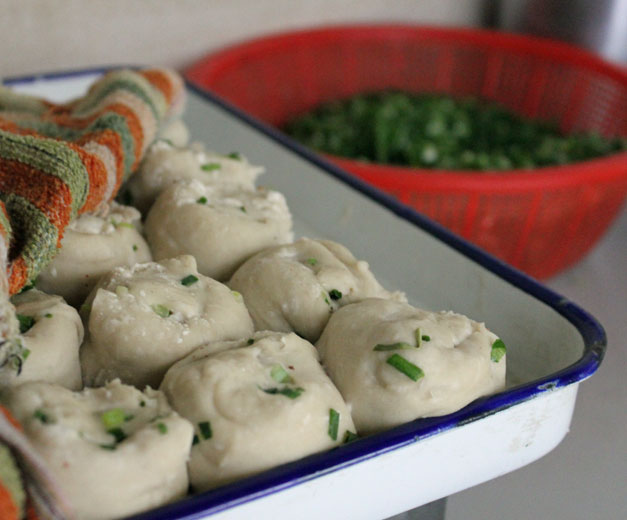
A Po's Cong You Bing

Here at CB Shanghai, we’ve already confessed our undying affection for the scallion oil pancakes (葱油饼, cōngyóubǐng) at A Da. Mr. Wu’s are so beautifully crafted that they take on the aura of art with their precision and flair, but we’re also a little in love with the slapdash, unconventional version fried up by an elderly couple at A Po, just a couple of blocks away.

New Wave Retsina

For too long retsina has been thought of as a cheap, oxidized, overly pungent bad wine made from mediocre grapes, its poor quality disguised by an overdose of resin and exacerbated by being stored in questionable conditions in the backyards of seaside tavernas. To say the wine has an image problem is an understatement – but that may be changing. Regardless of its reputation, retsina is a true Greek original. It dates back to the Ancient Greeks, who would coat the interiors of their otherwise porous earthenware amphorae with resin to make their wine storage airtight. Wine drinkers grew to like the taste, and winemakers consequently began adding pine resin to grape must during fermentation.

Lao Shaoxing Doujiang

In Shanghai, a pretty surefire way to tell whether a dining establishment deserves your attention or not is by the presence of a line in front of it. (A corollary might be that the amount of attention the place deserves is commensurate with the size of the line.) Lao Shaoxing Doujiang passes the test. This ramshackle stand in the Huangpu district serves traditional breakfast foods all night long. Until recently, the stand was run by a granny in her nineties who would ladle out bowls of hot soy milk (豆浆, dòujiāng) into the wee hours of the morning. She retired this year, but her less-than-friendly son has taken over, and the buzz remains (as does the inevitable line).

logo

Terms of Service