Latest Stories

La Biblioteca Gourmande

[Editor's note: We're sorry to report that La Biblioteca Gourmande has closed.] In the heart of El Raval, one of Barcelona’s most multicultural neighborhoods, lies a portal to the Catalan countryside. At La Biblioteca, which opened in 2012, the origins of the ingredients sing out clearly from each dish and plunge you into a pure culinary experience inspired by the land: the traditional farmhouses called masias, the rustic recipes of the Pyrenees, the perfume of the valleys and gardens, the modern farmers near the city and the influence on plants and herbs of the Mediterranean Sea.

Ask CB: Child-Friendly Dining in Athens?

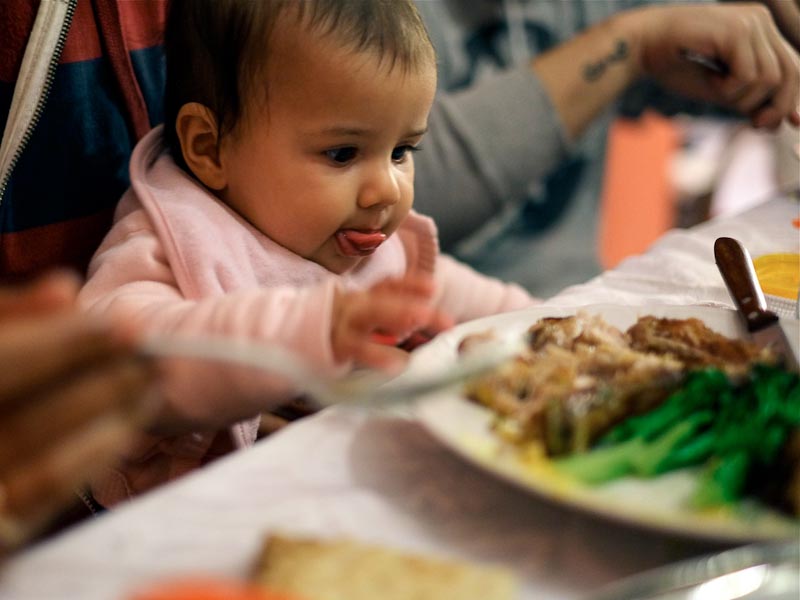
Dear Culinary Backstreets, My family is traveling to Athens in October. Some of our friends have told us that Athens is not very child-friendly and that the only places that cater to children are international fast food chains. Is this true? Are there any other options for those of us who do not want to eat American-style fast food?

CADEG: 24-Hour Market People

Foreigners tend to see Rio as stretching from the Christ statue to the beachside neighborhoods, from Copacabana to São Conrado; the rest of the city just provides passage to the Atlantic. That’s a shame. Neighborhoods like Jacarepaguá, Madureira and Bangu have vibrant lives moving at a breathless pace and more intriguing locales than the typical postcard views of the city.

Tacomix

Making mixiote takes some effort. On its home turf in Central Mexico, the dish is made by taking chicken, beef or mutton that is seasoned with pasilla and guajillo chili peppers as well as flavorings like thyme, cumin, bay leaves, oregano, onion and garlic, wrapping it in individual portions in maguey leaves and then slow-cooking the bundle in a pit, preferably overnight. But how about in Mexico City, a crowded metropolis where it’s not always possible to build a BBQ pit in the ground, or to obtain maguey leaves, which are both expensive and difficult to work with?

Ask CB: What is Stinky Tofu and Do I Dare Eat It?

Dear Culinary Backstreets, I keep hearing about something in Chinese cuisine called “stinky tofu.” Does it really smell that bad to earn such an offensive moniker?

Bar do Adão

Perhaps nothing epitomizes Rio de Janeiro’s hedonistic approach to cuisine more than a popular deep-fried finger food: the pastel. A bite into one of these fresh, crispy stuffed dough pockets – which range from a palm-sized crescent moon to a rectangle as big as a dinner plate – releases a blow of hot steam that envelops the diner’s face in an aromatic cloud carrying the fragrance of the decadent fillings inside.

Nuruosmaniye Köftecisi

Editor's note: We are sad to report that Nuruosmaniye Köftecisi has closed. In Istanbul, if all you have is a street address for a restaurant, you are as good as lost. It’s all about proximity to landmarks, as in “postanedeki kokoreççi” (the kokoreç vendor near the post office) or “Süleymaniye’deki kuru fasulyeciler” (the bean eateries at Süleymaniye Mosque). This is the way we’ve learned to navigate this city and we’ve even found reason to tag some places according to our own associations.

Horchatería Sirvent

Be it kvass in Russia or boza in Turkey, every nation seems to have one of their own, a locally loved drink that to most outsiders comes off as a particularly strange brew. In Spain, that drink is horchata, a unique and deliciously refreshing concoction made from chufas (tigernuts), water and sugar. Served chilled, horchata is beloved all over the peninsula.

El Tast de Joan Noi

Update: This spot is sadly no longer open. In Barcelona, food markets are longtime culinary institutions beloved by both neighbors and chefs. Their intense sights, smells and sounds are a wonderful, chaotic amuse-bouche that stimulates our senses without our even opening our mouths to taste any of the products being sold. But sometimes, we long for the chance to combine the multisensory experience of market shopping with the taste of great food. Although this concept can seem obvious, it’s actually not easy to find places that combine the selling of fresh products with their cooking.

Nom Nom Dessert Bar

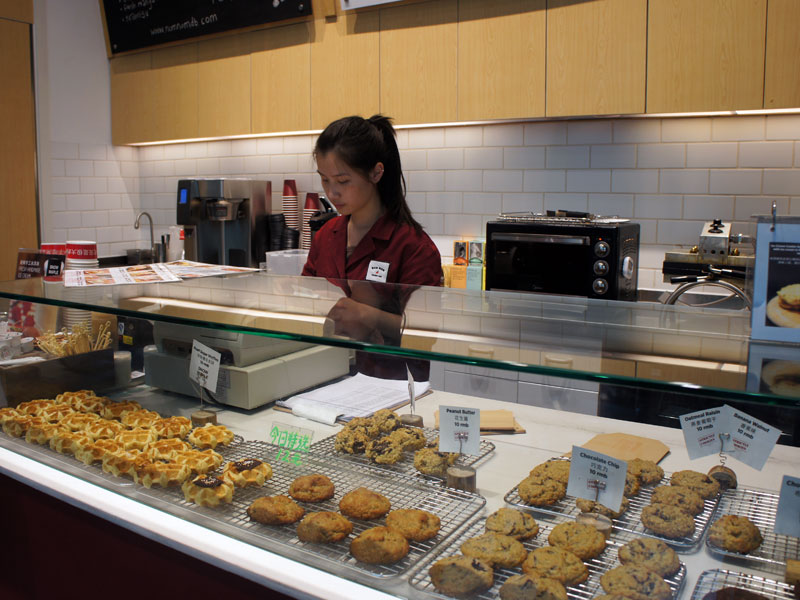
For years, expats in Shanghai complained about the lack of quality desserts in the city. Perhaps they just meant familiar desserts, as locals were more than happy to point them to delicious egg tarts, mooncakes or Taiwanese iced treats. But alas, when it came to sweets, there seemed to be a Great Wall-sized divide between East and West.

Strofi, photo by Manteau Stam

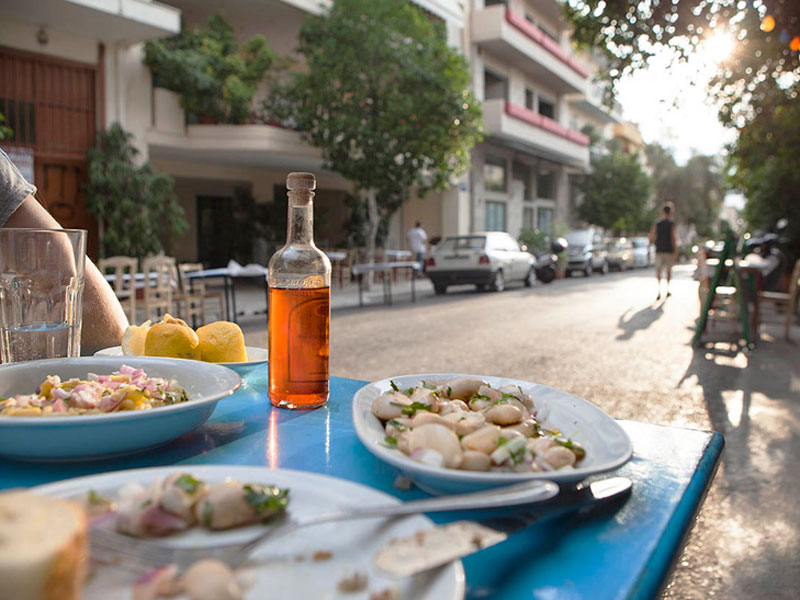
It’s a long drive from Athens to Perama, the westernmost terminal of the port town of Piraeus, and the payoff is, at first sight, minimal. To the left is the port’s industrial zone – a forest of blue and orange cranes that tower over the sea. To the right is a stretch of industrial wasteland: old electricity plants, derelict factories, walls with enormous graffiti celebrating Piraeus’s very successful team, Olympiacos, and then a jumble of recently built high-rise buildings on a rocky hill. First populated in the 1920s by immigrants from Asia Minor, Istanbul and the Pontus (Black Sea) region, this suburb of Piraeus now has about 25,000 residents, most of whose livelihoods depend on the dockyards that have been here since the 1930s. Perama remains a proud, working-class neighborhood, and it is no accident that the early Greek hip-hop of the ’90s and the so-called Low Bap hip-hop genre and movement started here.

Yedikule: An Istanbul Neighborhood’s Bitter Harvest

Foreigners living in Istanbul often say they love the place for its history, while some say it’s the people who make it special. We find life here mystifying for the unpredictable dialogue between the two, the way 15 million or so people reconcile their daily lives with this city’s rich past. To live inside this beautiful crash course is invigorating and, at the same time, a heartbreaking experience. Where else does the elegant silhouette of migratory storks cross a skyline of construction cranes busy laying a metro tube to connect two continents, a project whose progress was stalled by the unexpected discovery of one of the richest underwater archaeological finds ever, a lost port full of ancient boats filled with age-old cargo? Walking these streets, every day we see something so fabulous that it takes our breath away, just as we spot something around the corner threatening to smash it.

Ask CB: Getting Around Rio's High Prices?

Dear Culinary Backstreets, I hear that prices in Rio are Olympic-sized. How can I eat the best the city has to offer, without spending an arm and a leg? It’s true that prices in Rio aren’t what they used to be. As a recent New York Times article notes, Brazilians pay extremely high prices (particularly relative to wages) for just about everything from food to automobiles, due to both high inflation and a tax system that’s skewed in favor of consumption taxes. The high prices hurt both consumers and businesses. As NPR reported, one Italian restaurant in Sao Paulo recently went as far as taking tomatoes off its menu because the cost had shot up so much. Meanwhile, an influx of money – from the construction boom ahead of the upcoming 2014 World Cup and 2016 Summer Olympics and from the growing oil and gas sector developing off Rio’s coast – is driving up prices even further. Indeed, what’s most surprising about Rio’s priciest locales is how oversized the lines to get into them are.

Our Culinary Walks in the New York Times!

We are very proud to have been included in a New York Timesarticle about small group culinary tours that appears on the front page of today’s Dining section. Looking at food walks in Istanbul, Paris, Rome and a few other culinary capitals, the article hails the arrival of a new kind of guide – the “food Sherpa”:

Taktika Berri

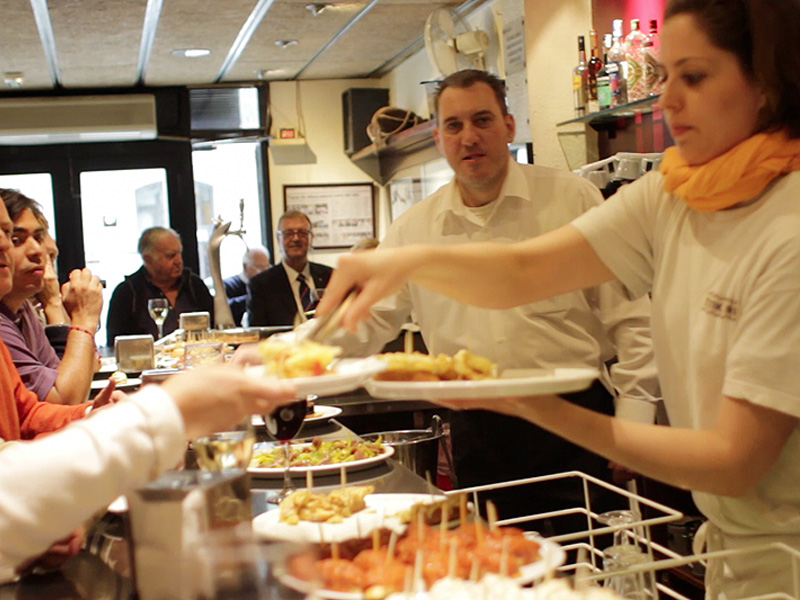
When Julián Fernández and Carmen Erdocia moved to Barcelona in 1996, they bought an old fútbol salon in the Eixample that was named Táctica, or “tactics,” in a reference to Spanish football. Julián and Carmen began serving pintxos such as tortilla de bacalao (Spanish omelet with codfish) to hungry futboleros. Eventually, the venue became so popular that they decided to convert Táctica into a Basque restaurant specializing in pintxos. The name was easy: Taktika Berri means “new tactics” in Basque.

logo

Terms of Service