Latest Stories

Bizim Ev

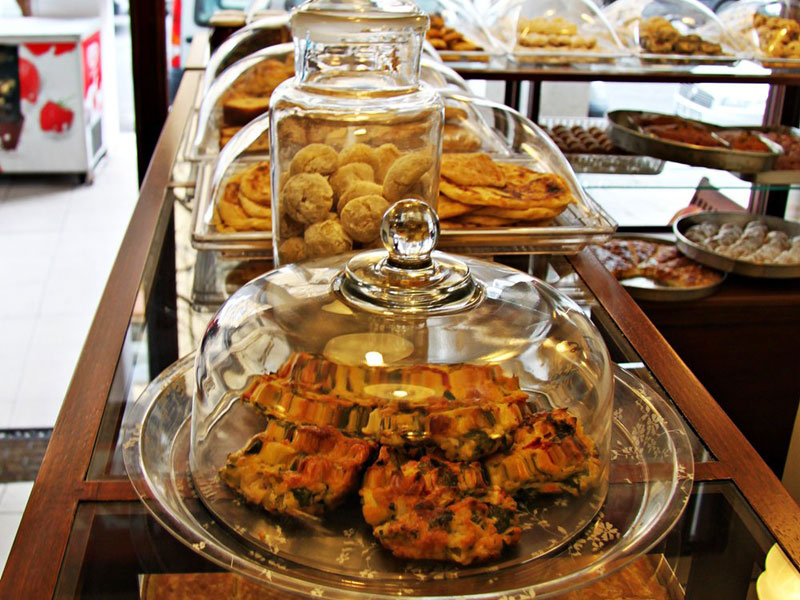
Editor’s note: This post was written by “Meliz,” an intrepid explorer of Istanbul’s culinary backstreets and frequent Istanbul guest contributor who would like to keep her anonymity. It all started with Laz böreği. It was not just any Laz böreği that showed up at the dinner party that evening, but perfect Laz böreği: layers of yufka (phyllo), buttery and moist, dusted with confectioner’s sugar, in a symbiotic balance with the custard, which was neither too sweet, nor too eggy, neither too runny, nor too stiff. Juuuust right. Goldilocks would have been proud. And, it turns out, this stuff is addictive.

CB on the Road: Exploring the Mythical Port of Piraeus

Piraeus holds the distinction of being Greece’s biggest port, as well as the largest passenger port in Europe. Although it is a mere 20-minute train ride from downtown Athens, most Athenians think of Piraeus with a reverence reserved for a foreign country. There is just something almost mythic about this ancient port, which has been in existence since the 5th century B.C. – the famous opening line of Plato’s Republic is, after all, “I went down to the Piraeus yesterday.” In the modern period, the greater Piraeus area – home to a population of about half a million in Piraeus proper, along with a number of suburbs – has witnessed dizzying highs and lows, especially over the past century. The area has been a major destination for immigrants from elsewhere in Greece, including the islands and the Peloponnese. One of the biggest population expansions came after 1922, when vast numbers of Greek refugees fleeing Asia Minor (modern-day Turkey) migrated to the area and established new working-class neighborhoods, including Nikaia, Keratsini, Drapetsona and Korydallos.
Culinary Backstreets’ First "Birthday"!

We’re very happy to announce that Culinary Backstreets turns one today! It’s been a wonderful first year and we’re thrilled to see how far we’ve come in this time. When we launched CB last year as the global expansion of IstanbulEats, we set ourselves the goal of covering authentic local eats around the world. As we described in our “Gastro Manifesto,” our mission was to get “off the eaten path,” sharing with readers our explorations of some great cities’ culinary backstreets. From four cities at the beginning – Istanbul, Athens, Barcelona and Shanghai – we grew to a network of six within the year, adding Mexico City and then Rio de Janeiro. Along the way, we’ve covered everything from family-run, hole-in-the-wall restaurants to quirky street foods in each city, from festive holiday culinary traditions to the sometimes fraught intersection of food and politics. A big “thank you” to our always curious and engaged readers, for your interest, support and feedback. Keep reading – and eating!

Casa Trampa

Most people who visit Barcelona are sure to spend at least some time at one of the city’s beaches. Yet few are aware that when seeking respite from the bustling urban streets, heading up into the forested hills above the city can be just as pleasant. Vallvidrera, a village at the entrance to Collserola National Park that offers gorgeous views of the surrounding forests and the city below, is just the place for such an excursion. Starting in the early 19th century and up until the 1980s, Vallvidrera served as a vacation destination for wealthy Barcelonans who wanted to escape the summertime heat of the city. The abundance of mansions here, many built in the Modernist style, is a testament to this bygone era. Nowadays, although Vallvidrera is a year-round community that is technically part of Barcelona proper, it’s still a destination for local urbanites and their families wanting to get out of the city and relax, particularly on weekends.

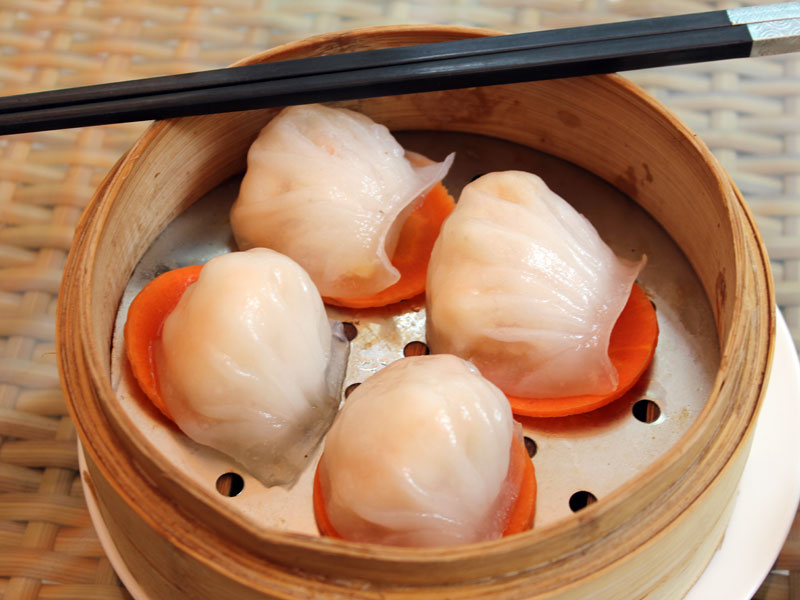
369 Shanghai Dim Sum, photo by Gizelle Lau

Editor’s note: This feature, by guest contributor Gizelle Lau – a Chinese-Canadian food and travel writer based in Toronto – is the first in an occasional series on “diaspora dining,” covering the best places to find our favorite cuisines outside of their places of origin. The history of Chinese in Canada – pioneers who left their native land in pursuit of a better life and future – is a familiar immigrant story.While the first record of Chinese in Canada dates back to the late 1700s, it wasn’t until the late 1800s and early 1900s that they began to arrive in greater numbers, establishing Chinatowns in cities such as Toronto and Vancouver and opening their own restaurants, grocery stores and laundromats. Despite exclusionary government policies that existed for many years, today Canada is home to one of the largest Asian populations outside of Asia, including over half a million Chinese in the Greater Toronto Area alone.

Botero

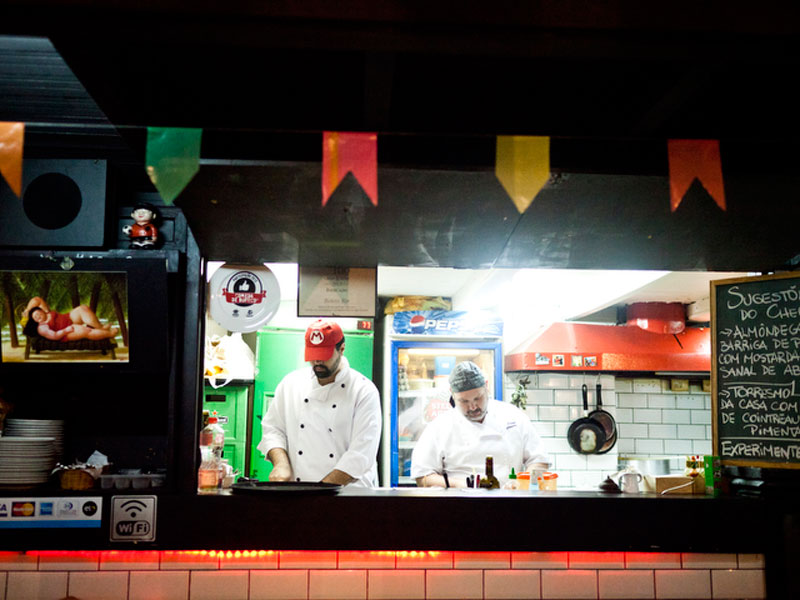
Editor's Note: Sadly, this spot is now closed. Rio’s Mercado São José looks all but abandoned during the day. The windowless white building with blue trim hosts a small fruit vendor and a thrift shop during work hours. A band practices capoeira – Brazilian martial arts – occasionally on the weekends. But the market bursts with chatter and merrymaking in the evening, thanks in large part to boyish chef Bruno Magalhães and his inventive bar and restaurant, Botero.

Cibalikapı Balıkçısı

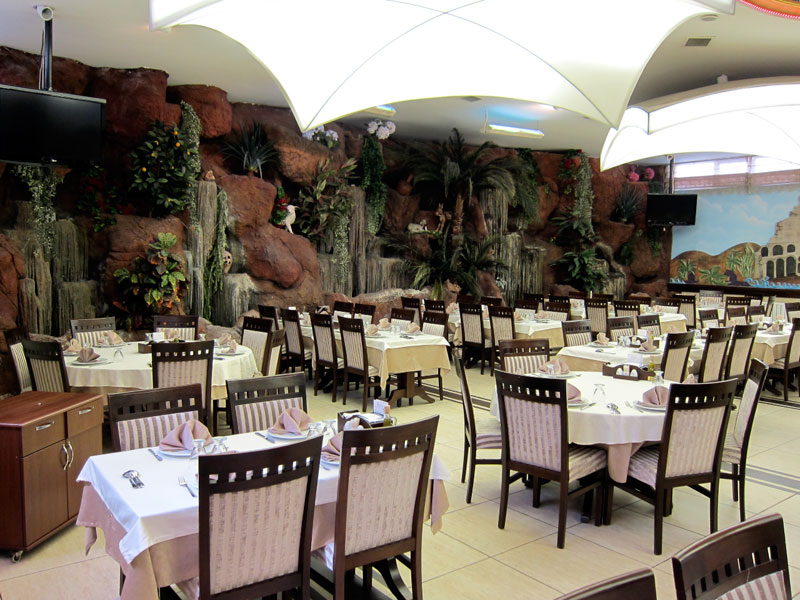
On a night out in Istanbul, we often find ourselves forced to make sacrifices in one or more categories of the overall dining experience. Great food at reasonable prices will surely be laid out in a room decorated in Anatolian kitsch.

Shanghai’s Top 5 Late-Night Dining Spots

The vast country of China has just one time zone, so Shanghai’s East Coast location means darkness comes early and most residents usually eat by nightfall, with restaurants often closing their kitchens around 9 p.m. But for those who keep late hours, nighttime brings out a chorus of pushcart woks and mini grill stands to street corners around the city. Despite often aggressive government crackdowns on these tasty, yet mostly unlicensed, food stands, the migrants who run them are determined to make a living and feed the masses while they’re at it. Our top five list goes beyond these roving vendors to feature a mix of restaurants that stay open late and small family-run gems that cater exclusively to the night-owl crowd.

Ikastola

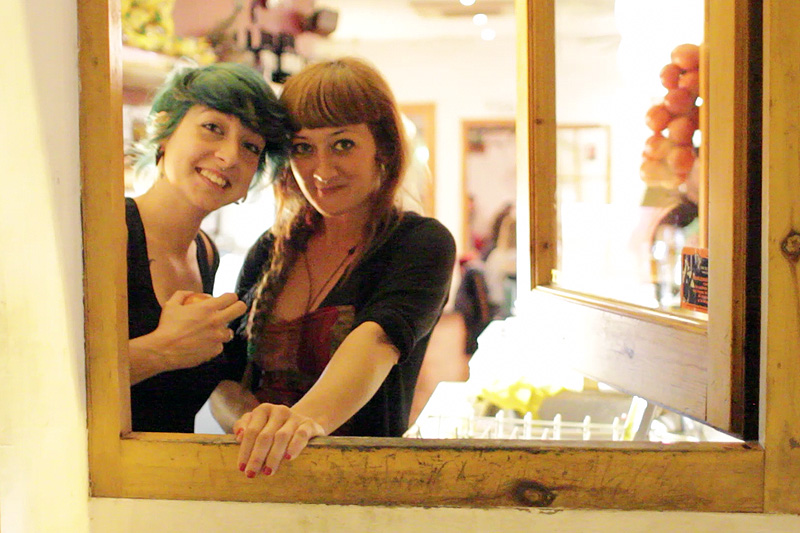
Ikastola means school in Basque. Covering the wall on the right as you walk in is a huge green chalkboard, inviting all to have a hand in the décor. Offering well-priced food and drinks in a cozy, unpretentious atmosphere, this laid-back bar evokes public school right down to the wooden furniture. The venue is owned by three local Basques who met in London and who have known each other since they were knee-high. Guillermo, David and Laura hail from Amurrio, a town in the province of Álava in the Basque Country, roughly halfway between Vitoria and Bilbao. “There weren’t really any bars serving sandwiches,” explains Guillermo. “So we wanted to open a place in Gràcia that would fill that niche.”

Ask CB: Cretan Cuisine in Athens?

Dear Culinary Backstreets, I keep hearing about the wonders of Cretan cuisine, but is it really any different from regular Greek cooking? And is there anywhere nice to try it in Athens?

Wangji Chaozhou Shaguo Zhou

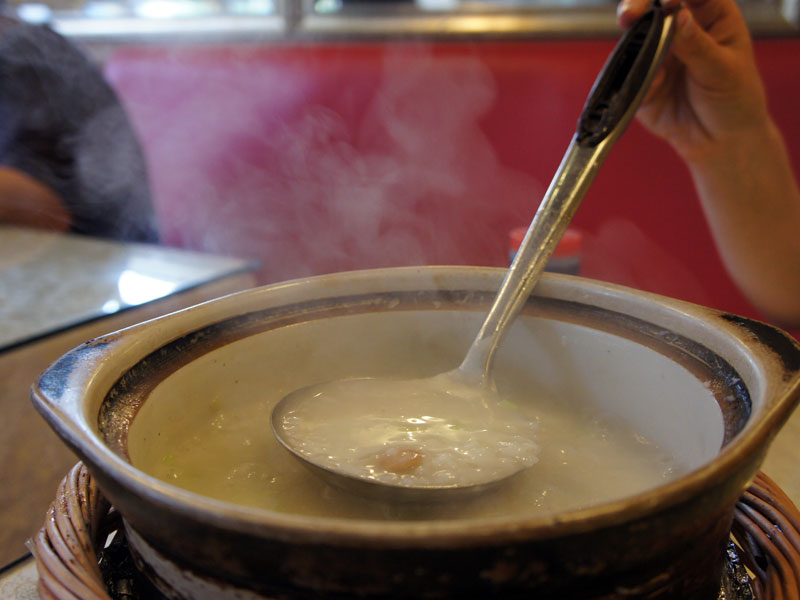
It’s two in the morning at Wangji Chaozhou, a rice porridge (粥, zhōu) restaurant in Changning that stays open till 5 a.m. – late even by the standards of restless Dingxi Lu, a bustling, neon-lit thoroughfare close to several college campuses. The waitress on duty is either suspicious by nature, or made more so by her late-night schedule. She regards us impassively, unwilling to let the slightest flicker of amusement disturb her bored demeanor.

Spanish Conservas: Gourmet Food? It’s in the Can

In Spain, conservas, or foods preserved in cans and jars, are not simply a matter of economic survival or a source of basic nutrition for students, hikers, military recruits and the like. Rather, the tradition of conservas more resembles that of keeping one’s most beautiful jewelry locked safe in a strongbox, to be brought out only on special occasions like Christmas, birthdays or the victory of a favorite football team. There’s nothing better than some delicate canned cockles to lavish on your parents-in-law before a holiday meal!

Hatay Has Kral Sofrası

In our imaginary primetime lineup, a reality show called “Pimp My Kebab Salon” transforms a drab kebab shop into a grill palace suited to the tastes of the latter-day sultans. Surfaces are suddenly gilded in gold, fountains appear and everything is reupholstered under the watchful eye of the boisterous host with tacky taste. If this TV series existed, a much-loved classic episode would take place at Hatay Has Kral Sofrası, a zany kebab restaurant in a part of the Aksaray district filled with lots of other establishments selling food from Southeast Turkey.

Xin Dau Ji

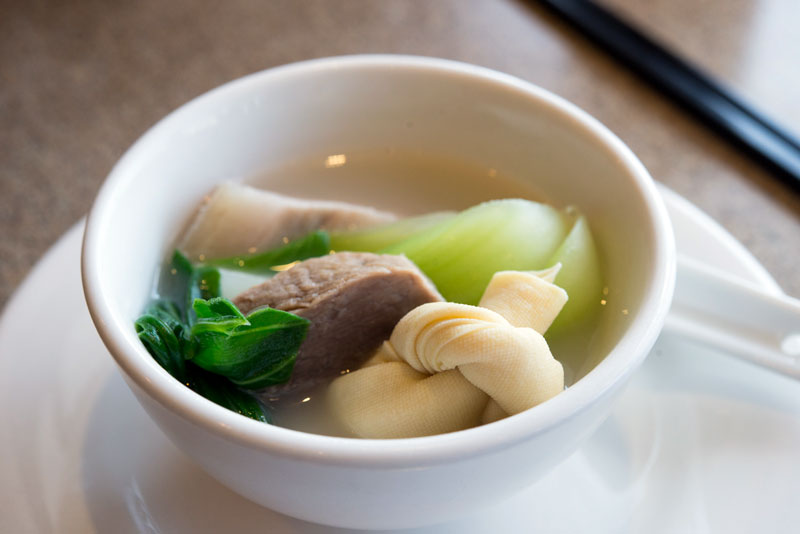
Nothing beats an alfresco summer meal in Shanghai, yet it’s not easy to find a Chinese restaurant that offers outdoor seating. While Chinese people prefer to shelter under umbrellas during the hottest months, Shanghai’s sun-worshipping expats flock to patios and terraces – most of them located in Western-style establishments. So the opening last summer of Cantonese restaurant Xin Dau Ji, with its expansive deck outside, complete with fans for open-air breezes, was a very pleasant surprise. The venue’s outdoor tables sprawl into the former French Concession’s Xiangyang Park, one of Shanghai’s smallest parks, built in the 1930s for French children. Alongside the bubbling fountains, miniature roller coasters and stone tables, more than a hundred varieties of flowers bloom, making it one of most serene spots in the city to enjoy a meal.

Diamonds in the Touristy Rough: Plaka Dining Secrets

Editor’s note: This is the second piece in our series featuring the hidden gems in some of Athens’ most touristy neighborhoods. We previously explored Psyri; it is now time to take on the holy grail of Athenian tourism: Plaka. There’s a reason why this area of old Athens, just below the Acropolis, is the city’s most touristy neighborhood: it has a history of more than 6,000 years.

logo

Terms of Service