S M B O measurement-vertical measurement-vertical

Latest Stories

Liu Tang Men

In the past year, we’ve seen more new noodle houses hawking spicy Chengdu and Chongqing style noodles than we can count on two hands. Very few of the Shanghai-based noodle houses do the fly restaurants of Chengdu justice. Some dish out bowls of insipid strands that barely register on the Scoville scale, while others go for that unbalanced, burn-your-face-off flare that means the chef has likely never been to Sichuan, much less studied the careful art of the region’s balanced cooking. Liu Dao Men is among the exceptions, carefully walking the tightrope of spicy yet tasty, with its menu of Chengdu noodle classics.

Bar Bodega Salvat

Some sociologists say that Spanish society and culture can’t be properly understood without spending time in its bars. You can find bars in mountain refuges, subway stations, on the beach and by the highway. In Barcelona, there are as many bars as taxis and ten times more bars than bookshops. In fact, a recent study by Coca-Cola found that in Spain there’s a bar for every 132 Spaniards. The same study points out that a third of Spaniards wouldn’t hesitate to leave their house keys at their local bar and that two-thirds of them are on a first-name basis with the employees there.

Imported image from WordPress content

The esnaf lokantası is Turkey's gift to the working man and woman. While in many parts of the world, lunch during the work week means eating an uninspiring sandwich or salad inside a lonely cubicle at the office, workers in Turkey have the esnaf lokantası ("tradesman's restaurant" in Turkish). Outfitted with a steam table that usually holds dozens of ready-made and utterly homey dishes, it is much more than simply a canteen. In reality, it is the place that keeps a hungry nation going. We've rounded up six of our favorite esnaf lokantaları in Istanbul.

Cape Verde in Lisbon: History

Once the hub of a trading empire that connected Macau in the east to Rio de Janeiro in the west, Lisbon today can at times feel like a sleepy town of nostalgic storefronts and scenic churches. But that’s only its façade. Take a closer look and you’ll discover a city that still maintains deep-rooted links around the world – just consider the local obsession with African piri piri sauce. But there’s an even stronger tie to Portugal’s past in Lisbon, one that can be found in the form of the city’s communities from the former colonies. Though integral elements of Lisbon life, these communities can sometimes be an invisible presence in their adopted land, pushed out to the periphery of the city.

Cape Verde in Lisbon: Taste

On a narrow and, until recently, slightly forgotten street in Lisbon’s city center, a simple Cape Verdean eatery is holding its own. As one of the few tascas serving up African dishes in this part of town, Tambarina, with its dozen tables and keyboard and mics set up in the corner, bears testimony to this urban quarter’s historical connections to the people of Africa’s northwestern archipelago.

Naples Market Watch, Pt. 1

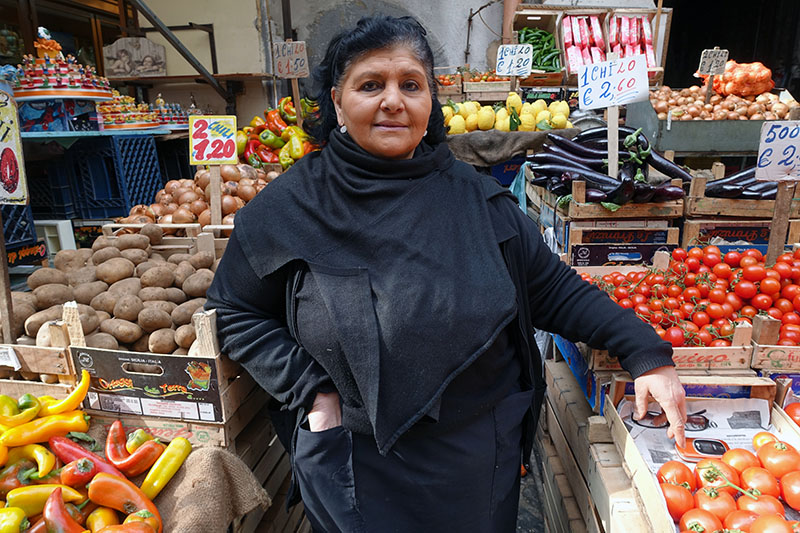
It’s Sunday morning at La Pignasecca market in Naples and time is in flux. Picture a Boccioni painting: movement is blurred, there is an inter-penetration of objects, speeding vehicles and sound – a frenetic moment in the Futurists’ imagination. The city rises as engines splutter, traders hustle, klaxons yelp. Santa Maria di Montesanto spews punters out into the marketplace after mass; men peel off, heading home to check on the simmering ragù; groomed teenagers peacock on mopeds as groups of women push in line to pick up their last-minute order of fresh pasta, charcuterie and squid. The church bells chime: it’s lunchtime. Anticipation is in the air.

Famous Chicken and Rice in Istanbul: Accept No Imitations

This chicken and rice cart in Istanbul's Unkapanı quarter serves the city's best, and there are many imitators that try to capitalize off of its good name. Fortunately, our Old City walk stops by for a taste of this simple yet delicious snack.

Imported image from WordPress content

It all started with a seriously delicious hamburger in New York City. Rumor has it that it was this burger that first gave acclaimed Catalan chef Oriol Rovira the idea of opening Sagàs Pagesos y Cuiners (“Farmers and Cooks”) in the Born district of Barcelona. Specializing in high-end sandwiches, the restaurant embraces the farm-to-table philosophy, with a menu that is both distinctively Catalan and international in scope. Rovira, who also runs Els Casals, a Michelin-starred restaurant in the tiny village of Sagàs near the edge of the Pyrenees, opened his sandwich spot in May 2011. As at Els Casals, nearly all of the food at the Barcelona venue comes straight from the chef’s village farm. But why sandwiches?

Lello's Octopus Broth Stand

To make excellent octopus broth, you must first fill a huge pot with water to the brim – at least 20 liters – bring it to a boil, add salt and pepper in industrial quantities and immerse four large octopuses. After 33 minutes (and not one more) of simmering, it’s ready: the octopus has reached the perfect consistency. Yet in Naples there’s a saying, “The octopus cooks in its own water” – a proverb that means that a person needs to get to the truth on his own and in his own time. Lello tells us that what this saying is referring to isn’t actually true, since clearly, an octopus needs much more water than what it comes with to actually cook.

Amber Bar

On the left bank of Tbilisi’s Mtkvari River in the Plekhanov district is David Aghmashenebeli Avenue, a thoroughfare long associated with wallet-friendly Turkish restaurants and discount clothing boutiques. Some 15 years ago, the crumbling 19th-century buildings and huge eucalyptus trees that lined the street were crowded with people hawking everything from wooden utensils to costume jewelry, fresh produce and coffee beans labeled “Nescafé.” It was a congested, lively sidewalk bazaar of sorts that exemplified the Asiatic spirit of Tbilisi. However, a massive urban renewal project in 2011 put an end to the colorful disorder. Today, most of Aghmashenebeli is a sensible European-looking boulevard that the former President of Georgia likened to Paris, although the Turkish restaurants are still there serving up tasty Anatolian specialties.

Cape Verde in Lisbon: Go Deep

On the last floor of a high building in Marquês de Pombal – Lisbon’s financial and commercial area – is the headquarters of the Associação Cabo Verde, the oldest of its kind in the capital. Its unexpected location aside, it draws many from the community who need support with issues relating to law and integration issues and acts as a central meeting point for all types, including academics. As well as organizing events focusing on post-colonial Cape Verde and its diaspora, the association also hosts regular festive lunches (almoço dancantes), with live music on Tuesdays and Thursdays.

Cape Verde in Lisbon: History

Cape Verdeans, particularly those from the island of Santiago, form one of the biggest migrant communities in Portugal. Because of the cyclical drought that afflicts the 10 volcanic islands making up this archipelago, the country’s sense of homeland coexists with the idea of movement, with Cape Verde recognized by many as an essentially diasporic nation.

Mangia e Bevi

Neapolitan cuisine encompasses such a variety of dishes, ingredients and preparations that sitting down for lunch in Naples is always a feast of smells, tastes, colors and sensations. Menus here are populated by numerous meat dishes and equally many seafood options, and the extraordinary variety of vegetables are complemented by unique dairy products, preserves and sweets steeped in history and quality. Restaurant kitchens know how to be baroque (as demonstrated by menesta maretata, a complex soup that “marries” a variety of vegetables and cuts of meat), sumptuous (as in eggplant parmigiana), or deceptively simple (as in the classic spaghetti aglio e olio, which combines the basic trio of pasta, garlic and oil to great effect).

Imported image from WordPress content

While in many parts of Europe consumer capitalism has brought an invasion of chain supermarkets and restaurants, contributing to the extinction of independent family-run grocers, Naples and the small distinct districts of its old town have magically managed to resist. The neighborhood markets retain a charm that is reminiscent of a by-gone era when Europe’s streets would smoke and hiss and the ground would be covered in cabbage crusts and fish entrails. The city’s cobbled and narrow streets revolve around civic life, which still brims with stalls selling fresh mollusks, sacks of nuts, knots of garlic and onions, rounds of cheese and hanging hams.

La Morenita: Fishy Business Featured Image

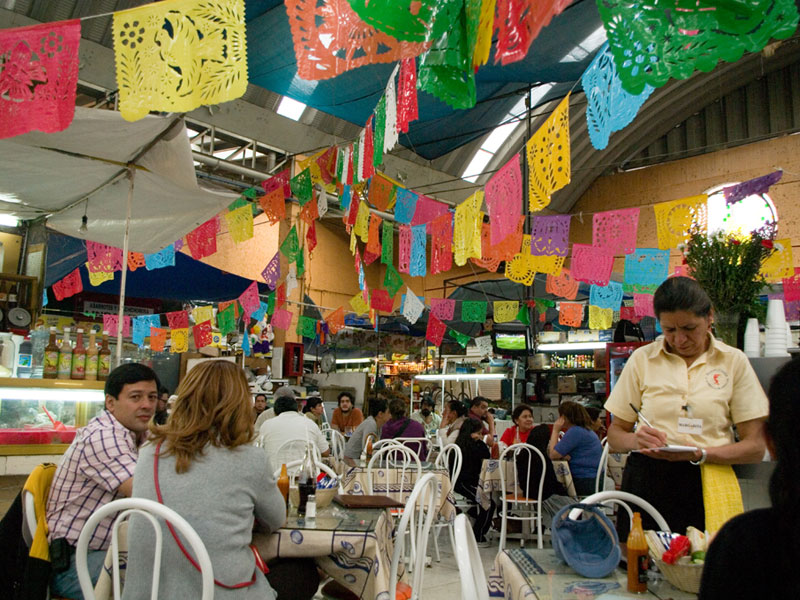
Mexico City can be quite lacking when it comes to finding fresh, tasty seafood. At most markets in the city, in addition to the taco places and tlacoyo vendors, there is usually some kind of stand selling seafood, but the quality can be either very good or very bad. Buying from the right place is thus essential, and that’s why we were so happy to discover La Morenita, a standout seafood and oyster restaurant in Colonia Roma’s Mercado Medellín. Established more than three decades ago by Miguel Gardono, La Morenita has become a busy, reliable stop for shoppers.

logo

Terms of Service