Latest Stories

Pica-Pau: For the Love of Lisbon

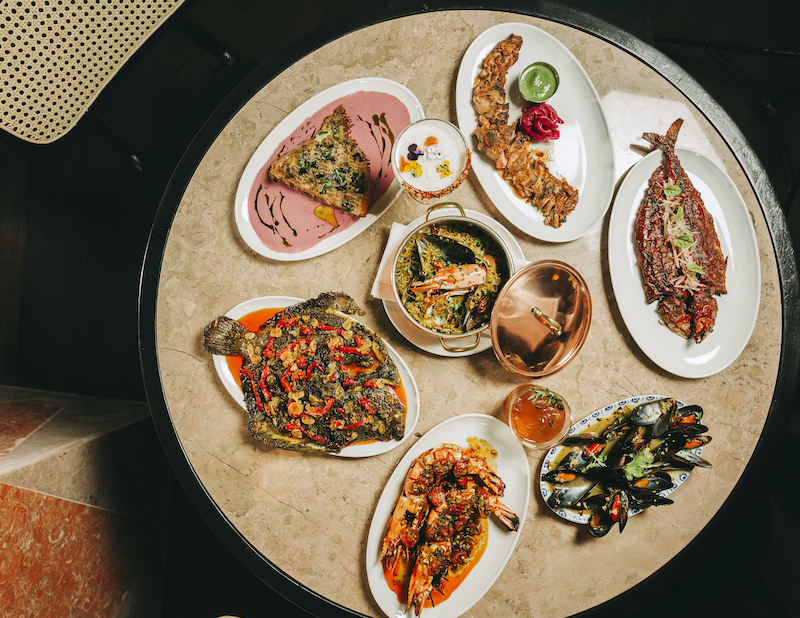
Your friends or family are visiting Lisbon for the first time. Where do you take them to eat? If you’re us, it’s a no-brainer: Pica-Pau. Open for less than a year now, the restaurant, for us at least, has become a go-to introduction to the dishes, ingredients and flavors of Portugal. Or, more accurately, the dishes, ingredients and flavors of Lisbon. “Lisbon is a culinary region, just like Trás-os-Montes or Alentejo,” says Luís Gaspar, referring to Portugal’s far north and south, both regions with distinct, recognizable culinary legacies. He’s the chef behind Pica-Pau, and collaborated with the restaurant group Plateform to create a venue that centers around the sometimes-neglected cuisine of Lisbon.

La Santita: Marseille’s Latin American Lunch Counter

We all have our favorite watering hole – that place close to home where you can have a bite to eat, sip on your preferred drink, have a chat with neighbors, friends, strangers. A place where you feel welcome and frequent often. La Santita, a tiny Latin American restaurant located on the tree-lined Boulevard Eugène Pierre, embodies this description. A sister restaurant to the popular El Santo Cachón, La Santita opened just a little over a year ago, and has rapidly become a neighborhood favorite. Here, owners and Marseille transplants, Chilean-born Cristobal Urizar and his French wife, Mathilde Gineste, serve up traditional Latin American favorites with French verve. After meeting in Honduras while on holiday, the pair moved to Marseille and have called it home for 15 years.

Buatta: Comfort Food and Conversation in Vomero Featured Image

Chef owner Angela Gargiulo calls her restaurant Buatta a trattoria di conversazione – a “conversation eatery.” Tucked in a peaceful corner of Vomero, the Neapolitan shopping district, Buatta is “…a conversation restaurant in the true sense of the word,” Angela tells us. “After cooking, and now that I have excellent collaborators [to help] in the kitchen, I have time to sit next to my customers; I talk to them at the table about the strangest things; it's as if they came over to my house.” Little by little, the restaurant (whose name, Buatta, from the French boite, is a Neapolitan word that means “jar”) has become a destination for those who love simple and quality cuisine, and for those who love to chat.

Fall Recipes: Greek Butternut Squash Fritters with Olives and Herbs

It’s fall and the wonderful farmers markets of Athens are filled with the season’s harvest; fresh walnuts and chestnuts, persimmons, pomegranates, quince and, of course, the two queens of the season: pumpkin and butternut squash. I love using butternut squash or pumpkin in a variety of recipes and these traditional fritters are one of my favorite ways to enjoy this nutritious vegetable. This is a recipe that I include in my cookbook Salt of the Earth (Quadrille, 2023), and it is inspired by the traditional version from the region of Messenia in southern Peloponnese. In my take on this dish, I add some chopped green olives as I like variety in textures and flavors and the olives, along with crumbled feta, add a beautiful layer of umami to the fritters.

Fall Recipes: Le Fiadone, An Autumnal Corsican Cheesecake Featured Image

As the summer crowds disappear and the autumn temperatures arrive, les Marseillais await the arrival of a well-known delicacy from the neighboring island of Corsica. Beginning around November, the island’s best-known cheese, Brocciu, also known as national casgiu (the national cheese) shows up in markets and specialty shops. The mild, soft cheese hints at the richness of the island terroir, with aromas of hay and grass. It’s made from goat's or sheep’s milk and whey, and produced only from November until June, when the milk is at its richest. Brocciu first appeared in writings from the 19th century, but Corsican farmers practiced the tradition of making the beloved cheese long before.

Bacalhau à Brás, salt cod scrambled with matchstick potatoes and eggs, at Pica-Pau, Lisbon, photo by Austin Bush

If there’s one Portuguese ingredient familiar to all, it’s probably salt cod. And if there’s one Portuguese salt cod dish that’s best known, it’s likely bacalhau à Brás. Why has this particular dish – salt cod scrambled with eggs, onions and matchstick potatoes – risen to the top? “It’s the most democratic,” theorizes chef Luís Gaspar. “It has eggs, potatoes – things everyone likes.”

Halim and Amina Fekraoui of Kasbah Café, photo by Dave Cook

By area, Algeria is the largest country in Africa; by population, the tenth-largest. But in New York, Algerian cuisine has secured only a tiny foothold. We've sought out garantita, a savory chickpea pudding, in Astoria, and traveled for excellent date-filled maamoul in Bath Beach, deep in southern Brooklyn. But otherwise, finding Algerian grub in the city has been a challenge. Recently, while strolling through Sunnyside, we spotted the green, white and red colors of the Algerian flag on a mural outside a public school. In New York, murals like these are a common way to illustrate the diversity of a student population. At this school, the national colors of about three dozen countries were on display, each of them charmingly painted by hand.

Mirak: The GOAT of Goat Stew

It’s no secret that Los Angeles has an amazing Korean food scene. L.A.’s Koreatown is the largest in the United States, with over 500 restaurants, so Angelenos are lucky enough to find restaurants that specialize in less common dishes, beyond the popular Korean barbecue or bibimbap. One such dish is yeomso tang (also spelled yumso tang), a stew traditionally made with Korean black goat meat, which we tracked down at Mirak. Black goats get their name, naturally, from the black hair that covers their body. They are native to Korea, where eating black goat is believed to have numerous health benefits. Not only is it a leaner meat, it’s also believed to be very nutritious.

To Mitato tou Psiloriti

On Crete, endowed with fertile soil and an enviable climate, devotion to the island’s culinary traditions runs deep. This is even the case for people who have family ties to Crete but did not live there themselves, like Dimitris Katakis, who runs To Mitato tou Psiloriti, a small Cretan deli in Athens. In 1950 his grandparents left Crete, despite their great love for their native island, to go to Athens for better job opportunities – the postwar era saw many Greeks move to cities or even abroad in search of a better life. Yet the flavors and traditions of Crete, one of the southernmost points in Europe and the largest island in Greece, stayed with them and were lovingly passed on to their children and grandchildren.

Yakinikuen Azabujuban: Underground Barbecue

Our introduction to Yakinikuen takes place on a Saturday night. Two German friends, former Tokyo residents and long-time fans of the restaurant, were determined to take an edible trip down memory lane. “We’ll already be in the queue. Hurry!” they told us. Reservations at Yakinikuen, apparently, are only taken for weekdays before 7 p.m., and so they had lined up to secure a table. “It’s an underground joint with the best meat,” they said.

In the Pocket: An Empanada Tour of Queens

In the Spanish-speaking neighborhoods of Queens, empanadas are everywhere. Literally "covered in bread," an empanada at its most elemental is made from dough that is folded over a filling, sealed and then baked or fried. This basic recipe gives rise to innumerable variations. All-purpose wheat flour is a common foundation for empanada dough, but the dough might feature cassava, corn or plantain flour instead. The fillings are generally savory, but sweet fillings are not unusual; guava paste and cheese is one familiar combination. The largest menus we've come across in Queens include several dozen different empanadas.

Bay Köfte: Black Sea Street Food

The upper-middle class residential neighborhood of Dikilitaş in Istanbul's Beşiktas district is certainly pleasant enough, but is not a place we pass through very often and has few culinary attractions that we know of. So when we encountered Bay Köfte, a food truck churning out sandwiches one cannot find elsewhere in the city (or the country for that matter) we were intrigued instantly, and have since been back to Dikilitaş twice – this new street food favorite is sure to take us to the neighborhood much more often.

Caldo Verde

Caldo verde, Portugal’s most famous soup, doesn’t sound like much in English – “green broth” is the literal translation. I was thinking about this when reading an article on the 20 best soups in the world, which a friend sent to me, noting that caldo verde (a “homey soup” where “thinly sliced greens meld with potatoes and onions”) had made the cut. The article refers, in general, to the restorative power of soup, a belief that is held in very different cultures across the globe – which sounds about right to me. But then the author references a book that broadly defines soup as “just some stuff cooked in water, with the flavored water becoming a crucial part of the dish.” And I have to disagree there, because caldo verde is so much more than flavored water. How to explain that it is a feeling?

Bar Bodega Gol, Barcelona, photo by Paula Mourenza

An old bodega is a bit like a classic book. As the book passes from editor to editor over time, each must to know how to update it for modern readers, but still preserve its original story and authenticity. In the same way, only a true bodeguero can bring an old bodega to life, keeping its essence while also modernizing certain elements to keep up with modern palates. Javier (“Xavi”) Caballero, current owner of Bar Bodega Gol in the Sant Antoni neighborhood, is one of the latest Barcelona bodegueros taking this step. After a career change, Cabellero entered the culinary world head on. He started at Moncho’s, one of Barcelona’s larger hospitality groups, with a catering service for large events and 14 restaurants, including the famous Galician marisquería (seafood restaurant) El Botafumeiro, which opened in 1975.

Holy Mole: Celebrating Mexico’s Iconic Sauce

If you like mole – and we still haven’t met anyone who doesn’t – then a visit to pueblo of San Pedro Atocpan in Mexico City’s Milpa Alta district and its National Mole Fair, which this year celebrates its 46th anniversary, is a must. That the pueblo should host a mole fair makes perfect sense. San Pedro, located about two hours directly south of downtown Mexico City, is known (perhaps unofficially) as the Mole Capital of Mexico (other pueblos also stake their claim to this title). There are only about 9,000 residents and it’s believed that ninety percent of the are involved in some way in the production or sale of mole.

logo

Terms of Service