Latest Stories

King for a Day in Barcelona

On January 6, bakeries throughout Barcelona are filled to the brim with tortell de reis (roscón de reyes in Spanish), or kings’ cake. Whoever finds the king figurine hidden inside the cake is declared king for the day and wears the gold paper crown that comes with the sweet treat.

Sunflower Health Food Store

The year was 2001, and we were squeezed around an enormous table, together with a half dozen men in their late fifties, in a small conference room at a Soviet-era tobacco collective in Lagodekhi, near the Azerbaijan border. The director of the collective casually slipped a biography of Joseph Stalin under the table and told us the story of the farm, although we weren’t really interested. Our local host had hijacked us into the meeting, believing we could give these gentlemen sound business advice simply because we were westerners. “Our tobacco is natural, no chemicals,” the director asserted. “Yes,” another man interjected with a grin, “we have no money for chemicals.” The men all chuckled.

Mi Xiang Yuan 2.0, photo by Jamie Barys

When Chef Anthony Zhao was planning the relaunch of Mi Xiang Yuan, a home-style lunch spot popular with local office workers looking for a healthy set meal, he knew he had to get one thing right: the rice. At the first alleyway restaurant just north of Xintiandi, Zhao sourced many of his ingredients for his Shanghainese bento boxes from family members’ farms. These small operations used organic techniques, although they were too small-scale to obtain official certification. But high demand for his set meals has made sourcing from family farms impossible. So while updating the menu for the latest Mi Xiang Yuan, Zhao approached sourcing ingredients with the same standards – even if it wasn’t going to come from a family member’s farm, it still had to be of the highest quality.

To Laini, photo by Manteau Stam

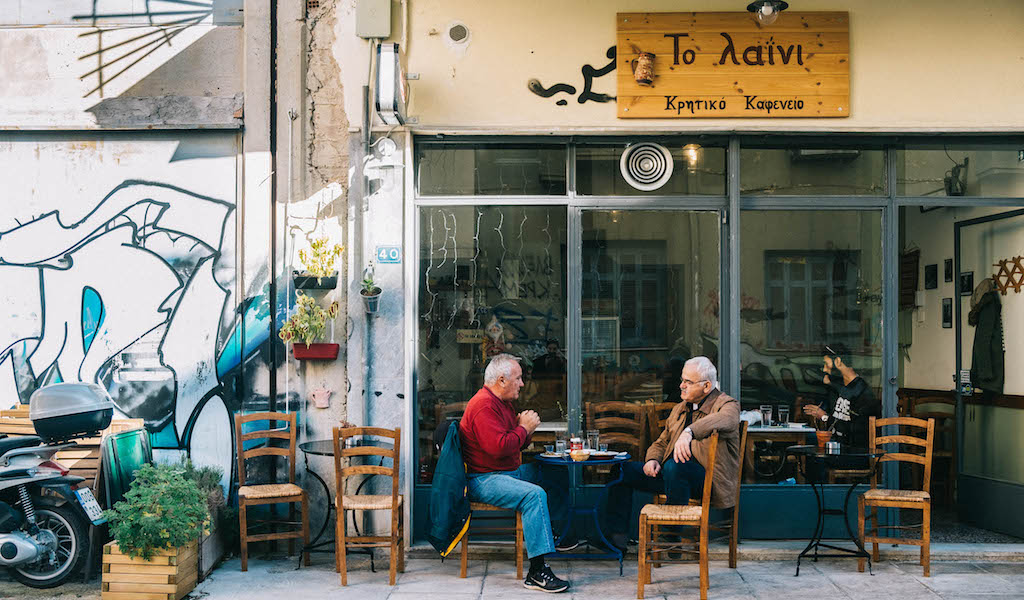
The name of To Laini, a traditional-style kafeneio (a café that also serves food) specializing in Cretan cuisine, hints at what type of night one will have at this cozy spot. The word “laini” derives from ancient Greek and is widely used on Crete and the Cycladic islands to describe the small ceramic pitcher used to transfer water, wine or tsikoudia (a traditional Cretan spirit made from the distillation of grape pomace). Let’s just say, they’ll be transferring a lot of ceramic pitchers to your table over the course of a meal. The spot was opened in March 2017 by two childhood friends, Yioula Svyrinaki and Michalis Psomadakis. They both grew up on Crete, the island known for its rich cuisine and high-quality food products.

Vesuvius, photo by Maureen Camelo Whiting

The city of Naples sits nonchalantly in the shadow of Vesuvius, which has remained quiet – yet active – since the famous eruption in 79 A.D. that destroyed Pompeii and Herculaneum. Despite its prominence, Vesuvius is not even the most powerful volcano in Napoli. That distinction belongs to the Phlegraean Fields, an underground caldera that forms the Bay of Naples. Around 12,000 years ago this super volcano exploded so violently that it shaped the continent of Europe. You might think that with all these active volcanoes around, Neapolitans would be afraid. They aren’t. In fact, most seem to relish the nearby volcanoes, claiming that they make the food here taste better.

CB Book Club

Nuno Mendes is excited. He’s standing at my kitchen counter, where laid out before him are pieces of half-moon-shaped dough, each encasing a juicy meat mixture. They’re about to go into a pan filled with bubbling oil. My mom, Lica, is nervous. She is sharing her mother’s recipe for pastéis de massa terra, a traditional Portuguese savory pastry, with the highly esteemed chef of Chiltern Firehouse and Taberna do Mercado in London. He has heard about her mouth-watering pastéis from a mutual friend and decided to see for himself just how good they are. Worried that the dough isn’t quite right, she drops in the first one and the pastry bubbles up crispy, as it should. When it’s finished, she gives it to Mendes, who takes one bite and says, “Wow, these are amazing!”

Tbilisi Sketches: Muscling Up Some Churchkhela Featured Image

Tbilisi stores and markets are festooned now with distinctive sausage-shaped candies called churchkhela, ready for New Year celebrations and then Orthodox Christmas on January 7. They are a very traditional Georgian specialty, usually homemade from grape juice thickened with flour and nuts. But those aren’t the only ingredients you need to make churchkhela – they also require some serious muscle. How could it be otherwise for a food created by Georgian warriors as a sugar hit that wouldn’t perish on a long march? It was, in other words, one of the world’s earliest energy bars. “We still do it the same way as our ancestors,” says Khatuna Saalishvili, as we watch her and her husband, Temuri, start the process in their backyard in the village of Kisiskhevi. A wood fire heats a large metal cauldron filled with the mix of grape juice and flour known as tatara. The steam shines in the winter sun.

Ekoda at night, photo by <a href="https://www.flickr.com/photos/nodoca/" target="_blank" rel="noopener">Daisuke Matsumura</a>, on Flickr

As the calendar year turns over, we’ve grown accustomed to the barrage of lists telling us where to travel during the next 12 months. Oftentimes these places are a country or even a whole region – you could spend an entire year exploring just one of the locations listed and still barely make a dent. We like to travel on a smaller scale. Forget countries and cities, for us the neighborhood is the ideal unit of exploration. Celebrating neighborhood life and businesses is, of course, essential to what we do as Culinary Backstreets. Since our founding in 2012, we’ve been dedicated to publishing the stories of unsung local culinary heroes and visiting them on our food walks, particularly in neighborhoods that are off the beaten path.

Fish at Mariscos El Paisa, photo by Ben Herrera

Hit by a devastating earthquake in September, Mexico City has certainly faced some challenges this past year. But life in the city marches on, and adventurous foodies can still find a great meal simply by following their nose. Our DF correspondents did just that in 2017, rediscovering some old favorites and branching out into unchartered territory. Mercado Jamaica By far my favorite food experience of this year was exploring Jamaica Market. Mostly known for its wholesale flower section, this large market offers much more: fresh produce, colorful piñatas, and incredible food. In fact, it is home to three of my favorite food stands in the city.

Best Bites 2017

Brazil’s economic crisis has hit Rio hard this past year, and the culinary scene was by no means immune from the downturn. Some famous restaurants and bars closed their doors for good. But the city hasn’t given up. In fact, if some doors have closed, a lot more have opened. Because now creativity is being used as a weapon against the crisis, and not only at newly opened spots. Established bars and restaurants have been reinvigorated with new ideas and processes. In this atmosphere, many exciting culinary novelties have made their way to the streets, ready for us to indulge in, all without having to spend too much money. So my best bites of 2017 reflect this abundance of good and cheap novel eats that have become so popular in these leaner times.

Bhuttun at Nepali Bhanchha Ghar, photo by Dave Cook

Queens is a grazer’s paradise. On any given day the devoted food lover will find that the culinary experiences come early and often, thick and fast, in mind-boggling variety. Limiting the year’s favorites to a mere handful, then, is problematic when they easily outnumber the combined total of fingers and toes. Consider these five – each in a different neighborhood of Queens – as points of departure for further exploration. Nepali Bhanchha Ghar From the sidewalk the seating area seemed tiny. It was within enticing range of the cooktops at this Nepali “kitchen home” (pronounced Bahn-sah gar) but also exposed staff and patrons to periodic sub-Himalayan gusts from the front door.

Mangia e Bevi, photo by Claudio Menna

In 2017, the Naples food scene took many steps forward by taking a step back: Restaurants resurrected ancient ingredients and most importantly, in a city famed for its pizza and pasta, old flours native to southern Italy made a comeback. The renewed interest in quality can be observed in all corners of this great city, from fast food joints to starred restaurants. My favorite eats of 2017 centered on those spots that attach importance to the basics, serving Neapolitan cuisine made with only the finest traditional ingredients. But it wasn’t the food alone that hooked me: The special people who manage these places played as large of a role, if not larger, in drawing me back to their tables time and time again.

Best Bites 2017

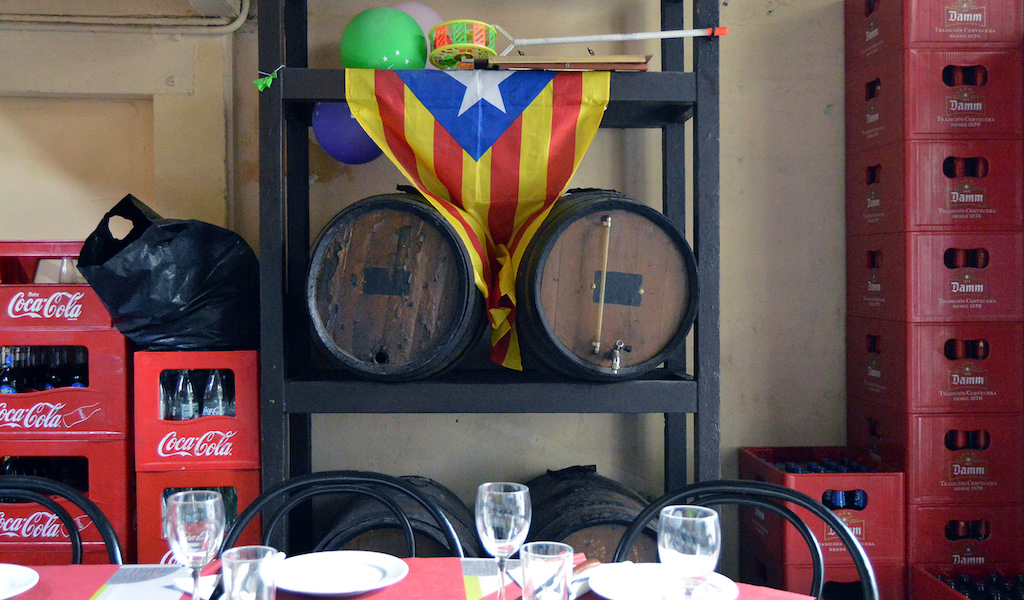
This was an intense year for Barcelona, with a complex political situation stemming from Catalonia’s bid for independence from Spain. It was a storm that the culinary scene could not help but get caught up in. Bars and restaurants have always been a temple of leisure and pleasure, but we sometimes forget that they also serve as a space for people to connect and debate. And in the spirit of debate, food and drink constitute another form of expression, an indication of a restaurant’s cultural leanings. In Barcelona this year, we could taste the continued interest in developing and strengthening Catalan cuisine, often considered an extension of Catalan identity. But we also observed the food scene’s openness to other regional cultures and global influences.

Benjia, photo by UnTour Shanghai

Shanghai’s dining scene still contains its share of neighborhood dumpling and noodle shops, but the overall trend is marching towards mall dining and chain stores in the ever-changing downtown, historic and suburban areas. A silver lining: At least a handful of our favorite street stalls have also taken the plunge into new digs, with the same dishes, but shiny (read: soulless) interiors. You win some, you lose a lot sometimes. Benjia Heading out to Gubei, Shanghai’s East Asian expat district, for Korean barbecue is one of our favorite meals any day of the week, but this year we brought a friend who took the meal to a whole new level.

logo

Terms of Service