Latest Stories

Imported image from WordPress content

Truth be told, we’re often not impressed with traditional holiday gift guides. They’re either littered with undisclosed affiliate links or seemingly endless lists (much like our holiday to-dos) that make us want to turn off the computer and hibernate until the end of January. So, what makes our gift guide different? It’s a highly-selective (and relatively short) list of products that our correspondents and guides eat and use. Many of them are featured in stories that we’ve published, and we worked our hardest to connect you directly with producers – while we weren’t always successful, we did manage to avoid Amazon entirely (and no affiliate links in sight).

Fruit off the Back of a Truck in Kuzguncuk

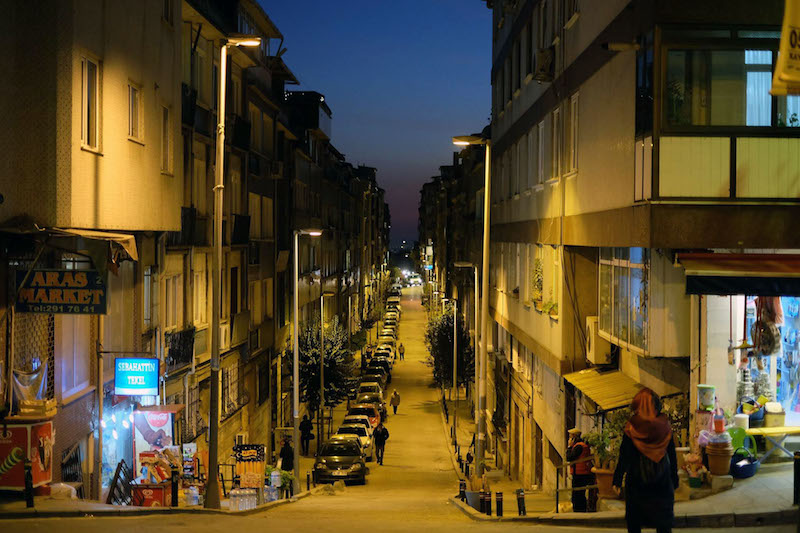
It’s the first time we’ve seen this small truck while on our Born on the Bosphorus walk in Kuzguncuk. It was selling apples and persimmons – the bounty of autumn – in front of one of our favorite grocers in the neighborhood.

Schmidt’s Candy: Perfectly Imperfect Featured Image

The charming sign outside Schmidt’s Candy speaks eloquently, especially when we look closer. The words “home” and “made” frame a tall glass candy jar; we notice the slight irregularity of the brushstrokes, and we see that the candy jar is slightly lopsided, as are the colorful candies inside it. Obviously the sign was painted by hand, and lovingly so. We hear a refrain of that theme when we open the door to the candy shop, where, in the words of third-generation owner Margie Schmidt, everything is made with “these ten digits.” Like her father, Frank, and his father, Frank, who founded Schmidt’s in 1925, Ms. Schmidt disdains mechanical candy making: She dips her chocolates by hand.

The interior of Piperiá, photo by Manteau Stam

Change may be inevitable but it’s the last thing we want in a restaurant we cherish. We were reminded of this a few months back when by chance we were taken out to dinner at Piperiá in the Neo Psychiko neighborhood by friends who live nearby. It had been five years since we last visited the place and we were very happy to find that little had changed in the interim. What a joy it was to find the same welcoming smiles and friendly young faces; excellent but not oversolicitous service; some items on the menu that we could never resist ordering; and some new tastes that rivaled the familiar treats.

Café de Raíz

The cuisine of Mexico City has long been influenced not only by waves of international immigrants but also by regional cooking from around the country. In the mid-20th century particularly, droves of workers and their families, lured by economic opportunities, arrived in the Distrito Federal from every corner of Mexico, bringing their local customs and food traditions with them and greatly enriching both the city’s culture and its culinary scene.

Os Imortais

There’s a new phenomenon in Rio’s botequim scene. Until some years ago, running one of these small bars was something done exclusively by immigrants from Portugal, Spain and Brazil’s northeast. But ever since botequims became extremely popular among the carioca middle class, new players have gotten into the business: the customers themselves. Since the beginning of the 21st century, it has become more and more common to hear about botequim customers who decided to buy the bars they used to frequent. Initially, it might be to help the former owners and to keep the bar from closing due to financial problems. But then they might notice that running a botequim in Rio can be enjoyable – and also good business, if the job is well done.

Chef Daniel Silva, photo by Ben Herrera

Mexico City’s Mercado Jamaica, a jumble of produce vendors and flower sellers, is not a place you would expect to find a gourmet establishment in. But this is what makes this public market so appealing: Hidden away among the various vendors in this massive market are several outstanding food spots, ranging in size and scope from a nondescript green chorizo taquería to a fine-dining seafood spot. Mariscos El Paisa didn’t start out as a “gourmet” restaurant when it first opened back in 1958 – like many other market establishments, it was humble and unpretentious. But in recent years, the kitchen has upped its game, putting out elevated seafood dishes (although the restaurant still retains an unpretentious vibe).

Carmine serving customers, photo by Claudio Menna

Naples is a city strewn with street vendors. Bread, thin pizzas meant to be eaten folded, fried pizzas, octopus broth, roasted artichokes, cones full of fried goodies, donuts, panzerotti and rice balls – there’s little you can’t find one of Naples’ vendors selling. Together, these numerous street sellers and their small stands play an important economic and cultural role in the city. In the midst of all these vendors there’s one that somehow manages to stand out. Some know him simply as Carmine. Others call him Carmine the Wizard because of his enchanting roasted chestnuts, which warm the hands and the stomachs of Neapolitans in winter. Whatever you call him, he’s an icon of Naples street food.

Fresh Catch in Copacabana

Adega Pérola, a bar that sticks close to its Iberian roots, offers more than 50 types of tapas from both land and sea. One of the best is the fresh tuna marinated in olive oil and served with onions, best eaten with your hands.

Cha’s

Hong Kong native and Cha’s owner Charlie Lau became a restaurateur because of a hankering. A movie producer by day, Lau came to Shanghai with Ang Lee to film “Lust/Caution,” and was disappointed that Shanghai lacked a proper Hong Kongese cha canting, a casual all-day eatery that serves traditional Cantonese food alongside milk teas and coffee. So he decided to open his own. On the set of “Lust,” a 1930s period piece, Lau was responsible for ensuring the historical accuracy of the costumes, casting and set design, so it’s not surprising that he designed Cha’s with the past in mind. Walking across the restaurant’s threshold transports you to 1950s Hong Kong.

Aripana

We spent the summer in Georgia’s Shida Kartli region, a vast expanse of fertile terrain in the heart of the country that we have fallen crazy in love with. One day, over a glass of local Chinuri wine, we wondered aloud, “Every other region in the country has signature dishes, but what about Kartli? What are its signature dishes?” We asked our neighbors and got a lot of shoulder shrugs. Shota, a 65-year-old contractor, re-called his grandmother’s soups. “They had fruit,” he said. Seventy-year-old Maro said she too ate fruit soups as a child. Thus began our plan to dig up forgotten Kartli recipes, someday.

Building Blocks

The resilient almond tree flourishes in a dry climate with very little water, which makes it an ideal tree for Greece, especially in the south and on many of the islands. So it’s no surprise that almonds have featured prominently in Greek cuisine and pastry making dating back to at least the 3rd century BC, or so historians believe. Today in Greece you’ll most likely find almonds in desserts or sweet treats. Since this particular nut generally symbolizes happiness, prosperity and good luck, it plays an important role in Greek weddings and baptisms, with sugared almonds and other sweets made with almonds, like amygdalota, being offered post-ceremony.

CB Book Club: Barbara Massaad’s “Soup for Syria” Featured Image

Barbara Abdeni Massaad may be an award-winning food writer and photographer, but she is also a humanitarian. After spending quite some time with the Syrian refugees who were living in horrible conditions not far from her home in Beirut, Barbara took her camera and began photographing people in the camps in Lebanon, especially children. This was the start of her book-cum-fundraising project “Soup for Syria: Recipes to Celebrate Our Shared Humanity,” a wonderful collection of pictures and soup recipes that has already raised $500,000. The profits from book sales are donated to help fund food relief efforts through the United Nations.

Some of the ingredients that go into making ratafia at the Ratafia Festival, photo by Sam Zucker

In the little town of Santa Coloma de Farners, within the Catalan province of Girona, locals have been making the herb-infused liqueur known as ratafia for centuries, with each family passing down their own version of this unique libation from one generation to the next. In 1997, within the county’s official records, came a major food discovery – written recipes for three distinct styles of ratafia dating back to 1842, which are now recognized as the oldest of their kind in Catalonia. These handwritten lists of ingredients (along with other culinary notations, savory recipes and home remedies) were discovered in the old notebooks of Francesc Rosquellas, once the proprietor of a café/restaurant in Santa Coloma de Farners whose name had long since been forgotten.

Ouzeri O Mitsos

It’s a quiet Tuesday lunchtime when we pass through Eleftheroton Square in Chalandri, one of Athens’s northern suburbs. Anyone living in the surrounding areas knows that this boisterous neighborhood is the best place to shop and go out, whether for a bite to eat or a drink. From small, quiet bars to gourmet restaurants, from cafés to wine bars, Chalandri has something for everyone. As expected, the square is dotted with places to sit and enjoy a coffee or have a meal while watching the world go by. Most of them are large, expensive-looking, and completely empty, apart from Ouzeri O Mitsos, a simple, teeny-tiny place squeezed amongst them, which is slowly filling up with customers.

logo

Terms of Service