S M B O measurement-vertical measurement-vertical

Latest Stories, Oaxaca

Tortas Oaxaqueñas

The thrill of hanging out in Oaxaca’s historic city center is something that has always made me happy since I was young. Almost every afternoon, I would walk, together with my best friend, to the colonial-style streets of downtown. From buying comics to returning a book to the library, there was always some reason to go to El Centro. Before heading back home, one of our rituals was to stop at the long-gone La Esmeralda, our favorite downtown convenience store. We would sidle up to the vintage wooden counter and order a cold soda, a spicy tamarind candy or a torta, a savory sandwich that, along with tacos and tamales, forms the backbone of Vitamin T, as this holy trinity of Mexican grab-and-go foods are often referred to.

Slow Drinking

Years ago, we were traveling with a friend through Belgium during a particularly cold spring when, after a long day, we decided to warm up at a local bar. We were happy – and a bit surprised – to find that they had a decent selection of Oaxacan mezcales. Filled with yearning for our warm homeland, we ordered two shots of mezcal made with tepextate, the agave with the longest lifespan among the 20 wild varieties used for making mezcal in Oaxaca. That first sip unleashed the mineral and herbal flavors of this lonesome agave plant – which can require up to two decades of maturation before it can be turned into mezcal – and took us to its terroir: a rocky Oaxacan landscape where the central valleys meet the mountains and the wind blows dry and gentle.

Building Blocks

Some of my strongest childhood memories are of warm afternoons spent at my grandparents' garden in Oaxaca, sitting around a big table eating all sorts of snacks. My grandfather would ask all the cousins to line up, close our eyes and open our hands, into which he would place a “special candy.” Then came the challenge: “I will give 10 pesos to the first one who eats the candy without opening their eyes.” Little did we know that these so-called “special candies” were chapulines (grasshoppers), little insects with tiny legs and a tangy flavor. Our grandfather's jokes introduced us to a world of challenging flavors and textures that eventually became synonymous with home, where we were surrounded by delicious food and innocent laughter.

Essential Bites

“Eat your greens,” they said. “Why not juice them?” Mexico asked. Since time immemorial, or at least for as long as I can remember, natural fruit and vegetable juices have been a thing in Mexico, long before juice bars became trendy in the rest of the world. The juguería (juice bar) is an essential part of the “stallscape” in every Mexican market. However, this tradition can trace its roots to Mexican households, where fresh juice and fruit-infused water have long been enjoyed during breakfast or lunch – and still are, although carbonated drinks are increasingly replacing them. Luckily, the juguerías continue to serve up dozens of juices with different flavors and purposes, from helping with a hangover effects to activating blood circulation and everything in between.

Tacos de Cazuela del Carmen Alto

The name of a food stall followed by “del Carmen Alto” has a particular ring in Oaxaca, calling to mind a whole world of stands, all of which are located in the two blocks facing the church La Iglesia del Carmen Alto, in the heart of the city’s historic center. It’s not entirely clear why El Carmen Alto is a street-food hub, but it’s probably related to the fact that, back in the 1970s, the Plaza del Carmen used to host a weekly open-air market where people from all over the Oaxaca Valley would bring their produce. This market turned out to be so popular that it eventually moved into a permanent building, named Mercado Sánchez Pascuas, where it still operates today.

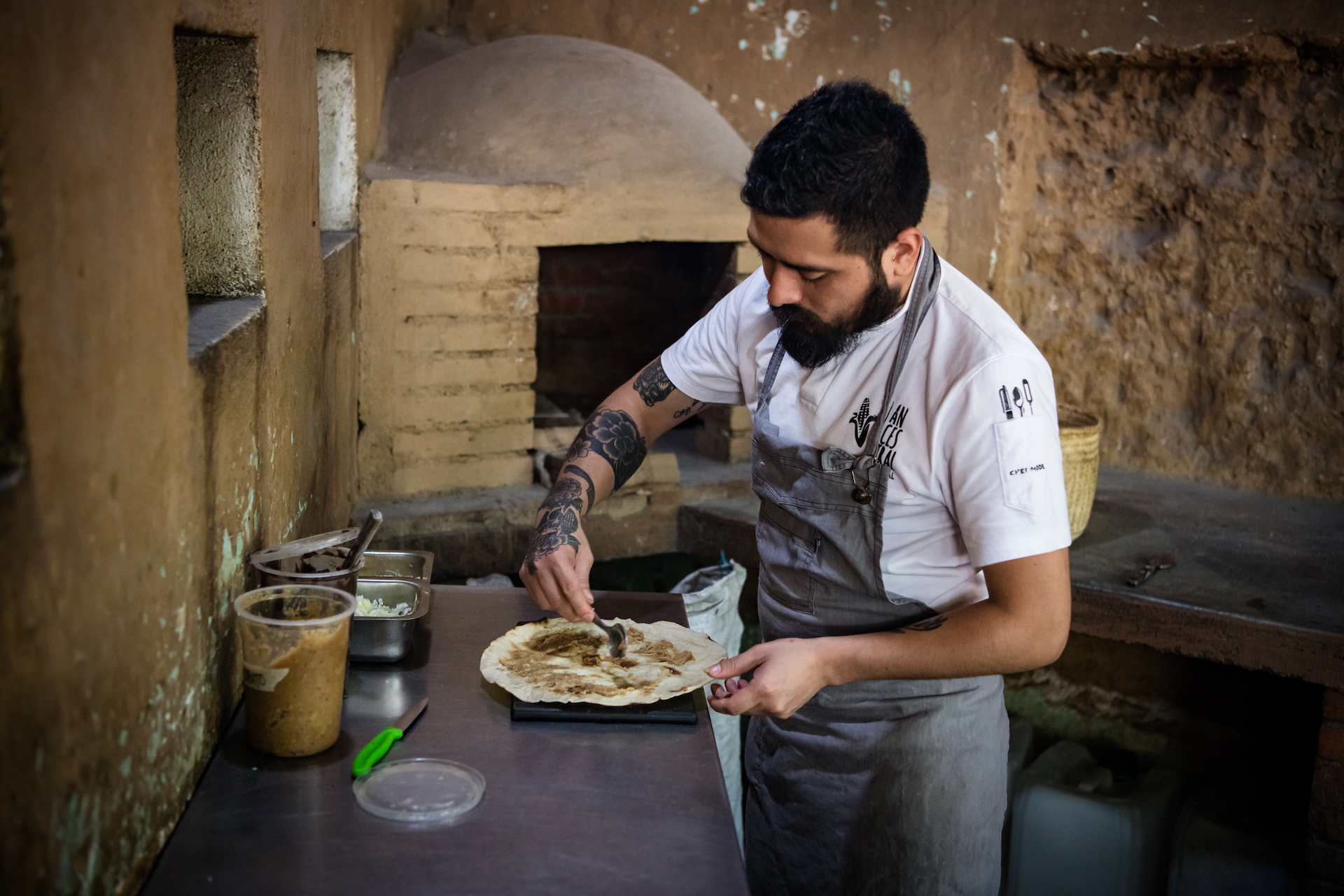
Making tlayudas at Ancestral in Oaxaca, photo by Jalil Olmedo

Amidst the uncertainty and turmoil caused by the coronavirus crisis, it’s easy for the days to blend together. Yet for many Oaxacans, the weekends are still distinct, mainly because of the pleasurable fin de semana (weekend) meals that allow family and friends to gather, reset and reenergize for the coming week. There is nothing more soothing than informal comfort food, which is often on the menu for these meals. “Although such food is not complicated to cook, on a Friday evening or a slow Sunday afternoon all you want is to chill and forget about cooking,” says Miguel Mijangos, head chef and co-owner of Ancestral, a traditional Oaxacan restaurant located in the picturesque neighborhood of Xochimilco.

Health Food

Oaxaca’s natural food projects have long had a presence in the city, but they are gaining new importance in light of the current coronavirus crisis. In a time of disruption and disconnection, they see themselves as helping to restore the links between humankind and nature. While the medical and scientific communities are going to great lengths to fight the local spread of the coronavirus and Covid-19, many Oaxacans are also realizing that this is a good moment to recognize that science and natural healing traditions can coexist. It’s something that locals are appreciating now more than ever – all the producers and vendors we spoke to reported a considerable increase in the demand for healing food products in the last few weeks.

Nicuatole

Growing up in Oaxaca, la gelatina rosita (“pinkish jelly”) was a biweekly ritual – every other Saturday, our mother would return from the market with this special dessert. It was so ingrained in our routine that we couldn’t imagine life without it. In fact, on a family trip to Mexico City, we were shocked to learn that gelatina rosita wasn’t readily available. Did they know what they were missing? It was only when we were older did we learn the proper name of this precious Oaxacan specialty: nicuatole. Some say its etymology can be traced back to Nahuatl (one of the many Indigenous languages spoken in ancient Mexico), specifically the words necuatl (“agave honey”) and atolli (“liquid corn”). While this may be true, it doesn’t quite portray what nicuatole is, not really.

Memelas de San Agustín

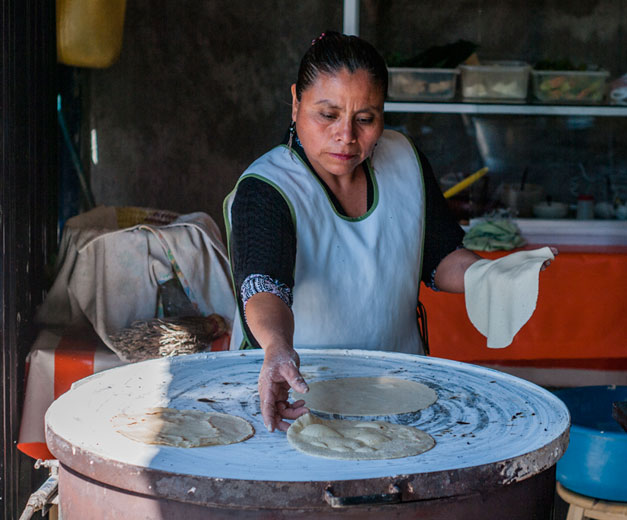
In Oaxaca, having a proper, hearty breakfast and also being on the go are not necessarily contradictory things. Memelas de San Agustín, an easy-going spot that has been feeding hungry Oaxacans for at least 15 years, is living proof. This small stall doesn’t have an official name – people just started referring to it this way since it’s located right behind the Iglesia de San Agustín on Fiallo Street. But it’s become a beloved destination for delicious versions of its namesake dish – essentially thick corn tortillas that are pinched around the edges and in the middle, making the texture slightly uneven so that their toppings (and their juices) stay in place.

Oaxaca

Editor’s note: We are very happy to be able to add Oaxaca to the growing list of cities CB is covering. Our coverage of that city’s deep and fascinating culinary scene begins today, with our report on Oaxaca’s State of the Stomach. Every Sunday, a vendor named Domitila heads out from a village called Etla and makes the hour-long journey to Oaxaca, where she sets up a small stand at a market on the north side of town and sells tamales filled with her homemade stews and moles. The many ingredients for these stews and moles cook slowly, for hours, after which Domitila combines them with spices, chile, chicken or cheese and mixes them into a cornmeal dough spread inside a cornhusk and then steamed – the quintessential Oaxacan snack, one that combines all of the area’s agricultural and culinary richness in one package.

Atila del Sur Comedor

Oaxaca, consistently ranked as one of the three poorest of Mexico’s 31 states, can also claim the title of having the country’s worst school system. Demonstrations and rallies by students, teachers and unions are a regular occurrence in Oaxaca City, causing frequent gridlock in the center of town. The walls of the city in bold graffiti reflect the young voices of the social movement: sometimes, a mere angry scrawl, but more often, these are canvases that will move you to pause and consider these depictions of revolution, past and present. One such wall is on Calle Porfirio Diaz in the Centro Histórico. It’s the exterior of Espacio Zapata, the home of the Asamblea de Artistas Revolucionarios de Oaxaca (ASARO).

Eating Oaxaca

We’ve written previously about the immense diversity of Mexican cooking: Every region has unique traditions that build upon ingredients common to much of the country. And yet there are a few regions that stand out for the variety and vividness of the flavors, colors and tastes found there.

logo

Terms of Service