S M B O measurement-vertical measurement-vertical

Latest Stories, Naples

CB Pantry Raid

We’re launching a regular Instagram Live series with our walk leaders called CB Pantry Raid – each person will give a guided tour of the local pantry and discuss the staples that have sustained their communities over the years. Tune in on Thursday, April 16, at 2 p.m. EDT (GMT-4) to hear Amedeo Colella, our Naples bureau chief, talk about the Neapolitan pantry, with a focus on pasta. As Amedeo wrote in his Coronavirus Diary, the markets in Naples initially saw a run on pasta, with only smooth penne pasta (penne lisce) remaining on the shelves (he obviously didn’t buy it, as they eat only ridged pasta in his house).

A slice of Neapolitan pastiera, photo by Gianni Cipriano and Sara Smarrazzo

A famous Italian saying goes, “Christmas with yours and Easter with whomever you want.” Well, this year there wasn’t much of a choice: Easter was spent at home, with family. The lockdown in Italy has largely coincided with Lent (the 40 days leading up to Easter, from Ash Wednesday to Holy Saturday). Except that this year, our Lent will not end on Holy Saturday but looks to continue for a long time (at least until May 3). Jesus Christ rose again on Easter Sunday to fly to the heavens, but it would be enough for us to be able to leave the house.

Amedeo Colella (left) leads a CB walk at Antonio Di Paolo's freselle bakery, photo by Gianni Cipriano and Sara Smarrazzo

The word “resilience” has come into fashion. I’ve heard it used everywhere in recent years, not only in the psychological field, where it was born, but also in a wide variety of disparate sectors. While I hate linguistic fashions, resilience is the only word that properly describes the ability of Naples’ long-standing family-run businesses to overcome traumatic events or periods of difficulty. I started thinking about this because the coronavirus has come in like a wrecking ball, one that risks destroying many companies. But, I wondered, how many punches in the face have the entrepreneurs of my city taken in the past? And how did they recover from what might have seemed at the moment an irreversible crisis?

Coronavirus Diary

Editor’s note: We don’t operate in Milan, but it's the home of our managing editor, Emma Harper. So we asked her to share her experience living under lockdown in the epicenter of Italy's outbreak. The first thing I noticed on lockdown in Milan, and the thing that has stuck with me the most, is the barking. Our apartment sits on a noisy thoroughfare, with cars and trams running by at all hours. But now, save for the errant tram, it’s quiet and still; the piercing, fearful dog barks ring out and bounce between the buildings that line my street, amplified by the silence. The only sound that can drown them out is an ambulance siren. It’s safe to say that the Milanese are dog people: Canines crowd the parks and streets, join their owners on the metro, and tag along for caffè and a brioche at the bar.

Pay It Forward

There’s some good news on the solidarity front. It’s especially nice to get good news since the coronavirus crisis in Italy goes beyond any disaster, any catastrophe I could have ever imagined. While there are few positive aspects to this experience, by nature I always see the glass half full. Professionally and psychologically, humanity will pay a high price, but I believe that we will recover soon. And my belief is buoyed by the solidarity shown in Naples (and that has sprung up all over the world).

Zeppole di San Giuseppe

A popular dessert in Naples and beyond, the zeppola di San Giuseppe, a deep-fried cream puff, is traditionally eaten on the Feast of St. Joseph (also called St. Joseph’s Day), on March 19, which is also when Father’s Day is celebrated in Italy. On this day, each Neapolitan traditionally eats several zeppole, despite their enormous size and rich filling. I have seen some that, with the addition of cream puffs, cream (inside and outside) and black cherries, weighed almost half a kilo.

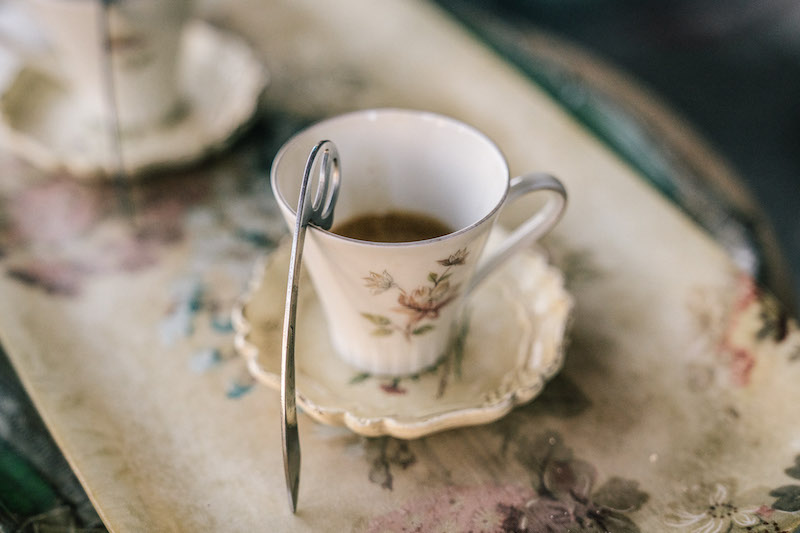
Cups of tea at The Florist Bar in Naples, photo by Gianni Cipriano and Sara Smarrazzo

Thursday, March 12, 11 a.m. My butt muscles start to hurt. I’ve been sitting for too many days, testing the resistance of Italian sofas (a small spot of national pride at a time when the rest of the world is scared of Italy). It is the fifth day of being confined indoors. We are following the #iorestoacasa (“I Stay Home”) decree of the government. In just four days everything has changed. Nobody dares to say, “It’s all an exaggeration.” Now the numbers are a confirmation – for some strange reason Italy has the highest number of infected people in the world after China.

Building Blocks

Tomatoes, one of the joys of summer in most locales, thrive in Campania’s hot and sunny climate. Yet good tomatoes can be surprisingly hard to find in summer – the oval, longish, rather crisp varieties that are the region’s claim to fame are mostly used for cooking, and the best ones are canned or exported to richer parts of the world. Somewhat improbably, winter is the best time to eat fresh tomatoes in Naples. As soon as the days get shorter and the nights get colder, small cherry tomatoes with a distinctly pointy end start to appear at every vegetable stall and restaurant throughout the city – this particular version of the fruit is known as pomodorino del piennolo del Vesuvio, or simply piennolo.

DocSicil Oplontis

The excavations at Oplontis, located in the modern city of Torre Annunziata, are often overlooked in favor of its much larger, much grander neighbor: Pompeii. Yet like all little-known things, this archeological site is full of incredible surprises, like the magnificent villa said to have belonged to Poppaea Sabina, the second wife of the Emperor Nero. A UNESCO World Heritage Site since 1997, the villa is certainly worth a visit (plus, you’ll avoid the tourists who come from far and wide to invade Pompeii). And after having “discovered” Oplontis, there is a small gastronomic treasure to be discovered: DocSicil.

Best Bites 2019

In a city with such a conservative attitude toward gastronomy, it’s rare for new foods, new preparations and new trends to flourish. Naples has continued to reject the aggressive advances of globalized food: The number of fast food chains can be counted on one hand (although many have tried their luck in the city), and the latest international fashions, from poke to kebab, struggle to make inroads. There is one exception: the muffin, an American dessert that has become widespread in the city’s bars. But, of course, Neapolitans proceeded to modify this novelty according to the tastes and traditions of South Italy. It is not uncommon to find rustic savory muffins, made with ricotta and cigoli (pork crackling).

Cuccuma Caffè

A philosophical bar with a throwback name, Cuccuma Caffè opened in October 2018 as a counterpoint to the Neapolitan coffee culture – unlike the many, many bars where you sling back a shot of espresso while standing at the counter, this spot prioritizes a slow coffee. Achille Munari, 32, fell in love with Naples when he arrived 10 years ago from Umbria and decided to stay here in our city. A brilliant guy, Achille prefers a calm, relaxed pace of life, one that allows for reflection and conversation. So he decided to set up a bar that puts his life philosophy into practice.

CB Book Club: Vicky Bennison’s “Pasta Grannies” Featured Image

Vicky Bennison, the woman behind the wildly successful Pasta Grannies YouTube channel, recently published a cookbook featuring a selection of the nonne she’s filmed. Titled Pasta Grannies: The Secrets of Italy’s Best Home Cooks (Hardie Grant; October 2019), it’s full of unique yet accessible pasta styles, some of which are only made in certain villages and towns, from all corners of Italy. After many years working in international development, Bennison began writing about her culinary adventures, publishing numerous food guides and a cookbook along the way. We spoke to her about the origins of Pasta Grannies, how she decided on which nonne to feature in the cookbook and her favorite pastas.

Trattoria Avellinese

One tip often given to travelers is to look for restaurants full of locals. In fact, we do the same thing when dining out in Naples: If we see a spot packed with groups of employees or policemen on their lunch break, it’s almost a guarantee that we’ll eat well. Trattoria Avellinese, the late Peppino (Giuseppe) Cipriano’s restaurant near the central train station, is one place that’s always crowded with Neapolitans. Moreover, we can personally testify that this trattoria is a local favorite. Growing up, we lived near Piazza Garibaldi, and whenever our family went out for lunch – which, to tell the truth, wasn’t that often – we went to Peppino’s place.

CB on the Road

In the late 19th and early 20th centuries, Italians – particularly southern Italians – immigrated to the United States in droves. Seeking their fortune in a distant land, they boarded ships with cardboard suitcases containing only a few clothes. But there was no shortage of good food in those suitcases: bread, cheese and even soppressata, cured pork salami made with the best pieces of the pig (and thus low in fat content), a perennial favorite in southern Italy. Alas, once they arrived on American soil after the long journey, their soppressate were seized because of a law prohibiting the import of cured meat, among other meat products (a ban that still exists today).

Pizzeria ‘Ntretella

Opening a pizza joint in a city that’s world renowned for its pies requires some gumption. Maria Rosaria Artigiano, 56, the energetic owner of Pizzeria ‘Ntretella, which opened a few years ago, certainly has it; so does her brother, the brilliant chef Gennaro Artigiano. The beautiful restaurant they built together has quickly become a “new classic” in the panorama of Neapolitan pizzerias. Gennaro, 57, owns Locanda Ntretella, an old restaurant in the Spanish Quarter known for its excellent cuisine. Yet he is a restless man, always on the lookout for a new challenge. So in 2013, when he heard of an old carpentry shop in the heart of the Spanish Quarter, he visited the space and realized it would be a perfect place to open a pizzeria.

logo

Terms of Service