S M B O measurement-vertical measurement-vertical

Latest Stories, Naples

Sogni di Latte: Sweet Dreams are Made of Cheese Featured Image

Biting into a freshly-made globe of mozzarella, porcelain smoothness yields to a creamy interior and milk trickles down the cheeks. For any Neapolitan, this is true pleasure. And everyone knows the best spot for such an afternoon delight is at a cheese factory in the countryside – namely in the Caserta and Salerno provinces. There, some of the best Mozzarella di Bufala Campana DOP is shaped daily from fresh buffalo milk. For those of us stuck in the city center and craving that addictive bite of fresh mozzarella, one of Sogni di Latte’s two locations is our first stop.

Vitto Pitagorico

Long before Neapolitans fell in love with dried pasta – a luxury food mainly reserved for the nobles until the late 1800s and only later a popular, filling meal – and earning their reputation as mangiamaccheroni (pasta eaters), they were called mangiafoglie – literally, “leaf eaters.” The moniker referred to the habit of consuming significant quantities of the vegetables that grow in the thriving farms at the foot of Vesuvius or in the countryside areas encircling the city center. Common folk cleverly found simple yet effective ways to amplify the vegetables’ flavor, often frying them or accompanying them with tomatoes, herbs, and other ingredients, while precious products such as raisins and pine nuts were – again – the prerogative of the noble class.

La Cantina di via Sapienza: The Real Deal Featured Image

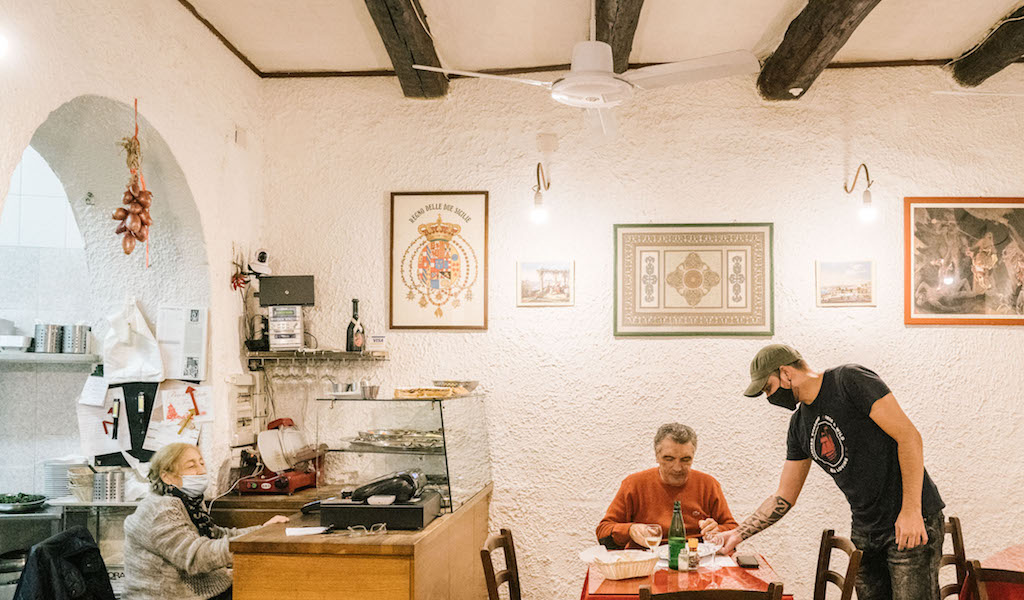
The requirements for a place to qualify as an authentic Neapolitan trattoria are simple: It must be tiny, intimate and quiet, with a small menu and a genuine atmosphere. In other words, it must be La Cantina Di Via Sapienza. This is not a trattoria with fake antiques strategically placed inside to draw tourists or chic Neapolitans looking for “aesthetic” culinary experiences. Rather, La Cantina Di Via Sapienza is a true neighborhood spot that serves meals to the employees and nurses of the nearby polyclinic, and to the students and professors from the various universities of the historic center.

Parigina

Often overshadowed by the ubiquity, convenience, and utmost deliciousness of the classic pizza – in this case, specifically the street version called pizza a portafoglio (folding pizza) – is another typical Neapolitan street food whose history is linked to the royal family: the parigina. Commonly sold, already cut into generous rectangular portions, found in bakeries, simple eateries, and deli shops, this is a different take on the Neapolitan savory tradition. The parigina tantalizingly combines various layers of flavors and textures: a variably thick leavened dough at the base, a well-calibrated filling of tomato sauce, mozzarella cheese, and baked ham in the middle, and a thin and flaky puff pastry to cover it all.

Top Ovens: Where We Go for the Best Pizza in Naples

The birthplace of pizza, Naples is awash with unbeatable pizzerias. Don’t want to miss out on the perfect pie? Culinary Backstreets has you covered. Our team of locals has handpicked the best of the best pizzas in Naples, highlighting the art of the city’s pizzaiolos – now recognized on the list of UNESCO Intangible Cultural Heritage.

Pastiera

Like the Proustian madeleine, sweets can stir up all kinds of feelings in the minds of those who eat them. In Naples, struffoli (small, round doughnuts glazed with honey) and cassata (sponge cake with ricotta and candied fruit) speak of Christmas, while chiacchiere (sugar-dusted fritters) and sanguinaccio (literally “blood pudding,” but actually made of chocolate) bring to mind Carnevale. And then there’s pastiera, whose very scent and taste make us think of Easter and spring. These days, pastiera can be made all year long, not only when the wheat has just sprouted, as was the case for our ancestors. Yet, when Easter approaches, all Neapolitans dream of this tart.

Neighborhoods to Visit

Nestled in the smaller bay of the Gulf of Naples, on the northern side of the Posillipo cape, Pozzuoli is the main center of the Phlegraean Fields, a vast and fertile volcanic area still marked by craters, sulfurous fumes, and seismic activity, rich with natural and archaeological treasures. Pozzuoli was once a Greek colony and a main Roman harbor and trading port the later a fishing village. Today it’s a busy ferry terminal – ferries heading towards the islands of Ischia and Procida leave from here – and a lively coastal district.

Neapolitan Lasagna: Carnival Cravings

Long before Halloween – nowadays a popular event marked by pumpkins and costumes here in Italy, too – arrived in Naples, we had Carnival. A mix of pagan and religious festivity, celebrated with exuberance and (mainly culinary) excess before Lent, it culminates with Mardi Gras, the Tuesday in February which falls six weeks before Easter. In Naples, Carnival used to imply embarrassing homemade costumes and the desperate effort to escape egg throwing in the streets on the way home from school – as well as much more pleasant rites, including the food-related ones. Which, luckily, still endure. The widespread Italian habit of frying food for Carnival here takes the irregular, indented shape of chiacchiere – thin, crunchy fritters sprinkled with powdered sugar, which are also common in other regions of Italy but with different names – traditionally served with sanguinaccio, a decadent chocolate sauce originally made with pork’s blood, to honor the animal’s sacrifice.
Drugstore Napoli: Gastronomy Grotto Featured Image

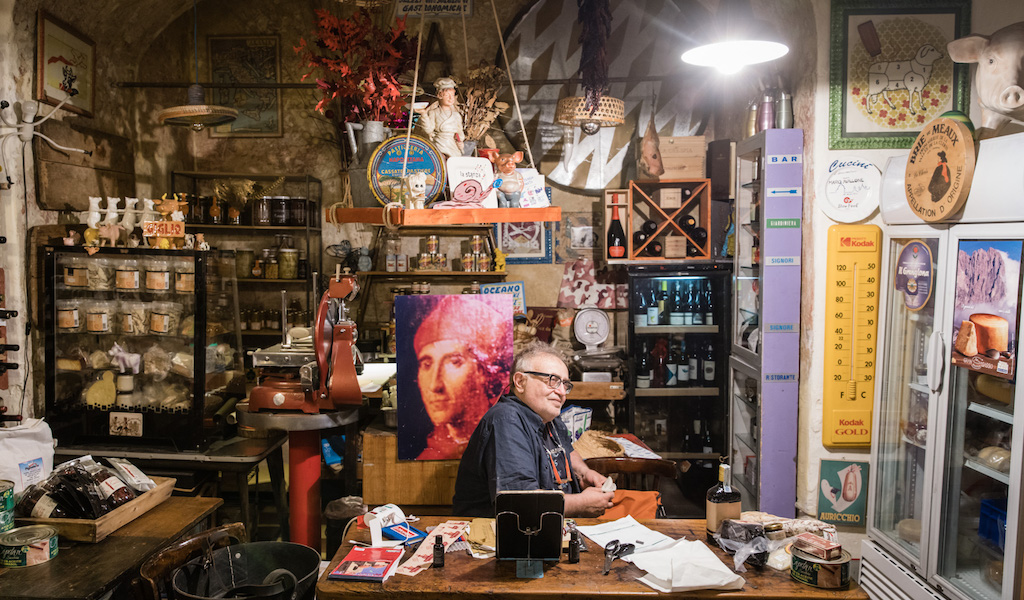
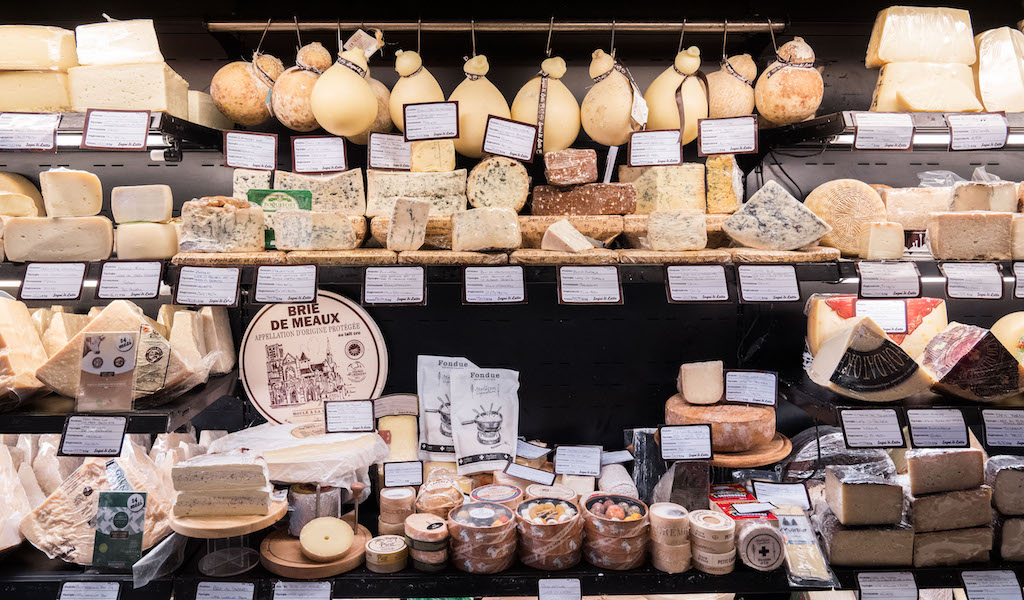
Dreamers make the world more beautiful. These extravagant eccentrics fascinate us with their seemingly impossible, utopian ventures, while equally making us wonder how their projects endure. Mario Avallone, 62, is one of these people. Get to know him, and he’ll happily tell you his tale: his travels around the world, his years living in Sicily, his incredible projects and the Mediterranean goods that he sources from A-to-Z. It is this truly extraordinary expertise in gastronomic culture that feeds his Neapolitan pantry – Drugstore Napoli – and the attached tasting room, La Stanza del Gusto, which was created to satisfy the most discerning palates, Neapolitans and travelers alike.

Mon Sciù Bouchons, photo by Alessandra Farinelli

In 2023 Naples boomed with tourism once again – every corner of the city was crowded with people. This post-Covid explosion of tourism runs the risk of distorting this historical city: an abnormal increase in vacation rentals and B&Bs has expelled many Neapolitans from the Historic Center, threatening the local market for traditional activities, goods and services. The city administration is taking action by limiting permits for new holiday homes and even pizzerias. We took advantage of this year to search out special places old and new, taking time to venture off the beaten track and finding solace in small corners of peace and gastronomic pleasure that only Naples can provide.

Buatta: Comfort Food and Conversation in Vomero Featured Image

Chef owner Angela Gargiulo calls her restaurant Buatta a trattoria di conversazione – a “conversation eatery.” Tucked in a peaceful corner of Vomero, the Neapolitan shopping district, Buatta is “…a conversation restaurant in the true sense of the word,” Angela tells us. “After cooking, and now that I have excellent collaborators [to help] in the kitchen, I have time to sit next to my customers; I talk to them at the table about the strangest things; it's as if they came over to my house.” Little by little, the restaurant (whose name, Buatta, from the French boite, is a Neapolitan word that means “jar”) has become a destination for those who love simple and quality cuisine, and for those who love to chat.

Cibi Cotti Nonna Anna: The French Connection Featured Image

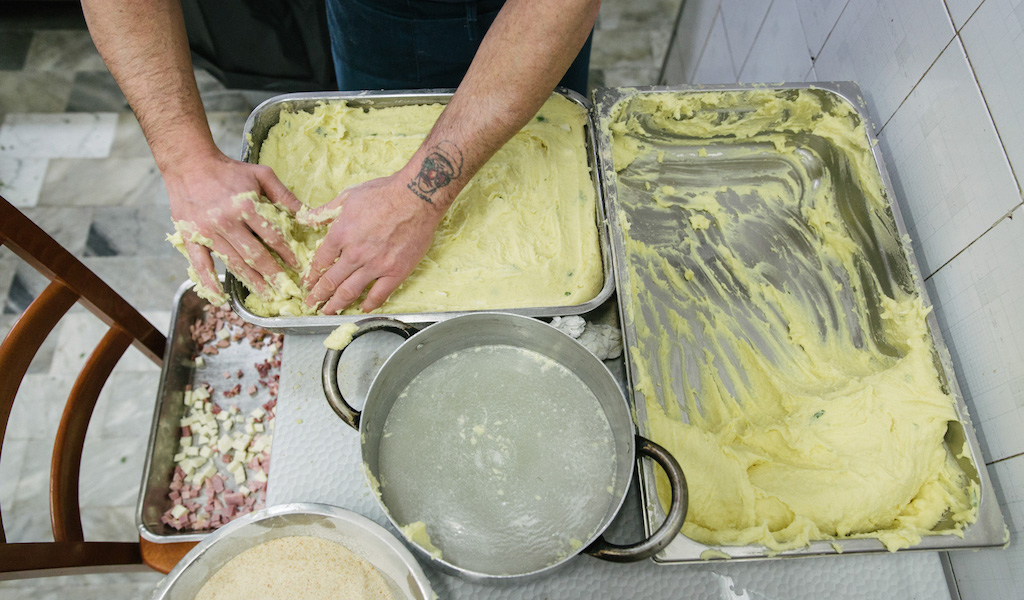
Neapolitan cuisine is an impure thing, the result of culinary influences from every part of the old continent. One of the most famous dishes this cross-pollination has produced is the Neapolitan potato gattò, a potato tortino rustico (a tall, square cake) with layers made of mozzarella, scamorza, ham, salami and more. A baroque dish, this gattò transforms the simple potato into a true miracle of gastronomy. The word “gattò” (not to be confused with “gatto” without the accent, which means “cat” in Italian) is the Neapolitanization of the French “gateaux” (cakes). But the Neapolitan potato gattò recalls the French gateaux only in form – taste-wise, it’s very far from a sweet French cake.

A tripe stall in Naples, photo by Gianni Cipriano and sara Smarrazzo

In a city like Naples, where almost every kind of street food – or food in general – seems to be carb-and-calorie laden, there's one unexpectedly light, all-protein option: ’o per’ e ’o muss’. This tongue-twister dish has roots in the same food traditions common to many Italian regions: back in the 18th century, the needy would save scrap pieces of meat discarded from the nobles (until they, too, realized how good they could be), to make tasty and nutritious recipes out of them.

Pizzeria Carmnella: Margheritaville

The hordes of pizza lovers who descend on Naples usually head for Via dei Tribunali in the city’s historical center, famed for its parade of pizzerias. If they arrive by train, they will exit the central station, go straight through Piazza Garibaldi and head right for the Centro Storico, where the guidebooks they carry always (erroneously) say they will find the best pizzerias. Locals in the know, meanwhile, head ten minutes in the opposite direction, towards an area that has less foot traffic and appeal for tourists, but that is home to Carmnella – truly one of Naples’s best pizzerias. Evidence of this can be seen in the pizzeria’s dining room; by noon, Carmnella is already full, unusual in a city like Naples, where locals are used to having lunch between 1 and 3 p.m.

È Pronto ‘O Mangià: Come and Get It!

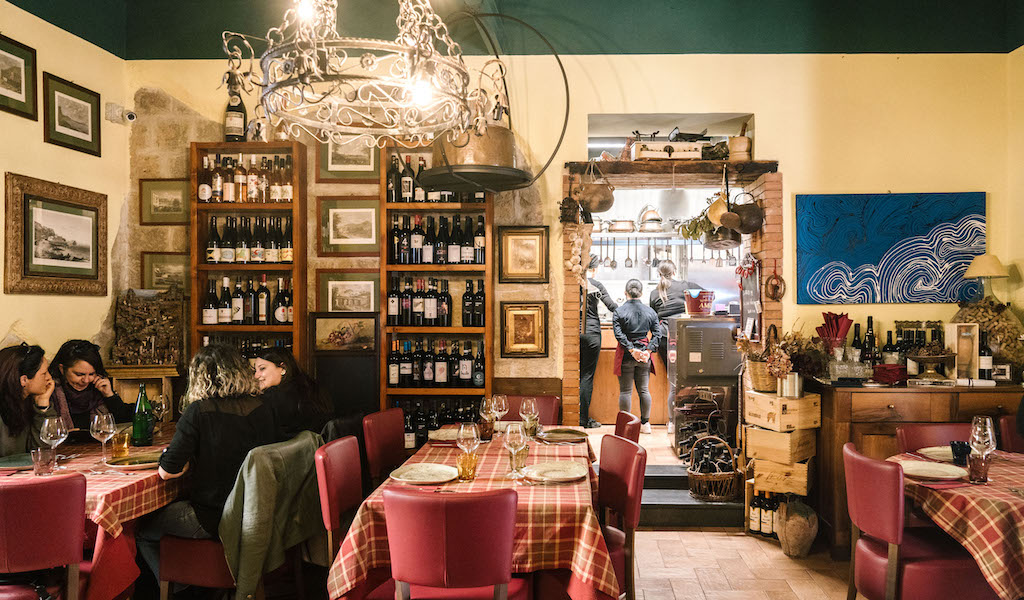
In Neapolitan dialect, “È Pronto ‘O Mangià” means simply: “Food is ready!” It is the perfect name for Mattia Grossi’s trattoria, a small, unassuming space on via Cesare Rosaroll. We are welcomed to this family-owned restaurant with an undeniably warm atmosphere: stone walls lined with old photos and newspaper clippings, smiling waiters, music and chatter. È Pronto ‘O Mangià matches the simplicity of its name: nothing sophisticated, nothing gourmet – just true, homemade Neapolitan cuisine.

logo

Terms of Service