S M B O measurement-vertical measurement-vertical

Latest Stories, Naples

The Babà

The Neapolitan pastry landscape is dominated by three sweet treats: sfogliatella, a shell-shaped pastry with a variety of fillings; pastiera, a type of tart flavored with orange flower water and most commonly served at Easter; and babà, a small yeast cake soaked in a liquor syrup. The first two cakes were born and raised in Naples, thanks to the gifted pastry-making skills of the nuns and monks in the Neapolitan convents. But babàs, although considered by many Neapolitans to be homegrown, are not, in fact, an indigenous sweet – our beloved baba was imported from France, where they were invented by a Polish gourmet.

Pasquale ‘o Nummararo

His name is Pasquale De Stefano, but everyone knows him as Pasquale ‘o nummararo, “the number man.” In this era of plotters and laser printers, De Stefano continues to hand-paint his signs, using ancient paintbrushes on wooden boards, which are then planted in the baskets of all Neapolitan fruit sellers. And even the wooden signposts are still cut by hand. In 65 years of work he has by now created tens of thousands of signs advertising the prices of apples (€0.99) or peaches (3 kg for €2). They can be small or large, on canvas or on wood, promising a “special offer” or “great value.” Sometimes Pasquale’s signs will feature a more pointed message: “Whoever touches the fruit will be touched by the fruit seller,” is one that comes to mind.

Friggitoria Masardona

Pizza, as you might already know, was born in Naples. What you might not know is that in Naples, fried pizza existed before baked pizza. And although Neapolitans have raised pizzamaking in the oven to an art form, their skill at turning out fried pizza is even greater. As with so many local specialties in this city, it’s hard to say who makes the best fried pizza here; there are improvised pizzerias in every corner of Naples, street vendors that make a really good pie. There’s a saying here, voce e’ popolo, voce e’ dio (the Neapolitan version of vox populi vox dei), which means that something is certain – there’s no doubt. And that applies to Masardona's pizza being one of the best in the city.

Tortano and Casatiello

In past centuries, ones of economic hardship, Neapolitans’ ancestors feasted only during religious holidays. It was easier then to distinguish the piatti delle feste, feasting foods, by their richness and variety. In these more prosperous times, and with the availability of raw materials throughout the year, these lavish dishes can be prepared or purchased virtually any time, which makes it seem difficult to talk about “festive meals.” However, with the approach of Easter (and Christmas), many Neapolitans, beyond their religious beliefs, are seized by an irresistible desire to return to family traditions and to eat the dishes prepared by their forebears.

Naples Market Watch, Pt. 1

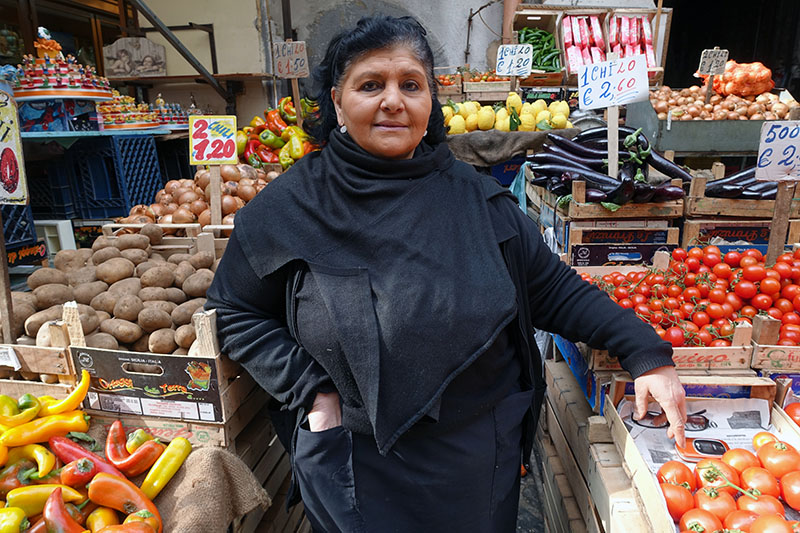
It’s Sunday morning at La Pignasecca market in Naples and time is in flux. Picture a Boccioni painting: movement is blurred, there is an inter-penetration of objects, speeding vehicles and sound – a frenetic moment in the Futurists’ imagination. The city rises as engines splutter, traders hustle, klaxons yelp. Santa Maria di Montesanto spews punters out into the marketplace after mass; men peel off, heading home to check on the simmering ragù; groomed teenagers peacock on mopeds as groups of women push in line to pick up their last-minute order of fresh pasta, charcuterie and squid. The church bells chime: it’s lunchtime. Anticipation is in the air.

Lello's Octopus Broth Stand

To make excellent octopus broth, you must first fill a huge pot with water to the brim – at least 20 liters – bring it to a boil, add salt and pepper in industrial quantities and immerse four large octopuses. After 33 minutes (and not one more) of simmering, it’s ready: the octopus has reached the perfect consistency. Yet in Naples there’s a saying, “The octopus cooks in its own water” – a proverb that means that a person needs to get to the truth on his own and in his own time. Lello tells us that what this saying is referring to isn’t actually true, since clearly, an octopus needs much more water than what it comes with to actually cook.

Mangia e Bevi

Neapolitan cuisine encompasses such a variety of dishes, ingredients and preparations that sitting down for lunch in Naples is always a feast of smells, tastes, colors and sensations. Menus here are populated by numerous meat dishes and equally many seafood options, and the extraordinary variety of vegetables are complemented by unique dairy products, preserves and sweets steeped in history and quality. Restaurant kitchens know how to be baroque (as demonstrated by menesta maretata, a complex soup that “marries” a variety of vegetables and cuts of meat), sumptuous (as in eggplant parmigiana), or deceptively simple (as in the classic spaghetti aglio e olio, which combines the basic trio of pasta, garlic and oil to great effect).

Imported image from WordPress content

While in many parts of Europe consumer capitalism has brought an invasion of chain supermarkets and restaurants, contributing to the extinction of independent family-run grocers, Naples and the small distinct districts of its old town have magically managed to resist. The neighborhood markets retain a charm that is reminiscent of a by-gone era when Europe’s streets would smoke and hiss and the ground would be covered in cabbage crusts and fish entrails. The city’s cobbled and narrow streets revolve around civic life, which still brims with stalls selling fresh mollusks, sacks of nuts, knots of garlic and onions, rounds of cheese and hanging hams.

logo

Terms of Service