<p><strong>Simit, Turkey’s Lord of the (Bread) Rings: </strong>Sold by roving vendors, street carts and bakeries, spread with a triangle of soft cheese or tossed to circling seagulls from the ferry, the humble simit has become a quintessential symbol of Istanbul – and of Turkey more broadly. But there’s more to this sesame-coated bread ring that it may at first appear, as demonstrated by the reactions last autumn to a piece of unexpected news from abroad.</p><p></p><p>“Hang out the flags!” Turkish food-delivery giant Yemeksepeti tweeted exuberantly when the Oxford English Dictionary announced in October 2019 that the word “simit” had been officially added as an entry, saving future translators from having to employ awkwardly inadequate substitutes such as “Turkish bagel” when writing in English about the popular snack. Amid the general celebrating on social media, however, one group of Turks was decidedly not pleased.</p><p></p><p>“Dear OED, whatever the rest of the world says, this is not simit cuz THIS-IS-GEVREK,” one Twitter user wrote, summing up the predominant opinion in the Aegean city of İzmir, where a trade association vowed to lobby the dictionary to rectify the linguistic slight.</p><p></p><p>Others chimed in to sing the praises of Ankara simit, to suggest that simit – defined by the OED as “originating in Turkey” – may have European Jewish roots, or to note that it’s found in Greece and North Macedonia as well.</p><p>So does a simit by any other name taste the same? Where did this doughy snack really come from, and when did people first start baking and eating it?</p><p>As with so many other gastronomical tales in Turkey, the story of simit is intertwined with the history of migration, according to İzmir-born and based food historian Nejat Yentürk.</p><p></p><p>“The ring-shaped sesame bread made in İzmir and known as ‘gevrek’ today was introduced from Istanbul,” says Yentürk, author of the 2018 book <em>Ayaküstü İzmir: Sokak ve Fırın Lezzetleri (İzmir On the Go: Street and Bakery Flavors).</em></p><p></p>
The Essentials: Where We Eat in Izmir, Turkey
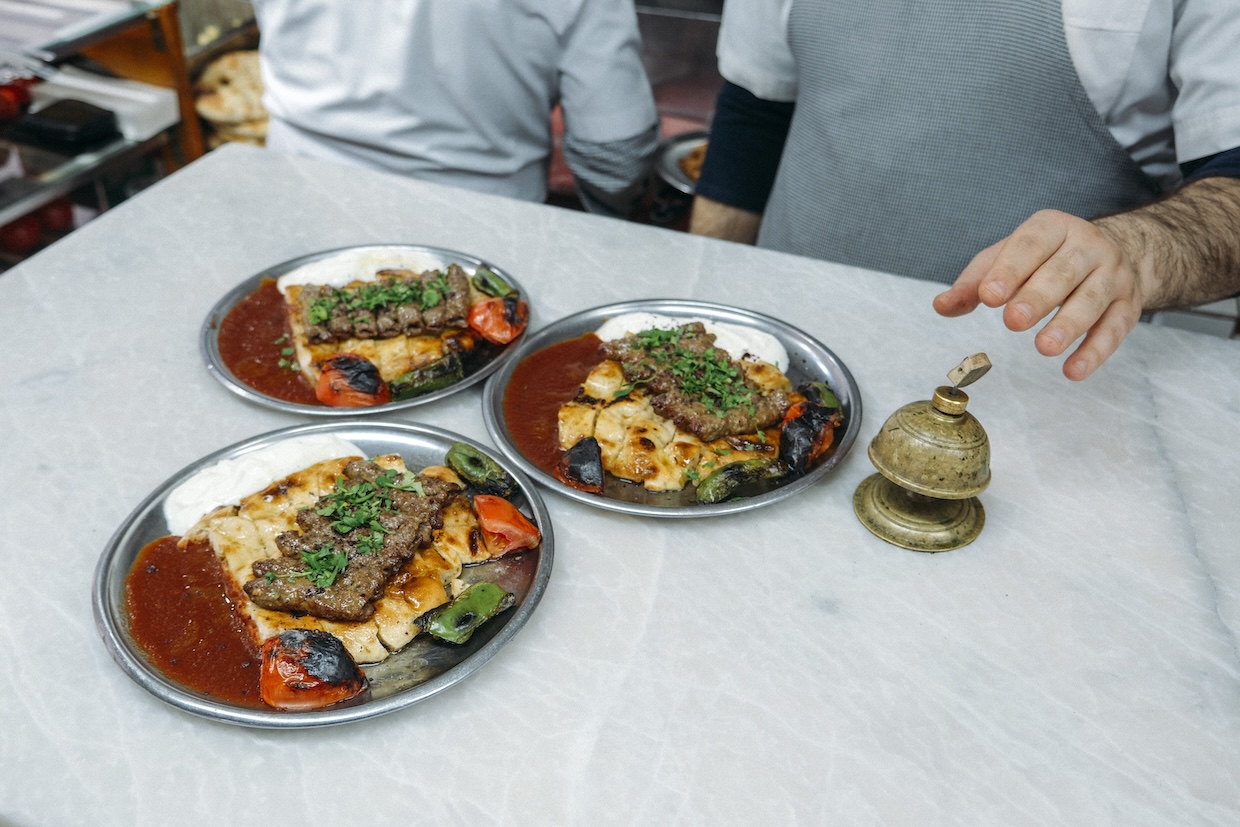


<p><strong>Mandatory Lunch Spot : </strong>One of the most popular restaurants in Kemeraltı is Doyuran Manisa Kebap Salonu, which serves up the namesake dish of Izmir's neighboring province. Manisa kebap can be found throughout the city, but less skilled ustas often cover up mediocre meat with the dish's other main components: tomato sauce, yogurt, and butter bubbling from the pan. The opposite is the case at Doyuran, where the hand-shaped skewers of ground beef are tender and cooked expertly, complemented by the layer of pide bread upon which they rest. The sauces are the result of fine attention to detail. If you get one lunch in Izmir, this should be it. </p>

<p><strong>Posh Patisserie: </strong>In the posh residential section of the Alsancak quarter, some Levantine businesses still thrive. (Here, "Levantine" refers to Western European merchants, such as the French and Italians, who settled in Ottoman ports centuries ago). Marilen is one such café, baking billowy, buttery croissants – done nowhere better in Turkey (and perhaps anywhere else outside of the French capital). The sleek, Levantine-owned coffee shop also offers something not easily found on this side of the Aegean: tiropita and spanakopita, empanada-shaped pastries stuffed with cheese and spinach, respectively. Both are accompanied by excellent espresso, hard to find.</p>

<p><strong>A Moment for the Old-School: </strong>More than just a patisserie, this Izmir institution has served as a meeting place in the heart of Alsancak's buzzing shopping and entertainment district since 1957. They are most famous for the "pavlova," a formidable rolled cake with a crunchy shell stuffed with a decadent filling of strawberries, blackberries, chocolate and mascarpone. It's more like a cake than traditional pavlova, though it does include meringue – it's just taken out of the oven before it can harden.</p><p></p><p>Those without a sweet tooth can choose from their wide selection of savory pastries, or simply enjoy a glass of tea while enjoying the ambiance of one of Izmir's most iconic establishments. </p>

<p><strong>A Downhome Taste of Urla: </strong>This Kemeraltı tradesmen's restaurant offers a wide selection of Aegean cooking, particularly inspired by the nearby district of Urla. The owner's hometown, Urla has become something of a culinary destination in its own right, with the <a target="_blank" rel="noopener noreferrer nofollow" class="text-[#781e2a] underline" href="https://culinarybackstreets.com/stories/izmir/urla-wine-day-trip">Urla Bağ Yolu (wine route)</a> skyrocketing the seaside district’s popularity these last 15 years. Kısmet Lokantası has been open since 1967, however, offering Aegean-style homefood over gastronomic glories.</p><p></p><p>Outside of these Aegean staples, we were blown away at their take on elbasan, a dish with Albanian origins that consists of tender, succulent lamb bathed in a delightfully spicy roux. We also loved their irmik helvası, a light semolina dessert elevated by a sprinkling of pine nuts. The only problem one encounters here is deciding among the several dozen delectable choices simmering behind the burly, crowded counter, all prepared that day and all of which will sell out within hours. Beyond busy during the lunch rush, Kısmet closes well before dinnertime. </p>

<p><strong>Neighborhood Meze Haunt: </strong>For three-quarters of a century, this small yet proud meyhane has served the <a target="_blank" rel="noopener noreferrer nofollow" class="text-[#781e2a] underline" href="https://culinarybackstreets.com/stories/izmir/where-to-go-basmane">neighborhood of Basmane</a>, drawing diners from near and far who have come to enjoy the mezes and grilled specialties of Nihat Sezgin, now pushing 80. Nihat usta has run the place for decades, but shows no signs of slowing down. </p><p></p><p>Start with a plate of yaprak sarma (stuffed grape leaves), genuine spicy çiğ köfte (Turkey's beef tartare, served in broad lettuce leaves with a generous squeeze of lemon juice) and whatever else Nihat usta has whipped up that day. Enjoy a few glasses of rakı before opting to order the grilled specialties, which include köfte (meatballs) and lambchops. Hayyam Meyhanesi is the epitome of salaş (pleasantly rough around the edges), i.e. our favorite kind of culinary backstreet institution. </p>

<p><strong>Rakı-Balik till Midnight: </strong>The entertainment district of Alsancak is packed with bars and meyhanes, and if you are keen on spending a few hours at one of the latter, look no further than Klüp Ali. In its current location for nearly 40 years, this meyhane has several decades more history under its belt just across the street.</p><p></p><p>Loyal regulars span all age groups and come for the pitch-perfect meze and fresh catch of the day. We order half-portions of havuc tarator (shredded carrots swimming in garlicky yogurt and topped with razor-thin sliced almonds), acılı ezme (a spicy dip that resembles a properly chunky Mexican table salsa), kaya koruğu (rock samphire doused in vinegar and olive oil), and şakşuka (grilled eggplant and potatoes laced with tomato sauce). After enjoying these alongside a glass of rakı, it's time for an order of crispy, ever-so-slightly chewy and flauntingly-fresh fried calamari, served with lemon and a tartar-esque sauce. You won’t find better calamari outside an Aegean island. </p>

<p><strong>The Price, and Drink, is Right: </strong><span style="color: rgb(0, 0, 0)">Tucked in a backstreet of Alsancak, Better Days is a narrow, cozy bar that serves cold draft beer and surprisingly good cocktails at reasonable prices – no small feat in Turkey, where consistent taxes on alcohol have made grabbing a drink an increasingly luxurious activity. Better Days is a great spot to sit with friends over a few pints, or solo at the bar, where the friendly bartender will whip up a nice whisky ginger. We also enjoyed their regional offering, which pleasantly combines mastic liqueur with Angostura bitters. It happened to be the cocktail of the day, which at 325 TL ($7.40), is a steal anywhere for a thoughtfully-mixed libation in 2026. </span></p>