S M B O measurement-vertical measurement-vertical

Latest Stories, Athens

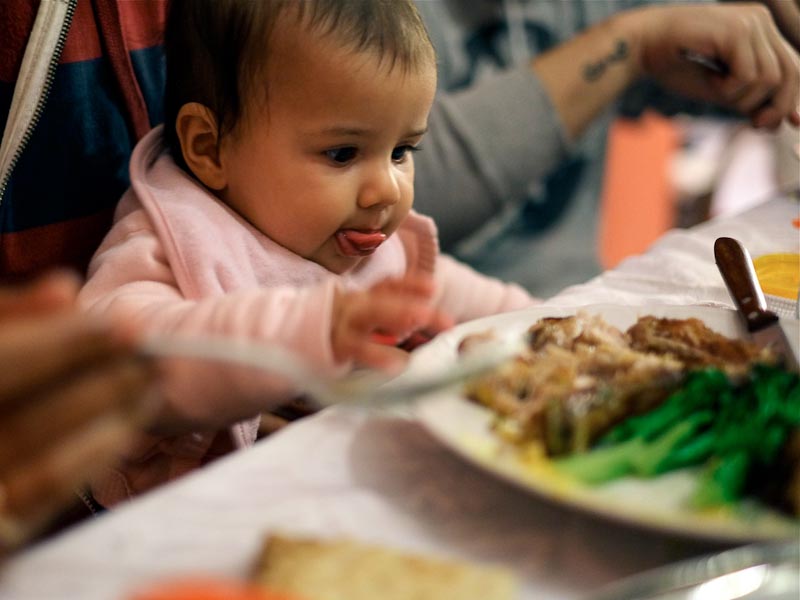
Ask CB: Child-Friendly Dining in Athens?

Dear Culinary Backstreets, My family is traveling to Athens in October. Some of our friends have told us that Athens is not very child-friendly and that the only places that cater to children are international fast food chains. Is this true? Are there any other options for those of us who do not want to eat American-style fast food?

Strofi, photo by Manteau Stam

It’s a long drive from Athens to Perama, the westernmost terminal of the port town of Piraeus, and the payoff is, at first sight, minimal. To the left is the port’s industrial zone – a forest of blue and orange cranes that tower over the sea. To the right is a stretch of industrial wasteland: old electricity plants, derelict factories, walls with enormous graffiti celebrating Piraeus’s very successful team, Olympiacos, and then a jumble of recently built high-rise buildings on a rocky hill. First populated in the 1920s by immigrants from Asia Minor, Istanbul and the Pontus (Black Sea) region, this suburb of Piraeus now has about 25,000 residents, most of whose livelihoods depend on the dockyards that have been here since the 1930s. Perama remains a proud, working-class neighborhood, and it is no accident that the early Greek hip-hop of the ’90s and the so-called Low Bap hip-hop genre and movement started here.
CB on the Road: Exploring the Mythical Port of Piraeus

Piraeus holds the distinction of being Greece’s biggest port, as well as the largest passenger port in Europe. Although it is a mere 20-minute train ride from downtown Athens, most Athenians think of Piraeus with a reverence reserved for a foreign country. There is just something almost mythic about this ancient port, which has been in existence since the 5th century B.C. – the famous opening line of Plato’s Republic is, after all, “I went down to the Piraeus yesterday.” In the modern period, the greater Piraeus area – home to a population of about half a million in Piraeus proper, along with a number of suburbs – has witnessed dizzying highs and lows, especially over the past century. The area has been a major destination for immigrants from elsewhere in Greece, including the islands and the Peloponnese. One of the biggest population expansions came after 1922, when vast numbers of Greek refugees fleeing Asia Minor (modern-day Turkey) migrated to the area and established new working-class neighborhoods, including Nikaia, Keratsini, Drapetsona and Korydallos.

Ask CB: Cretan Cuisine in Athens?

Dear Culinary Backstreets, I keep hearing about the wonders of Cretan cuisine, but is it really any different from regular Greek cooking? And is there anywhere nice to try it in Athens?

Diamonds in the Touristy Rough: Plaka Dining Secrets

Editor’s note: This is the second piece in our series featuring the hidden gems in some of Athens’ most touristy neighborhoods. We previously explored Psyri; it is now time to take on the holy grail of Athenian tourism: Plaka. There’s a reason why this area of old Athens, just below the Acropolis, is the city’s most touristy neighborhood: it has a history of more than 6,000 years.

Pandeli

Editor’s note: We're sad to report that Pandeli is now closed. This guest review by Nicolas Nicolaides, an Istanbul-born Greek and Ph.D. student in history who moved to Athens as a child, offers a personal look at a famous Istanbul-Greek culinary landmark and its Athens outpost. The Istanbul Greeks (aka Constantinopolitans) have some obsessions when it comes to food, and my grandma was no exception in that regard. Like every Istanbulite transplanted to Athens, she would do her research, taking advice from family and friends in order to find food that would satisfy her high standards – i.e. the way it tasted in Istanbul. For example, Grandma was very fond of meringue cookies and she knew that the best in Athens were to be found at Varsos. She wouldn’t compromise on anything else, so even though Varsos was 12 miles from where we lived, Grandma and I would make an excursion two or three times a year from our largely Constantinopolitan neighborhood of Phaleron to Kifisia (aka Kephisia) to get her precious meringue cookies. I would be rewarded with a couple scoops of ice cream or a creamy rice pudding while Grandma took her coffee on the famous patisserie’s patio.

Diamonds in the Touristy Rough: Oinopoleion

Editor’s note: This is the first piece in a series in which we explore the hidden gems in some of Athens’ most touristy neighborhoods. The streets of Psyri, Plaka, Gazi and other popular areas are full of restaurant signs trying to lure diners in, but which of them are truly worth your time and money? Culinary Backstreets is on the case.

Ideal

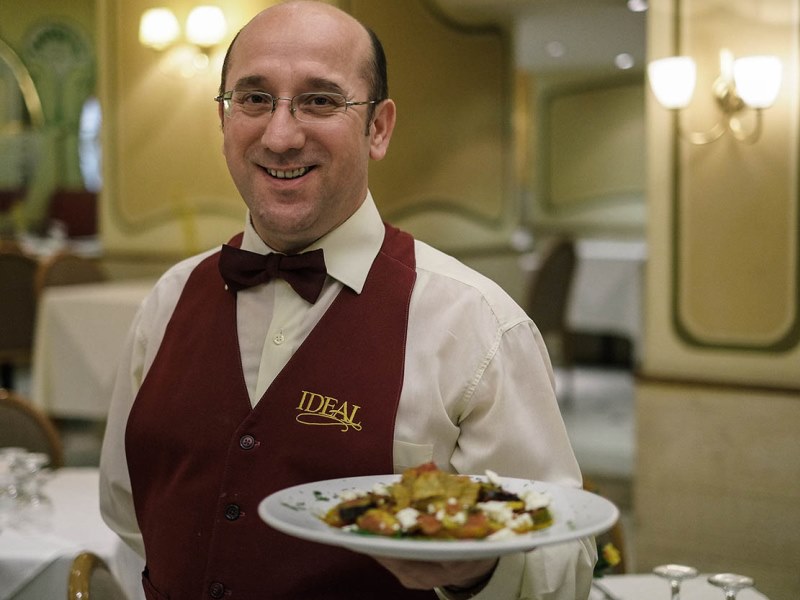
Editor's note: We regret to report that Ideal has closed. There is just something special about Ideal, one of Athens’ oldest restaurants, which recently celebrated 90 years in business. Perhaps it’s the marble and glass Art Nouveau entrance with gold lettering, which makes the venue look right at home next to some of the city’s architectural gems, such as the 1930s-era, New York-influenced Rex Theater, which now houses the National Theater of Greece. Or maybe it’s the restaurant’s proximity to the imposing yet decrepit Majestic Hotel just across the street and long-suffering Omonia Square nearby. Taken together, all point towards an almost forgotten bourgeois Athenian identity.

Athens’ Top Street Foods

Editor’s note: This is the fourth installment in our street food series this week, featuring dispatches on the best streetside eating in all the cities Culinary Backstreets covers. Before we get down to the business of discussing the best of Athens’ street food, a disclaimer: Athens is at a disadvantage when it comes to streetside eats. For one thing, a lot of venues – souvlaki joints, pizza parlors and even offal soup places – are open all night or even 24/7; they are just not serving on the street, though.

Melilotos

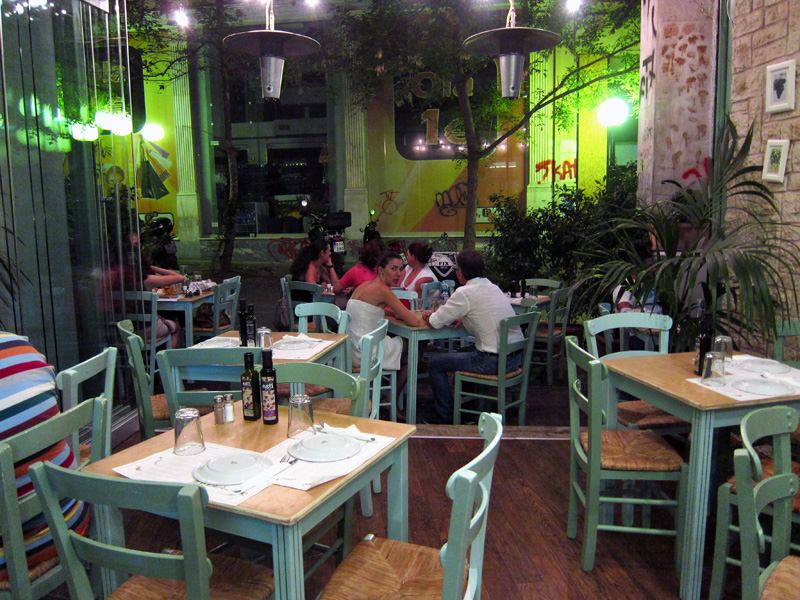
Painted in hues of pistachio green, the new Melilotos is now located in the heart of Athens’ traditional shopping district on Kalamiotou Street, in a neighborhood that is well known for shops selling all sorts of wonderful fabrics and textiles by the meter.

Greek Easter Week, Dish by Dish

Forget about Christmas. In Greece, Easter is the main event, one where food, naturally, plays a starring role. It is also very much a holiday celebrated in the countryside: most Athenians go back to their villages during the holiday to be with their extended family and enjoy the Easter-related culinary delights of their home region.

The “Migrant Kitchen” Lands in Athens

The idea behind the “Migrant Kitchen” lunch series, first organized in Istanbul this fall by Istanbul Eats and Culinary Backstreets, is simple: get locals to sample the food of some of the immigrant communities living in their city and, through that experience, to learn more about those often invisible communities. In Istanbul, the series gave locals a taste of some fantastic Cameroonian, Liberian and Ethiopian delicacies.

Ask CB: Smoke-Free Athens?

Dear Culinary Backstreets, I heard from some friends that everyone smokes in restaurants in Athens, despite the fact that it is not officially permitted. What is the situation, and is there anywhere we can dine without being exposed to smoke?

Museum Quality: Dining in Athens’ Cultural Institutions

Considering Athens’ position as a top tourist destination, it may come as a surprise that it is only recently that local museums have decided to up their game when it comes to their dining offerings. Worldwide, a good restaurant and café are now considered part of the whole museum-going experience, but it took a little time for Athenian museums to catch on to that, though catch on they have.

Saladin

Editor’s note: We’re sorry to report that Saladin has closed. The mezedopoleio – a type of venue where mezes are passed around for all to eat – is traditionally associated with students more interested in getting drunk on cheap alcohol than savoring a nice meal. But tough times require hard drinking, which means that mezedopoleia have recently made a massive comeback in Athenian life. In the historic Keramikos area, Saladin is a venue that does double duty, fulfilling the traditional function of the mezedopoleio while taking the food component up several notches.

logo

Terms of Service