We can't find the internet
Attempting to reconnect
Something went wrong!
Hang in there while we get back on track
CB Book Club: Carolina Doriti’s “Salt of the Earth”



Recipe Information
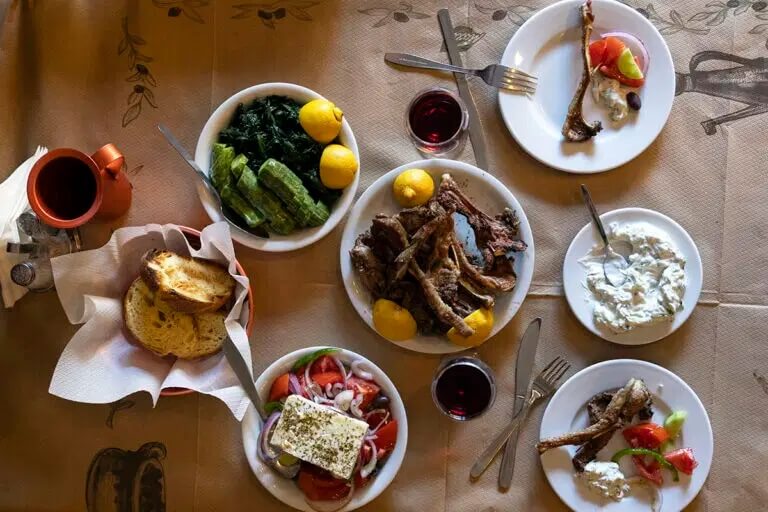
This dish is a celebration of spring and a great example of how traditional Greek cooking uses meat, which is more about adding flavour to a dish than actually consuming a large amount of protein; although this dish relies on the vegetables. Fricassée is a kind of stew usually prepared with green leaves – it can be wild edible weeds that grow locally every season, such as nettles or leaves, or chard, lettuce, spinach or vine leaves, along with plenty of chopped onions and herbs.
Variations use other spring vegetables, such as artichokes. Although the name fricassée is borrowed from French cuisine (pieces of meat browned in butter, then cooked in stock and served in a white sauce with cream or milk and butter),the Greek take is quite different. Greek fricassée is most commonly prepared with lamb, goat, pork, rabbit or chicken.
Other glorious versions of this recipe use mushrooms, field snails or fish, but my personal favourite is with goat or lamb. When the dish is ready, we prepare an egg and lemon sauce with its broth. The lemon really brings out the freshness and amazing flavours of this dish, which is really a cross between a stew and a soup. To properly enjoy it, serve it in a slightly deep plate with lots of broth (almost like a soup) and fresh crusty bread to dunk in it. This recipe is among my most favourite comforting and nutritious dishes, and I do urge you to make it if you are a lover of greens, lemons and herbs, as I am. I find it essential to use meat on the bone as it will make your dish far tastier and messier to eat, which is always a good thing!
SERVES 4
From Salt of the Earth by Carolina Doriti (Quadrille, £27) Photography © Manos Chatzikonstantis
Ingredients
220g (7¾ oz) vine leaves, fresh or from a jar
1.5kg (3 lb 5 oz) goat shoulder or lamb shoulder, on the bone, cut into 100–130g (3½–4½ oz) pieces, ask your butcher to prepare this
50ml (2 fl oz) olive oil
1 onion, chopped
1 leek, including the green part, chopped
5–6 spring onions (scallions), including the green parts, roughly chopped
1 garlic clove, quartered
100ml (3½ fl oz) dry white wine
1 liter (34 fl oz) warm vegetable stock
380g (13½ oz) chard, trimmed and roughly chopped
250g (9 oz) lettuce, roughly chopped
8 tbsp dill, roughly chopped
5 tbsp mint leaves, roughly chopped
1 tsp cornflour (cornstarch)
80ml (3 fl oz) lemon juice (about 1 lemon)
2 eggs
Sea salt
Freshly ground black pepper
Preparation
Step One
If using vine leaves from a jar, drain and rinse them. Bring a medium pot of water to the boil over medium-high heat, then reduce to medium-low and add the vine leaves. Simmer for 7–8 minutes, or 3–4 minutes if using fresh leaves. Drain, roughly chop and set aside. Season the goat with salt and pepper.
Step Two
Place a wide, deep pan over medium-high heat and add the olive oil. When hot, add the goat pieces and brown gently on all sides. Remove from the pan and set aside on a plate.
Step Three
Reduce the heat to medium and add the remaining olive oil to the same pan. Sauté the onion and leek until soft and glossy. Add the spring onions and garlic, season with salt and pepper, and stir gently.
Step Four
Return the meat to the pan and pour in the wine. Let it bubble briefly, then add the warm stock. Cover with a lid and simmer for 40–45 minutes, until the meat is tender.
Step Five
Place the chard and lettuce in a colander and pour boiling water over them to wilt. Remove the lid from the pan and add the vine leaves. Simmer uncovered for 10 minutes. Add the chard, lettuce, dill, and mint, gently folding them into the broth. Adjust seasoning with salt. Cover and simmer for another 10–15 minutes.
Step Six
Ladle about 200ml (7 fl oz) of broth into a jug. In a small bowl, stir the cornflour into the lemon juice until dissolved.
Step Seven
Separate the eggs. Whisk the whites to a soft, light meringue. Whisk in the yolks until combined, then gradually add the lemon juice mixture, whisking constantly until light and frothy. Slowly pour in the hot broth, whisking continuously to temper the eggs.
Step Eight
Pour the egg-lemon mixture back into the pot and gently shake or swirl to combine. Return to medium-low heat and bring to a gentle simmer. Cook over very low heat for 2–3 minutes, until the sauce thickens slightly and the flavors come together.
Related Stories
We can't find the internet
Attempting to reconnect
Something went wrong!
Hang in there while we get back on track


Book our Award-Winning Athens Food Tour





Get Your Free Athens Pocket Guide
Introducing our pocket-sized Athens guide — perfect for your next culinary adventure. Yours free when you sign up for our newsletter.