Latest Stories

Building Blocks

At first glance, quince can often pass as a larger version of its cousin the pear. But it becomes a bright golden yellow as it matures – hence, it’s longstanding nickname, “the golden apple.” When the quince made its way west from south Asia and the Caucasus into Ancient Greece, the fruit quickly took to the soils of Cydonia (Κυδωνία), a town in northern Crete now known as Chania. This is a region that became famous in the ancient world for the production of the finest quinces. Known as “kodymalon” back then, this hard, yellow fruit is scientifically the Cydonia oblonga, so-named for its new Greek home. The ancient Greeks made good use of them, both in savory and sweet dishes.

Fernand et Lily

Since the start of the Covid-19 pandemic, the value of shopping local has grown more and more apparent, especially in France. The country that coined the term hypermarché (big-box store) has returned to its roots. As of January 2021, 75% of consumers put “regional products” at the top of their shopping priority list, according to a report by France 3 news. Another study by AlixPartners confirmed that “friendliness is the foundation for retailers.” Serving up these two artifacts revived form another era is a new épicerie in the heart of Marseille. Fernand et Lily combines regional goods and old-fashioned conviviality. Owner Julien Baudoin has passionately and personally selected each of the shop’s products – including Marseille-made microbrews, Provençal nougat and raw cow’s milk cheese from the Hautes-Alpes.

Homestead Gourmet Shop: German Time Capsule Featured Image

Homestead Gourmet Shop in Kew Gardens, with its quaint, peeling sign and cheery strudel-filled front window, looks like a Disney vision of the Old World. Its employees, clad in all white with old-fashioned paper hats, evoke a 1950s soda fountain shop. It feels like a relic in a forgotten corner of the city. In fact, German fare like the kind served here has become something of a relic in the contemporary American food scene, as changing tastes have led to the shuttering of dozens of old-school German dining institutions around the country. At Homestead, though, this kind of food is alive and well – thanks, in a very Queens-like twist, to a Polish immigrant who went from working at the counter to owning the place.

El Jaliciense

Birria is among the biggest culinary buzzwords across the U.S. today – only it’s not the goat-based Jalisco recipes that get the attention. birria de chivo, the signature dish of the state. Most people, especially Jaliscans, traditionally think of birria as being made from goat. Hector’s version, tatemada, involves a final roast of birria de chivo in the oven, making the skin charred and crisp. When the hour strikes eight on Saturday morning, Hector Ramirez pulls the wooden handle on a cast-iron lid sealing his self-constructed, propane-fueled, cylindrical oven and unveils his birria tatemada.

Behind Bars

For every level of society inside and outside Mexico, cantinas serve as both toxin and tonic for drink, song, jocularity, wit, mayhem and mishap. Tio Pepe, now thought to be the oldest such bar in the old Aztec capital, has provided both in equal measure since way before it received its present name in 1878. The cantina is nowadays a refuge for Mexican politicians, as the nation’s state department and the city’s supreme court sit in front of it. On a Tuesday at noon, we found a huddle of operatives gathered in a booth arguing amid cocktails. We sat down with Don Sebastian Alvarez, who took up bartending at Tío Pepe in 1987, a witness to the ebb and flow of politicians, luminaries and troublemakers passing through the doors.

Los Angeles

It’s Sunday morning in Los Angeles. Behind the white door of a single-story house that blends in with its suburban neighbors, Jalia Walusimbi starts her day as she does every other. Stripping the tough green skins from a cluster of plantains, she plunks the peeled fruit into a boiling pot to prepare a dish of matooke covered in peanut-based binyebwa to pair with the samosas, mbuzi goat soup and luwombo she’ll shortly place before the homesick Ugandan expats and curious culinary tourists who visit the informal restaurant she runs from inside her Van Nuys dining room.

Athens Backstreet Plaka Box

As travel comes back and all of us begin reconnecting with the world, we would like to start our annual guide with what we believe is the best kind of gift: experiences. If you have a loved one that’s planning to hit the road in 2022, take a look at our culinary walks or trips and consider purchasing a CB gift certificate for them (you can find them here). Last year, at a time when it was difficult to make connections between travelers and our local heroes, we put together a series of boxes from our cities featuring some of our favorite bites and ingredients. In addition to this year’s recommended products, we have brought a handful of our city boxes back for the 2021 holiday season.

The Big Slurp

Looking for the best Shanghai-style noodles, for the city’s most slurpable strands? From hairy crab specialists to the sesame sauce of your dreams, there’s something for everyone. Come prepared to chow down, but don’t forget there’ll be a wait at most of these joints. Reservations are not available for these mom-and-pop owned shops, and demand for these nostalgic flavors is high, especially during the breakfast and lunch rush.

Kikliko: For Whom The Rooster Crows Featured Image

The Georgian culinary experience is all about the dinner, stereotypically a glutton’s nirvana of singularly delicious foods stacked plate by plate to the ceiling alongside beer pitchers full of wine. This might explain why, after a night of belt-popping gourmandizing, there is very little in the way of a breakfast culture in Tbilisi. Another explanation might be that Tbiliseli are not morning people. Most cafes open around 11 a.m., which is about the time our neighborhood baker is slapping his first batch of bread in the tone. Nevertheless, people do break the fast at home, often with leftover bread and butter or a chunk of cheese, or maybe day-old khachapuri.

Tacos de Canasta La Abuela, photo by PJ Rountree

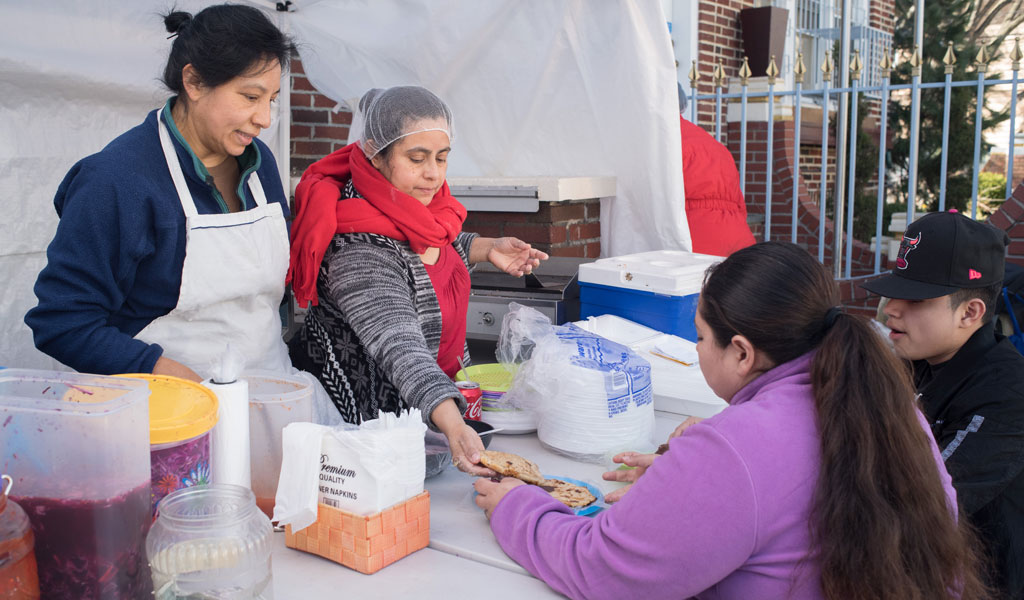
Whether it’s Hacı Beşir Usta’s çiğ köfte from Istanbul’s Kadınlar Pazarı, a perfectly steamed Oaxacan tamale by Tia Tila or the Pang family’s late-night dumplings in Shanghai, street food and the folks who make it are the heart and soul of Culinary Backstreets. Yes, we love street food. It’s tasty. It’s fast. It’s cheap. But the carts, trucks and stands serving up our favorite snacks are also an integral part of the communities they operate in. There are the beloved vendors who have been local fixtures for decades and the hardworking entrepreneurs trying to get their start. Whatever their story, these street vendors are hardworking people worth celebrating. On this International Street Vendor Day, we’ve gathered together some of our favorite street vendor stories from over a decade of fanatic street eating.

Venâncio da Costa Lima

Port wine and Madeira wine are well-known Portuguese fortified varieties, but Moscatel de Setúbal remains a perfect stranger for many visitors. Which is a shame, since this wine – complex and elegant, with a delicate sweetness and rich flavor – is one of Portugal’s great vinous pleasures. In Lisbon and the south bank, it’s common to enjoy a small glass of Moscatel (muscatel) as either an aperitif (chilled) or a digestive. The fertile land of Setúbal, a peninsula south of the city of Lisbon, has long-been a wine producing region. It is not known exactly when Moscatel – which is made from the Muscat grape, although the name also refers to the grape itself – was first made here, but it is generally accepted that the Phoenicians and Ancient Greeks were trading the wine in the estuary of the Sado River.

Lotus Eatery, photo by Jamie Barys

Ever since former President Deng Xiaoping opened China’s economic doors to the rest of the world starting in 1979, foreigners wishing to do business in China have had to find a local partner to form a joint venture company. Though no longer a hard-and-fast requirement, that’s still the modus operandi at Lotus Eatery, where a founding partnership brings together the best of both culinary worlds: unusual yet authentic local flavors and distinctly foreign notions of consistent quality and attentive service.

Soğuk Baklava & Beyond

Istanbul's dessert culture mirrors the richness of its broader culinary diversity and depth, and the city is home to numerous classic establishments that have essentially perfected favorite Turkish sweets. There’s Özkonak’s tavuk göğsü, a dense, thick pudding made with shredded chicken breast and topped with cinnamon, and Mahir Lokantası’s irmik helvası, a subtly sweet mound of semolina paired excellently with a dollop of vanilla ice cream. Despite these and numerous other beloved desserts having firmly established their places on Istanbul's menus, the city also has a penchant for being consumed with the latest trends, often hybrids of local staples or imports from afar. In 2012, we remember lots of folks going berserk over trileçe, a version of Latin America’s tres leches cake, which one can guess from the name is traditionally made with three types of milk.

Brandi Pizzeria

It is 1760 and on the throne in Naples is King Ferdinand IV. Pietro Colicchio has opened Pizzeria di Pietro e basta così, and the name says it all: “Pietro's Pizzeria and that's enough.” A restaurant strictly selling pizza, it will become known as one of Naples’ first pizzerias. As we move into the 19th century, Raffaele Esposito and his wife Giovanna Brandi take over Pietro’s, which is located on via Chiaia, the city’s “good sofa” as they say in Neapolitan, meaning one of the best and more elegant parts of the city. It’s here that Brandi Pizzeria creates a legend of its own, without the help of Pietro.

Avli

For over a century, the dense downtown Exarchia neighborhood, located near the National Technical University and the Law School of Athens, has been deeply connected to the city’s students. Greece’s first student revolution took place there in 1901, resulting in the resignation of both the leading government and the Archbishop of the time. Since then, Exarchia has maintained its revolutionary spirit, displaying its most prominently during the Athens Polytechnic uprising against the military junta that ruled Greece from 1967 to 1974. An everlasting sort of vendetta has remained between the student population of Exarchia and the police – often with dramatic results. Everything is recorded on the walls of the neighborhood, in the form of mostly political graffiti that covers any reachable surface, as well as many seemingly unreachable ones.

logo

Terms of Service