Latest Stories

Manojo

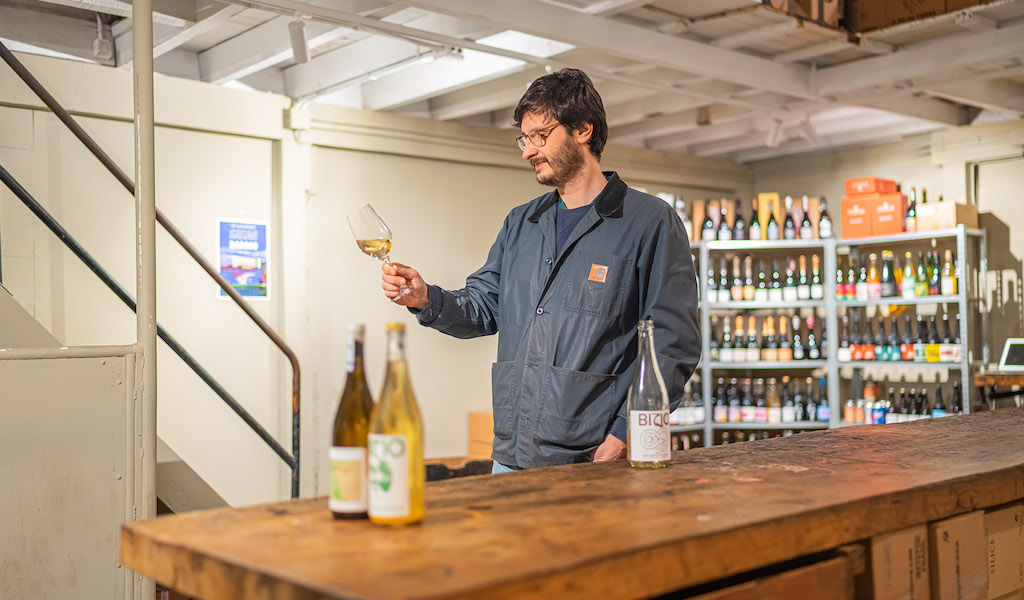
It's a Sunday and, in the blink of an eye, Manojo is full. People move between tables with familiarity; customers greet one another, say hello with a kiss on the cheek or give a wave – it feels as if everyone is a regular in this small establishment on José Arana Street in San Sebastian’s beachside Gros neighborhood. Manojo was created for just such a purpose, helmed by a couple of young chefs obsessed not so much with fine dining but with assuring a fine evening for all guests, by way of creative and honest food; for wines that are ready to start a good conversation and, mostly, for an ambience that feels as warm as a friend's hug.

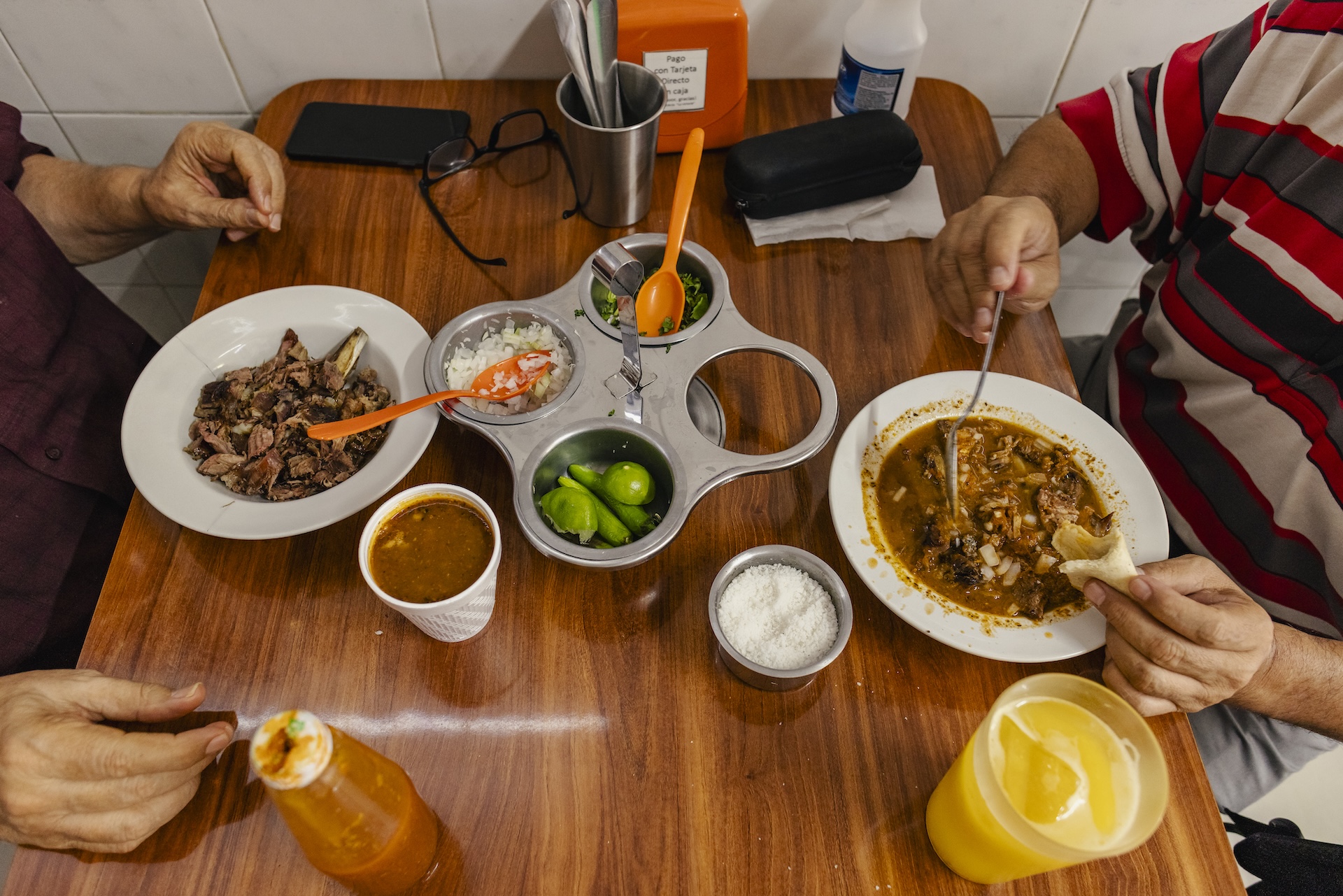
Boca del Río, Mexico City, photo by Andrew Reiner

In a city where dozens of new restaurants seem to sprout every week, it’s not an easy feat to stay on the culinary map for more than eight decades. Yet amidst the bustling streets of San Rafael hides a true oasis – a place where time seems to have stopped – a laid-back, family-run institution where fresh seafood and friendly service have been the norm for the past 80 years. Sitting down to lunch at Boca del Río on a Sunday is, perhaps, one of the best decisions we’ve made lately. The spacious, retro dining room is populated with a healthy mix of families, couples, and a few groups of friends who, like us, know their first mission is to order the ultimate Mexican hangover cure: micheladas and seafood. Afterwards comes a soothing cup of shrimp broth, savory and slightly spicy, keeping us company as we browse the menu.

Kabuto

Shinjuku’s Omoide Yokocho (“Memory Lane”) gradually grew from the rubble of post-war Tokyo, and has since become an institution of sorts. It started out as a black market area and gradually morphed into the narrow bar-lined, charcoal smoke-filled alleyway it remains to this day, with little in the way of real change since the 1950s. It’s not just the alley’s looks that haven’t altered much over the years, but also the food on offer – in the late 1940s, a crackdown on controlled goods affected the food stalls, forcing the vendors to switch to products that weren’t controlled, such as roast giblets. It’s a shift reflected even now, as many places continue to serve yakitori (chicken skewers) and motsu (offal).

Hassani and his dad, Cha’houla, photo by Annie Etheridge

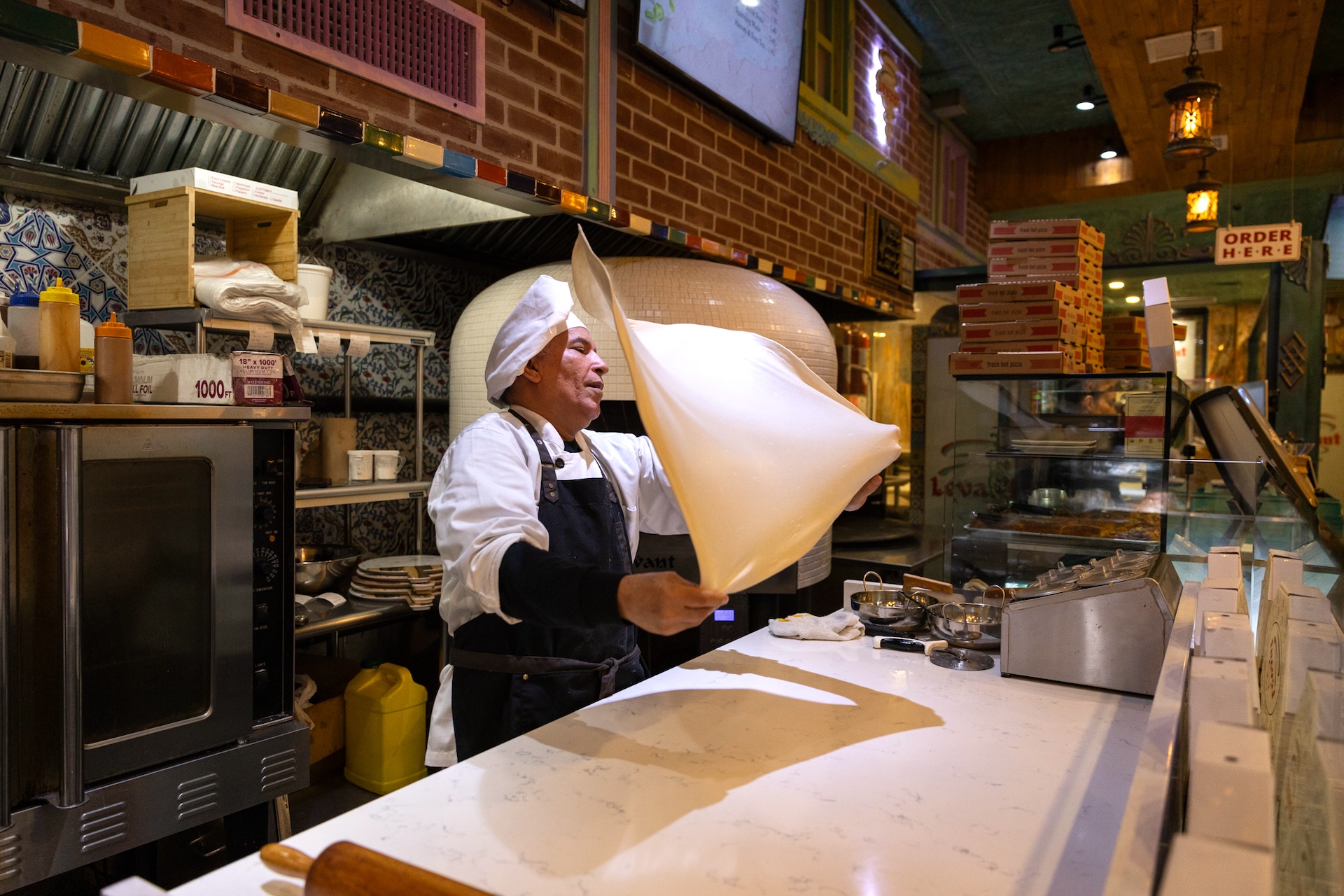
We’ve never seen a place like Eater Food Club. Advertised as a food court in the non-touristy Saint-Pierre neighborhood, we expected a shopping center or one of the more modern food halls that are all the rage. Instead, we found a non-descript corridor that seemed more corporate than culinary. Yet in lieu of office doors, the hallway is lined with counters at open kitchens. Despite this unique layout, Eater Food Club slings standard food-court fare like burgers, bao, and pizza. Among these, Cha’houla stands out for its Comorian food. At Cha’houla, you’ll find comforting Comorian dishes like madaba – stewed manioc leaves – and n’tibe beef stew. “My greatest pride is sharing my culture,” beams the young owner, Fayad Hassani. Marseille has more Comorians than the island nation’s capital, Moroni, yet their cuisine is relatively unknown here due to very few Comorian restaurants.

CB On the Road

It’s an epic love story between the Menéres family and the land of Romeu, a remote village in the region of northeast Portugal called Trás-os-Montes, whose name literally means “beyond the mountains.” Over 150 years ago Clemente Menéres began the family farm, and today the Menéres estate continues to produce certified organic olive oil and wine, as well as cork, with absolute respect for the land and the people living and working in the hilly fields. On our arrival we’re received by João Menéres, the fifth generation to lead the family business, whose infectious enthusiasm resists the high temperatures of the scorching summer months and the unusually harsh cold of winter. João leads the way as we explore Romeu, sharing a bit of the family’s story along the way.

Behind the counter at Bodega Joserra, Bilbao, photo by Marti Buckley

Pintxo bars abound in Bilbao, concentrated in the narrow streets of the Casco Viejo, the old town on the shores of the Nervion estuary. Known colloquially as Zazpikaleak (“seven streets” in the Basque language), this is where the city was born, and its streets are still full any day of the week with residents, shoppers, tradesmen and locals doing some old-fashioned poteo. If you plan on stepping foot in this Basque capital, you’d better learn what poteo is firsthand. The endurance required to barhop with a Basque is real, especially considering this social act consists of downing glass of wine after glass of wine in what is essentially a bar crawl. Fortunately, the Basques have invented their own coping mechanism – the pintxo.

Sanguan Sri

As the temperature soars in Bangkok, it means two things: the arrival of Songkran, the Thai New year in April, and the much-anticipated season of a unique dish known as khao chae. If you’ve never heard of it, you are not alone, as this distinctive dish often flies under the foodie radar, overshadowed by favorites like green curry and pad Thai. Available only for a couple of months each year, khao chae is known for its cooling properties during the hot summer months. This adored tradition is a visually beautiful dish consisting of delicate grains of rice soaked in a fragrant jasmine ice bath accompanied by a selection of meticulously prepared components. While it may not be universally adored (many Thais seem to have mixed feelings about it), khao chae has experienced a revival in recent years thanks to a younger generation of locals who want to reconnect with their roots.

Recipe: Sapateira Recheada, Portuguese Stuffed Crab

We are in Lota da Esquina, in Cascais, staring down a small bowl filled to the brim with a mix of crab meat, chopped eggs, mayonnaise and other seasonings. On the surface, it looks like a straightforwardly decadent dish but according to chef/owner Vítor Sobral, it’s actually a way to boost a product that’s not quite at its peak.

Recipe: Nazuki, Georgia’s Forgotten Easter Bread Featured Image

In Georgia, there are certain dishes that everyone associates with Orthodox Easter: paska, a sweet panettone-like bread and chakapuli, a lamb stew. However, there is another Georgian Easter tradition, one often overlooked: nazuki. Beautifully glazed and filled with raisins and spices, in recent years these fluffy sweet breads have become associated almost exclusively with the village of Surami in the Kartli region. In this small settlement between Tbilisi and Kutaisi in the West, huts line the side of the highway, each with a tone (a cylindrical traditional oven), a baker and a family nazuki recipe.

Recipe

On Easter Sunday in Greece the star of the feast is the lamb, which is often substituted with goat. In some regions (and nowadays all across the country) it’s iconically slow roasted outdoors on a large rotating spit, symbolizing the sacrifice of Christ for the salvation of humanity. This tradition of spit roast lamb is linked to customs from ancient Greece and the Jewish Passover. In many parts of Greece, tradition calls for other recipes for cooking or roasting Easter lamb. Tradition generally dictates that the whole Easter lamb must be used and consumed – including the offal and head – as the lamb here is symbolic and represents the animal sacrificed during the Resurrection of Christ, and thus serves as a tribute to the divine sacrifice.

Gildas, Bilbao, photo by Aritz Tabuyo

With just 30 minutes to go until noon, Plaza Nueva already smells like pintxos de tortilla. Children chase after a ball or trade collectible cards while adults scramble for free tables. Meanwhile, gildas – skewers of olive, pickled guindilla pepper, and anchovy – stand firm at the bars like armies of tiny soldiers. It’s a typical Sunday in Bilbao, as long as the weather cooperates. If not, all the action moves under the arcades, where crowds gather, raising their marianitos high. This local drink, a mix of vermouth with a splash of Campari, another of gin, a few drops of Angostura bitters, and sometimes orange juice (every place has its own recipe), is practically a religion here.

Easter in the Algarve: Our Favorite Folares Featured Image

A visit to a pastelaria in Lisbon in the lead up to Easter brings with it new surprises. Alongside the usual pastries and cakes, you’ll spot folares, loaves of sweet bread, some topped with hardboiled eggs, and many surrounded by a colorful assortment of almonds. This type of bread, which contains ingredients forbidden during Lent, has long been associated with Easter and the feasting that occurs on this holiday. “After the winter months and the long fast during Lent, the Easter brings an intense activity in terms of culinary preparations and the exchange of cakes, namely the folares,” writes Mouette Barboff in her book A Tradição do Pão em Portugal (Bread in Portugal).

Khun-Yah Cuisine

It’s said that the massive gold Buddha statue at Bangkok temple Wat Traimit was once hidden away – its value concealed from an approaching army under a thick layer of plaster. It was only when workers were relocating it in the 1950s that the statue fell and the plaster exterior cracked, revealing a core of solid gold. If Wat Traimit has another hidden treasure, we’d argue that it’s Khun-Yah Cuisine. Enter one of Bangkok’s most visited temples and wind through tour buses and rows of tourists, guides, and Buddhist monks to the eastern edge of the compound; keep your eyes peeled, and you’ll see an almost garage-like space and a sign. This is Khun-Yah Cuisine.

Sumac Mediterranean Cuisine: Hollywood Beginning Featured Image

For Eli Berchan, it certainly seemed like the universe was telling him to open his Lebanese restaurant, Sumac Mediterranean Cuisine, in Hollywood. Prior to coming to Los Angeles, Berchan was living in Lebanon and working in event management and organizing destination weddings. At the end of February, 2020, he had come to Southern California to attend an industry conference. “The last day of the conference was Covid day one, and I ended up being stuck here,” Berchan recalled. Since he wasn’t able to go back to Lebanon, he rented a place in Hollywood, and soon found out the owner happened to be Lebanese. Berchan was doing some private cooking to get by and sent his landlord, Ferris Wehbe, some traditional Lebanese food he had prepared to thank him.

Feeding People Amid Protests

It's a grey early spring day in the bustling coastal district of Üsküdar on the Anatolian side of Istanbul. The holy month of Ramadan is in its last days, and many Istanbullites are fasting until the evening. Some of those who aren't are waiting in a long queue outside of the local kent lokantası (“city restaurant”) for a late lunch, and this is the best deal around. 40 TL (US $1.05) gets you a main course with meat, a side or two, and a bowl of soup. Today, the menu is döner, buttery rice pilaf, and lentil soup, and we've arrived with an empty stomach. This restaurant is among the more than 15 that have been opened and operated by the Istanbul Metropolitan Municipality (IMM) since 2022, and they have become increasingly popular and necessary as Turkey's rampant inflation and soaring food prices have hit the city's residents hard.

logo

Terms of Service