Latest Stories

Preservation Society

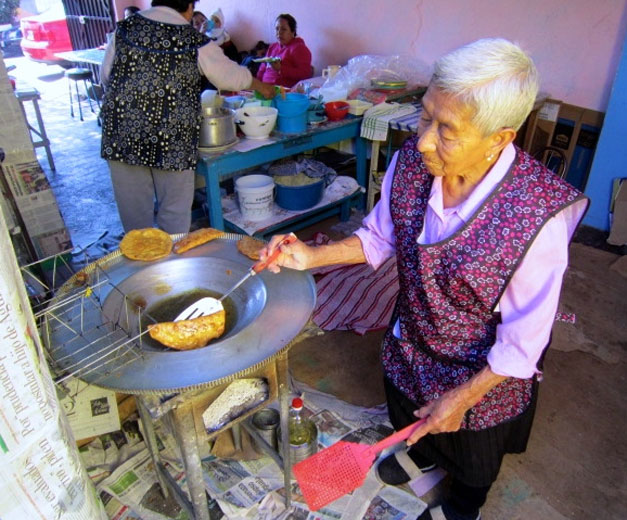
In November, the Conservatorio de la Cultura Gastronómica Mexicana held its second International Mexican Gastronomy Forum in the city of Puebla, about 100 kilometers east of Mexico City. We had the opportunity to attend and learn more about the importance of creating this kind of space to preserve and propagate Mexican recipes that have been cooked for thousands of years.

Sweet Beirut

Unless you know it’s there, you might miss this tiny shop hidden behind a bus stop on the outskirts of the northern Athenian suburb of Chalandri. Many Athens kiosks are twice, three times the size. But it’s certainly cozy, and once you’ve discovered it, you’ll keep going back, not just for the sweets – which would put a smile on the face of Scheherazade – but also for the spices, condiments, nuts, cardamom-perfumed coffee, arak and other hard-to-find Lebanese specialties, or maybe just to have a chat with the owner, Lina Tabbara.

For a Good Claws

Hairy crab season is once again sweeping Shanghai’s diners into a frenzy, with the bristly crustaceans popping up on street corners, in streetside wet markets and, most importantly, on dinner plates. This year we’ve even seen reports of elaborate live crab vending machines hitting the streets in Nanjing and an attempt to start a black-market trade in German crabs.

Curry Club

In the 1920s, Brazilian artists and writers published the Antropofagia Manifesto. They were unconvinced by the way the Brazilian elite – in a show of low national self-esteem – attempted to deferentially imitate European and U.S. culture. The writers instead proposed a “cultural cannibalism,” a “devouring” of imported cultural expressions that would be chewed up and “reelaborated with autonomy and converted into export products.”

Mutfak Dili

Culinary Backstreets lunch hunting tip #1: Wander into one of Istanbul’s numerous districts of small commerce and find yourself on a small street with a shoe cobbler, a knife sharpener and hardware shops.

Pamuk Usta’s Nohut Dürüm

Following a tip, we set out one morning to find Pamuk Usta, a legend among the chickpea breakfast-wrap-eating Antep-Birecik-Nizip diaspora of Istanbul.

Ask CB

Dear Culinary Backstreets,I am very confused regarding drinking over in Athens. Do Greeks even drink ouzo anymore? If so, when do they drink it? Also, my friends have told me something called “tsipouro” is more popular these days – what’s that drink all about?

Rings around the World

Simit, as we’ve reported previously, has gained a foothold outside of Turkey. The enticing sesame-encrusted bread rings have an easy target in bread- and bagel-loving New York – so much so, in fact, that the simit craze has even crossed the Hudson River into New Jersey. We decided to check out the stateside version for ourselves.

Dom Cavalcanti

This popular botequim, a small bar that serves traditional snacks and dishes, is not located in the sceniest part of Lapa, but in a quieter neighborhood, Bairro de Fátima, just a five-minute walk from where everything’s happening. Kitschy and a little too brightly lit, Dom Cavalcanti is open almost every day until three in the morning, which makes it an excellent last stop at the end of a night out before heading off to bed. And if it’s been a particularly memorable night out, some canja is most definitely in order.

CB on the Road

Zeynep Arca Şallıel had a successful career in advertising in Istanbul, but in 1995 she decided to take on a daunting new challenge: taking part in the revival of small-scale viniculture in the ancient winemaking region of Thrace. “I wanted to do something with soil, something that mattered a little bit more,” she says. Her father had always dreamed of making wine, so together, they started Arcadia Vineyards. Their vineyards are planted on the 65 million-year-old eroded rock of Istranca Mountain, which creates a border between Turkey and Bulgaria. We drove two hours west from Istanbul through rolling hills of drying sunflower fields to learn how this pioneering winemaker is making great wines under difficult circumstances.

Eating and Drinking in Tianzifang

Beyond the stunning juxtaposition of the Bund’s colonial architecture with some of the world’s highest skyscrapers, one of Shanghai’s most charming, local architectural experiences can be found on the southern edge of the former French Concession, in the neighborhood of Tianzifang. Slated to be destroyed to make way for (yet another) mall development in 2008, Tianzifang's artist community rallied to save the warren of original laneway houses that are uniquely Shanghainese.

Altan Şekerleme

Just up the Golden Horn from the Egyptian Spice Bazaar is Küçük Pazarı, a rarely explored warren of market streets and Ottoman-era caravanserais that are home to scissors sharpeners, saddle shops, vendors selling axle grease (by the vat) and purveyors of axes. From this potpourri of run-down yet extremely photogenic shops, one storefront, decorated with candy canes and Turkish delight, beckons from a distance like a foodie mirage. Welcome to Altan Şekerleme – or, better yet, Candyland.

Pasteli

The origins of pasteli, a honey and sesame bar sold everywhere in Greece from supermarkets to delis to bakeries, can be traced back to Greek and Roman antiquity. Athenaeus of Naucratis, in his Deipnosophistae (“The Dinner Experts”), written in the 3rd century A.D., mentions it many times, and references to pasteli can be found all over ancient Greek and Byzantine texts.

White Rabbit

In a country not known for its candy-making culture, Shanghai holds the singular distinction of being the birthplace of one of China’s most iconic sweets: White Rabbit (大白兔, dà báitù).

La Dulcería de Celaya

Mexican sweets might not be as world-famous as those from the U.S., France or Switzerland, but judging by the enormous variety of pastry, candy and chocolate made and consumed domestically, Mexicans have an insatiable sweet tooth. And chocolate, of course, is one of Mexico’s gifts to the world.

logo

Terms of Service