S M B O measurement-vertical measurement-vertical

Latest Stories, Tbilisi

Pizzeria Rainer’s and Beergarden

Back in the days when we spent more time living without electricity than with, when the police had the sole function of extorting money from citizens, and we were never sure whether the Borjomi mineral water we were buying had been mixed in a bathtub, there weren’t many options for diners desiring a break from the generic Georgian menu of those times. Of course, there were the Turkish steam table restaurants in Plekhanov, but our spoiled western palates periodically demanded more. There was Santa Fe, a Tex-Mex inspired restaurant we can credit for introducing “Caesar Salad” (with mayonnaise!) and “Mexican Potatoes,” spud chunks fried with a generous dusting of paprika, which have somehow become staples on virtually every Georgian menu in the city. Then we discovered a place with flavors our taste buds were no strangers to.

All Hail the Pickle Queen

Nunu Gachecheladze, our “pickle queen” at the Deserter’s Bazaar, pickles everything on site from produce she gets at the bazaar, based on her family recipe. While they’re all outstanding, our favorites are her pickled cucumbers and carrots.

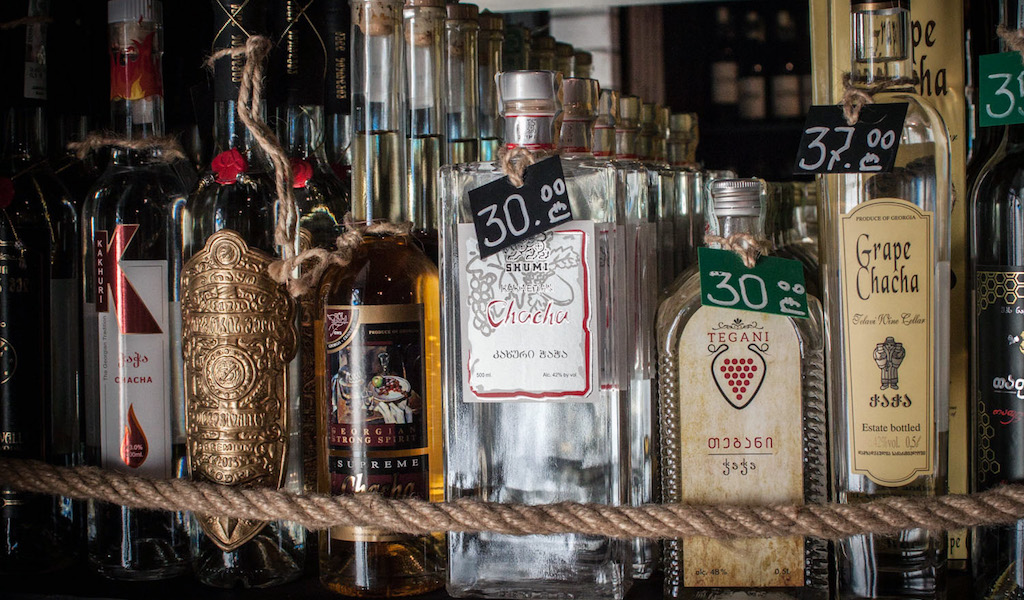
Chacha Corner: Moonshine Museum Featured Image

The day two airliners flew into the World Trade Center, we were in Lagodekhi, an east Georgian village on the border with Azerbaijan. We had been in a total daze trying to comprehend the scope of the tragedy from a village halfway around the world where our hosts were offering solace through the bottle. Zaur, a neighbor, showed up the morning of the twelfth with a Borjomi mineral water bottle of his chacha and made breakfast toasts to the victims of New York, to peace, to bloody revenge and so on. Needless to say, we were well under the influence by lunch time and ended up arm-in-arm at a local stolovaya (canteen) with a platter of frankfurters and bread before Zaur put us in a minibus home.

Something Brewing

“Tea,” our friend Lasha indicated with a head nod, driving past fields with rows and rows of overgrown, chest-high, bushes of green leaves. It was 2002 and we were zipping along a skinny road littered with potholes on the outskirts of Zugdidi in west Georgia, but we could have also been in Guria or Adjara or even Imereti; regions with tea fields that have also become agrarian relics. Later we visited the last operating tea factory in town, a Soviet era rust bucket of a building that Lasha said churned out leaf dust that was sold to Lipton. Such was the fate of an industry that had once provided the USSR with 95 percent of its tea. However, after decades of inaction, Georgian tea production is slowly making a comeback.

Tbilisi

A few months ago a little storefront joint opened down the street next to our neighborhood green grocer, a mom and pop operation that has been there for decades. A varnished wooden counter behind the iron-framed windows and a few matching tables make it fit the new bohemian-chic Tbilisi style popping up the street around Rooms Hotel, the hip four-star flophouse all the travel magazines are fawning over these days. Although the wine list was not well-stocked, the food didn’t disappoint. The pork belly was not the standard room-temperature slab of bacon on a plate, but was oven-roasted and nestled on two puddles of cherry and plum sauce, zesty richness that nearly overpowered the smokiness of the pork. It was simple, bold and delicious. And it was Georgian, although not everyone will agree on that.

Shavi Lomi

In the Caucasus, guests are considered gifts from God. Georgians like to call them okros stumrebi – “golden guests” – an endearment that illustrates the stature the ever-hospitable Georgians give to those they host. And whenever our own golden guests come to visit in this remote corner of the world, we never fail to entertain them in our own surrogate dining room, Shavi Lomi (the Black Lion). The cellar restaurant is an homage to Georgia’s favorite artist, Niko Pirosmani, a naive painter whose favorite subjects were animals, a singer named Margarita and feast scenes. The flea-market furniture, tablecloths and china make the Black Lion an ideal setting for anybody hankering to create a one-of-a-kind, laid-back feast scene of his own, with hearty original takes on traditional Georgian cooking.

Sunflower Health Food Store

The year was 2001, and we were squeezed around an enormous table, together with a half dozen men in their late fifties, in a small conference room at a Soviet-era tobacco collective in Lagodekhi, near the Azerbaijan border. The director of the collective casually slipped a biography of Joseph Stalin under the table and told us the story of the farm, although we weren’t really interested. Our local host had hijacked us into the meeting, believing we could give these gentlemen sound business advice simply because we were westerners. “Our tobacco is natural, no chemicals,” the director asserted. “Yes,” another man interjected with a grin, “we have no money for chemicals.” The men all chuckled.

Tbilisi Sketches: Muscling Up Some Churchkhela Featured Image

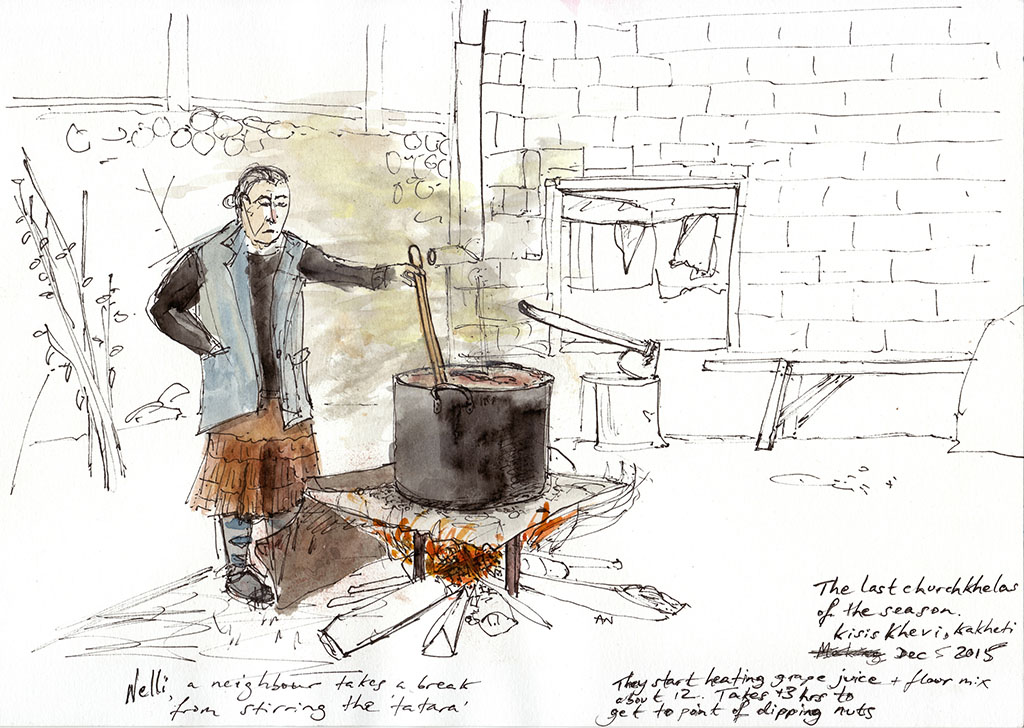
Tbilisi stores and markets are festooned now with distinctive sausage-shaped candies called churchkhela, ready for New Year celebrations and then Orthodox Christmas on January 7. They are a very traditional Georgian specialty, usually homemade from grape juice thickened with flour and nuts. But those aren’t the only ingredients you need to make churchkhela – they also require some serious muscle. How could it be otherwise for a food created by Georgian warriors as a sugar hit that wouldn’t perish on a long march? It was, in other words, one of the world’s earliest energy bars. “We still do it the same way as our ancestors,” says Khatuna Saalishvili, as we watch her and her husband, Temuri, start the process in their backyard in the village of Kisiskhevi. A wood fire heats a large metal cauldron filled with the mix of grape juice and flour known as tatara. The steam shines in the winter sun.

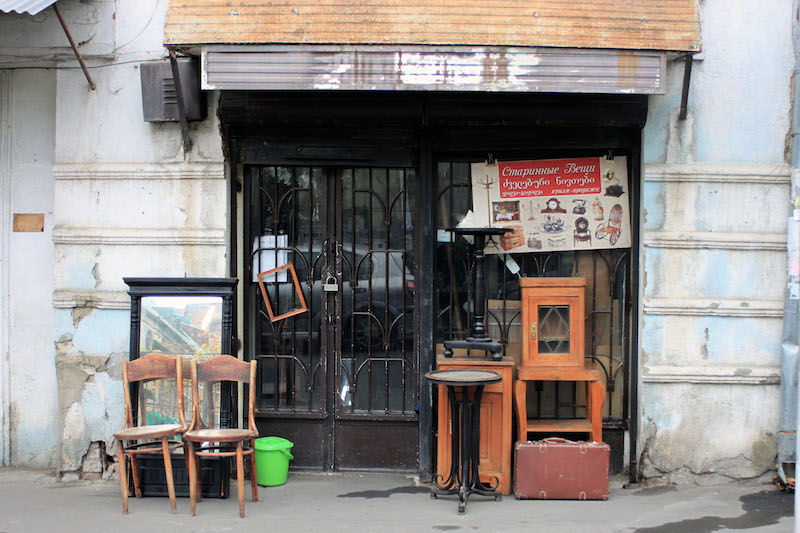
An antique shop in Plekhanov, photo by Paul Rimple

As the calendar year turns over, we’ve grown accustomed to the barrage of lists telling us where to travel during the next 12 months. Oftentimes these places are a country or even a whole region – you could spend an entire year exploring just one of the locations listed and still barely make a dent. We like to travel on a smaller scale. Forget countries and cities, for us the neighborhood is the ideal unit of exploration. Celebrating neighborhood life and businesses is, of course, essential to what we do as Culinary Backstreets. Since our founding in 2012, we’ve been dedicated to publishing the stories of unsung local culinary heroes and visiting them on our food walks, particularly in neighborhoods that are off the beaten path.

Best Bites 2017

Editor’s note: We’re celebrating another year of excellent backstreets eating by taking a look back at our favorite restaurants and dishes of 2017. Starting things off is a dispatch from our Tbilisi bureau chief Paul Rimple: In 2001, a chic fashion designer opened up a snazzy café in the Vake Park building we were living. The low quadratic furnishings were not made for comfort, but were perfect for posing with your nose in the air and a cigarette between your fingers. It was the only cafe in this part of town and lucky us, it was downstairs.

The nameless chaikhana is in the cellar of Akhudovi 9 (door on the left), photo by Justyna Mielnikiewicz

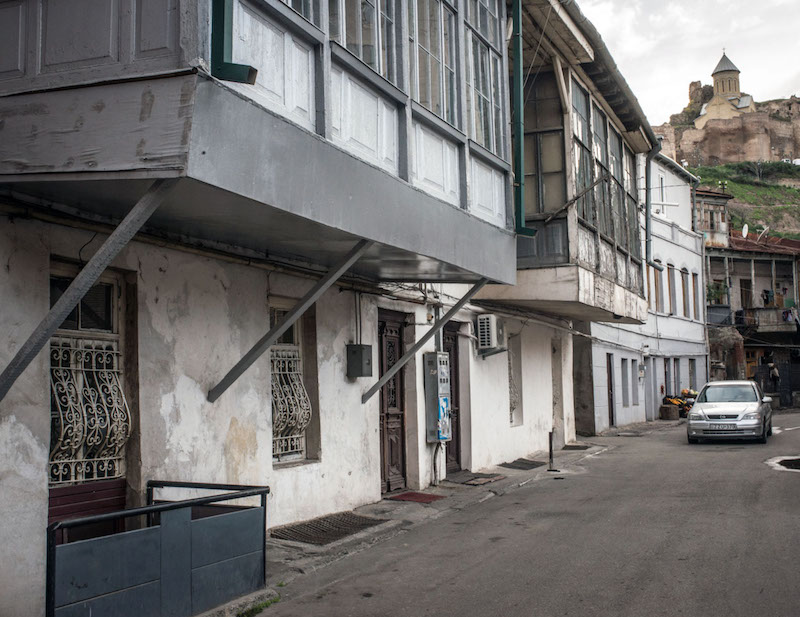
Before gentrification, Tbilisi’s ancient bath district of Abanotubani was a collage of dome-roofed sulfur baths and carpet shops, claustrophobic grocery stores and teahouses packed inside crooked multi-storied brick buildings with condemnable wooden balconies, a sneeze away from collapse. Yet this quarter is the nucleus of Tbilisi, the site of its founding and from where the multicultural city grew to become a key hub along the Silk Road. Today it is home to a tight, multiethnic community of mostly Azeris, who have lived here for generations. Directly above the baths is the 120-year-old Jumah Mosque, renowned for being a place of worship for both Shia and Sunni Muslims.

Aripana

We spent the summer in Georgia’s Shida Kartli region, a vast expanse of fertile terrain in the heart of the country that we have fallen crazy in love with. One day, over a glass of local Chinuri wine, we wondered aloud, “Every other region in the country has signature dishes, but what about Kartli? What are its signature dishes?” We asked our neighbors and got a lot of shoulder shrugs. Shota, a 65-year-old contractor, re-called his grandmother’s soups. “They had fruit,” he said. Seventy-year-old Maro said she too ate fruit soups as a child. Thus began our plan to dig up forgotten Kartli recipes, someday.

CB Book Club: Carla Capalbo’s “Tasting Georgia” Featured Image

The author of 14 books, Carla Capalbo is best known for her food- and wine-centric travelogues exploring the lesser-known regions and culinary traditions of Italy. Her last book, “Collio: Fine Wines and Foods from Italy’s Northeast,” took readers on a gustatory journey through a tiny region that few outside Italy – or even inside Italy, for that matter – know much about. Several years ago, Capalbo – who was born in New York, raised in Paris and spent some 20 years living in Italy – became intrigued by Georgia and its cuisine. For her newest book, “Tasting Georgia: A Food and Wine Journey in the Caucasus” (Interlink Books), Capalbo traversed the country’s culinary backroads, collecting stories and recipes along the way.

Tbilisoba: Harvest Bacchanalia for the Whole Family Featured Image

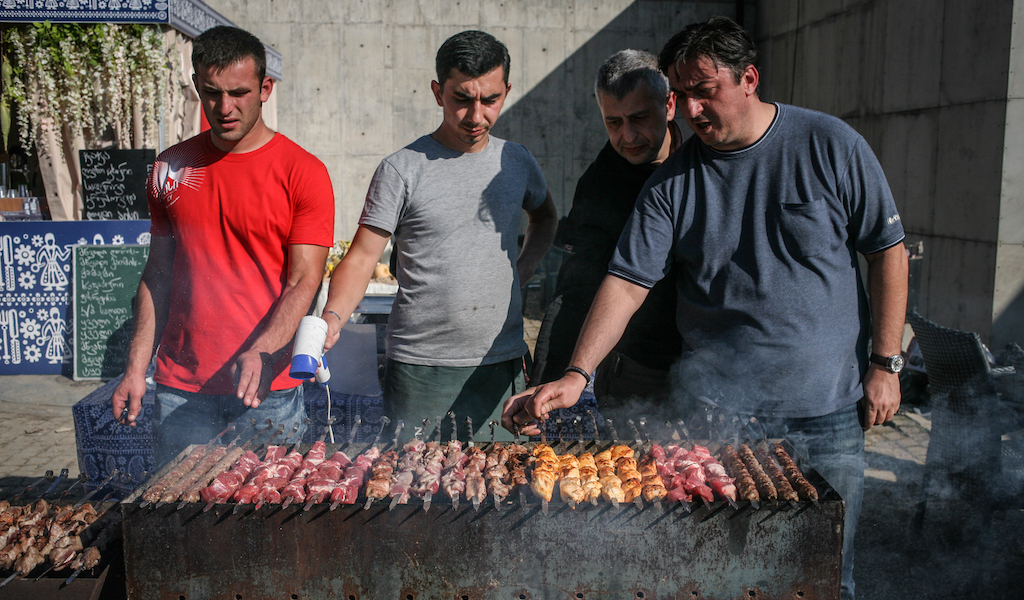
When it comes to fragrances, nothing makes you stop in your tracks and moan in delight more than the redolence of mtsvadi roasting on the coals of grape vine trimmings. It’s the juicy sizzling fat basting the chunks of skewered pork that clinches it and makes whiffing the browning meat just as good as eating it. For one October weekend every year, the entire center of Tbilisi is immersed in wafts of barbecue from perhaps hundreds of hot grills, called makhali, as men, teary-eyed in billows of smoke, turn the skewers in pop-up sidewalk picnic parties. This is part of an annual event called Tbilisoba, a kind of Georgian Oktoberfest, but much cooler.

Making Moonshine in Kakheti

An important part of our chacha journey is making sure that the moonshine still is sealed with a putty made of ash, earth and water.

logo

Terms of Service