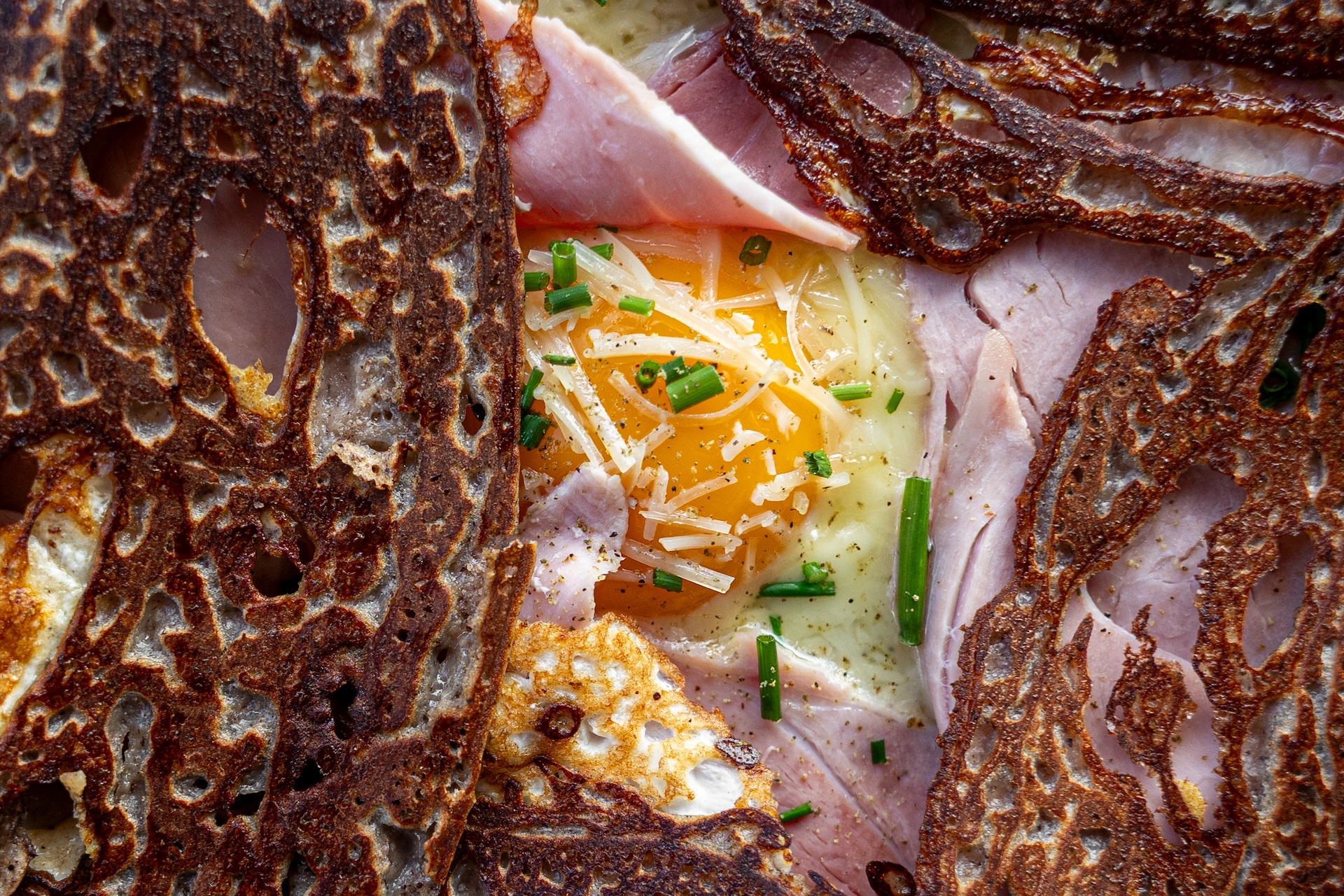
<p>It’s worth heading out of the center to Belleville, if only for the rare chance to eat a crêpe in Paris that isn’t an overpriced, flabby con. More accurately, ROND serves a proper galette, made with buckwheat flour as Brittany’s tradition dictates. The galettes are tantalizingly lacy, folded neatly into a square with a daub of butter brushed across the top, wrapped around classic Breton fillings.</p><p></p><p>The <em>complète</em> (ham, organic egg, and aged Comté) is very good indeed, generous and comforting. Salads come strewn with toasted buckwheat and tossed with a sharp vinaigrette, and there’s a serious selection of Norman ciders and Calvados. For dessert, try <em>crêpes froment</em> (this time with wheat flour), comforting and satisfying with lemon and sugar, homemade chocolate spread, or salted caramel.</p><p></p>
The Paris Essentials: 11 Restaurants That Define How Paris Eats


<p>Septime may be one of Paris’s most sought-after tables, but their sister pâtisserie delivers the same creativity with more consistency. There are feather-light <em>sablés</em> filled with chocolate, tea, and buckwheat ganache, and shimmering peach tartlets, ribbons of fruit arranged like miniature sculptures. The choux à la flouve is a two-bite masterpiece: crisp shell with a fresh, delicately hay-scented puddle of <em>crème pâtissiére</em> at the center. It pairs beautifully with coffee from L’Arbre du Café. Savories are outrageously tasty too, like the seeded, buttery feuilleté roll stuffed with Perche sausage and plenty of mustard. Best enjoyed from a stool outside, pastry in hand, watching the bakers roll dough, macerate fruit, and scatter herbs.</p>
<p><span style="color: rgb(0, 0, 0)">Tripe and trotters may come in and out of fashion, but the neighborhood bistro Quedubon has been unabashedly nose-to-tail for almost twenty years. Englishman Ollie Clarke runs the kitchen, rolling out generous chalkboard menus that feel like Paris of old: <em>pâté en croûte</em> stuffed with guinea fowl and foie gras, veal tongue, and poultry vol-au-vent with chanterelles, much of it cosseted in rich sauces. Sometimes the dishes come with pickled beet or diced blood orange but, more often than not, the kitchen offers no respite from the richness. The weekday fixed-price menu, around €20, is solid value, running from a dainty starter to a hearty offal centerpiece and dessert (perhaps their rice pudding or an île flottante) ideally rounded off with a stroll through nearby Buttes-Chaumont.</span></p>

<p>There are a lot of Lebanese food and drink spots in Paris, rooted in France’s Mandate-era rule over Lebanon, and deepened by migration, especially after the civil war. Opened in 2023 by siblings Ingrid and Mayfrid Chehlaoui, Kubri offers something particularly fun and generous, built for sharing. Forget the falafel/hummus joints that crowd every list and come here instead: the hummus is a revelation, whether silky plain, loaded with roasted carrots and laced with prawn oil, or topped with beef fillet and pistachio pesto. Vegetarians eat brilliantly, too. There’s a ridiculously good baba ganouj piled high with taro straws and a cabbage glazed in Aleppo butter. Carnivores can feast on roasted chicken with toum and black lemon labneh, or lamb chops with blistered grapes, sweet and collapsing into their own juices. Lebanese wine flows, and though diners leave reeking of garlic, that’s the price of great pleasure.</p>

<p>Few caramels rival those from Jacques Genin. He grew up poor, left home at twelve to work in a slaughterhouse, and taught himself everything he knows. Before opening his gleaming Marais “lab” in 2008, he supplied chocolates and petits fours to Paris’s grand hotels. His caramels, kept chilled and rich with cream, dissolve into liquid silk. Try classics like vanilla or nature (plain) alongside raspberry, sesame, or - best of all - mango and passionfruit. <em>Pâtes de fruits</em> line the glass cabinet like a mosaic (it took him two years to perfect the recipe), each gummy a tiny, concentrated bite of fruit. The chocolates, delicately yet boldly flavored, include a fresh mint ganache that tastes like a mojito condensed into a tiny square. Everything glitters like jewels, but behind the shine is scrupulous sourcing and fidelity to flavor. Skip the designer boutiques; this silver box of sweets delivers the same indulgent thrill.</p>

<p>Classique offers a refreshing exception in a city where cocktail bars too often come with strict dress codes or cloyingly sweet, overpriced drinks. Inside a former 19th-century pharmacy in Pigalle, with mint-green walls and rattan chairs, it looks like a casual bistro. Cocktails are built on natural wines, bold but balanced, like a dirty martini laced with sake, pandan, verjus, and Savagnin emulsion, or a Merlot milk punch with roasted sweet potatoes, rum, shochu, and coconut milk. Wildly talented and disarmingly charming, the bartenders nail the classics, and visiting mixologists keep the mood electric. At certain hours, cocktails arrive with a couple of oysters on ice, plates of octopus carpaccio or burrata provide something more substantial. Romantic under low light inside, lively on the terrace in summer, it manages to be warm, fun, and unpretentious all at once.</p>

<p>Plenty of Paris bakeries look gorgeously inviting; Maison d’Isabelle, with its hulking black façade and shouty "1er prix 2018 - Best Croissant in Paris" sign, does not - but it doesn’t matter, this is easily the best croissant in the city. Made with Charentes-Poitou AOP butter (a protected butter from western France, its flavor shaped by lush pastures and slow churning) these crescents are rich but not greasy, crisp at the tips, tender and slightly chewy at the core. Their zebra-striped exterior is the mark of textbook lamination, and they fill the street with a delicious fragrance that draws a long line. The baguette tradition is equally solid. Shoppers can be seen drifting through the Place Monge market (Wed, Fri, Sun), trailing buttery flakes behind them.</p>

<p>Parisians love their dürüms — Kurdish wraps made famous by Urfa Durum around fifteen years ago, now a city lunchtime staple. Urfa is still popular, but Riha, near the Grands Boulevards, feels more generous, with fresher ingredients and better overall quality. Yufka flatbreads are kneaded and stretched by hand at the window, then wrapped around chicken, lamb, or beef cooked over charcoal, with fresh coriander and properly ripe tomatoes. The Adana, the house favorite made with minced lamb, carries a gentle heat by French standards. Each bite builds: salty, then sweet, then fresh and herbaceous, a shimmer of spiced orange oil clinging to fingers long after the last mouthful.</p>

<p>The 13th arrondissement, shaped by waves of migration from Vietnam, Cambodia, Laos, and China since the 1970s, is a neighborhood mostly free of tourists - and one every visitor should explore. Pâtisserie de Choisy is takeaway-only, its window plastered with sun-faded posters of Chinese-French pastries that are gloriously beige and best eaten blisteringly hot. A steady flow of locals (students, aunties, construction workers) stop in for snacks that cost a couple of euros. Order a mix: the salted egg yolk bao is outrageously more-ish, its warm, sweet, custardy center cushioned by fluffy dough; the savory <em>chaussons</em> are buttery, flaky, and well-seasoned. In autumn, there are mooncakes, some of the best in Paris; year-round, there are steamed buns stuffed with caramelized pork that are essential. These are for eating on the move fistfuls of hot pastries in hand while wandering through streets thick with the scent of broth, grilled meat, and durian.</p>

<p><span style="color: rgb(0, 0, 0)">A few streets from the Louvre, Juveniles pulls diners straight into a Parisian fantasy: charcuterie under sultry light, whispers against bottle-lined walls. This small, romantic cave holds a stellar selection of wines, particularly from the Rhône, Beaujolais, Provence, and Languedoc. Owner-sommelier Margaux and her husband, chef Romain, are gracious, impassioned hosts, eager to guide guests through the list. Alongside the wines come seasonal French bistro dishes that balance comfort and finesse: maybe beef tartare with beetroot ketchup and <em>crème fraîche</em>, or roasted duck breast with red pepper coulis and potatoes slicked with garlic-chili oil. </span></p>
<p>Skip the tourist maze around the Sacré-Cœur and head downhill to Buzkashi, a small, busy Afghan restaurant that hums with garlic and warmth. The staff is genuinely kind, eager to talk through what’s in season, chat about what diners are craving, and steer them toward something that truly hits the spot. The dumplings alone are worth the trip: <em>aushak</em>, stuffed with leeks and topped with minced lamb and yogurt, or <em>mantoo</em> filled with beef and tomato sauce. Portions are generous and flavors are rich and soothing. They’re masters of rice: the <em>riz au safran</em> (saffron rice) is sumptuous and bright, the kabuli fragrant with candied carrots, pistachios, and almonds. Nab the low table near the entrance, sit cross-legged, and share a lamb knuckle stew so tender it falls apart at the touch of a fork.</p>