<p>Basaras is another legend in the Bilbao bar scene. When a bar manages to stick around for over eight decades, watching a faithful flow of regulars ebb in and out, it’s no wonder that it achieves heroic status. Basaras was founded in 1940 and is today run by Jon <span style="color: rgb(0, 0, 0)">Ocaña, son of founder Pepe. </span>Its tiny interior is packed to the brim with wine bottles and a traditional pintxo offering that showcases some of Bilbao’s most famous bites. This is a great spot to try the grillo, a pintxo with nearly a century of history that is jokingly referred to as the first vegan pintxo. Born in times of scarcity, the skewer of boiled potato, spring onion, lettuce, and olive, drizzled with golden olive oil, is more than the sum of its parts. Pair with a <em>Bilbainito</em> (boiled egg, shrimp, and mayonnaise), and the juicy Spanish omelet, and you have the holy trinity of Bilbao bar hopping. Be sure to save room for the Cantabrian anchovies, which are prepared in house, tender and scraped clean of bones until just the buttery taste of pure umami is left.</p>
The Essentials: Where To Eat in Bilbao, Spain


<p>Tossing back a glass of wine with a bit of a snack to coat the stomach is the essence of the pintxo tradition, and Bodega Joserra has been around since the beginning. Opened by Magencio Trigueros in 1924, the bar and its history mirror that of the pintxo: It started as a humble watering hole, until Magencio began to offer simple snacks of preserved fish and cured pork. Now, the fourth generation is behind the bar of this locally beloved spot, serving simple, good wine with bite-size baguette sandwiches. </p><p>There is no kitchen, so the pile of <em>bonito con divisa</em> sandwiches sits out before service, waiting to fly off the shelves in 3-inch sections. The crusty baguette soaks up the olive oil from the cured tuna, and a strip of spicy red pepper lends just the right amount of heat and brightness. Another hit is the chorizo simmering in Basque cider on a portable burner, but you’ll have to arrive earlier to snag one before they run out.</p>

<p>Café Iruña is another bar with over a century under its belt. This grand dame is stunning, decked in lively Andalusian tiles and ornate woodwork, and its tables have served as the setting for <em>tertulias</em> (social and literary gatherings) among prestigious writers and poets since it opened in 1903. You’ll find locals from morning to night, 365 days a year. </p><p>Many of them are here for the <em>pintxo moruno</em>, a lamb kebab heady with spices that gets a generous squirt of lemon before being served from a corner of the café. Sure, there is a menu of pintxos including airy fried hake, <em>gildas</em>, and creamy croquetas, but part of the art of pintxo eating is knowing what to eat where, and the lamb kebab is Iruña’s signature. A dining room in the back serves up prix fixe menus for those who’d rather sit.</p>

<p>This bar, tucked into a corner of the busy Plaza Nueva, is easily one of Bilbao’s best pintxo bars. Its sleek, modern décor is hardly visible among the throng of hungry people lined up at its counter and the plates and plates of pintxos that top the bar. Pedro Siles and his wife Santiaga opened this bar in the 1980s, serving classic dishes like tripe, mushrooms, and fried calamari. Their children, however, had other ideas and, inspired by <a target="_blank" rel="noopener noreferrer nofollow" class="text-[#781e2a] underline" href="https://culinarybackstreets.com/stories/bilbao/bilbao-2">the Guggenheim’s modernizing effect on the city</a>, they began to explore more experimental fare. </p><p>Ivan Siles’s self-taught culinary skills are on full display on Gure Toki’s chalkboard menu, from the Idiazabal cheese soup served with a quail egg and porcini, to a fried calamari sandwich with its deep black squid-ink baguette. This is the mecca of the modern pintxo, so you can be forgiven for breaking the rule of “one bar, one pintxo” here. Few bars have won more awards than this spot, so come hungry and ready to be surprised.</p>

<p>Bilbao’s dining scene is replete with modern haute cuisine and fast casual spots with a surplus of avocado, but the city’s traditional <em>asadores </em>(grill houses) remain the heart of its culinary identity. It doesn’t get much more traditional than <a target="_blank" rel="noopener noreferrer nofollow" class="text-[#781e2a] underline" href="https://www.instagram.com/asadorindusi/?hl=en">Asador Indusi’s</a> dark-wood facade and curvy red Basque typography. And the goods match the label – traditional dishes, executed with a magic touch and perfect produce. </p><p>This is where locals come for grilled turbot, hake <em>kokotxas</em> in salsa verde, tender oxtail stew, and harder-to-find dishes like lamb trotters. The Petralanda brothers took over after their father retired, keeping the taste of tradition as well as the unfussy atmosphere, wooden tables, and the buzz of the lively bar at the entrance.</p>
<p>A <em>txakoli </em>used to be an establishment in Bilbao and surroundings that served up its namesake wine and unfussy food in a boisterous social setting. Like all things, they evolved, and <a target="_blank" rel="noopener noreferrer nofollow" class="text-[#781e2a] underline" href="https://www.instagram.com/txakolisimon_/?hl=en">Txakoli Simon</a> is one of the only remnants of this tradition. Fortunately, it preserves the best parts, including that elbows-on-the-table group eating mentality that makes a trip up Mount Artxanda so worth it. </p><p>Wait for a sunny day and take the cable car up, sip from a cold bottle of the local white wine, and await your sizzling <em>txuleta</em> steak, which arrives smoking over charcoal on a personal-sized grill, charred and crisp on the outside and dark red on the inside. There are also sides galore, from the green salad with an apple vinegar bite to white asparagus from nearby Navarre. A nice selection of fried eggs with different porcine sets rounds out the offering in this scenic spot.</p>

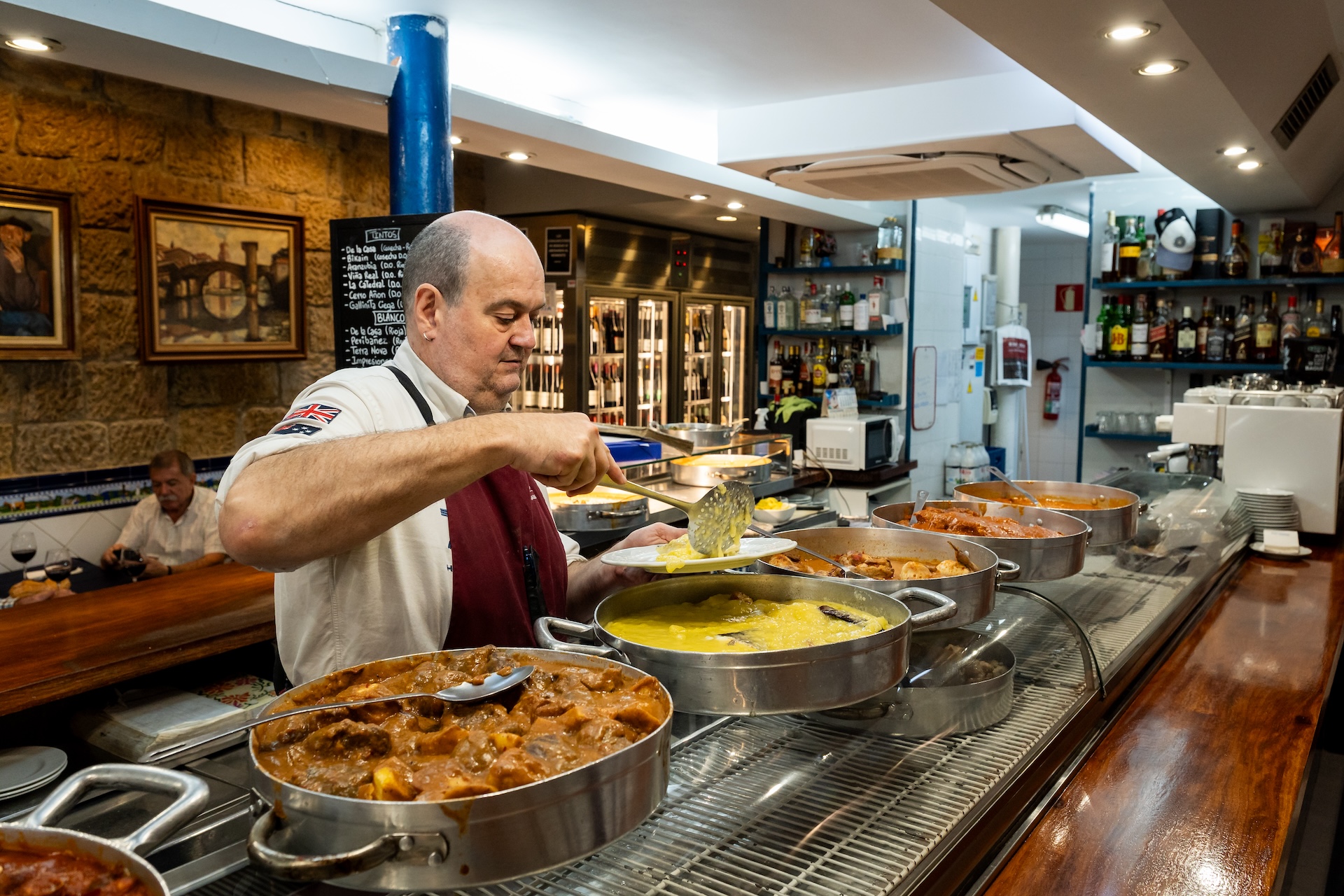
<p>Eating on foot is the daily bread of Basque people, but even standing up they still want their stews and<em> guisos</em>, especially on one of the drizzly gray days characteristic of the local climate. Rio-Oja is both pintxo bar and restaurant, yet in place of the perfectly constructed pintxos of its neighbors, the bar is filled with industrial aluminum pots filled with various shades of brown. </p><p>Small lumps lightly placed on a reddish-tinged sauce, large balls swimming in a very light-brown stew - you’ll find more variations on the theme than you ever thought possible. This is quite a selection of stews, from snails in a slightly spicy tomato creation to meatballs just like a Spanish mother makes, dense yet delicate in flavor, in a rustic<em> espagnole </em>sauce. Ask for a plate of this and a bowl of that and share them, washed down with a chilled glass of red wine from, where else, Rioja.</p>

<p>Open since 1950, Bar Eme is famous for its legendary <em>triangulos</em> – sandwiches that are (uncharacteristically for local cuisine) stuffed and sloppy. Don’t be put off by the bright, sleekly modern interior. Founded by Emeterio Arnáez and now run by his great-grandchildren, the bar has maintained its artisan spirit through generations. The secret lies in their house-made white bread and the mysterious salsa <em>rossini -</em> a spicy red sauce so closely guarded that its recipe is reportedly locked in a safe. </p><p>Borja, Oscar, Koldo, and Esther Morales continue the family tradition, serving up piles of the generously sauced sandwiches layered with thick-cut ham, tomatoes, mayo and lettuce from the counter. Despite numerous offers to buy, they remain committed to keeping Bar Eme a singular, family-run establishment that has been a much-loved part of the local dining scene for decades.</p>

<p>Little satisfies like a bartop stacked with pintxos, and <a target="_blank" rel="noopener noreferrer nofollow" class="text-[#781e2a] underline" href="https://www.instagram.com/irrintzibilbao/">Irrintzi’s</a> is dazzling. Tray after tray of delicately assembled pintxos ripe for the grabbing, from octopus cooked in red wine until tender and drizzled with an acidic vinaigrette, to the famous duck confit with a kick of peanut, sandwiched between crispy fried apple and perched on a slice of baguette. Owners Marian and Yoli have created a bar that’s an extension of their personalities - playful with bright orange and green walls, decorated with anime and comics - and they run this spot in Bilbao’s old town like their second home. </p><p>Pintxos like fragrant falafel with shitake mushroom make this a rare vegetarian-friendly stop, too. Where in some bars, paper signs explaining each pintxo are a red flag that you’ve stumbled upon a tourist trap, in Irrintzi they just save Yoli time from having to explain Marian’s always-changing elaborate creations as she serves up wine, vermouth, and pintxos at lightning speed, manning the bar all by herself.</p>

<p><span style="color: rgb(0, 0, 0)">Bilbao’s version of a down-home diner specializes in cazuelas, the local term used to refer to stews and amply sauced dishes. You’ll find the emblematic Basque dish salt cod al pil-pil: tender flaky cod draped in silky yellow sauce that is almost hollandaise-y, a simple emulsification of olive oil with a touch of garlic and cayenne. But </span><a target="null" rel="null" class="text-[#781e2a] underline ce-link" href="https://www.instagram.com/bikandietxea/?hl=en"><span style="color: rgb(0, 0, 0)"><u>Bikandi Etxea’s</u></span></a><span style="color: rgb(0, 0, 0)"> tables, covered in homey blue-and-white-checked tablecloths, feature a rotating list of traditional stars, from kokotxas with clams, snails in salsa Vizcaína of tomato and pepper, and tender squid served in an inky black sauce. This local spot is open only for lunch seatings during the week. Despite, or perhaps because of, this limited timetable, it’s best to call ahead.</span></p>