<p><span style="color: rgb(0, 0, 0)">Just south of the market, Pork Satay Tee Tha Din Daeng grills one of the street’s signature snacks: lean pork satay and the pork-liver skewers associated with this part of Thonburi. Orders start at 10 skewers and come with a mild, rich peanut sauce and ajaat, a crisp relish of cucumber, red onion and chilies in sweet vinegar. The satay cooks over charcoal at the curb, while diners sit in an open-air room lined with photographs of celebrity visitors. Pitchers of chilled pandan water on every table add an old-school touch that has become increasingly rare elsewhere in Bangkok.</span></p>
Street Smarts: A Thai-Chinese Food Crawl Through Tha Din Daeng


<p>A semi-open kitchen fronts this eight-table shophouse, where an all-female team deep-fries prawns, flashes vegetables through the wok and tends bubbling pots of soup. The menu centers on seafood, especially wok-fried and deep-fried dishes built for sharing. Order the stir-fried crab with yellow chili, made with generous pieces of crab, garlic, makrut lime leaf and long beans in a fragrant orange-hued oil. A spoonful of fish sauce sharpened with sliced chilies pulls the whole dish into focus.</p>

<p><span style="color: rgb(0, 0, 0)">Near the end of Tha Din Daeng Road, Chua Jiap Nguan occupies a semi-open dining room with bare walls, ancestral portraits and the lived-in feel of a longstanding Thai-Chinese restaurant. Its specialty, haan phaloh, reflects the area’s Teochew heritage: goose braised with five spice until deeply fragrant and savory. It arrives with rice and a garlicky, tart dipping sauce, though the richly seasoned meat hardly needs it. Add the pork-rib and bitter-gourd soup, peppery and gently bitter, to round out the meal.</span></p>

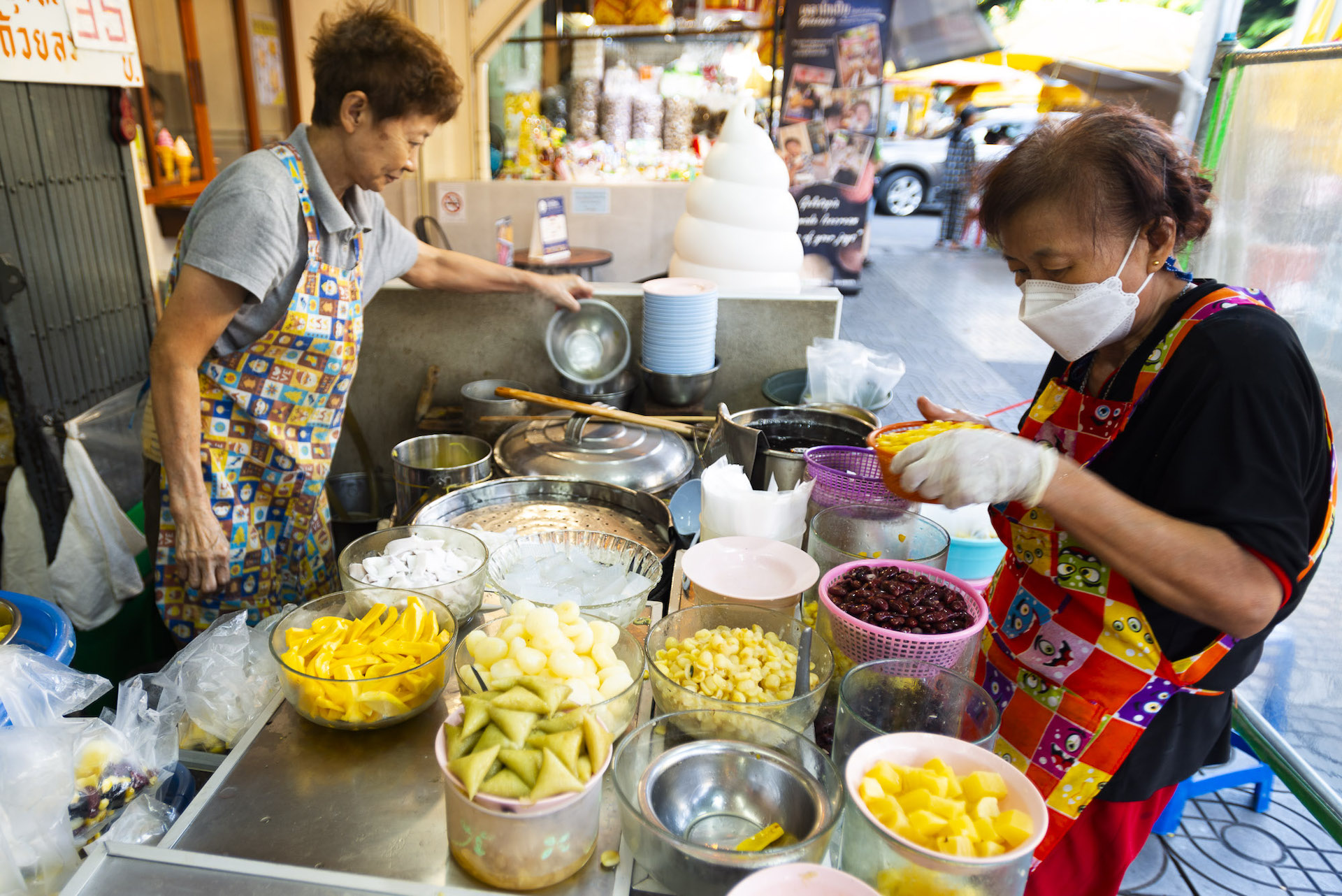
<p><span style="color: rgb(0, 0, 0)">This tiny, immaculate shophouse earned a Michelin Bib Gourmand for its namesake bok kia, a cold Thai-Chinese dessert built around shaved ice and two kinds of noodles: squiggly strands made from rice and tapioca flour, and thin wheat-and-egg noodles. The mixed version adds sticky rice, corn, kidney beans, lotus seeds, water chestnuts, young coconut, jackfruit and cubes of grass jelly, all drenched in syrup. The appeal lies in the collision of textures, chewy, crunchy, slippery and icy, rather than any single ingredient.</span></p>

<p><span style="color: rgb(0, 0, 0)">The neighborhood’s main fresh market occupies a bright, airy structure dating to 1960, with nearly as many vendors spilling onto the surrounding pavement as trading inside. Stalls sell produce alongside Chinese dried goods, seasonings, pork floss, baked goods and prepared foods, including bags of preserved vegetables seasoned with sesame oil and mushrooms. The market reflects Tha Din Daeng’s longstanding Thai-Chinese character, echoed by the nearby apothecaries, shrines, gold shop and stores selling ceremonial offerings.</span></p>

<p><span style="color: rgb(0, 0, 0)">Tucked down a side street off Tha Din Daeng Road, Sor Raat Naa 509 takes its name from raat naa, rice noodles fried with marinated pork and greens, but regulars come for the tomato fried rice. The cook works a huge flat-bottomed pan over a coal-burning stove, using an electric fan to send sparks flying as the rice and eggs hit the heat. Tomatoes nearly dissolve into the grains, lending the finished dish a subtle tartness, while the eggs emerge crisp and lightly charred. Smoky, rough-edged and deeply satisfying, it tastes like a Bangkok dish from another era.</span></p>