S M B O measurement-vertical measurement-vertical

Latest Stories

Rita Santos, owner of Comida Independente, photo by Rodrigo Cabrita

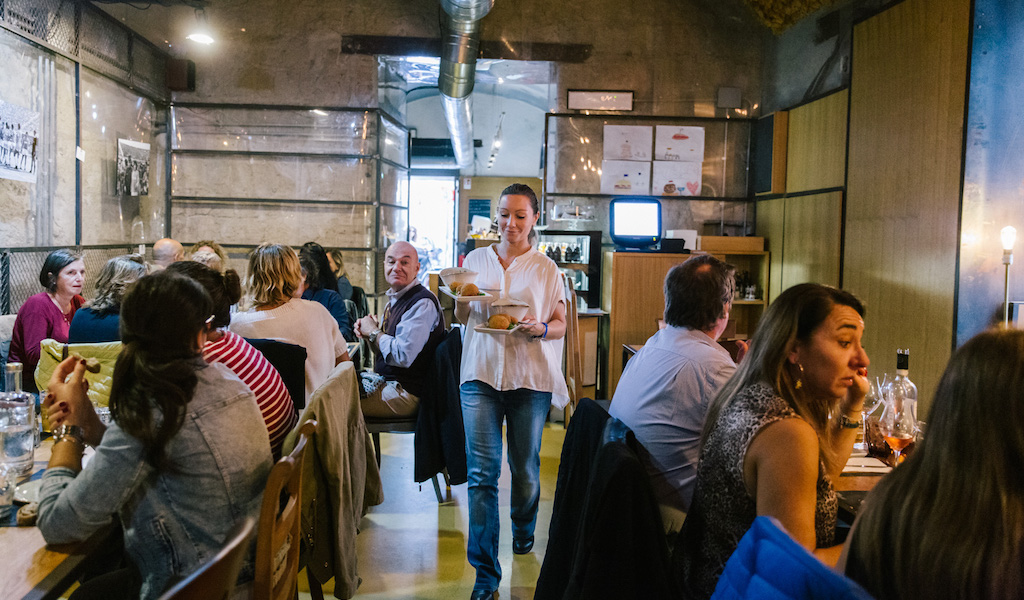
Lisbon’s indie culture scene has gone through various iterations over the years. In the 80s, influenced by the London indie scene, the city was animated by independent record shops, music clubs and bars, mostly in Bairro Alto. And in the 90s, the newspaper O Independente emerged and won over Lisboetas with its irreverent style. Although the indie scene has stagnated somewhat recently, one woman is working to reinvigorate it by adding a new sector: food and wine. And despite the fact that Rita Santos only opened her shop, Comida Independente, in March of this year, it has already won a legion of fans.

Jing Teng

Before we got down to the business of food, there was the business of tea. As soon as we were seated at one of the large round tables at Jing Teng in Mexico City’s Viaducto Piedad neighborhood, our server, Montse, placed a pot of piping hot red tea on the lazy Susan in front of us. As we took our first sip, we noticed the steam billowing out of the kitchen and the chatter of Sunday morning patrons casually conversing in Cantonese in between long stares at a mounted television blasting a cable Chinese news program. An unassuming diner, Jing Teng caters to the community of (somewhat) recently arrived immigrants from China who have settled in the neighborhood.

Yunnan dishes at In & Out, photo by Jamie Barys

Because of its location, topography and climate, Yunnan province resembles little of what many Westerners think of as “China.” The north is home to mountainous forests full of wild mushrooms and tribes tending goats, while down south tropical flowers and fruits grow in the hot, humid lowlands. More than 25 of China’s 55 state-recognized minority groups live in the province, and the cooking of each tribe has its own distinct flavors and characteristics. Yunnan cuisine is known formally as Dian Cai (滇菜), after the kingdom that resided on the Yunnan plateau more than two millennia ago. This southwestern province borders Tibet and Sichuan to the north and Burma, Laos and Vietnam to the south.

Building Blocks

The Delta de l’Ebre is a magical part of southern Catalonia’s Tarragona region. A flat swampy area where the Ebro River meets the sea, the delta contains within its confines a natural park rich in fauna and flora as well as 20,500 hectares of rice fields; the ecosystem allows both to coexist in harmony. The area is perhaps at its most magical when the water rises up to cover the plots, creating what the rice producer Teresa Margalef calls a “land of mirrors.” Until the arrival of the Arabs to the Iberian Peninsula in 711, rice in Spain (and Europe) was a non-cultivated grass with Asian origins; wheat was the crop of choice. The Moors, experts in its cultivation, started to implement their planting and harvesting techniques in the swampy areas in the south and east of the peninsula.

Celebrating Day of the Dead in Queens

Last week, while on one of our Queens culinary walks, one of the bakers we normally visit asked us to come to her house so that we could see her family’s personal altar for the Day of the Dead. She explained the tradition to us in detail, shared her homemade sweets and gave us parting gifts. It was a special day, and we feel so lucky that she opened her home to us.

Salumeria Upnea: Daydream Believers Featured Image

The team behind Salumeria Upnea, a modern trattoria cum exhibition space in Naples, is not exactly what you’d expect: Gennaro, Luigi, Stefano and Antonello, three pharmaceutical researchers and one lawyer, respectively, were deskbound at a pharmaceutical company not that long ago. Yet these four friends decided to risk everything for their two passions: photography and quality food. The first step in realizing their dream was founding a cultural association in an old building on Spaccanapoli, one of the three narrow streets that traverse the heart of the ancient city center. Here they held photography courses and photo exhibitions that invariably ended in long dinners with friends; after more exhibitions, and more dinners with friends, Gennaro’s cooking talents saw greater acclaim.

CB on the Road

While most artisanal markets and mom-and-pop groceries throughout Japan have given way to large supermarket chains and convenience stores, Kyoto still boasts one of the last markets selling local delicacies along with fresh foods and housewares. Often called “Kyoto’s Kitchen,” Nishiki Market is not like traditional huge bazaars with stalls selling fresh vegetables, fruits and meat. The market’s roots date back almost five centuries, to the fish market that grew up around an underground stream that remains freezing cold throughout the year and historically provided a way to keep fish fresh in a city far from the sea.

Taverna at Bios

Bios in Athens’ Keramikos neighborhood officially opened in 2003, but it all began two years earlier, when the Bios Cultural Organization was first founded as an audiovisual, electronic music festival held in various warehouses near central Athens. Following his instincts, Vassilis Charalambidis, the founder of Bios, decided to refurbish a beautiful Bauhaus-style building right on the corner of Pireos and Salaminos streets to give the festival and organization a permanent home. This innovative project had an immense impact on Athens, and very soon Bios became a kind of landmark and meeting point for creative young Athenians with an inquiring mind and a special love for their city. Its main goal over the past 25-odd years has been to promote contemporary arts, new technologies and creative, free thinking.

Ozzie’s Kokoreç

It’s just shy of noon when we step into the new location of Ozzie’s Kokoreç in Istanbul’s Asmalımescit neighborhood. Proprietor and usta Oğuzhan Sayı and his wife Gizem are preparing for another busy day in their compact, sharply-designed new restaurant. As we begin to chat, Oğuzhan gets a call that he has to take. It’s from the Hilton, which has requested a large order of Oğuzhan’s specialty. And while kokoreç – rolled lamb intestines roasted over a spit before being chopped up, grilled and doused with a layer of herbs and spices – is primarily known as a humble street food staple, one that’s most popular among those who have had a few, we aren’t surprised at the loftiness of this order.

Harvest Week

The rain makes it feel like November, when the majority of Spain’s olive oil producers begin the harvest to make extra virgin olive oil. Yet it’s October, and we’re watching the gathering of Arbequina olives in Belianes, very close to the city of Lleida in central Catalonia. These beauties are mostly green, with a few already changing to purple. Jose Ramón Morera, one of the owners of the small company Camins de Verdor, is finishing the harvest of these green olives for Umami, their premium line of olive oil. An absorbing deep green color, the organic extra virgin olive oil is intensely aromatic and fruity, made from early harvested oils that are mechanically pressed using a traditional cold extraction method.

Hongos azules, photo by Nicholas Gilman

In Mexico, the land of eternal spring, something good to eat is always in season. We ravenously await the arrival of artichokes in March, mangos in April, fresh corn in September. Even the wriggly little gusanos de maguey (maguey worms) which appear in May are wildly anticipated – by some. Change in season is subtle here, but essential to the survival of the country. But seasonal lines are blurring. Asparagus rears its tasteless Chilean head all year; pallid strawberries are found in December. Seasons have gone global and our palates suffer for it. Which is all the more reason to pay attention to what’s local now. From July into October, coinciding with our temporada de lluvia, wild mushrooms, spurred on by rain and humidity, hit the markets of central Mexico. Here in the capital, the month of August is high ‘shroom time.

Harvest Week

We have each got a couple of buckets and a pair of gardening clips and we are standing in a dewy vineyard in the middle of the majestic Alazani Valley. The autumn air is brisk, fresh with the fruity smell of grapes and the sun is warm, clouds permitting. Looming northward like some godly guardian of this huge, precious grape basket is the awe-inspiring Greater Caucasus range. It is rtveli, the harvest, and here in Kakheti, families across Georgia’s chief winemaking region are busy making wine much like their ancestors have done for centuries. They pick, crush and ferment wine in kvevri, enormous ceramic urns buried into the ground, or in oak barrels. They add nothing to enhance the fermentation process, the crushed grapes are stirred several times daily until they feel the maceration process is completed.

Seçkin Et ve Tavuk

Walking around the busy Çarşamba Market in Fatih on a Wednesday, we spot a line of people waiting patiently in front of a butcher shop. Not wholly unsurprising, since it is a market day, but we notice that some of them are enjoying particularly tasty-looking döner sandwiches. The tempting smell coming from the little shop, an innocuous place named Seçkin Et ve Tavuk, convinces us to join the crowd – a mixture of families, groups of old ladies and men taking a break from work – and grab a portion of döner accompanied by fresh tomatoes, pickles and fries, and washed down by the ever-present ayran.

Soba Kaiseki Gi

Ramen may have seen a worldwide boom in recent years, but when it comes to soba – Japanese buckwheat noodles – fans might say they’ve been unfairly neglected. “Soba have a history of at least 400 years, as long as sushi. Yet they’re almost completely unknown abroad,” chef Yoshinobu Saito says, pondering the concept behind his first ever restaurant. “I guess I don’t have a specific concept for the store. But I do want to promote soba worldwide.”

A Cozinha do Manel

The sensation of entering A Cozinha do Manel (“Manel’s Kitchen”) in Porto is so similar to entering grandma’s house on Sunday that it almost confuses us. There is no one to greet you at the door, no cloth napkins folded over employees’ arms. We walk confidently, as we would at home, with the sense of comfort that only intimacy is capable of inspiring. From the wall, among the many clocks, vintage plates and drawings made on cloth napkins by customers with an artistic bent, dozens of familiar faces look back at us. They are actors, musicians, politicians and soccer stars all standing next to Zé António, the owner and manager – a confirmation of the restaurant’s popularity.

logo

Terms of Service