Latest Stories

Otomisan: A Slice of L.A. Japanese History

Stepping into Otomisan in Boyle Heights feels like a step back in time. It’s a cozy diner with just three red booths to the right of the entrance, and a counter with five stools to the left. Along the walls are a mixture of old Japanese paintings, photographs of family and friends, and more recent news clippings about the restaurant. There is usually at least one table of Japanese customers chatting with the current owner. Boyle Heights sits just east of downtown Los Angeles and is known for having a large Chicano community and some of the best Mexican food in the city, but it once was also home to a large Japanese community, due to the neighborhood’s proximity to Little Tokyo, just across the L.A. river.

Regain: Novel Idea

Regain is housed behind the marigold shutter doors of one of Marseille’s trois fenêtres (meaning “three windows,” the city’s typical brownstone). From the street, one can spy the full tables of the shady urban garden far on the other side. It is hard to believe that this Rue Saint-Pierre restaurant opened just six months ago, given its current hot-spot status among Marseille gourmands. From the unusual descriptions of chef Sarah Chougnet-Studel’s creations, it’s hard to imagine what the taste and experience of any dish will be. But Regain’s many repeat diners trust in Sarah’s intriguing French-Asian amalgams: order anything on the menu and it will prove to be both intriguing and delicious.

La Opera: Booths and Bullet Holes

As you step into one of the gleaming chocolate-colored booths and slide along the ruby-red upholstered cushions, the nostalgia that permeates La Opera Bar is palpable. From an intimate corner booth you watch the hustle and bustle of the dining room, but remain inside your own dining world. One of the few centenarian businesses in Mexico City, the booths of La Opera have served as the meeting place of notable journalists, politicians, scoundrels and authors. Gabriel Garcia Marquez once refused some fans an autograph on a napkin, left the bar and returned an hour later with signed books for them. A faded newspaper clipping on the wall shows Carlos Monsiváis, José Luis Cuevas, Fernando Benitez and Carlos Fuentes seated around a table, deep in discussion.

Vino Vero: Natural Wine Oasis Featured Image

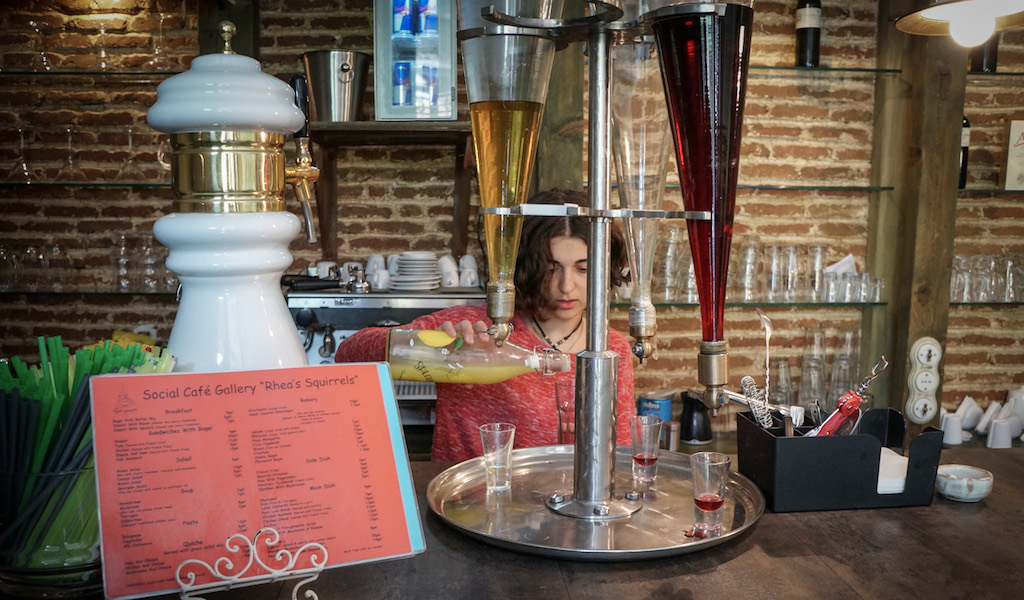
On Travessa do Monte, one of the friendliest streets in Lisbon’s Graça neighborhood, natural wine flows as freely as conversation. We’ve come here, right by the arch and with a narrow view of the city and the river, to have a glass with Giulia Capaccioli and Massimiliano Bartoli, two Italians from Tuscany who met in Venice and now live in Lisbon. The pair’s bar, Vino Vero, which they opened in April 2019, is the spring that feeds this natural wine oasis. To fully understand the origins of this wine bar, we need to go back to Italy. There, in Tuscany, Massimiliano’s brother, Matteo, has a winery producing natural wine – that is, wine to which nothing is added or taken away.

Da Maria: Spanish Quarter Secret

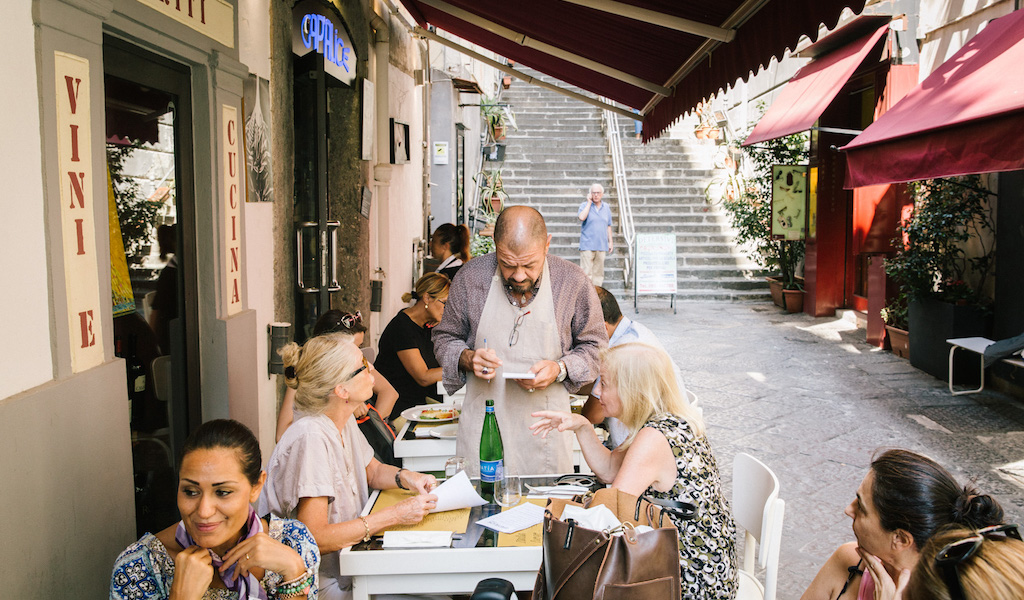
Naples’s Quartieri Spagnoli, the "Spanish Quarters,” are a part of the city with a long and tumultuous history. Founded in 1500, the Quartieri Spagnoli were created by Don Pedro De Toledo to accommodate the Spanish soldiers who were residing or passing through Naples. With the arrival of the soldiers, the network of narrow streets became a hotbed for illegal economic activities, from cigarette smuggling to drug dealing to prostitution, earning the district a bad reputation that stuck for centuries – even Neapolitans from other neighborhoods were afraid of entering the Quartieri Spagnoli. In recent decades, however, the atmospheric district has become one of the city’s tourist attractions, recognized as one of the centers of Neapolitan gastronomy as well as a place of craftsmanship, cultural and anthropological initiatives.

Naan Hut: Baking an Ancient Bread in a New Land Featured Image

Even as traffic slithers to a crawl west of the 405 Freeway on Santa Monica Boulevard, drivers may be hard-pressed to notice the small storefront known as Naan Hut standing on their periphery. Neither its name nor its red-and-yellow signage offer any indication that a 1,000-year-old Persian tradition of baking naan sangak is upheld within these walls in the heart of Tehrangeles, the unofficial name for the West L.A. stomping grounds of L.A.’s Iranian diaspora. An ancient bread, legend ascribes the origins of sangak to the 10th-century Persian military. Soldiers would march together carrying small river stones known in Farsi as “sangak,” arranging them together at their day’s destination to aid in the special technique of baking this bread come chow time.

Nhà Mình: Vietnamese, Re-envisioned

A "blank canvas." This was Fred Hua's first impression of the bright and airy space that would become Nhà Mình, his Vietnamese restaurant and coffee shop in Ridgewood, Queens. Like Fred's bygone restaurant of the same name, which had closed several years earlier, Nhà Mình offers a gallery for exhibits by local artists, room for his own inventiveness in the kitchen and a meeting place where, in Fred's words, he can "build community." The community in which Fred was born, in San Jose, California, is home to the largest overseas Vietnamese population in the world. Many of the conversations he heard there as a child, in the late 1970s and early 1980s, were in Vietnamese – although as Fred tells us, he would always respond in English.

Fatih Sarmacısı

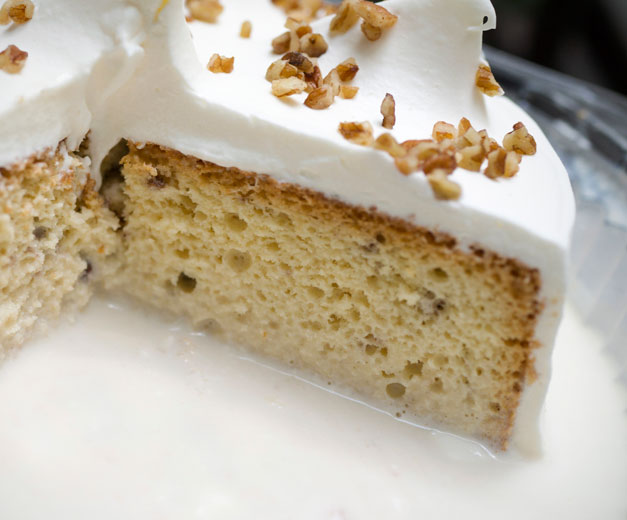
Settling into our first cross-country journey in Turkey many years ago, we were pleasantly surprised by the comforts of Turkish bus travel. The young garson wore a proper uniform and dribbled cologne onto our hands every hour or so. Tea was served regularly, accompanied by one of our early Turkish culinary discoveries, Eti brand pop kek – those unctuous and delicious cakes frosted or stuffed with everything from raisins to chocolate – the Anatolian Twinkie. Call us heathens, but we love them. We’ve tried many traditional Turkish cakes, but none we encountered measured up to the beloved pop kek. That is, until one recent visit to Fatih Sarmacısı, an Ottoman-era shop making our new favorite cake, sarma (the word means “wrapped” or “rolled up” in Turkish).

Retro: Maestro of Khachapuri Featured Image

There was a dowdy little joint in Batumi, Georgia’s Black Sea port town, where two middle-aged women churned out the most exquisite Adjarian-style khachapuri pies in an old pizza oven. It was a must-stop for every trip to the coast, as there were few places in Tbilisi that could scorch such an authentic acharuli. As the years passed, the seedy potholed streets that hosted a pool hall, brothels and our favorite khachapuri joint transformed into a gentrified neighborhood of gift shops and boutiques catering to the ever-growing number of tourists flocking to Batumi. Meanwhile, the boat-shaped acharuli has become one of the most emblematic dishes of Georgian cuisine and is not only found all over Tbilisi, but is also being served in New York and Washington, DC.

Camas Sutra

The storefront restaurant Camas Sutra (a play on its location in the Camas neighborhood of Marseille) still sports “Boucherie, Charcuterie, Crèmerie” on the original red and yellow banners, left over from just 18 months ago when it was home to a neighborhood butcher. The “no restaurant sign” tactic, occasionally seen these days in hip neighborhoods of Marseille, is a choice to curate client discovery and word-of-mouth marketing. But glancing towards the large window as we pass by on this narrow street off Boulevard Chave, we instantly recognize that it is now a restaurant, with a solo high table outside for apéro, a grand, 17-person wooden table inside, an open kitchen, and the chef and wine server prepping, circulating, and talking wine and food with their guests.

O Velho Eurico

Zé Paulo Rocha was born in September, 22 years ago. By December of that year, he was already sleeping on top of a chest freezer in his parents’ tasca, right behind Rossio, one of Lisbon’s main squares. Like so many tasca owners in the Portuguese capital, they had come to Lisbon from northern Portugal’s Minho region years before. As a young teenager, Zé Paulo used to help with the service while his mother cooked and his father ran the business behind the counter, the traditional family tasca format. His professional fate was sealed from the beginning.

UZU House

Follow a narrow alley radiating off the newly renovated Lado Gudiashvili square whose surrounding rebuilt period houses now exudes the tourist-attracting pastiche pleasantness of reconstructed historic centers, and you’ll stumble upon Uzu House, the sole standing habited ruin left on Saiatnova street. Uzu means “vortex” in Japanese, explains Yamato Kuwahara, the reticent founder of the space, which is registered as a non-profit and functions like an informal art residence – “This space is a vortex that brings different people together…it's a space for everyone, no concept or philosophy attached, ” he adds.

Vins Per Tu

Strolling down the streets of El Clot, you’ll encounter all the usual suspects of a typical residential Barcelona neighborhood: a small butcher, a multigenerational deli, a hole-in-the-wall bar and, of course, a couple of bodegas. Bodegas are the social and culinary epicenters of Barcelona – this is especially true for more residential, working-class neighborhoods like Clot, where eating out at a proper restaurant is a rare event kept for special occasions like birthdays or anniversaries. So for a casual mid-week get together, locals go to their neighborhood bodega for a small copa of nondescript red or white wine and a tapa of boquerones or some simple cold cuts.

Özbek Sofrası

In the former Soviet Central Asian republics, the boilerplate restaurant menu consists of plov, lagman, shashlik and samsa. Tired-looking Uzbek, Kyrgyz, Kazakh and Tajik establishments all serve up the same limp noodles and oily rice with a shrug – it’s their job. In the markets of Samarkand, Osh and Almaty, we found some exciting exceptions to this rule but, generally, restaurants in the region tend to successfully obscure the fact that Central Asian food, when cooked with passion, can be a riot of the senses. In Central Asia, according to regional specialist Sean Roberts, culinary traditions have customarily been preserved by a master/apprentice system that mainly existed outside restaurants. Monumental occasions like weddings and funerals in Uzbekistan often involve several hundred guests eating multiple meals. For this, an usta is called in from his day job, like Clark Kent from the newsroom.

Khinkali Chronicles, Part IV: Metis Featured Image

Snail khinkali? It might sound, at first, like an odd combination. On closer consideration of Georgian cuisine and history, however, it makes good sense. For one thing – perhaps the most important – they’re tasty, and we have yet to hear anyone who’s tried them disagree. The signature dish at Metis restaurant, which is – for now at least –the only place in Tbilisi one can have them, they remind us more of mushroom than of meat khinkali: savory, smooth, a little buttery, with some brightness from parsley and a hint of pastis. Metis’ logo, a snail with a khinkali for a shell, expresses the playful blend of French and Georgian cuisines that owner Thibault Flament is pursuing in close collaboration with his chef, Goarik Padaryan.

logo

Terms of Service