Latest Stories

Ask CB: The Food of Lent Monday in Greece?

Dear Culinary Backstreets, I heard that the Monday on which Lent begins is a holiday in Greece and that there are some special culinary traditions. Is this true? What do Greeks eat on this day?

When the Going Gets Tough, the Catalonians Get Brewing

Once a mostly beer-free country, Spain – traditionally a land of wine drinkers – has recently started to develop a taste for the sudsy beverage, and Catalonians seem to have been the main pioneers behind this growing trend. The number of local craft breweries is increasing and so is the number of beer fans, who are also learning how to brew the drink at home. Put it all together and you have a young and adventurous market that is ready to experiment with tastes and textures to create stellar new beers with a distinct Mediterranean flavor.

Istanbul’s Top 3 Lahmacun Makers

Lahmacun is one of those mysterious foods where a lot is created with so little. It checks all of the boxes of a perfect savory snack: crispy, oven-fired crust, light and spicy meat spread, a fresh green garnish and a tangy spray from a lemon. It’s like an artisanal pizza with a Middle Eastern topping wrapped around a side salad – for the cost of a shoeshine.

Pastes Real de Pachuca

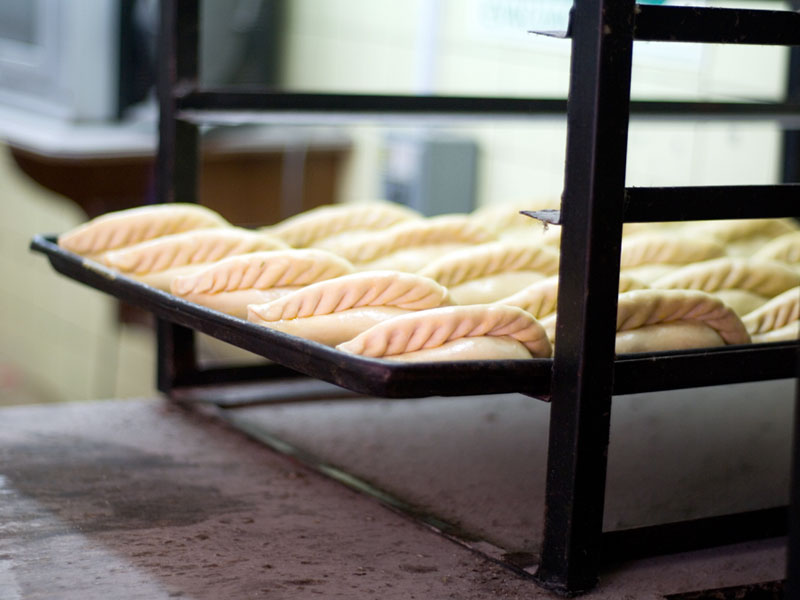
Update: This spot is sadly no longer open. For weeks we had been passing by a small venue that filled the sidewalk with the heavenly scent of butter and pastry dough, before we finally had the chance to stop in and investigate. The source of the intoxicating aroma turned out to be Pastes Real de Pachuca, a neighborhood bakery in middle-class Colonia Tabacalera that makes excellent empanadas and pastes, a type of pastry that’s a specialty of Mexico’s Hidalgo state but hard to find in Mexico City.

To Rodi

A quiet residential area in Western Athens, the working-class suburb of Sepolia was until the 1970s characterized by a few industrial buildings, empty plots of land and small, humble houses. Over the past few decades, Sepolia has developed rapidly and is now full of high-rise apartment buildings. Though it still has a neighborhood feel, there aren’t many cafés or dining venues, which makes To Rodi – an Armenian restaurant and neighborhood souvlaki place that does some of the best kebabs in Athens – seem particularly incongruous.

Ask CB: Lesser-Known Barcelona Food Markets?

Dear Culinary Backstreets, I’m traveling to Barcelona and I love visiting food markets. I’ve heard a lot about La Boquería, but are there any other markets that might be worth visiting?

Phaleron: Athens’ Culinary Museum of Innocence

Once a resort town on the outskirts of the Greek capital, Phaleron – only a few miles from downtown Athens – is now well incorporated into the city’s urban fabric. The area has remained an upscale neighborhood, but, sadly, it has lost its distinctive character: the sea is now polluted, the open-air cinemas have been turned into parking lots, and many of the stately mansions were demolished to make way for apartment blocks during the construction boom of the 1960s.

Mercè Vins

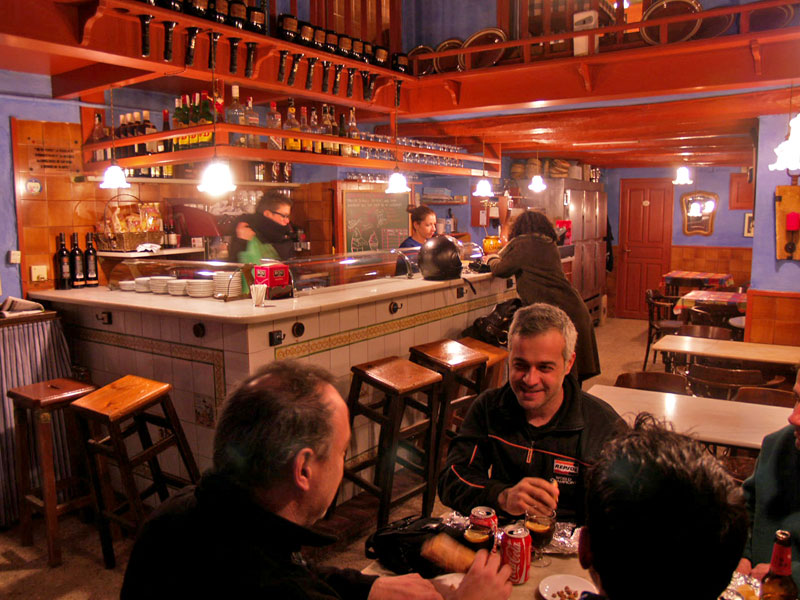
Editor's Note: Sadly, this spot is now closed. Mercè Vins is exactly between two worlds, located on the quiet, narrow and dark Carrer d’Amargós, close to the shopping area of Portal de l’Àngel, near the Cathedral and Plaça de Sant Jaume, and on the border between the Barrio Gótico and Born neighborhoods, where there are numerous offices and public institutions, filled with employees looking for a breakfast that goes beyond a sad, ersatz “croissant” or for a lunch that approximates the kind of meal they would get if they were able to sneak back home.

Meşhur Filibe Köftecisi

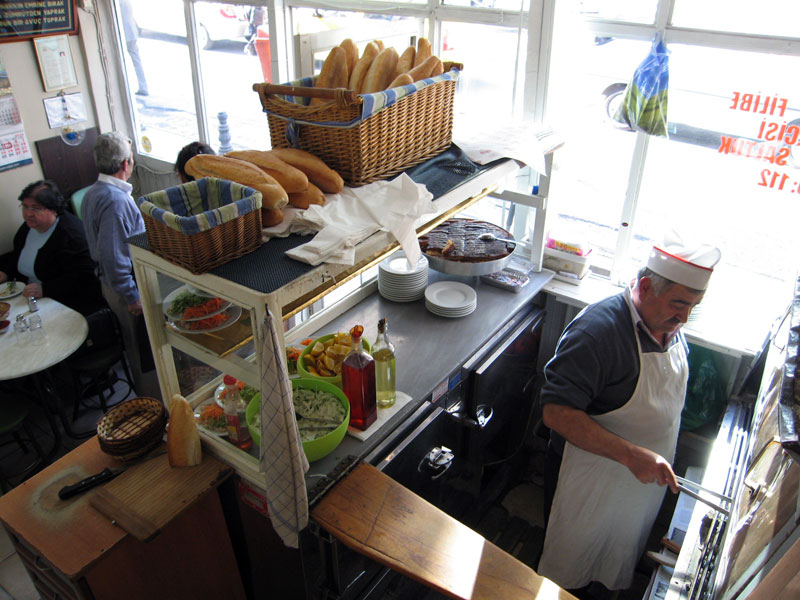
Where we come from, flipping burgers is a time-honored tradition among pimply teenagers looking for a summer job and troubled short-order cooks looking for a place to land in between firings. It’s work that promises mobility, not stability. But don’t tell that to Ziver Usta, who’s been turning the köfte – something like Turkey’s equivalent of the hamburger – at the grill of the shoe-box-sized Meşhur Filibe Köftecisi in Sirkeci for the last 30 years. The dough-faced Ziver, in his early fifties, is actually the restaurant’s junior employee – “head waiter” Mehmet has been there for 40 years – but his long tenure means he’s only one of a select handful of grill masters who have worked at Filibe over the course of its 100-year history.

El Profe

One of our favorite markets in Mexico City, Mercado Jamaica is a fantastic destination any time of the year, offering everything from festive Christmas decorations to a large selection of fruits and vegetables. After the markets of Xochimilco, Jamaica is also one of the city’s best flower markets, with block-long aisles filled with freshly cut flowers and plants of almost every imaginable color and type. But as much as we love getting lost in the sweet scents of these green alleyways, what keeps us coming back to Jamaica is El Profe, an excellent eatery inside the market that specializes in barbacoa. El Profe ("The Prof") looks less like your typical market food stand and more like a mini restaurant, with small brass chandeliers hanging from the ceiling that provide more in the way of ambiance than actual light. Waiters and cooks in matching blue uniforms hustle and bustle around the customers, who come and go from the counter at a steady pace.

Ask CB: Greek Coffee in Athens?

Dear Culinary Backstreets, I keep hearing about Greek coffee but is it any different from Turkish coffee? And do most Greeks actually drink Greek coffee these days or do they drink other types of coffee? Greek coffee is exactly the same as Turkish coffee – and it was in fact called just that in Greece until Turkey invaded Cyprus in 1974, at which point, for political reasons, the Greeks decided to rename their coffee “Greek coffee.” The process and preparation, though, are identical to the Turkish way.

Istanbul’s Burger Battle Goes International

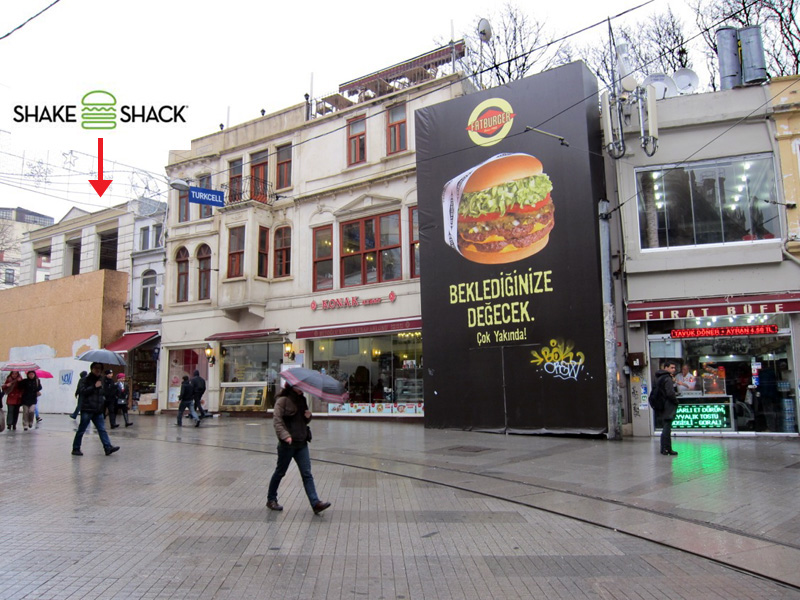
Update: Shake shack and Fatburger are sadly no longer open. As chronicled by Istanbul Eats, the Tünel end of Istanbul’s famed İstiklal boulevard was some two years ago the site of a heated burger war. It all started when a former Turkish basketball-player-turned-restaurateur who had spent time studying in California opened up Mano Burger, a mostly successful recreation of the kind of burger joints the owner frequented in the United States.

Athens’ New-School Wine Bars

The economic crisis that has plagued Greece for the past five years has led to changes on the Athenian culinary scene, including the opening of three new types of venues that seem to be reflective of the times. The first two – cupcake places and frozen yogurt shops – are imports from abroad, perhaps indicative of a population in need of something sweet, comforting and affordable. On the other hand, the third trend, wine bars, digs deep into Greece’s roots, representing a fascinating phenomenon in a country that is one of the world’s oldest wine-producing regions. In antiquity Greek wine was exported across the Mediterranean, and the winemaking tradition has remained strong through the millennia. Yet although there are numerous wineries around the country, in the modern era Greek wine has never achieved the place it deserves on the international market. Production levels are low and vintners have long been unsure of how to market abroad.

Barcelona’s Restaurants Go Underground

At Culinary Backstreets, we are all about seeking out backstreets eating at venues serving authentic cuisine and frequented mainly by locals – an approach that usually leads both to delicious food and to prices that won’t break the bank. But how about underground dining, where even locals themselves aren’t always in on the secret?

Mustafa Amca

The Turkish proverb “At, avrat, silah ödünç verilmez” (“neither horse, wife nor weapon should be lent”) is sometimes repeated as a way to recall the nomadic warrior past of the Turks. The primal Turkish essentials are clearly stated, but what about the çay bardağı, the tea glass that has become such a ubiquitous Turkish icon? Reading the 17th-century works of Evliya Çelebi, the Ottoman Rick Steves, you’d expect to find descriptions of medieval tea jockeys swinging trays filled with those tulip-shaped glasses through the alleyways of the Old City. Right?

logo

Terms of Service