Latest Stories

To Eidikon

At the corner of Psaron and Salaminos streets, in a quiet neighborhood of Piraeus, there’s a place that looks straight out of a 1960s Greek black-and-white movie. Its name, eidikon, means “special,” and it’s the last of its kind: a bakalotaverna, or grocery store and eatery, all in one. The shop opened in 1920, when the three Papakonstantinou brothers from Gardiki, an impoverished village near Trikala in central Greece, came to Athens in search of better prospects. The building was the tallest in the area. It had large windows, and in good weather, one could even see the sea on the horizon.

Mangal Kebab

We counted ourselves among the cogniscenti on our first visit to Mangal Kebab, a decade ago, when we passed up pizza in favor of pide (Pea-day). Sharing the same section of the menu and baked in the same oven, but elongated rather than round, the Turkish flatbread suggested a well-laden canoe, until it was sliced for portage from the kitchen, with a chewy crust that curled around seasoned ground lamb. Over the years we’d also become acquainted with the kebabs, and the mangal – the grill, just behind the counter, that gave the restaurant its name. Mangal Kebab is a come-as-you-are neighborhood restaurant that seems easy to get to know, even though we don’t know the language.

Porto Does It Better (In Some Cases)

There has always been a bit of a rivalry between the two main cities of Portugal, Lisbon and Porto, which is well illustrated by an old running joke among some tripeiros (the name given to the people of Porto): whenever someone asks what is the best thing about Lisbon they will reply, “The highway sign that says ‘Porto.’” But it’s a healthy rivalry for the most part – football aside. Lisboetas, Lisbon locals, in general even tend to recognize that the food might actually be better in Porto and its surroundings, especially traditional dishes. While Porto does not benefit from the same multicultural influences that helped shape Lisbon’s restaurant scene, it is home to some very talented cooks with a knack for doing so much with so little.

Farewell, Nunu

We are so heartbroken to report the passing of Nunu Gachechiladze, fondly known as our “Pickle Queen” at Tbilisi’s Deserter’s Bazaar. We first met Nunu two years ago, while mapping out our market walk with Justyna Mielnikiewicz. In our decade and a half of life together in Georgia, Justyna, a Polish native and pickle expert by default, had never been impressed with local pickled cucumbers, finding them too salty, too mushy or simply bland. Some sort of cosmic force directed us to Nunu. How else to explain that out of all the pickle makers at the bazaar, we were drawn deep into a hidden corner of the labyrinthine market to where Nunu stood behind stacks of her creations?

Brewmasters

Throughout Italy, Naples is known as the “city of coffee” – the Neapolitan caffè is synonymous with high-quality brew. And within the city, there are a number of stories and legends that swirl around the black stuff. Coffee is far and away the most popular caffeinated drink in the city. Neapolitans are not tea drinkers. In fact, most see it as a kind of medicine, probably because when you’re sick to your stomach the doctor recommends eating white rice and drinking tea. But it’s not just about the coffee itself. In Naples, drinking coffee is a true ritual, a complex set of unwritten norms, customs and ancient habits.

Milpa Alta

We met Don Tirso in the center of Santa Ana Tlacotenco, one of 12 villages in Milpa Alta, Mexico City’s southernmost delegation, on a sunny and cool morning. The road from village to village in Milpa Alta snakes through fields and around ancient volcanoes, slowly climbing up the mountains that overlook the beast of a city to which it formally belongs. We take a truck to his property, part of a farming cooperative ceded to the campesinos (farmers) following Mexico’s decade-long revolution that ended in 1920, which focused heavily on agrarian reform. In his village, the city’s only rural area covered with forests and farms, his generation of elders is the one that mostly carries the torch of their direct connection to the Aztec past.

Köklem Uygur Yemekleri

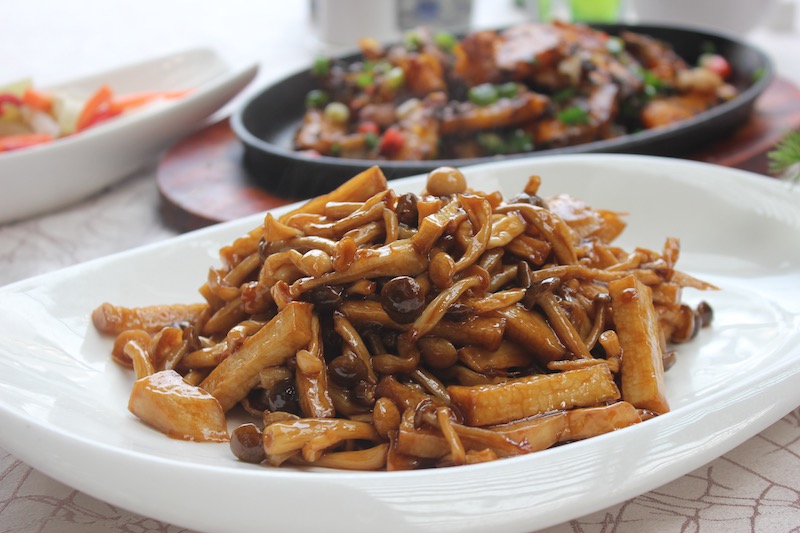
It’s the eve of Kurban Bayramı, and while most of Istanbul is eerily empty, the tables at Köklem Uygur Yemekleri in Çapa, a neighborhood in the Fatih district, are quickly filling up. A young couple calmly chats, using chopsticks to pick up sautéed chicken slathered in soy sauce. At a nearby table a man sits alone, his bored countenance swiftly replaced by a broad smile as a waiter arrives at his table with a steaming plate of noodles, ready to be devoured. Most of the customers are speaking a language we can’t decode. But based on how happy everyone looks, this food is bringing them some serious joy.

La Moderna

As the food scene in Barcelona continues to change at a rapid clip, with a constant stream of closings and openings, the city’s bodegas are an excellent example of what can be saved. These are businesses that have been updated again and again, sometimes over the course of a century, in order to preserve an essence and an identity that nobody – not now nor back then – wants to lose. La Moderna, a tapas bar and bulk-wine shop on Carrer d’Enric Granados in the Eixample Esquerra (Left Eixample) neighborhood, is a good example of this preservation model. Established in 1937, the bodega has survived just about everything, including the Spanish Civil War (1936-39).

Chinese Wine

Don’t tell it to French winemakers, but in 2015, the Chinese wine industry hit a major milestone by narrowly surpassing France in land dedicated to vineyards. With 7,990 square kilometers of grape-growing land concentrated mostly in China’s north-central and northwestern regions, the country now ranks second only to Spain and holds almost 11 percent of the world’s vineyards by land area. Most experts estimate that the vast majority of these vineyards grow grapes for the table, not wine, but the statistic follows the trend of wine’s growing popularity in the Middle Kingdom. And China is now among the top 10 wine-producing countries in the world.

Taverna tou Veletakou

The geography of Lavrion, a seaside town located in southeast Attica, about a 45-minute drive from downtown Athens, has played a big role in shaping its population. The most important factor is Lavrion’s proximity to the sea. With an abundance of fish and seafood at its doorstep, as well as a marina and port, it’s not wonder that a large portion of the town’s population are fishermen. Perhaps not as obvious, considering it’s more concealed nature, is Lavrion’s mining industry. Since before 3,000 B.C., the area was famed for its silver and lead mines. Although abandoned in the 2nd century B.C., the mines were re-opened in 1864, attracting a large number of miners who eventually settled in the town.

Steamed Buns in Shanghai

Bāozi (包子), or steamed buns, are a basic, on-the-go meal. Yeast is added to wheat dough, which is allowed to rise. The dough is then stuffed with a raw filling (everything plain pork to egg custard), wrapped by hand using a pinching style until closed and placed on top of boiling water in towers of giant bamboo steamers.

Tortas Robles

The Robles family has sold tortas in downtown Mexico City for over 70 years, earning generations of devoted customers. But this year could be its last. Their story begins in 1940s Mexico City, at the intersection of Doctor Mora and Juárez Avenue, the southwestern corner of the Alameda Central. Diego Rivera immortalized the famous park, the first of its kind in Mexico City, in a 1947 mural, imagining over 100 seminal figures from Mexican history strolling through the grounds. On a sunny summer morning at Tortas Robles in Centro Histórico, Guadalupe Robles points to a photograph from that same year, 1947. The photo captures her father, Alejandro Robles, leaning over the cart from which he sold tortas.

Goa in Lisbon: Taste

The owners of Zuari and Delícias de Goa, two of the most traditional Goan restaurants in Lisbon, share not only similar backgrounds – both migrated from Goa to Mozambique before settling in Portugal – but also the dedication to keeping family traditions alive.

Goa in Lisbon: Go Deep

Last year, Casa de Goa, celebrated its 30th anniversary in Lisbon. Located in Alcântara, it’s a cultural hub for Goans in Lisbon, keeping both traditions and memories alive. Besides a library and museum, there’s a restaurant – currently closed but soon to re-open – and regular events, conferences, exhibitions, games, social gatherings and food workshops. Casa de Goa is particularly active in promoting traditional Goan music and dance: it hosts a folk dance group called Ekvat and the music group Gâmat. Jerónimo Aráujo e Silva is the musical director and also the composer of some of the original songs.

Goa in Lisbon: History

Vasco de Gama’s voyage to India in the late 15th century laid the groundwork for the Portuguese empire, in which Goa, a small region on the southwestern coast of the Indian subcontinent with ample natural harbors and wide rivers, would come to play an important role. In the early 16th century, Goa was made the capital of the Portuguese State of India and remained as such until 1961, when the Indian army captured it. Over four centuries of colonial rule, Goan intellectuals most often migrated to Portugal in search of education, especially in the 20th century. Yet following the annexation of Goa by India, many Goans, particularly those working in government and the military, accepted the state’s offer of Portuguese citizenship and made their way to Europe.

logo

Terms of Service