Latest Stories

Kimyon

Kadıköy’s Kimyon is a friend of the after-hours and the booze-fueled denizens who are done at the bar but have yet to call it a night. It is the buffer zone between too many drinks and a brutal hangover, and doesn’t judge those who are still up at 6:30 a.m., because it’s still open and orders of grilled chicken skewers are freshly sizzling above the charcoal. Kimyon runs nearly around the clock, save for perhaps an hour at dawn when operations shut down for cleaning. Appropriately, it’s located in the dead center of Kadife Sokak (Velvet Street), whose elegant name belies the revelry that takes place inside and frequently spills out of the numerous drinking establishments that give the street its de-facto moniker: Barlar Sokağı (Bars Street).

Bodega Pàdua

The classic neighborhood bodega in Barcelona is a place where customers feel at home. At Bodega Pàdua, an old bodega turned bar-restaurant in the El Farró neighborhood, part of the Sarriá-Sant Gervasi district, this quintessential spirit – usually invisible to the eye – is, somewhat surprisingly, physically manifested on the walls. The long space, which extends to a patio in the back, is decorated with mementos from the community: old photos, antique objects such as radios, cameras, and typewriters, a claviharp, written tributes to local musicians and house pets (including the bodega’s beloved parrot Ricky, who is now in a “better life” but used to say hello to the clients), and even pieces of the old iconic SEAT 600 car, which still has lots of fans in Spain.

CB on the Road

When Cleveland-native Andy Husney set out for China at age 20 to teach English, he never would have believed that he would live there for the next decade, or, for that matter, open a Mexican restaurant. Husney initially came in 2012 for a one-year gig teaching English in Shenyang, located in China’s northeast Liaoning Province. But after that wrapped up, inspired by some friends and a desire to experience the culinary history of China, he made his way to Chengdu – recognized by the United Nations Educational, Scientific and Cultural Organization (UNESCO) as a Creative City of Gastronomy, the capital of Sichuan province is also one of the capitals of Chinese cuisine.

Chaikhana Sem Sorok

Chaikhana Sem Sorok, a newly opened little café just off the Central Asian thoroughfare of 63rd Drive in Rego Park, proves more than anywhere else that all cuisines are fusion cuisines, if you go back far enough. Every day but Saturday – the Sabbath – loaves of round, crusty bread called non or lepyoshka emerge from the restaurant’s towering brick tanur oven. They’re distinctly Uzbek, but share Persian roots with the naan of the Indian subcontinent. Meanwhile, samsas, similar to samosas, bake while clinging to the sides of another tile tanur, which was built in Samarkand and shipped to Rego Park. Filled with onions and either lamb, pumpkin or beef, and lightly charred like a Neapolitan pizza, they are Chaikhana’s big draw.

Bel'Empada

These days, a good Portuguese-style savory pie is hard to find – even in Portugal. In a country with so many great examples, namely in Alentejo, Beiras or Trás-os-Montes, where pies (or empadas in Portuguese) are beautifully made, it’s disheartening that in Lisbon you’ll find mostly dull and dry versions or disappointing fillings within good pastry. Belmiro de Jesus, a native of Trás-os-Montes, one of the most remote and unspoiled regions of Portugal, always loved the empadas his grandmother would cook for special occasions or festive times of year, like Easter or the August village festival. So when he decided to open an empada-themed restaurant, he used hers as an inspiration but changed the format and developed a thinner pastry.

Vezir Han

Khan al-Wazir is a remnant of Aleppo’s Ottoman past: In the late 17th century, the Ottoman governor of Aleppo commissioned the construction of this large caravanserai (in fact, its name means “caravanserai of the minister”), a building that housed both merchants and travelers. In 21st-century Istanbul, the former capital of the Ottoman Empire, a new Khan al-Wazir has cropped up, this one providing a different type of comfort: Aleppian cuisine. “I wanted to give my restaurant this special name, which refers to the ancient link between Aleppo and Istanbul,” said Hasan Douba, when asked why he chose Vezir Han, the Turkish rendering of Khan al-Wazir, as the name for his restaurant in the Fatih neighborhood.

200 Gram Noodles

On the streets of Chongqing, no menus are needed. From that southwestern Chinese city near Sichuan province, a beribboned snapshot – which hangs beside the table where we speak with Tingting Li, the chef and a partner of 200 Gram Noodles, in Flushing, Queens – helps tell the story. The snapshot depicts an outdoor noodle stall, where customers at short plastic tables are perched upon even shorter and surely precarious plastic stools. Knees bend toward chins. In this setting, customers simply call to the noodle-maker from their seats; a standard order is “200 grams.”

Tbilisi Sketches: Strange Fruit Featured Image

This is a piece that celebrates the odd, the misshapen and the sometimes grotesque – in other words, what to look for to find a really tasty tomato. Just to be clear, we are talking about tomatoes from Sakartvelo here. Sakartvelo? You might know it better as Georgia, but Sakartvelo – literally, the dwelling place of the Kartvelian, or Georgian, people – is what natives call their country. And some Georgians say Sakartvelo should be the official name for everyone else too, to avoid confusion with a certain U.S. state that wasn’t even a colonialist’s dream when Georgia the country was already 1,200 years old, but which now irritatingly hogs all the Google limelight.

Lunch Rush

At exactly the right moment, and not a minute sooner, lunch will be ready at La Cocina de Q.B.D.O. Generally, the magic hour of comida corrida – affordable, multi-course midday meals offered on weekdays and often Saturdays – is between 2-4 p.m., the typical lunch hour for Mexican workers. The comida corrida, also known as menú del día, is a fixture across Mexico and especially common in Mexico City. These dining options run the gamut from humble to gourmet, often depending on the neighborhood you find yourself in. But there is never a doubt that it will be satisfying – and quick (comida corrida can be roughly translated as “food on the run”).

Student Special

In early September and October, Athens – just like many other cities around the world – sees an influx of young people leaving home for the first time to spend the next four years in intellectual pursuits and drinking coffee. Few among them are as concerned with what they’re eating as they are with other, seemingly more important matters, and so Greek student life is usually associated with deliveries of souvlaki, pizza and other minor domestic disasters. But for young people eating on the cheap, fast food doesn’t have to be the only option; local restaurants often offer student specials this time of year.

Nurlan

During a busy evening on Main Street in Flushing, the sight of a food cart grilling skewers of meat doesn’t seem out of the ordinary on a thoroughfare filled with street vendors. After hanging around long enough, though, it becomes clear that this cart is different from similar ones up the block. The most obvious difference is its operator, Ekrem, a young man from western China’s Xinjiang region who shows an intense care for each and every skewer of his Uyghur-style barbecue. As he effortlessly and gracefully flicks the perfect amount of his secret spice blend on each bit of meat (all of which are quality cuts), he tells us that nothing in them is artificial, gesturing up the street to indicate that the others in the area do not have the same exacting standards.

Mulberry Manor

In a southwest corner of residential Tokyo, a British bakery shimmers into view – seemingly a mirage in the urban desert. This is not a hallucination of a nostalgic expat, but the second branch of Mulberry Manor, a bakery hailing from Lyme Regis, a charming town on southern England’s Jurassic Coast, which, as the name suggests, is famed for its fossils. It looks like 2019 is turning out to be quite a year for this bakery – this unlikely outpost in Tokyo will celebrate its first birthday while its mother store in Lyme turns ten. But it certainly wasn’t planned this way.

In the Cradle of Wine

Georgia is a small country with a huge appetite for life. This passion is evident in all aspects of the country’s extraordinary culture, from its ancient polyphonic songs and breathtaking national dances to its rich culinary heritage and winemaking tradition that goes back eight millennia. To become better acquainted with this unique region, we have organized a seven-day trip in partnership with Atlas Obscura – “In the Cradle of Wine: A Georgian Culinary Adventure” – that focuses on all the senses, with special emphasis on taste. It is a mouthwatering, belt-popping, intimate dive into the heart of Georgia.

Comida Exotica

The oft-heard quote from Pablo Neruda, “Mexico is in its markets,” is rarely truer than at the Mercado San Juan de Pugibet. Not only is Pugibet likely the only market on the face of the planet where you can pick up bok choy, ostrich meat, black-eyed peas and chicatana salsa (made from Oaxacan flying ants!) on any given day of the week – and, to be fair, that last one is probably hard to find anywhere – this downtown market is positively dripping in centuries of history. The market has its origins in the pre-Hispanic open-air market, or tianguis, in the San Juan Moyotlan quarter of colonial Mexico City. Before 1548, the neighborhood was simply Moyotlan – “place of the mosquito” in Nahuatl – a nod to a common (and persisting) nuisance in the formerly marshy area bordering Lake Texcoco that surrounded ancient Tenochtitlan.

Building Blocks

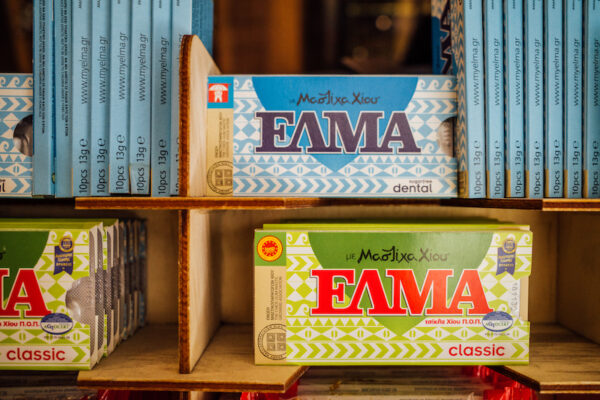
There’s a beautiful Greek island on the eastern edge of the Aegean Sea that is officially called Chios, but is unofficially known as “Mastiha Island.” The fifth largest among Greek islands, Chios is blessed with fertile land and a celebrated microclimate that allows islanders to grow a unique range of products, the most famous being – as its nickname suggests – mastiha (mastic), an aromatic resin produced by mastic trees. The first references to mastiha on Chios can be found in the work of Herodotus, the ancient Greek historian, who, in the 5th century BC, described those trees that grew on the south side of the island and how the ancient Greeks collected their resin and chewed it, both for pleasure and hygienic purposes. In fact, mastiha has been described as the first chewing gum in history.

logo

Terms of Service