<p>Former fisherman David Vieira Obispo and his wife, Shirley, opened Bar do David in the Chapéu Mangueira favela in 2010. Since then, the neighborhood boteco has earned national recognition for its inventive petiscos, winning the Comida di Buteco competition three times. Among the highlights is <em>Resurgência</em>, an award-winning seafood salad served in a bowl of cabbage leaves. The original location remains in Chapéu Mangueira, with a second outpost in Copacabana.</p>
Liquid Assets: Our Favorite Bars & Botequins in Rio de Janeiro


<p>The origins of its name (“Blue Peacock”) remain a local mystery, but Pavão Azul’s popularity is no secret. This beloved Copacabana neighborhood bar draws loyal crowds for its <em>patanisca de bacalhau</em>, a crispy, golden codfish fritter made with egg batter, unlike the softer, potato-based <em>bolinho de bacalhau</em>. Once a modest botequim, Pavão Azul has grown so popular that it expanded across the street, though tables still spill onto the sidewalk and cold beers flow freely. Running the show are Portuguese-Carioca sisters Beth and Vera, who took over the business after their husbands passed away.</p>

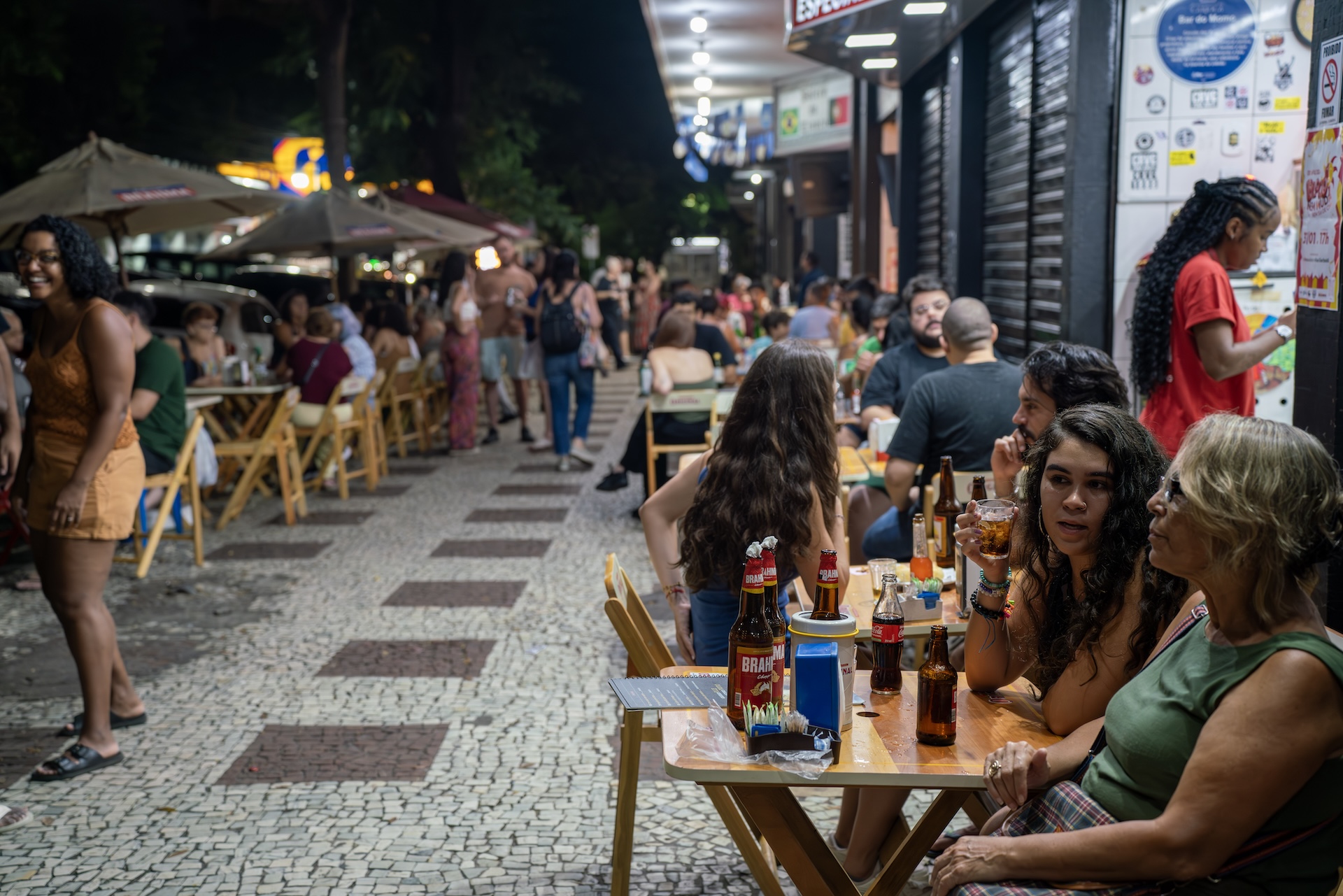
<p>Opened in 1972 by a former Rei Momo (Carnaval king), this beloved Tijuca boteco draws neighborhood regulars and chefs to its sidewalk tables for cold beers and some of Rio’s best bar food. Chef Antonio Carlos Laffargue, aka Toninho, puts his own spin on traditional <em>petiscos</em>, including <em>torresmo de panceta</em> (crispy fried pork belly) with pepper jelly and <em>jiló</em>, a slightly bitter green vegetable stuffed with meat or cheese. For something to drink, try a <em>batida</em>, a blended cachaça cocktail. Toninho even met his wife here, which says something about the bar’s place in local life.</p>

<p>Housed in a former velodrome, Feira de São Cristóvão is a sprawling market celebrating the food, music, and traditions of Brazil’s northeast, brought to Rio by generations of migrants. Every weekend, thousands gather to eat hearty, inexpensive northeastern dishes, browse craft stalls, and dance to live <em>forró</em>. With multiple stages hosting performances throughout the night, it’s as much a cultural gathering place as a food destination.</p>

<p>A bohemian temple for Rio's night owls, Galeto Sat’s is sequestered on Copacabana’s inland Barata Ribeiro street. (Like many answers for where to eat in Rio, this spot is hidden just inland from the city’s world-famous beaches.) Galeto Sat’s is legendary for its galeto – exceptionally tender young chicken, no more than three months old, expertly grilled over a big coal fire. What elevates it to near-mythical status are the simple, yet transformative, house-made sauces: zesty lemon, bright orange, and pungent garlic. Since the Rabello family, helmed by the charismatic Sergio and his wife Elaine, took over around 2006, this once-tiny spot has become a Carioca institution famously praised by Anthony Bourdain. While the original remains a rambunctious, crowded 30-seater with a lively sidewalk scene, larger branches in Botafogo (a beautiful two-story colonial that stays open till 5 a.m. or later, per Sergio's "commitment to the night owls") and Barra now cater to the demand. Beyond the chicken, don't miss the seasoned hearts, incredible garlic bread, and one of Rio’s most respectable cachaça lists, curated by Sergio and Elaine, respected cachacistas who travel Brazil for the finest bottles and love to share their finds.</p>

<p>The view from Bar Urca , looking out over Guanabara Bay with Christ the Redeemer poised on Corcovado’s peak, is undeniably one of Rio’s finest, but it's the bar's steadfast, unpretentious soul that makes it an institution. Originally opened by German immigrants in 1939, it passed into the hands of the Gomes family in 1972. Armando Gomes Sr. saw the tightly-zoned, residential Urca neighborhood – a world away from the encroaching developers of Ipanema – as a place to lay down lasting roots. Today, his grandson, Armando Gomes Neto, presides over a scene that feels little changed by the decades. Below the small, family-style upstairs restaurant (known for its generous seafood platters and moquecas), the ground-floor bar dispenses ice-cold beers, caipirinhas, and classic salgados. Every afternoon, especially as the sun begins to dip, the mureta – the low seawall across the quiet street – becomes an open-air annex, crowded with Urca locals, off-duty military personnel, and those who’ve made the pilgrimage for a crisp pastel, a hefty empada, or a cup of their rich caldo de frutos do mar, all enjoyed with that killer backdrop. "You come here, eat well, and watch the sun set,” Neto says.</p>

<p>Founded in 1951 as a social club for Afro-Brazilians excluded from Rio’s segregated clubs, Renascença Clube has become a beloved institution for live samba. Several nights a week, musicians gather around a central table as crowds dance, drink cold beer, and snack on bar classics like <em>frango a passarinho</em> (garlicky fried chicken) and <em>aipim com carne seca</em> (cassava with dried beef). Even Monday nights can draw a lively crowd.</p>

<p>In Rio's historic downtown, chef Diego Melão brings the hearty, pork-loving traditions of Minas Gerais to Capiau Botequim. Part of a new wave of establishments breathing life into the city's old center, this lively botequim is a stop on our <a target="_blank" rel="noopener noreferrer nofollow" class="text-[#781e2a] underline" href="https://culinarybackstreets.com/food-tours/rio/discovering-the-culinary-soul-of-old-rio">Discovering the Culinary Soul of Old Rio food tour</a>. Here, Melão serves <em>comida mineira</em>, including <em>kaol</em>, a plate of pork sausage, rice, and egg cooked with sugarcane liquor. With tables spilling onto the street, Capiau celebrates Brazil's countryside cooking in the heart of Rio.</p>

<p>Dating back to 1919, Bar Armazém São Thiago, better known as Bar do Gomes, is a Santa Teresa institution with shelves lined with bottles and a long history as a neighborhood gathering place. The bar is known for its extensive cachaça selection and <em>bolinhos</em> (fried, stuffed balls), including versions filled with pumpkin and dried beef. Recognized as a Rio cultural heritage business in 2011, it's a place to settle in for drinks and traditional bar snacks.</p>

<p>Suru Bar brings a contemporary approach to the traditional boteco in Lapa, pairing inventive cocktails with creative takes on Brazilian bar food. The retro-patterned floors and pink walls nod to old-school drinking spots, while the menu includes beer-battered <em>frango a passarinho</em> (fried chicken pieces) and meatballs with Canastra cheese. With another space across the street, it's a lively option for cocktails and petiscos.</p>