S M B O measurement-vertical measurement-vertical

Latest Stories, Rio

Bar Imaculada

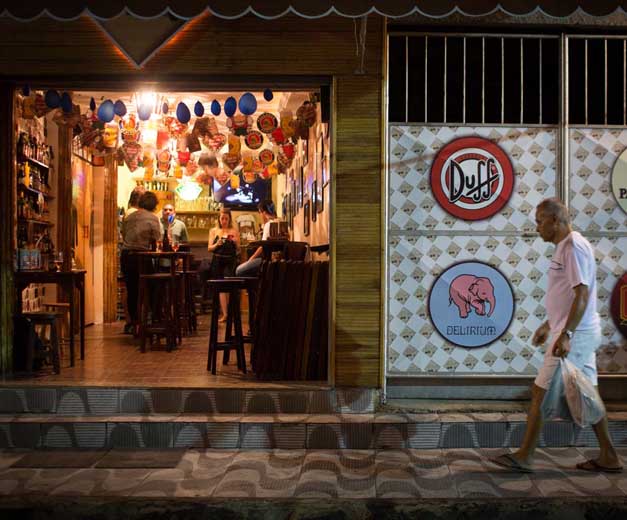
Editor's Note: Sadly, this spot is now closed. The locals of the Morro da Conceição are a proud bunch, and with good reason. To the north the cargo and cruise ships of Rio’s Port Zone steam in and steam out of Guanabara Bay. To their south the centro overflows with working cariocas during commercial hours. By evening, the centro becomes sparsely populated stretches of concrete and highway. The residents of Morro da Conceição have witnessed Rio history on its various sides.

Mercadão de Madureira

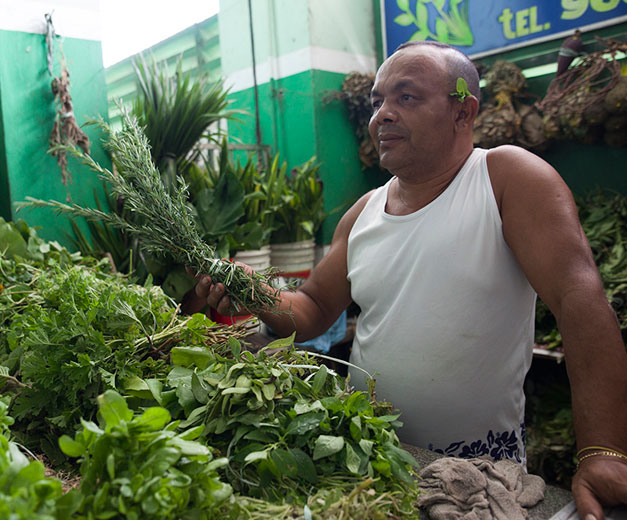
For the carioca in need of grains in bulk, cheap party decorations, live animals and herbs for the ritual baths practiced in Afro-Brazilian faiths, the Mercadão de Madureira offers one-stop shopping. Madureira is a good two-hour bus ride from tourist-zone Ipanema and is tucked behind hills far from the ocean breeze, which means the neighborhood heats up even more than already steamy Rio. In the heart of Rio’s working-class north zone, the Mercadão is where cariocas who count every real go to comparison-shop and haggle for the best deals in the city limits. Remember that the minimum wage in Rio is less than 800 reais (about US$330) per month, and a middle-class family is defined as earning above US$450 per month. That means the 100-real meals of Ipanema are hardly palatable for the so-called “new middle class.” Despite the cheery BRIC emerging-economy narrative and the olho grande (“big eye,” or greed) of investors looking for a new consumer market, this sector of Brazilian society can be better understood as the working poor.
Back to the Source

Perhaps coffee is underappreciated in Rio because it’s so plentiful. Brazil is the world’s largest producer of coffee, but both the selection and the presentation of the stuff you’ll find in Rio is hardly what a gringo dreams of in the capital country of café. Coffees here are cafezinhos, small, potent, highly sugary and with no milk. A cafezinho is taken standing up at a lanchonete (snack bar) or on a work break in the office in tiny medicine cups filled from an unseemly plastic cylinder. When Brazilians have seen the size of our morning coffee, many have expressed a concern that we could hurt ourselves with such a large quantity. (It’s just a coffee cup.)

Intihuasi

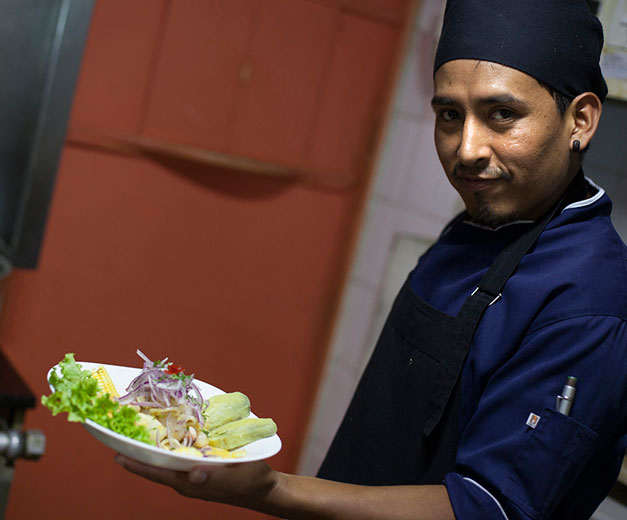
After three decades in Brazil, Margarita Sayan Pinto still speaks a charming, peppery portunhol – the Spanglish-like mix of Portuguese and Spanish – that she seems in no hurry to rid herself of. The chef remembers an interaction she had with a local taxi driver when asked to describe why she opened Rio’s first Peruvian restaurant nine years ago. "Peru?" the driver said. "That’s the only country in South America that doesn’t border Brazil." (Peru indeed has a 1,860-mile border with Brazil. Ecuador and Chile are the only South American nations that do not touch Brazil.)

Aprazível

Well-intentioned food appreciators have often made the error of believing that touristy is the opposite of authentic. The same goes for tourism and cultural exploration in general. The relentless search for the most local anything becomes based not on how locals themselves regard this thing but on how many fellow outsiders like ourselves have found it. (The fewer, the better, so goes the logic.) The localness of the thing is inverted, with the outsider becoming the arbiter of what is “authentic.” But if we, the outsiders, put so much effort into finding what is local, what’s wrong with locals making a similar effort to reach out to us?

Take to the Streets

Carnival in Brazil can be traced back to the 17th century, when the colonial-era population threw street parties, collectively called the entrudo, which involved pelting each other with lemon-scented water. (The governor of Rio de Janeiro tried to ban such raucousness in 1604, but the party lived on.) Throughout the colonial period, Brazil’s lower classes and slaves were the protagonists of street carnival, often imitating the dress and mannerisms of the elite. The entrudo continued, with irreverent (or was it inebriated?) revelers sometimes substituting urine and feces for the scented water in the spirited street parties.

Rio's Food Idioms

You are what you eat, as the saying goes. Is it any surprise then that food figures so largely in popular culture all over the world? In Rio, food and culture go hand in hand like Romeu and Julieta (for Brazilians, that refers to white cheese and guava paste, respectively, which are such a tasty combination that they are said to be destined to be together). And perhaps nowhere is this more evident than in language – after all, the word for “language” in Portugese, língua, also means “tongue.” In Rio, what the carioca says tells us a great deal about how he eats. To wit:

Espírito Santa

In a country the size of Brazil, you’ll have an easier time finding a carioca who’s been to Disney World than to the Amazon region, so cut off is it by vast forests and pricey airfares from the cosmopolitan southeastern cities of São Paulo and Rio. When we visited Manaus and took a days-long boat trip on the Rio Solimões, we introduced ourselves as American, living in Rio. Locals seemed uninterested in asking the usual litany of questions about America but grilled us on Rio, which they had only seen in evening telenovelas.

Casa Paladino Comestíveis

In a city filled with Technicolor snack bars, Casa Paladino Comestíveis instead looks more like the kind of place where you’d find seedy men smoking cigars in a black-and-white film. Glass cases lining the walls display manila-labeled cachaça and Cuban rum bottles, with an occasional anachronism, like boxed Toddynho chocolate milk, breaking its turn-of-the-century salon aesthetic. Cloudy mirrors, a handwritten menu and a grape-adorned Bacchus sculpture decorate its black carved wooden walls.

Best Bites of 2013

Editor’s note: This post is the third installment of “Best Bites of 2013,” a roundup of our top culinary experiences over the last year. Stay tuned for “Best Bites” from all of the cities Culinary Backstreets covers. Bar do Adão There are so many good fillings – 65, in fact – for the pastéis, or fried turnovers, at Bar do Adão that we appreciate their diminutive size, which allows us to eat a greater variety in one sitting.

Ask CB

Dear Culinary Backstreets, My husband and I are headed to Rio for vacation and neither of us eats meat or fish. Brazil sounds like a paradise for the carnivorous, but what’s a vegetarian to do?

Sobrenatural

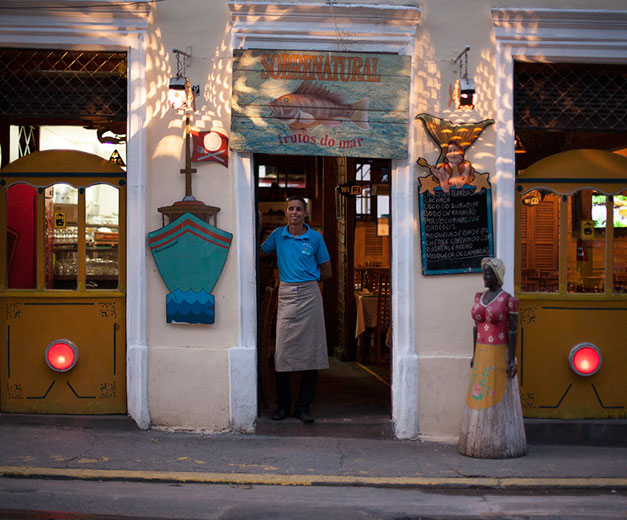
With 4,500 miles of coastline, the world’s largest river by volume (the Amazon), more than 10,000 miles of waterways and the largest amount of fresh water on the planet, Brazil suffers from a certain gastronomical misperception. Yes, this is a country that loves beef, prominently on display in popular Brazilian churrascarias.

Gracioso

Rio’s Port Zone is undergoing a major facelift, and whether that will nicely polish its tired face or look like a botched Botox job remains to be seen. The port is the heart of Rio Antigo and particularly central to Afro-Brazilian history.It’s home to Rio’s first favela (squatter settlement), called Providência, which was originally populated in 1897 by veterans of the War of Canudos who were told the government would provide housing when they returned to Rio and found those promises to be delayed and elusive. At this port, up to an estimated half million slaves walked in from Brazil’s shores to then be sold in the port’s slave market, treated in a hospital if they were sick or buried if they died after arrival in Gamboa, where a fascinating makeshift museum called the Cemitério dos Pretos Novos offers a view of the human bones a homeowner found while digging on her property.

Bistrô Estação R&R

Favelas just aren’t what they used to be – or what you thought they were. Rio’s squatter settlements have grown up, though uneven development still leaves considerable gaps in terms of policing, sanitation, sewage and public services. But the favela label is increasingly arbitrary as Rio’s “slums” – we put that in quotes because we think that word often leads to some generous and inaccurate flights of imagination – start to look more like working-class bairros. And they’re working their way up to becoming the more intriguing and inviting parts of the carioca landscape.

Fat Choi

Editor's Note: Sadly, this spot is now closed. Just inside the entrance of Fat Choi hangs a meter-tall photo of a many-armed statue of Guanyin, the Buddhist Goddess of Mercy. Iana, the daughter of Fat Choi’s founder, Silvana Assumpção, took the photo in a hotel in Macao, the infamous Chinese port and sin city. She then photoshopped out the hotel scene in the background and added bright fluffy white clouds. Macao hotels show up in posters elsewhere in the restaurant, along with a backlit aquarium with choose-your-own tilapia.

logo

Terms of Service