S M B O measurement-vertical measurement-vertical

Latest Stories, Mexico City

Tacos El Patán

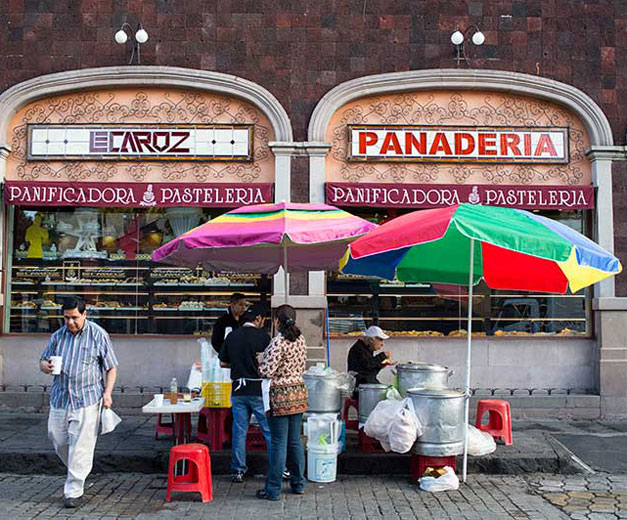
There’s more to downtown D.F. than tourist attractions, however. It is the cultural, political and economic heart of the city and the country. Any item imaginable can be bought downtown. There’s the lighting district as well as one for appliances, clothing, electronics, printing and a long list of others. For generations, people have been going there to buy by the piece or wholesale to supply small businesses all over the country.

Funky Fungi

In Mexico, the land of eternal spring, something good to eat is always in season. We ravenously await the arrival of artichokes in March, mangos in April, fresh corn in September. Even the wriggly little gusanos de maguey (maguey worms) which appear in May are wildly anticipated – by some. Change in season is subtle here, but essential to the survival of the country. But seasonal lines are blurring. Asparagus rears its tasteless Chilean head all year; pallid strawberries are found in December. Seasons have gone global and our palates suffer for it. Which is all the more reason to pay attention to what’s local now. From July into October, coinciding with our temporada de lluvia, wild mushrooms, spurred on by rain and humidity, hit the markets of central Mexico. Here in the capital, the month of August is high ‘shroom time.
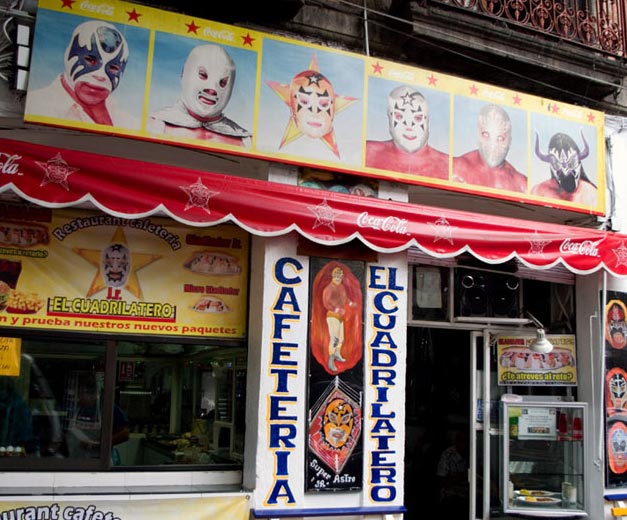
Cafetería El Cuadrilátero

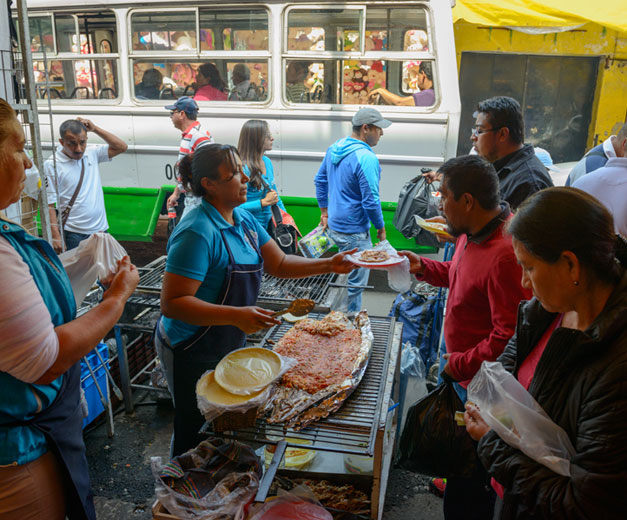
Editor's Note: Sadly, this spot is now closed. Mexico City’s Centro Histórico is never a dull place. Combined with the massive crowds and the constant roar of honking horns, passing buses and shouting vendors, the sheer visual stimulus is enough to make one weak in the knees after an hour or so. It can be a huge relief to step off the street for a breather and a bite to eat – although, in the case of Cafetería El Cuadrilátero, whose name can be translated to “wrestling ring cafeteria,” a “bite” is quite an understatement.

Merendero Las Lupitas

In the U.S., chimichangas and burritos are always associated with Mexican food, but in the central part of Mexico those words don’t mean a lot. In Mexico City, specifically, it’s very hard to find burritos that resemble those found north of the border, and the word “chimichanga” doesn’t even exist in our vocabulary.

Riviera del Sur

A few months ago, El Portal, one of our favorite cantinas in the Colonia Roma, shut its doors without any warning or fanfare. As we had been customers there for about 15 years, this was a great disappointment, and we were curious when we found out it had reopened. Happily, its current incarnation – as Riviera del Sur, a restaurant that specializes in food from the Yucatán peninsula – promises to be as much of a mainstay for us as El Portal ever was.

Mariscos Frescos del Mar

When it comes to finding new places to eat in Mexico City, we’ve learned not to be too quick to judge a place by its looks. A very good example of this is Mariscos Frescos del Mar, a hole in the wall we had passed without noticing many times before. When a good friend recommended it, we couldn’t even place it on a map, though we know the street it’s on very well.

CB on the Road

A few weeks ago we wanted to get out of bustling Mexico City, but we only had one day free, so we decided to look for a place where we could see some sights, eat, enjoy ourselves and still be back before the day was over. We found not just one, but two gorgeous towns that fit the bill in the state of Hidalgo, just over an hour north of Mexico City. The picturesque town of Real del Monte, also known as Mineral del Monte, is a small pueblo mágico (the Ministry of Tourism’s designation for a unique and historically significant village) with a long and rich heritage. It was one of the first mining towns the Spanish established after La Conquista. Much of the silver and gold mined during the colonial and post-colonial periods came from this part of the country.

Papalotl

The first inhabitants of what is modern-day Mexico City subsisted on mostly plants and grains. Their daily protein intake came from nixtamalized corn, beans, insects and, in smaller amounts, fish and game. When the Spanish brought pork, chicken and cattle to the New World, the local diet changed forever.

Hamburguesas a la Parrilla

In the past couple of years, in the fashionable neighborhoods of Mexico City, a panoply of high-class hamburger joints has opened. To delineate their distinction from anything to do with Mexico, most of them have names in English, and their menus offer burgers fashioned from ground sirloin, Kobe or Wagyu beef, with toppings as diverse as imported Stilton, caramelized onion and even foie gras. Their decoration is similarly varied, from sidewalk café to faux diner to intimate and candlelit. Perhaps predictably, at these emporiums the clients pay as much for a burger as they would in New York, Los Angeles or maybe even Tokyo.

First Stop

Kim is an avid traveler who divides her time among sniffing out new ingredients in markets, poking through bookstores around the globe and teaching at Grand Arts High School in downtown Los Angeles. Poon is a food, travel and lifestyle photographer based in Los Angeles.

First Stop

Editor’s note: We asked writer JJ Goode where he heads first for food when he lands in Mexico City. He has written about food and travel for The New York Times, The Wall Street Journal, Gourmet, Bon Appétit and many other publications. He is also the co-author of Pok Pok: Food and Stories from the Streets, Homes, and Roadside Restaurants of Thailand, with Andy Ricker; A Girl and Her Pig, with April Bloomfield; Truly Mexican andTacos, Tortas, and Tamales, with Roberto Santibañez; and Morimoto: The New Art of Japanese Cooking, with Masaharu Morimoto.

Tamales Los Vaporcitos

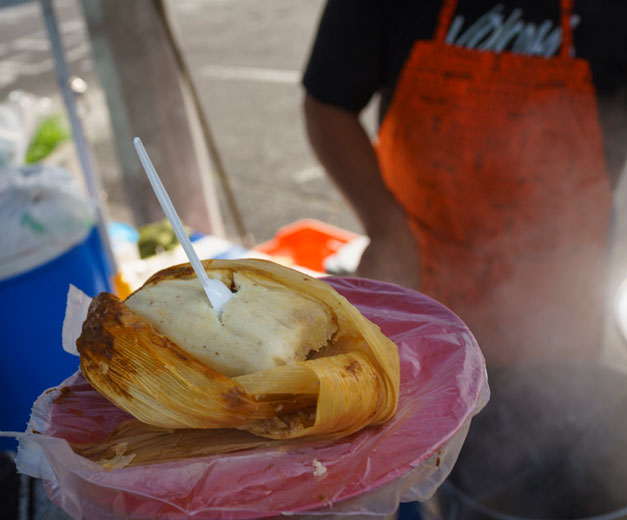
On our list of favorite Mexican comfort foods, the tamal would likely come in near the top. Simple, yet extremely versatile, tamales share pre-Hispanic roots with the tortilla. A corn masa very similar to the kind created during the nixtamalization process to make tortillas is used as the base for delicious tamales. Recently, we found a first-rate version of this ancient food from a new street vendor located just blocks from the Monumento a la Revolución.

CB on the Road

In Mexico, magic is all around us. It’s in the architecture, history, way of life – and, of course, the food. The country’s Ministry of Tourism is no stranger to this magic, and in fact, fully grasping its economic possibilities, it created the Pueblos Mágicos program in 2001 to recognize villages that are unique and historically significant. There are now 80 such pueblos mágicos across the country, and one of our favorites is just a short drive away from Mexico City.

Taquería La Única

Carnitas, a pork dish that originated in the state of Michoacán, can be found in restaurants, markets and street stalls all over Mexico City – it’s a fixture of the chilango diet. The other day, we received an invitation to visit a carnitas place that our host said would blow our minds – and that’s definitely the kind of offer we never refuse.

First Stop

Editor’s note: In the latest installment of our recurring feature, First Stop, we asked Asia-based photographer David Hagerman where he stops first for food when he arrives in Mexico City. Hagerman’s work has appeared in the New York Times, Saveur, Food & Wine, AFAR, SBS Feast and the Wall Street Journal, among many other publications.

logo

Terms of Service