S M B O measurement-vertical measurement-vertical

Latest Stories

319 Noodle House, photo by Kyle Long

These days, you won’t find anyone reaching for their wallet while dining out in Shanghai. Cash has become almost obsolete as virtual currencies corner every last slice of the retail payment market. QR codes and app-based systems are the new normal, even for transactions less than the equivalent of US$1 (like our beloved breakfast street food staple, the jianbing). According to a recent New York Times article, mobile payments in China hit US$5.5 trillion in 2016. Yes, with a “T”. And 2017 is sure to be another banner year as AliPay, WeChat Wallet, Apple Pay and others continue to fight for market share.

Chiles en Nogada

Mexicans can mark their calendars by what they’re eating: moles for weddings, pan de muerto for Day of the Dead, lomo and codfish for Christmas and chiles en nogada for Independence Day. Every September 15 and 16 Mexicans gather together to celebrate their independence from Spanish rule. This movement started in the city of Dolores Hidalgo, in the state of Guanajuato, the night of September 15, 1810, when Father Miguel Hidalgo y Costilla gave el grito de Dolores (“the Cry of Dolores”) that ignited the War of Independence. This war lasted until 1821, when Agustín de Iturbide, who later became the first Mexican Emperor, signed the Treaty of Córdoba that granted Mexico its independence.

The open kitchen at Taberna dos Mercadores, photo by Francesca Savoldi

Seating around only 20 people, Taberna dos Mercadores is a microcosmic reflection of contemporary Porto: a mixture of high-concept design and traditional food. From a design perspective, the focal point of the small yet comfortable dining room is the ceiling, where white metal supports create the outline of a false dome. Although sculptural in nature, the distinctive design is not merely ornamental but also practical: it doubles as a wine rack, cradling neatly stacked rows of bottles. Wine buffs will be satiated at the diverse but humble selection on offer here, which mainly originate from the Douro valley, the sumptuous growing region that extends from Porto along the Douro River all the way to the eastern border with Spain.

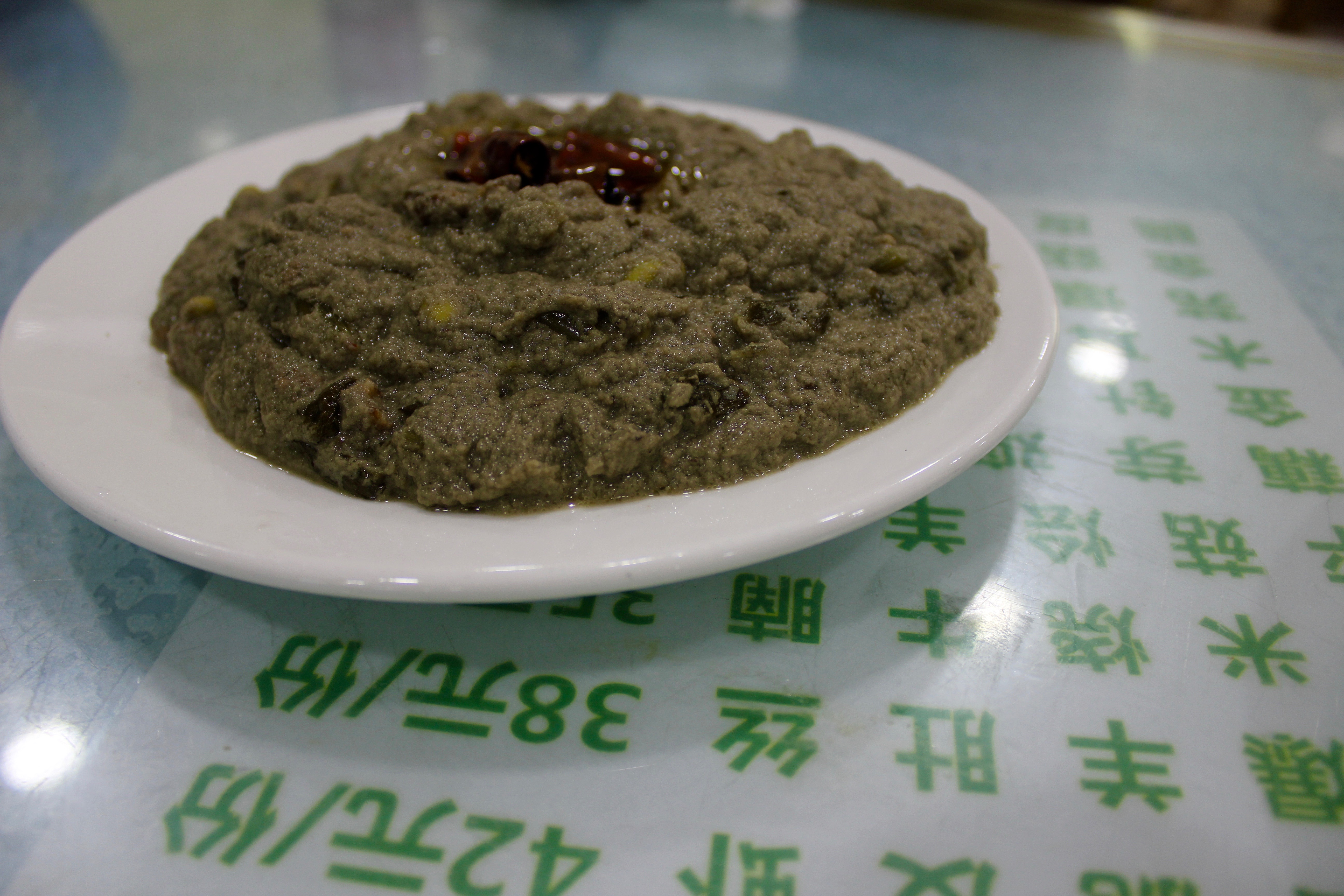
Chao Ma Doufu: Breakfast in Old Beijing

Chao ma doufu (stir-fried tofu) is among the numerous Chinese breakfast favorites we'll sample on our morning breakfast tour in old Beijing. 

Kushiwakamaru

Traveling out to the Nakameguro district from central Tokyo is similar to a trip from midtown Manhattan to Greenpoint, Brooklyn. It’s not that far and there are many amusing and delicious reasons to go. Nakameguro is similar to parts of Brooklyn in that real estate prices remain reasonable and artists, designers, chefs and entrepreneurs have flocked there to establish high- and low-end shops and restaurants catering to the hip and trendy. It is now one of the more desirable places to live in Tokyo. Smack in the middle of all things fabulously cool is the yakitori shop Kushiwakamaru, catering to neighborhood regulars as well as a rabid expat community since the mid-90s.

Panegyria

The warm months in Greece have special meaning for most villages, particularly on the islands, as they herald the legendary panegyria. Organized by locals, these communal festivals are usually held outdoors, often in the village’s central square. They provide an opportunity for people of all ages, from young children up to elderly folks, to feast, drink and dance until the early morning hours – it’s a chance for the whole family to let loose. Considering that this tradition involves entertainment, food, booze and dancing, it’s no surprise that its observance is centuries old. The word panegyri (πανηγύρι) derives from the ancient Greek word panegyris (πανήγυρις, pan = all + agiris = meeting), whose use has been documented as early as the 7th century BC.

Pita.gr

It has the makings of a sitcom: two itinerant chefs, one Greek and the other Peruvian, meet in Portugal and decide to open up a restaurant devoted to their home countries’ cooking. Rather than pratfalls, though, we get Pita.gr, a charming restaurant where during the course of one meal we can feast on ceviche, fresh moussaka and tiropita (a Greek pastry made of phyllo dough, feta cheese, honey and sesame seeds), all at the same table. Having the chance to eat delicious food from both countries feels like a privilege in this corner of the Margem Sul (South Bank), half an hour’s drive from central Lisbon.

Art installation at the Art Villa Garikula, photo by Justyna Mielnikiewicz

The table was a motif of fresh delights we had never seen before, all the ingredients from the family garden. In due time we would learn about pkhali, chicken tsatsivi and the intrepid Georgian ratatouille, ajapsandali; however, the only thing on our minds was surviving the barrage of toasts our host Aleko was pummeling us with. In Georgia guests are considered gifts from God, though it was clear from the beginning that the god Aleko had in mind was Bacchus. If we failed to drain the water glass full of his wine to the bottom, he would refill it and force us to do the toast right a second time.

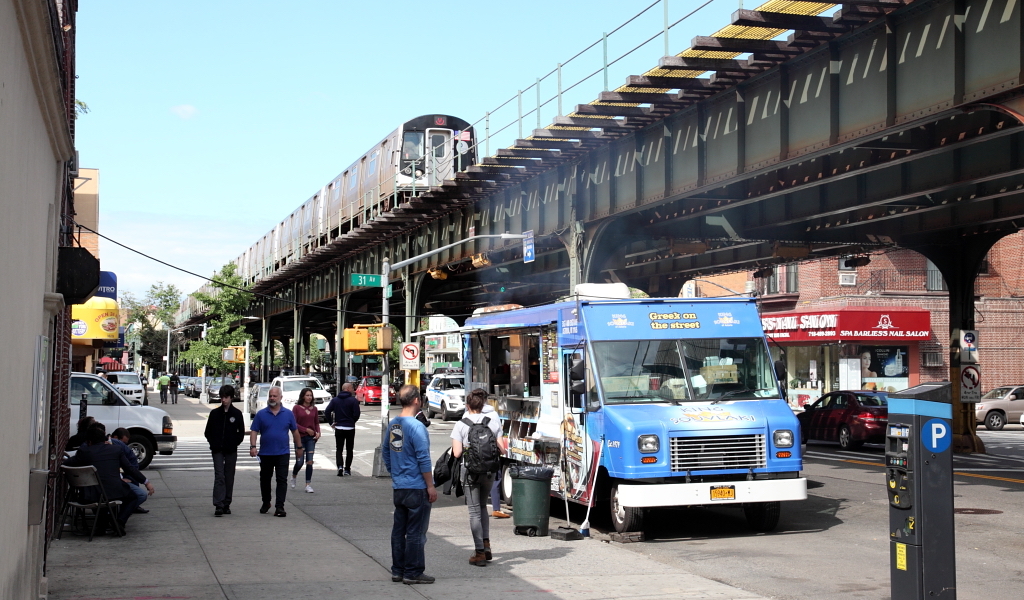
Skewered: A Survey of Astoria’s Souvlaki Street Vendors Featured Image

Grilling meat is a Greek tradition that hearkens back at least to the days of Homer. In his Iliad, the poet wrote of a sacrifice of cattle to the god Apollo, after which the men “cut all the remainder into pieces and spitted them and roasted all carefully.” They feasted, they drank wine, they sang praise to Apollo and they slept, until “the young Dawn showed again with her rosy fingers.” In modern-day Greece, spit-roasted meat, today called souvlaki, is an everyday meal. The same is true in Astoria, Queens, home to a stalwart Greek-American community for more than half a century, where you can feast on skewers for the sacrifice of only a few dollars each.

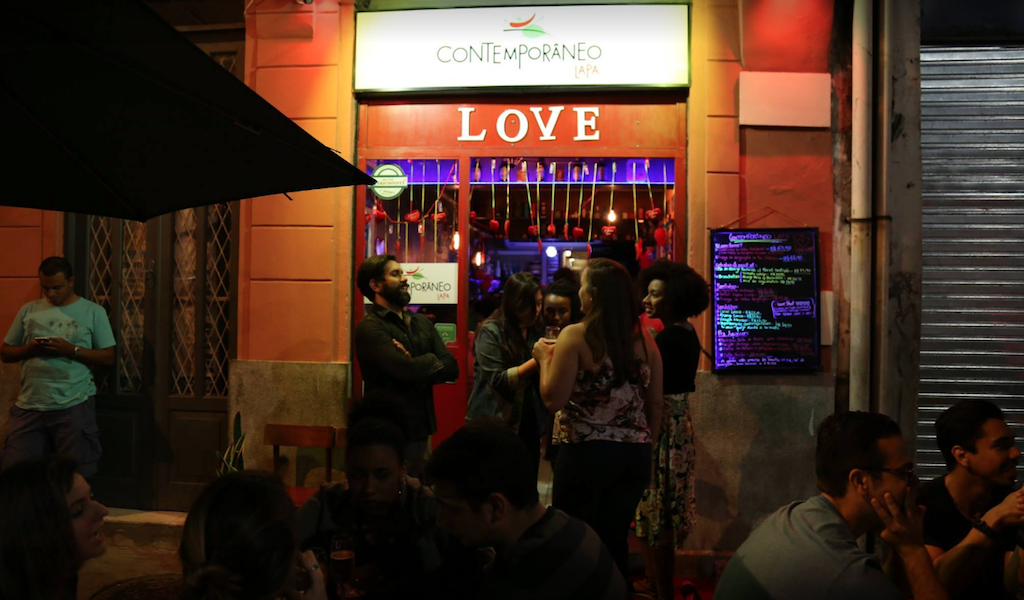
Contemporâneo Lapa: Bar Snacks from Afar Featured Image

Lapa is the heart of bohemian Rio de Janeiro, a place that pulses with samba music and the clamor of bargoers. Local musicians, artists and intellectuals (and tourists, too) flock to this old neighborhood, which during the day is best known for its rich stock of colonial-era architecture and where at night more than 200 bars fight for customers. Almost all the bars offer the same thing: live samba music, cheap beer and bad food. But Contemporâneo Lapa is bucking this trend. The bar is situated on one of the most frenzied blocks in Lapa – it’s brimming with prostitutes and drug dealers (the neighborhood hasn’t completely shed its dubious reputation) as well as tourists and Cariocas chasing a wild night out.

Lilian Mendoza prepares lunch, photo by Martha Pskowski

At 2 p.m., the lunch rush begins at El Trapiche, a restaurant along Mexico City’s chaotic Avenida Revolución. Two women arrive from a nearby office and ask for the set lunch menu, comida corrida, that El Trapiche serves for 60 pesos (or around $3.30). “Today we have baleadas,” says Lilian Mendoza Rivera, El Trapiche’s owner and manager. “Is that like a sope?” one of the women asks, referring to a corn-based Mexican dish, also topped with beans. “No, they’re better,” says Lilian, “Try it.”

Scoop by Scoop

In summer, there are just a couple of things that lisboetas will queue for: the beach and ice cream. The city is blessed with good places for both, but between the two, we prefer the latter, which in Lisbon tends to be Italian-style gelato, as served in the most long-standing and successful shops in town. Tucked away in a corner of Restauradores, A Veneziana still has the same façade and is run by the same family as when it opened in 1936. The shop is small, with a big esplanada, or terrace, on which customers can sit and enjoy their treats.

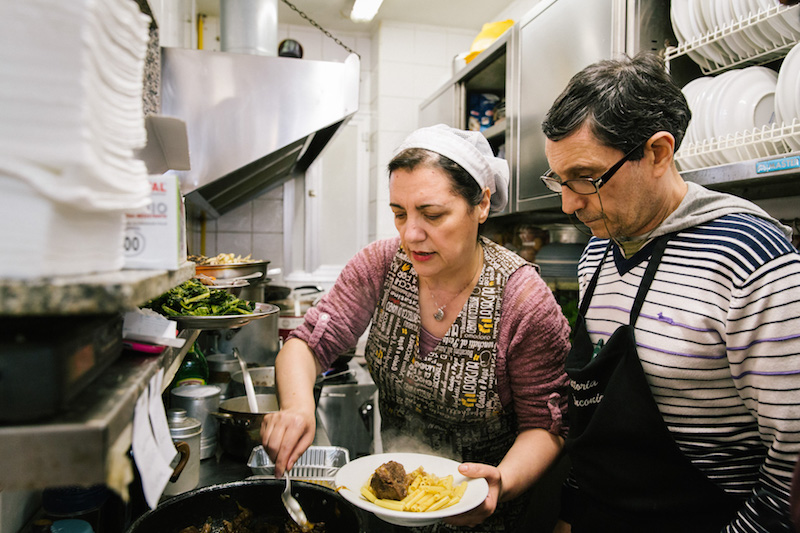
Marianna Sorrentino prepares pennette with Genovese sauce at Trattoria Malinconico, photo by Gianni Cipriano and Sara Smarrazzo

Earlier this year we launched our dedicated Naples section, a decision inspired by the city’s divine culinary heritage. Although many Italian cities are celebrated for their cuisine, Naples is one of the few to resist the global invasion of chain supermarkets and restaurants. The city’s cobbled and narrow streets revolve around civic life – the late filmmaker Pasolini accurately described it as “the last great village in Italy.” We recently asked Gianni Cipriano and Sara Smarrazzo, photographers who regularly shoot for CB, to go along the route of our Naples walk and document what they saw.

Crispy falafel fresh from the fryer, photo by Paul Osterlund

The assumption that falafel is a Turkish staple is a misunderstanding of global proportions. Perhaps this mix-up is due to its appearance on the menu of what seems like every Turkish restaurant outside of the country. Yet for years falafel has been largely absent from Turkey. We have often pondered why this was the case: The chickpea is a fundamental ingredient in Turkish cooking, after all. And hummus has made its way from the southern province of Hatay – which shares a border and culinary traditions with Syria – to the meyhanes of Istanbul and Izmir. But for whatever reason, falafel never made the jump; it used to be very difficult to find proper falafel in Turkey, although it remained popular over the border in Syria.

Mozambique in Lisbon: Taste

The Mozambican community in Lisbon may be small, but the city is blessed with several delightful restaurants serving the food of Mozambique – one of them even a neighborhood landmark.

logo

Terms of Service