Latest Stories

Lanzhou Lamian: Noodles With Pull

Is there anything that warms the heart of a food-obsessed traveler more than civic pride in a local culinary specialty? In a country that more often celebrates a particularly polarizing political leader, the great affection among the people of Lanzhou for their famous noodles – which the city has reportedly even sought to trademark – gets our stomachs rumbling.

Türkistan Restaurant

Thwap. Thwap. Thwap. “Do you hear that?” asked Sean Roberts, an expert on Uighur culture and politics and our dining companion for the day. “They’re making the lagman.”

Xinjiang Expedition

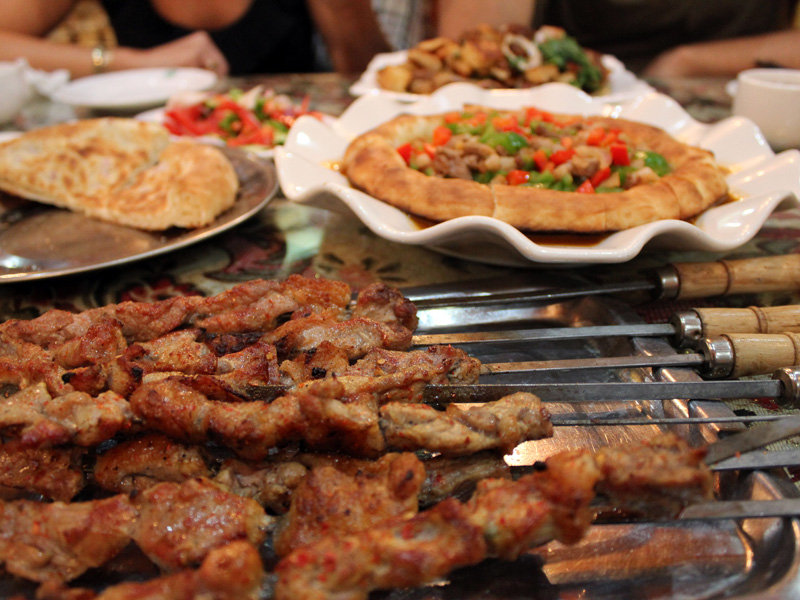
The three states of naan may not have any political standing, but they do enjoy culinary representation at one of Shanghai’s finest Uighur restaurants, Xinjiang Yining Yuanzheng, aka Xinjiang Expedition. We’re talking bread without borders, dough diversity at its finest, and a refreshing change of pace from the Chinese staple grains of noodles and rice.

La Plata

If La Plata is good enough for Paul Hewson, it’s good enough for everyone. More commonly known by his stage name, Bono, Mr. Hewson ate here in June 2009 a few nights before kicking off U2’s 360° world tour at Camp Nou in Barcelona.

Kebapçı İskender

A visit to Bursa İskender Kebabı® feels as if you’ve stepped right into the war room of the İskenderoğlu family’s never-ending quest to establish ownership over the İskender kebab, a plate of döner laying on a bed of cut flatbread doused with tomato sauce and butter and served with a scoop of cool yogurt on the side. The tables and walls of the restaurant are covered with literature about what the owners see as their family’s inheritance, but the rest of the world seems to consider public domain.

The Grand Bazaar Eats

We like to think of Istanbul’s Grand Bazaar – open since 1461 – as the world’s oldest shopping mall. If that’s the case, shouldn’t the Grand Bazaar be home to the world’s oldest food court? That may be taking the analogy too far, but for us, the Grand Bazaar can be as much a food destination as a shopping one. As we see it, one of the hidden pleasures of going to the bazaar (once you get past the overzealous shopkeepers hawking souvenirs) is exploring some of its quieter back alleys and interior courtyards for new dining possibilities, especially some of the smaller restaurants that cater not to tourists but rather to the locals who work in the sprawling marketplace. Here are some of our favorite places.

Yu Xin

One of China’s most ubiquitous culinary exports, Sichuan cuisine is famous for the 麻辣, or málà (mouth-numbing spice), that comes in the form of a peppercorn (花椒, huā jiāo). Prompting a tingling sensation that has been likened to licking a nine-volt battery, the lemony husk is tossed into dishes with dried chili peppers, and never more skillfully than at Yu Xin.

Paradosiako

Ah, the joys of Plaka! That most beautiful of Athens neighborhoods, full of sights for visitors to behold: Neoclassical buildings, views of the Acropolis and the Parthenon, tourist trap restaurants full of plastic, overpriced food. Joking aside, by all means go to Plaka, walk around, laugh at the kitschy copies of Ancient Greek statues depicting men with priapic erections. Then walk back to Syntagma and eat at Paradosiako.

Fatih Karadeniz Pidecisi

Inside Fatih Karadeniz Pidecisi, nothing could be heard over the crunch and crackle of fresh pide being torn open and chomped down on. Still, the man across the table from us spoke in a low, conspiratorial whisper: “There are some very well-known businessmen sitting at that table by the window. They all come here,” he said.

Mid-Autumn Mooncakes

Mid-Autumn Festival (中秋节, zhōngqiūjié) lands on the fifteenth day of the eighth lunar month, relatively near the autumnal equinox; in 2012, it falls on September 30. Also sometimes called Mooncake Festival, it is a public holiday in China and Taiwan on which families gather to give offerings to the full moon, float sky lanterns and eat mooncakes (月饼, yuèbing). A culinary tradition with legendary roots, mooncakes are sold everywhere from grocery stores to five-star hotels and come with competing origin stories that relate how these sweets came to represent the holiday.

Colibri

Colibri constitutes something of an Athenian phenomenon: what started out as a small neighborhood pizza and burger takeout place in Mets, next to Athens’ grand First Cemetery, has now evolved into three successful restaurants where people actually queue for more than half an hour to eat homemade pizzas and burgers. The menu is the same in all three places, offering simple comfort food at decent prices.

Café Niko

In a desk drawer at Istanbul Eats HQ is an envelope of leftovers from days when life was less sedentary: Tajik somoni, Kyrgyz som, Cypriot pounds, a wad of Macedonian denar and a small stack of Georgian lari. As with the last bite on the plate, it’s impossible to throw money away, no matter how unstable the currency. But the real value of having it on hand is that it makes a return visit seem likely, even pending. Our plans to return to Georgia were made, cancelled, rescheduled and cancelled again. It would seem our lari would never be much more than a filthy little memento, an IOU from the National Bank of Georgia for a khachapuri that would never be cashed in.

Indian Spices

The so-called “ethnic” cuisines – from Middle Eastern and Indian to Chinese and Japanese – came to Athens relatively late, in the mid-1980s, and were a costly affair. Athens’ first “exotic” restaurant, the Kona Kai in the Athens Ledra Mariott Hotel, opened its doors in 1984 and was one of the city’s most fashionable, high-class restaurants for years, serving Polynesian cuisine. It remains untouched, at least in terms of décor: the venue is a glorious extravaganza of bamboo and waterfalls!

Move Over, Ouzo

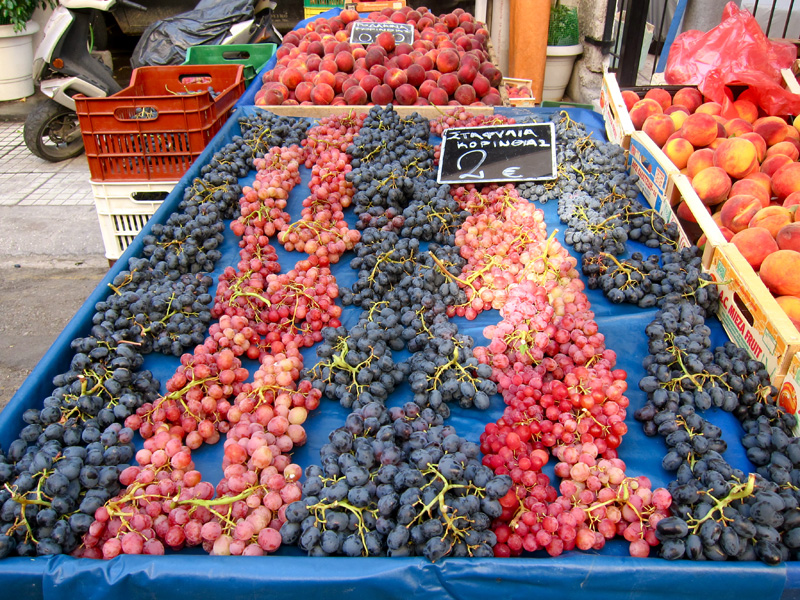
During her travels this summer, Culinary Backstreets’ roving photographer seemed quite taken with the luscious-looking grapes she saw in Athens street markets (pictured). While Greek grapes are not just for eating – this is, after all, the land of Dionysus, the ancient god of wine – in modern times the aniseed-flavored spirit ouzo has been the country’s most popular alcoholic drink, with wine lagging far behind. Yet Greek wines, including those made from indigenous grape varietals, have recently begun attracting greater interest.

Lillian Cake Shop

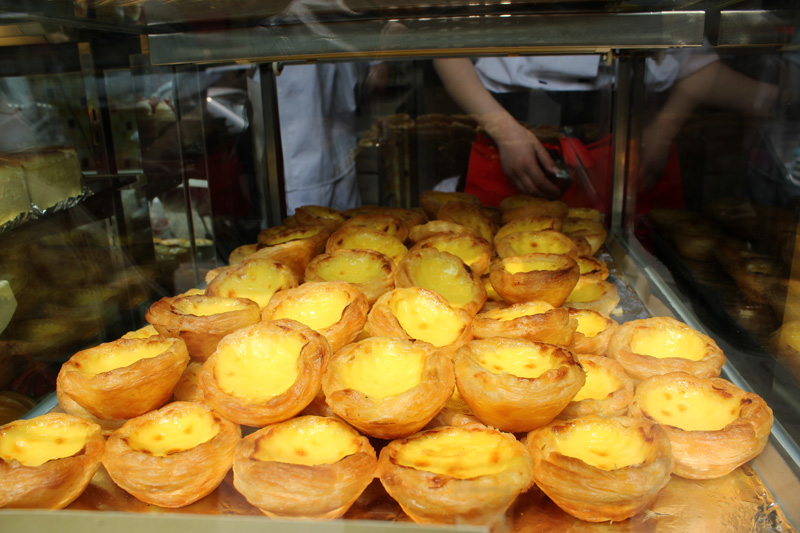
Confucius once said, “The superior man is modest in his speech, but exceeds in his actions.” He clearly never met a food writer, because superlatives and immodest speech are basically all we have to work with. But had Confucius opened a small patisserie, it would probably be Lillian Cake Shop.

logo

Terms of Service